
Published:
2005-01-02
Updated:
2024-03-20
Learning Ukulele with Curt
Whole Tone Scale for `Ukulele - C Tuning
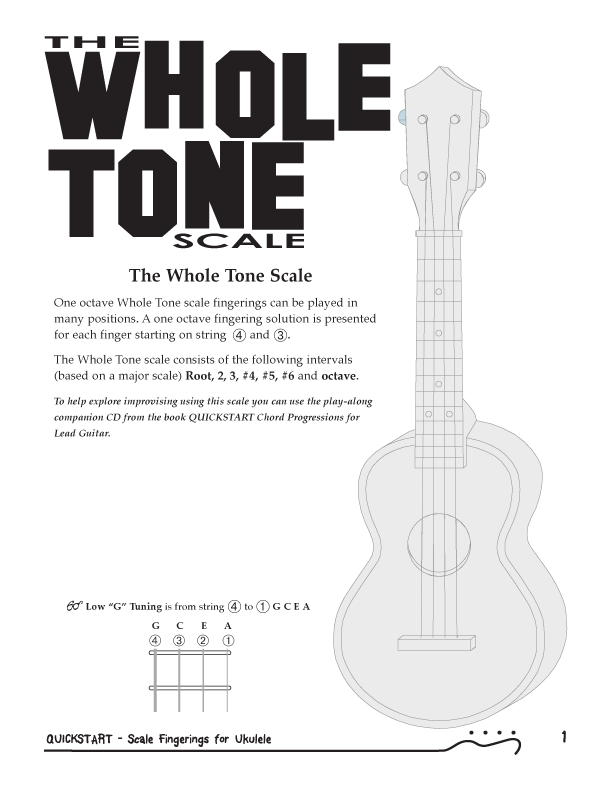
The "Whole Tone scale" is a symmetrical scale with an equal distance been each note or scale degree.
Author(s): Curt Sheller Publisher: Curt Sheller Publications Code: UL25
Main Category: Scales Main Instrument: Ukulele
Categories: Chords, Scales, Theory, Tuning, TmpPagyCatDebug

2026-08-23
Show Series Lessons
Series Home
Number of Pages: 14
If you're a registered site member and have the correct permissions you can view ALL the pages of this PDF at a larger size using the LearningUkulele.com Online PDF Viewer (button below).
Download PDFThis Download is NOT part of your LearningUkulele.com & Learning Ukulele with Curt membership level.
Sign-up for Premium Site Access or Upgrade Your Plan to download this PDF or your can purchase a copy for download
Sign In for Access…Contact Us if there are any issues.
The Whole Tone Scale scale is a symmetrical scale with an equal distance between each note or scale degree. Each scale degree is a whole step from the previous.
You only need two whole tone scales to cover all keys.
- C D E F# G# A# C'
- C# D# E# Fx Gx Ax C#' (Db Eb F G A B Bb`)
The whole tone be used over augmented triads and 7b5 and 7#5 chords.
Fingering
With the Whole Tone's scale being a symmetrical scale, it's a good candidate for some set fingerings using a few of the fingering principles from the The Six Secrets of Ukulele Fingering , fingering principles.
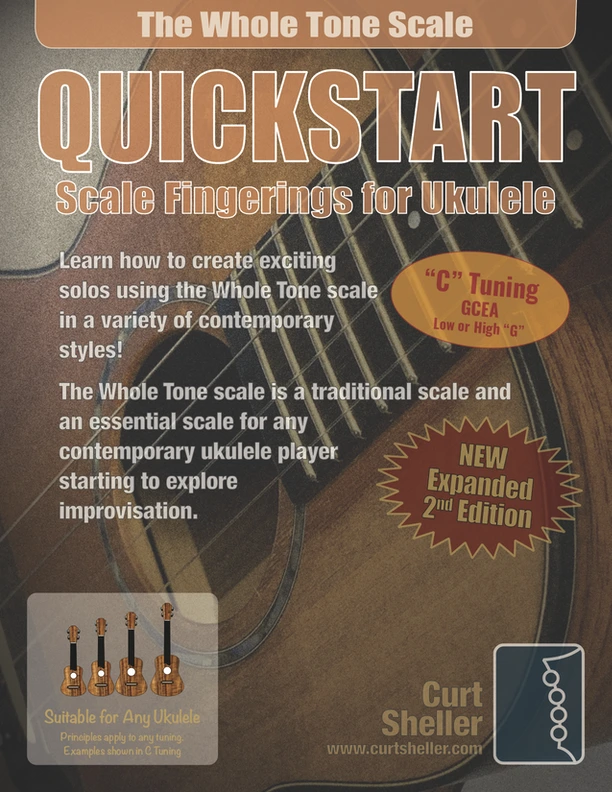
In the QuickStart Scale Fingerings for Ukulele, C Tuning - WholeTone Scale you will see the Basic and Pass fingering principles used a lot with a slide thrown in at the end to get the last note, the octave.
More Whole Tone Scale for `Ukulele - C Tuning
content below, continue exploring...
More Whole Tone Scale for `Ukulele - C Tuning
What IS a Scale?
A scale is simply a collection of pitches or notes, not really a "this is a Jazz scale", "this is a Blues" or "this is a Rock scale". It's how a scale is used that really matters, not its name.
Most music starts with a scale. The melody, chords, licks, and riffs all can be related back to a particular collection of notes, a.k., scale.
The Six Essential Scales ( in no particulate order ):
- Blues
- Blues (Minor Pentatonic)
- Pentatonic (Major Pentatonic)
- Dorian (Minor)
- Mixolydian (Dominant)
- Aeolian (Natural Minor)
- Ionian (Major)
Essential Reference Scales
There are two scales that can be the memorized and other essential scales referenced from these two. These two scales are the Ionian/Major and Aeolian/Natural Minor scales. The Major and Natural Minor scales are traditional scales and common scales in all forms of contemporary music.
This lesson explores the Major and Natural Minor scales and their derivations.
QuickStart Scale and Arpeggio Fingerings for Ukulele
This lesson uses the same page format as the QuickStart Scale & Arpeggio Fingering series of books.
QuickStart Scale Fingerings for Ukulele 3 volumes.
C, G, and D tuning.
(QuickStart Scale Fingerings for Ukulele
)
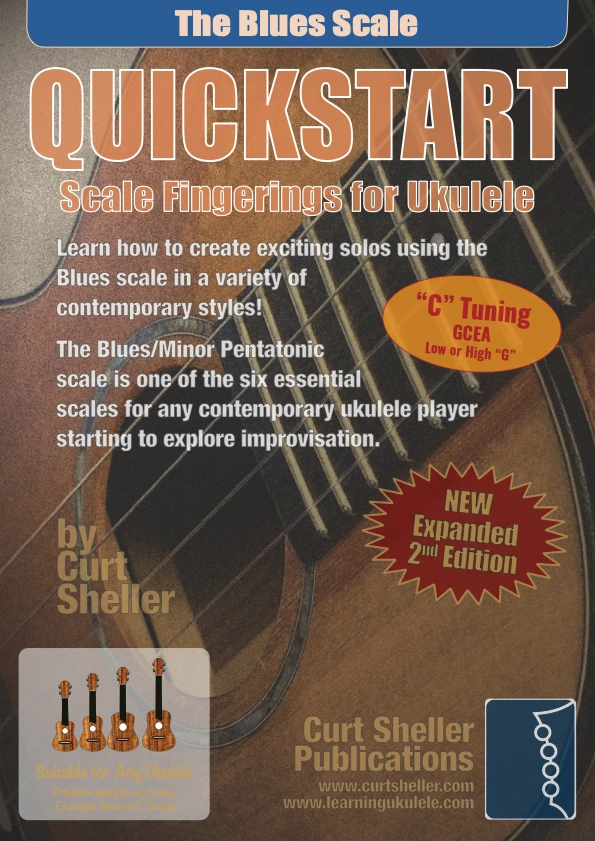
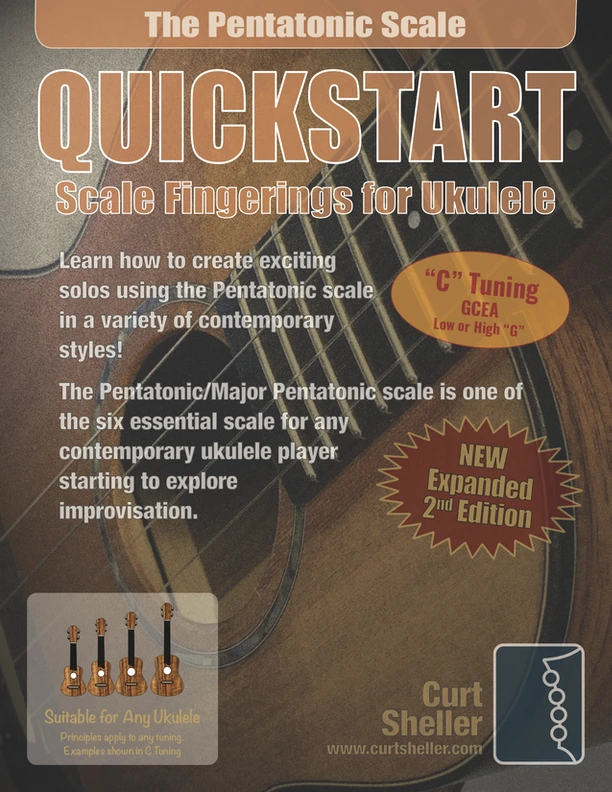
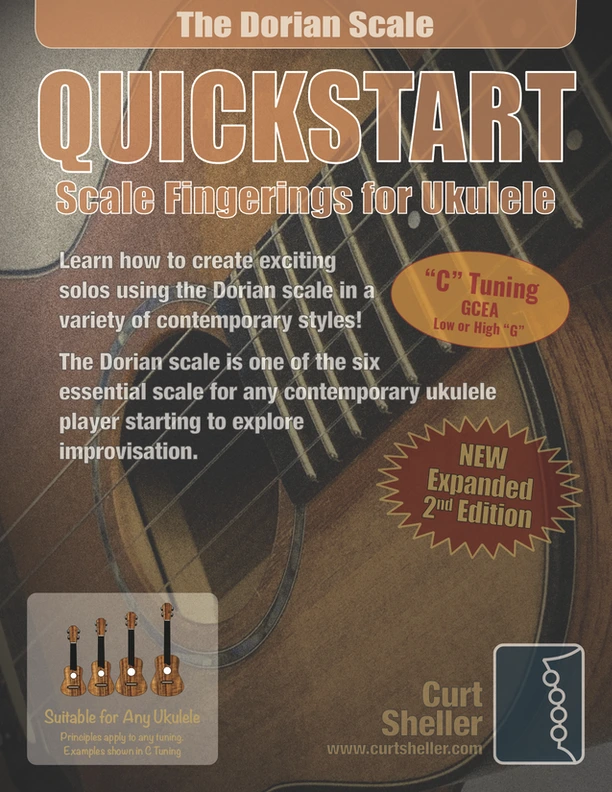
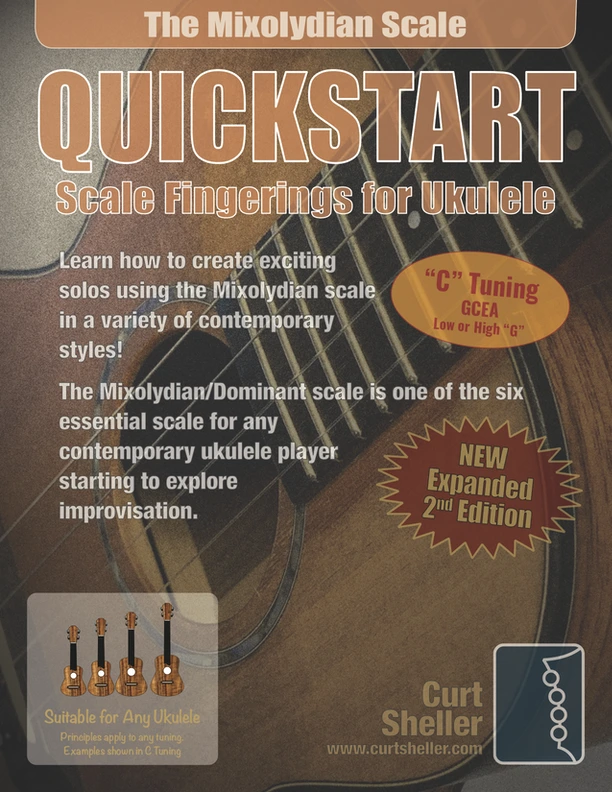
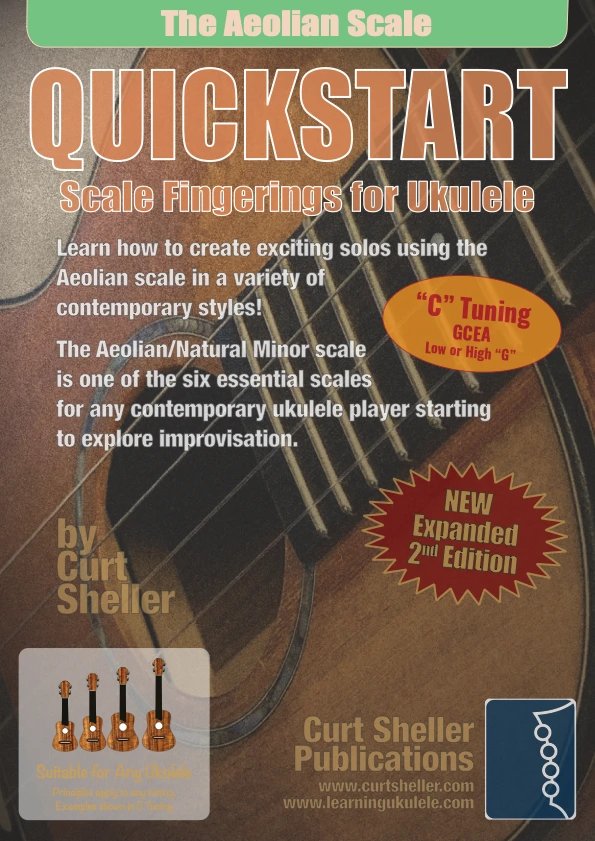
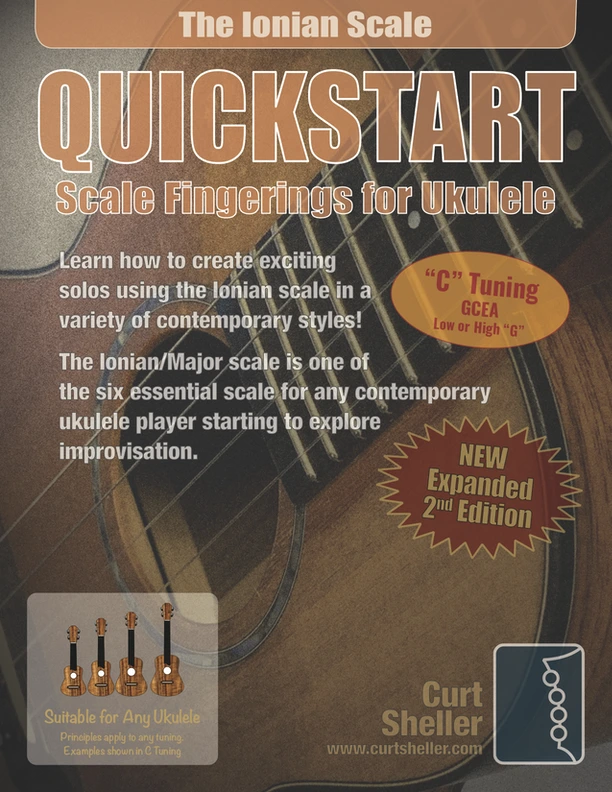
The QuickStart Scale Fingerings Vol 1 covers the Blues, Pentatonic, Dorian, Mixolydian, Aeolian, and Ionian scales.
Each scale is also available as an individual book. NOTE: the traditional name for each scale is shown in parentheses.


End of Lesson - Thanks, Hope You Enjoyed It!
Related Lessons, Videos, Lesson Series, Songs, Books & Reference Charts, Resources & Assets, Workshops are below.