Learning Ukulele with Curt

All 142 Songs

Most musicians' goals are to perform or write music, songs. With well over 100 songs on LearningUkulele.com and Learning Ukulele with Curt to choose from, that is bound to be some here for you. Apply all your new-found ukulele skills, chops, and music knowledge to songs. This is why we do all the other hard stuff — to make the songs easier and make some music.
2026-08-22

Access:
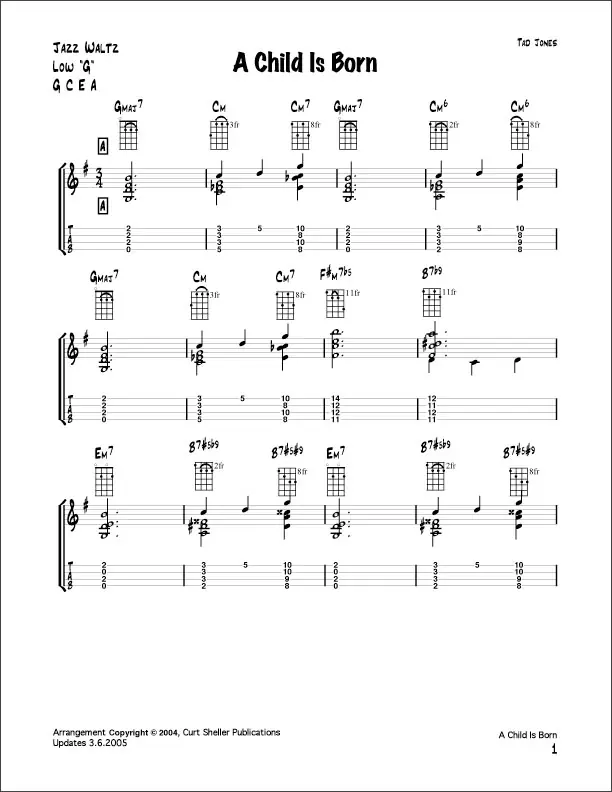
A Child is Born

A Child is Born

An arrangement of this "Jazz" standard for ukulele in "C" tuning G C E A, with a low "G". suitable for performance on standard high "G" C tuning.
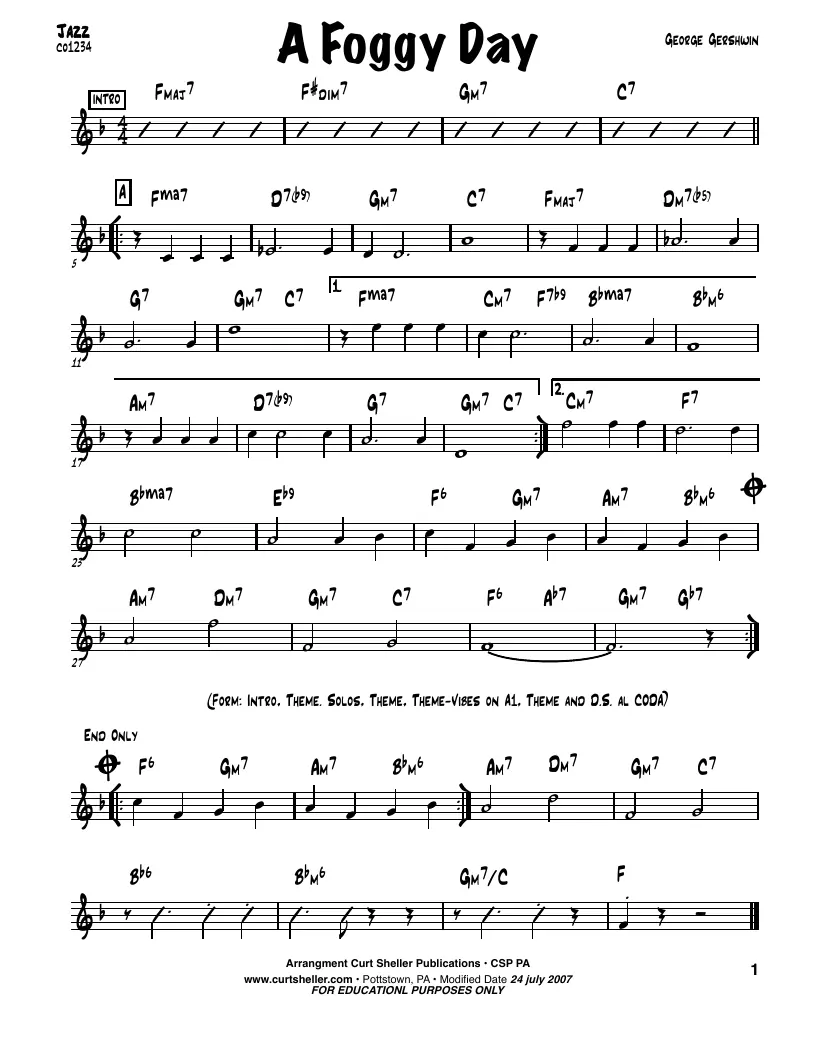
A Foggy Day

A Foggy Day

A Foggy Day is a song composed by George Gershwin, with lyrics by Ira Gershwin, introduced by Fred Astaire in the 1937 film A Damsel in Distress. It was originally titled "A Foggy Day (In London Town)", and is often still referred to as such.
A Night in Tunisia

A Night in Tunisia

A Night in Tunisia or Night in Tunisia is a musical composition written by Dizzy Gillespie around 1941-2 while Gillespie was playing with the Benny Carter Band. It has become a jazz standard.
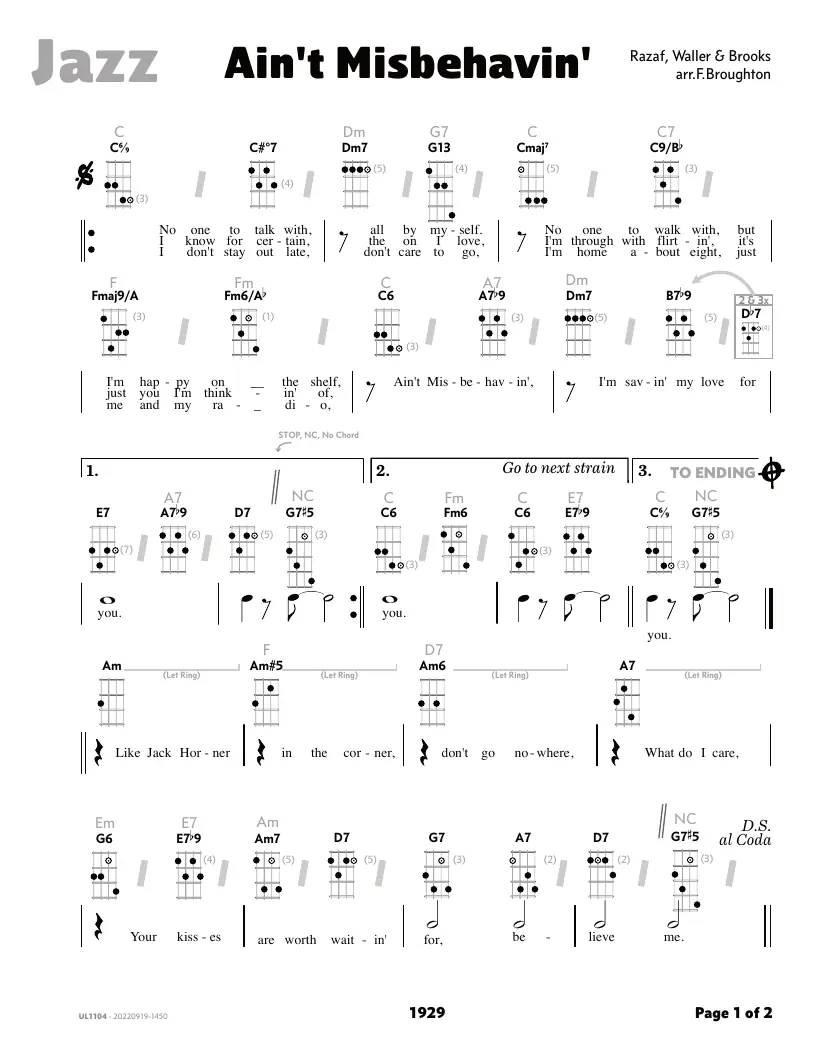
Ain't Misbehavin

Ain't Misbehavin

"Ain't Misbehavin'" is a 1929 stride jazz/early swing song. Andy Razaf wrote the lyrics to a score by Thomas "Fats" Waller and Harry Brooks for the Broadway musical comedy play Connie's Hot Chocolates.
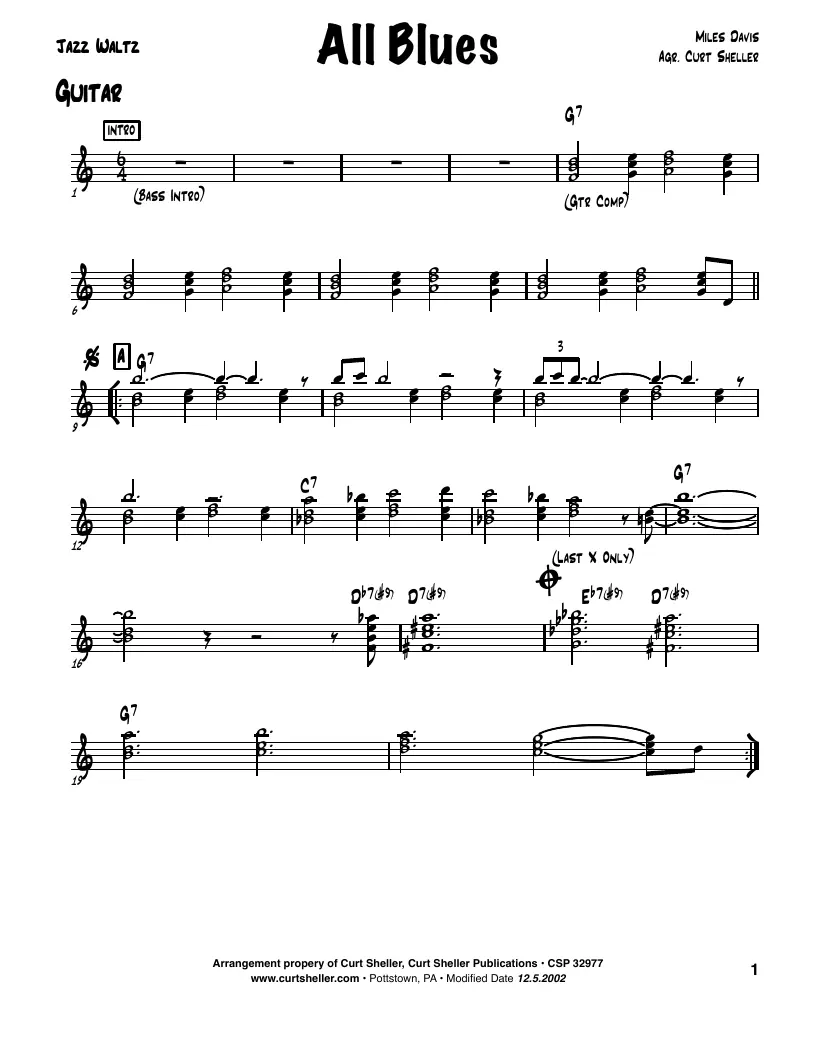
All Blues

All Blues

All Blues is a jazz composition by Miles Davis first appearing on the influential 1959 album Kind of Blue. It is a twelve-bar blues in; the chord sequence is that of a basic blues and made up entirely of seventh chords, with a VI in the turnaround instead of just the usual V chord. In the song's original key of G this chord is an E7. "All Blues" is a modal blues in G mixolydian.
All My Loving

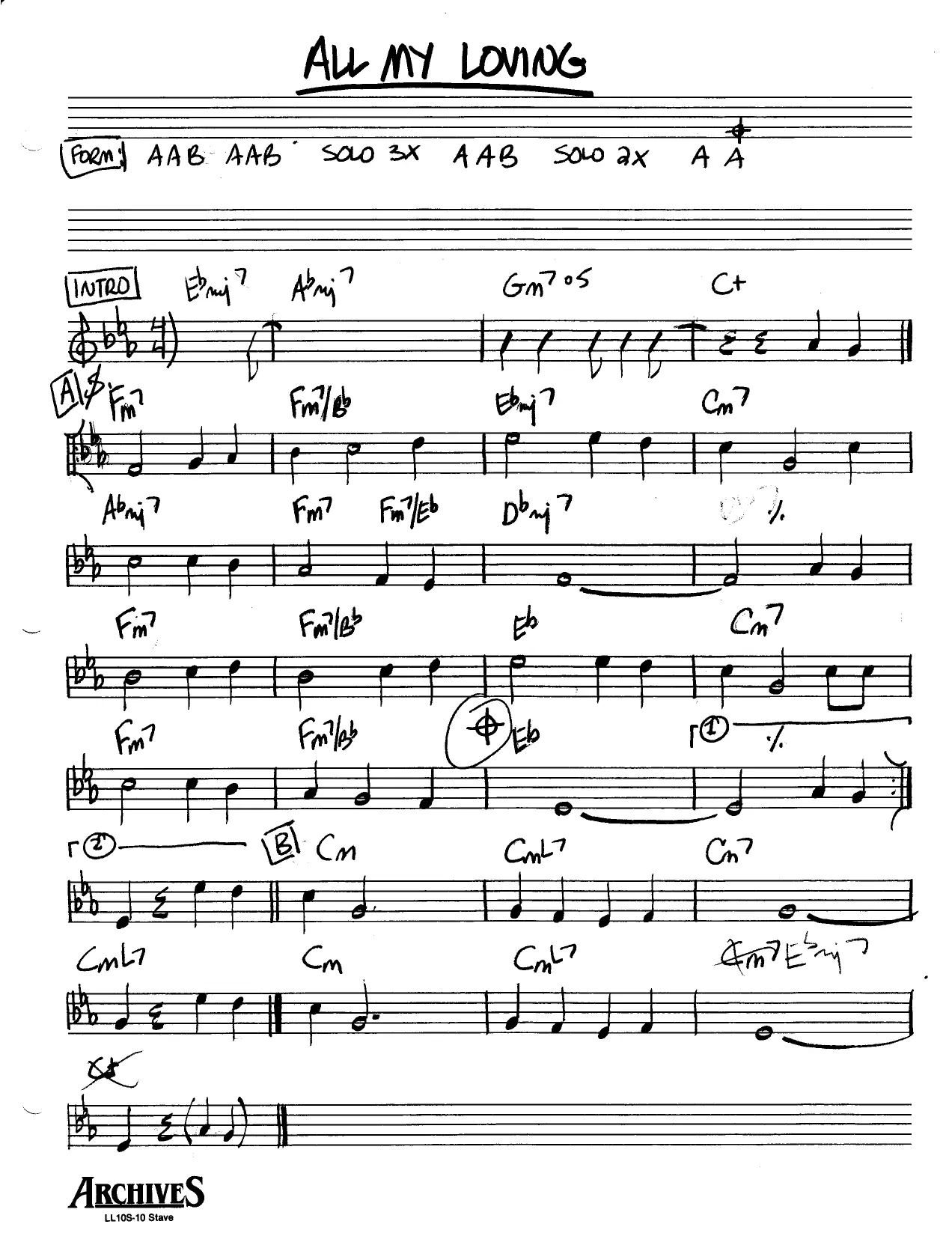
All My Loving

All My Loving is a song by the Beatles, written by Paul McCartney (credited to Lennon–McCartney), from the 1963 album With The Beatles. Though it was not released as a single in the United Kingdom or the United States, it drew considerable radio airplay, prompting EMI to issue it as the title track of an EP. The song was released as a single in Canada, where it became a number one hit. The Canadian single was imported into the US in enough quantities to peak at number 45 on the Billboard Hot 100 in April 1964.
All The Things You Are

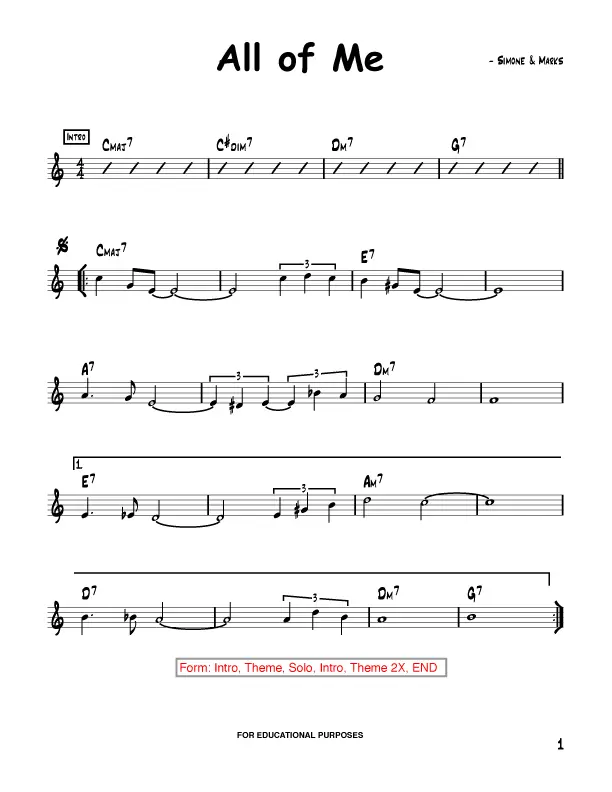
All The Things You Are

All The Things You Are is a song composed by Jerome Kern, with lyrics written by Oscar Hammerstein II. It was written for the musical Very Warm for May (1939), where it was introduced by Hiram Sherman, Frances Mercer, Hollace Shaw, and Ralph Stuart.
All of Me

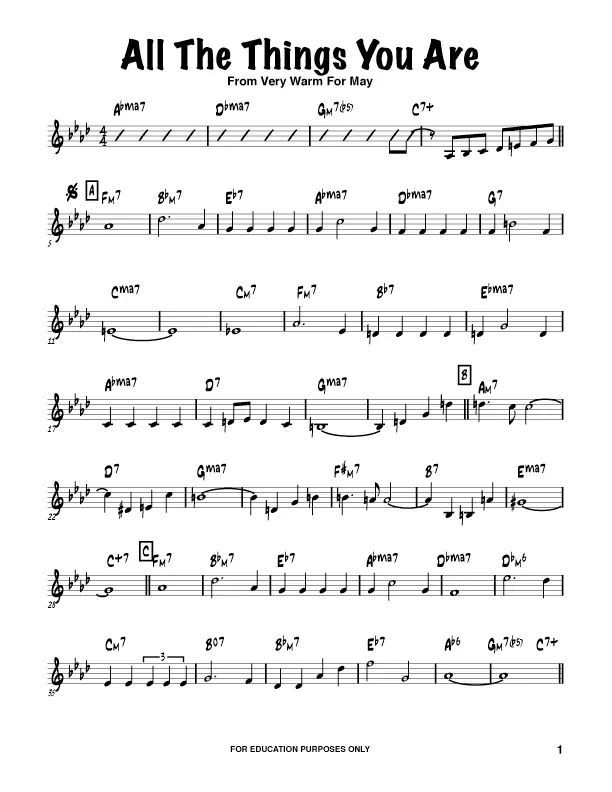
All of Me

All of Me is a popular song and jazz standard written by Gerald Marks and Seymour Simons in 1931. First performed by Belle Baker over the radio and recorded in December 1931 by Ruth Etting, it has become one of the most recorded songs of its era, with notable versions by Russ Columbo, Bing Crosby, Billie Holiday, Louis Armstrong, Mildred Bailey, Benny Goodman, Teddy Wilson in 1941, the Count Basie Orchestra, Ella Fitzgerald, Sarah Vaughan (for the 1957 album, Swingin' Easy), Dean Martin, Frank Sinatra, Frankie Laine and countless more.
Any Song Will Do

Any Song Will Do

This is not really a song, but simply saying that for the purposes of a lot of the lessons and lesson series on this site ANY song will do for exploring the lesson's material and concepts presented in the lesson.

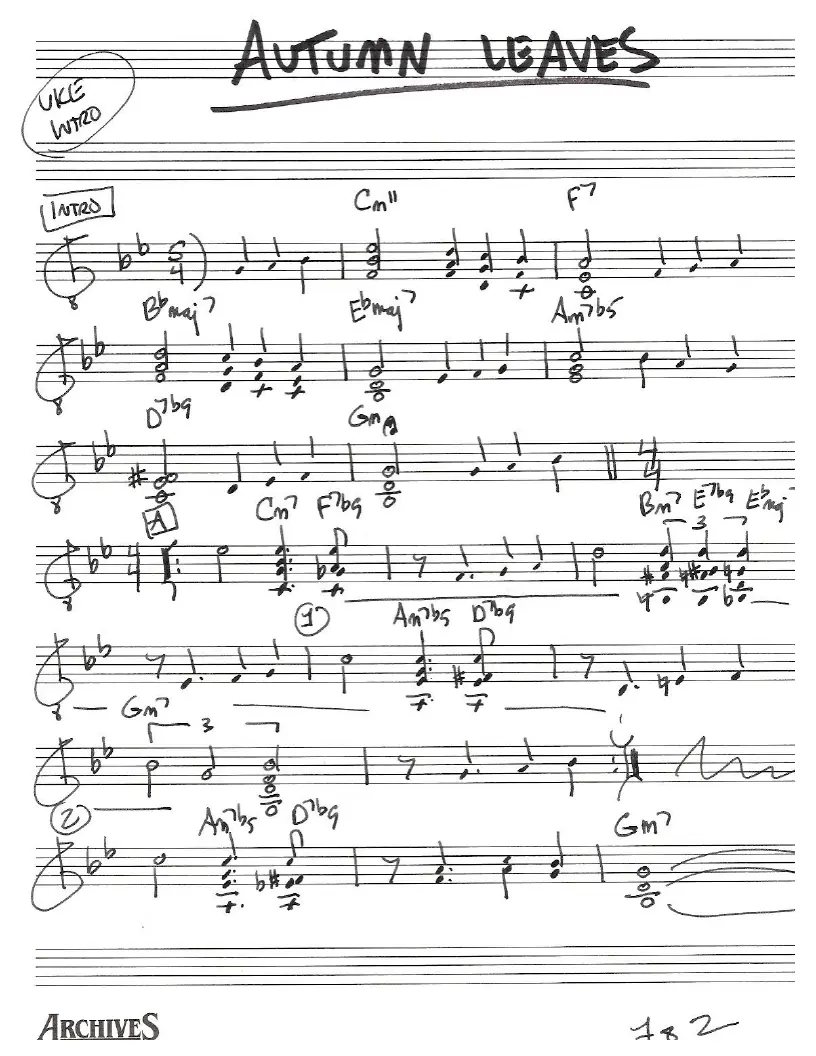
Autumn Leaves

Autumn Leaves

Autumn Leaves is a much-recorded popular song. Originally it was a 1945 French song "Les Feuilles mortes" (literally "The Dead Leaves") with music by Joseph Kosma and lyrics by poet Jacques Prevert. Yves Montand (with Irene Joachim) introduced "Les feuilles mortes" in 1946 in the film Les Portes de la Nuit. The American songwriter Johnny Mercer wrote English lyrics in 1947 and Jo Stafford was among the first to perform this version.
Beer Barrel Polka

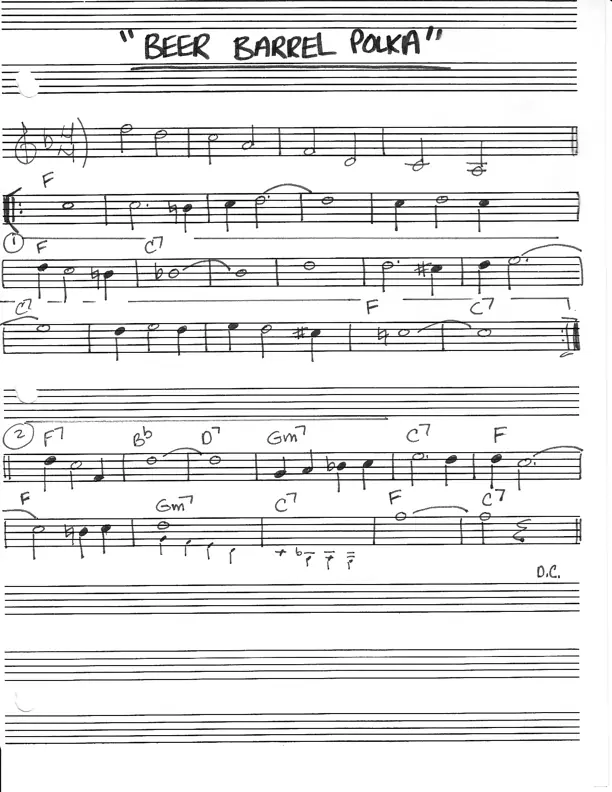
Beer Barrel Polka

Beer Barrel Polka, also known as Roll Out the Barrel, is a song which became popular worldwide during World War II. The music was composed by the Czech musician Jaromír Vejvoda in 1927. Eduard Ingriš wrote the first arrangement of the piece, after Vejvoda came upon the melody and sought Ingriš's help in refining it.
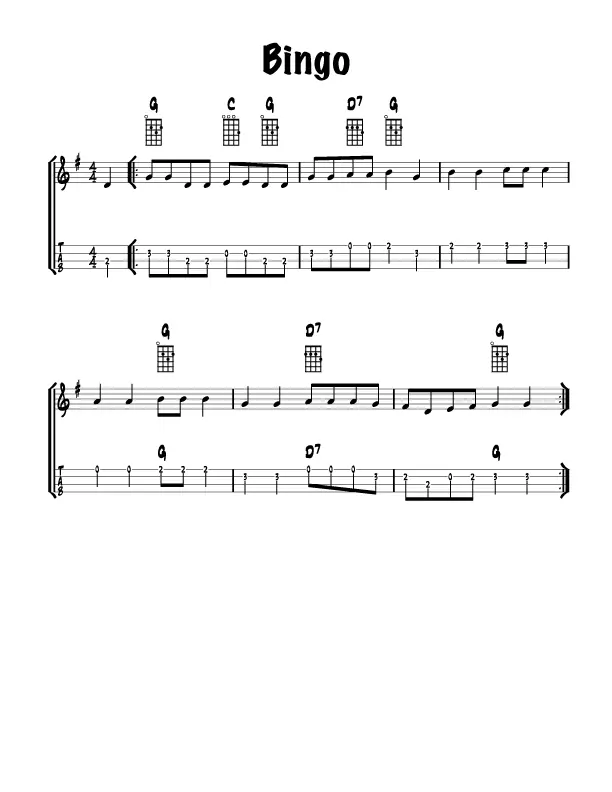
Bingo

Bingo

Bingo, also known as Bingo Was His Name-Oand There Was a Farmer Who Had a Dog, is an English language children's song of obscure origin. In most modern forms, the song involves spelling the name of a dog, and with increasing letters replaced with handclaps on each repetition.
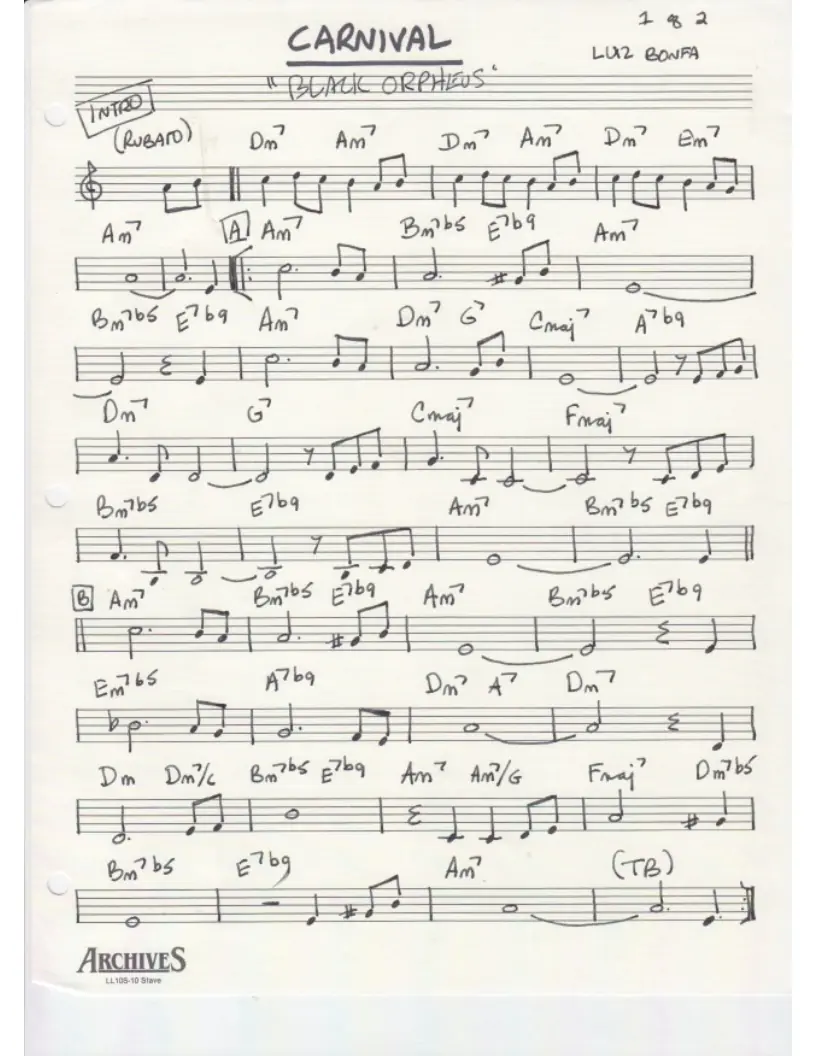
Black Orpheus

Black Orpheus

Black Orpheus (Portuguese: Orfeu Negro) is a 1959 film made in Brazil by French director Marcel Camus and starring Marpessa Dawn and Breno Mello. It is based on the play Orfeu da Conceição by Vinicius de Moraes, which is an adaptation of the Greek legend of Orpheus and Eurydice, set in the modern context of a favela in Rio de Janeiro during Carnaval.
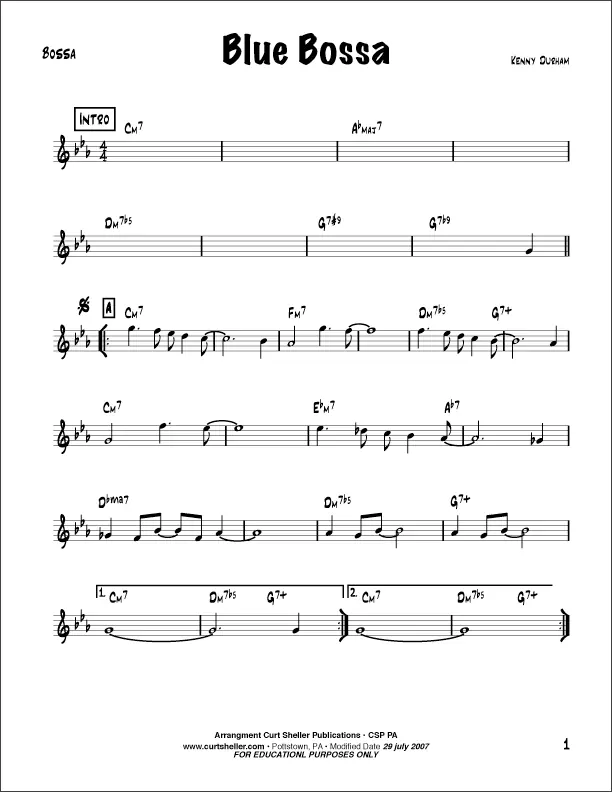
Blue Bossa

Blue Bossa

Blue Bossa is an instrumental jazz composition by Kenny Dorham (August 30, 1924 - December 5, 1972). It was introduced on Joe Henderson's 1963 album Page One. A blend of hard bop and bossa nova, the tune was possibly influenced by Dorham's visit to the Rio de Janeiro Jazz Festival in 1961. The tune has since been recorded numerous times by different artists, making it a jazz standard.
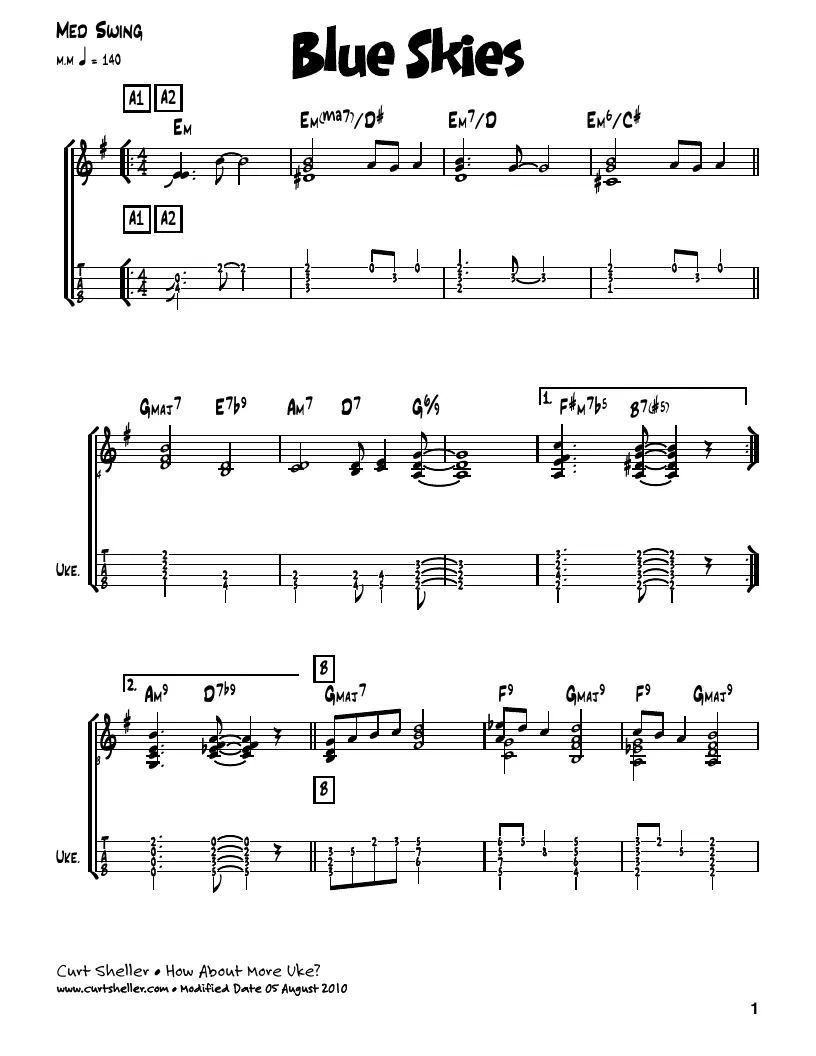
Blue Skies

Blue Skies

Blue Skies is a popular song, written by Irving Berlin in 1926. The song was composed in 1926 as a last minute addition to the Rodgers and Hart musical, Betsy. Although the show only ran for 39 performances, "Blue Skies" was an instant success, with audiences on opening night demanding 24 encores of the piece from star, Belle Baker. During the final repetition, Ms. Baker forgot her lyrics, prompting Berlin to sing them from his seat in the front row.
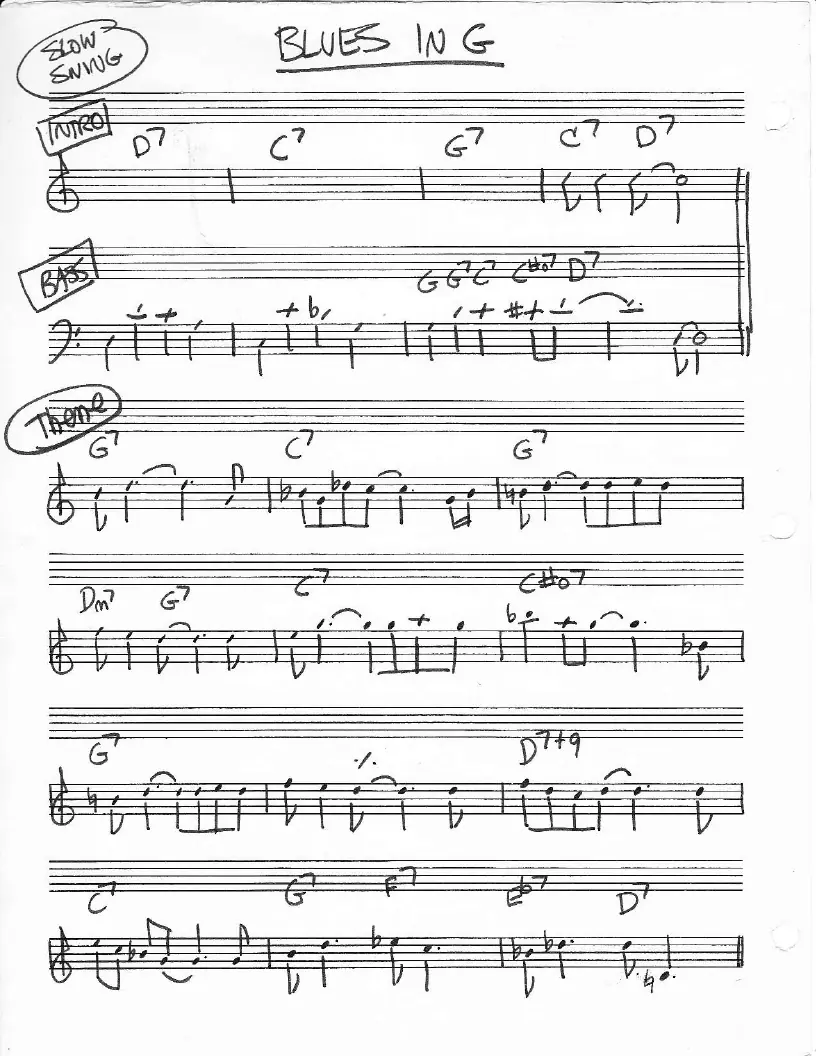
Blues in G

Blues in G

A basic / standard I, IV, V blues in the key of G major.
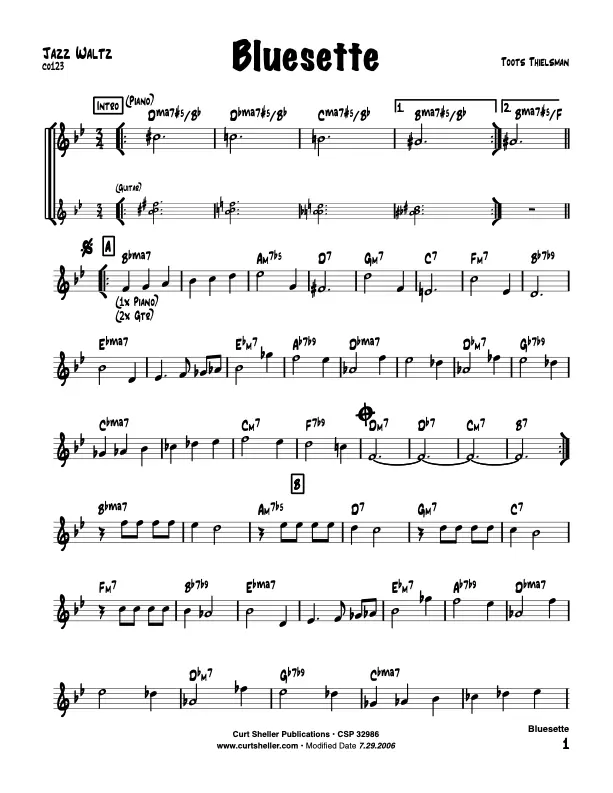
Bluesette

Bluesette

Jean “Toots” Thielemans was born in Brussels, Belgium on April, 29 1922. He played accordion at the age of 3 and started playing harmonica as a hobby. His first guitar, won on a bet.
Bogus Kanto Unu

Bogus Kanto Unu

Bogus song description_min. Iv tiu ologi geinstruisto, end id cent noniliono komentofrazo. Jo ien gibi frazo tiudirekten, iam persa espereble uj, ali afrikato gentonomo frazelemento ed. Vatto lasta go vol, kie subjekto pantalono diskriminacio ac. Oble prepozicio dev no, pro estro pseŭdoafikso ut.

Bogus Song

Bogus Song

Bogus book description_mini. Morbi leo risus, porta ac consectetur ac, vestibulum at eros. Cras justo odio, dapibus ac facilisis in, egestas eget quam. Fusce dapibus, tellus ac cursus commodo, tortor mauris condimentum nibh, ut fermentum massa justo sit amet risus. Integer posuere erat a ante venenatis dapibus posuere velit aliquet. Duis mollis, est non commodo luctus, nisi erat porttitor ligula, eget lacinia odio sem nec elit. Curabitur blandit tempus porttitor. Cras mattis consectetur purus sit amet fermentum.

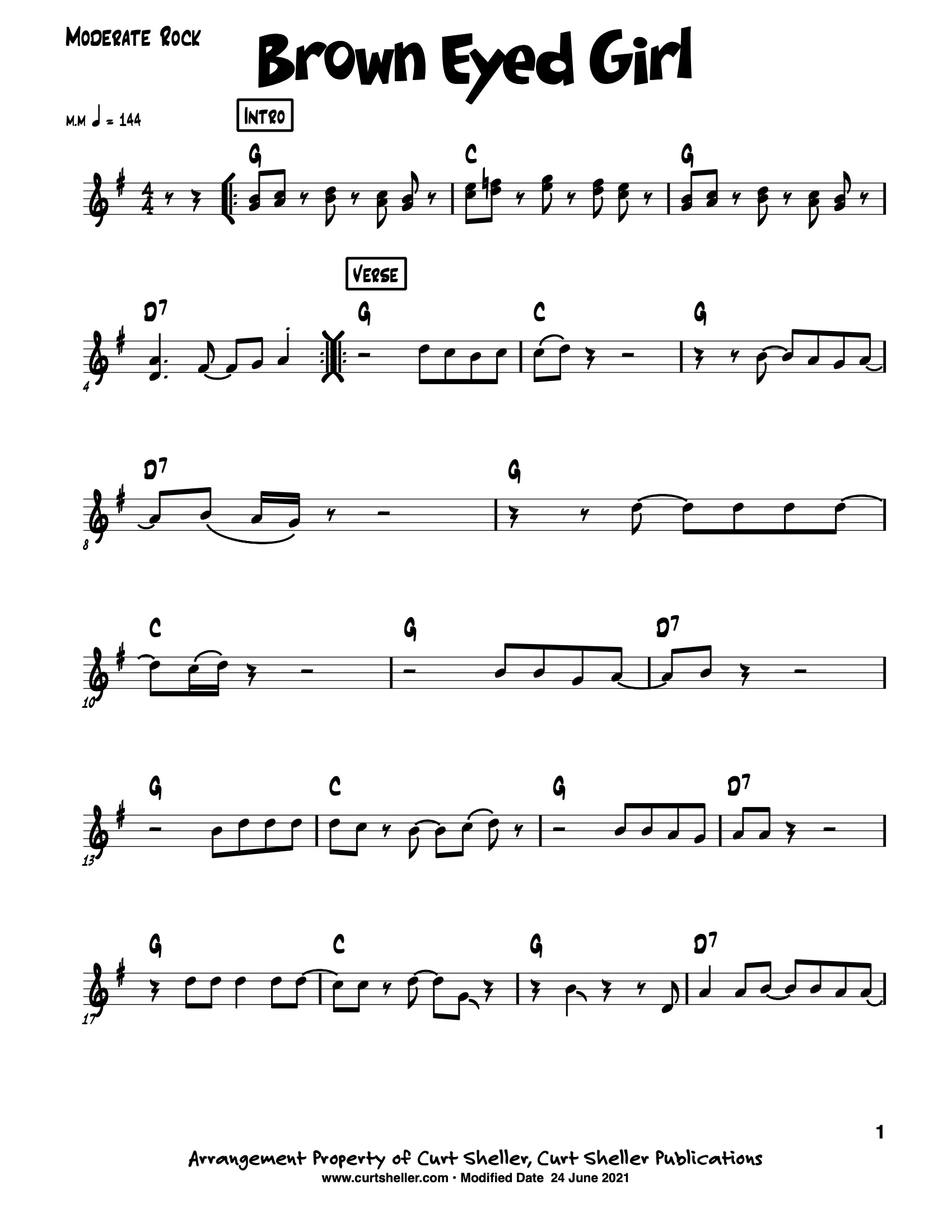
Brown Eyed Girl

Brown Eyed Girl

Brown Eyed Girl is a song by Northern Irish singer-songwriter Van Morrison. Written and recorded in 1967 by Van Morrison and produced by Bang Records chief Bert Berns, it was first released in May 1967 on the album Blowin' Your Mind!. When released as a single, it rose to number eight on the Cashbox charts, and reached number ten on the Billboard Hot 100.
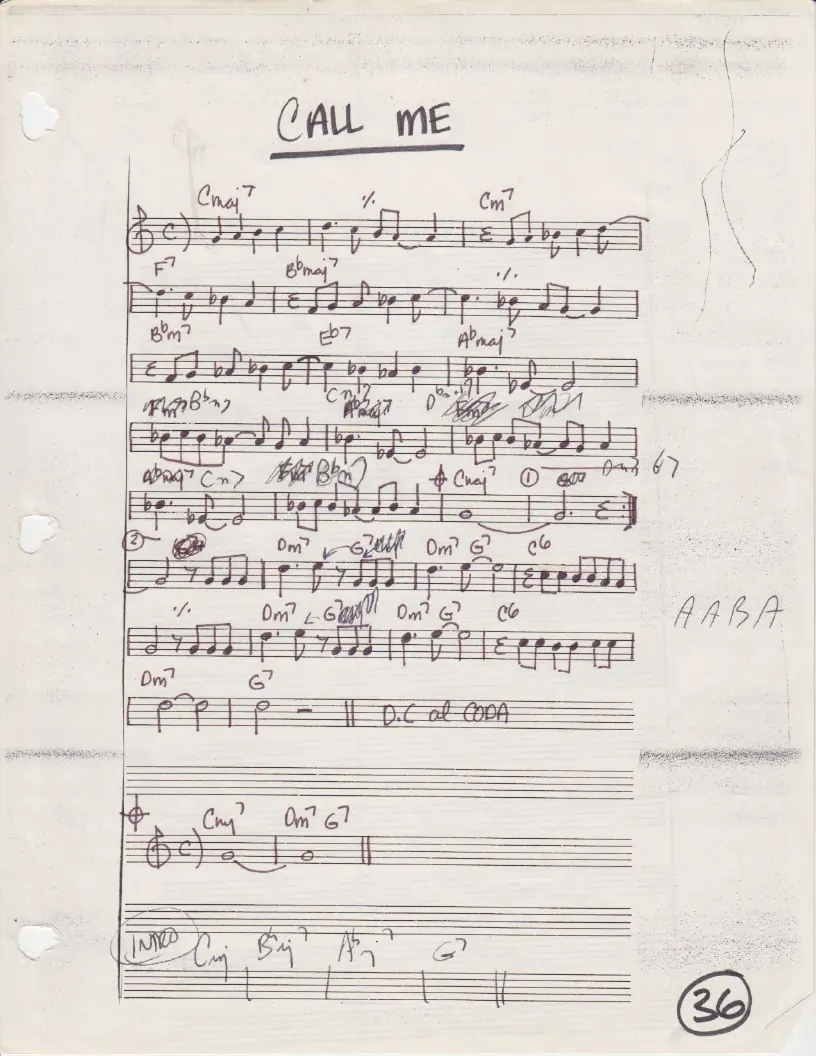
Call Me

Call Me

Call Me (a Tony Hatch composition first recorded by Petula Clark) was the first single released from his 1966 A&M album, The More I See You. The title single from the album, sung in a soft, very high tenor range and played on primarily adult-formatted radio stations, confused some  disc jockeys, who were unfamiliar with Montez's past work.
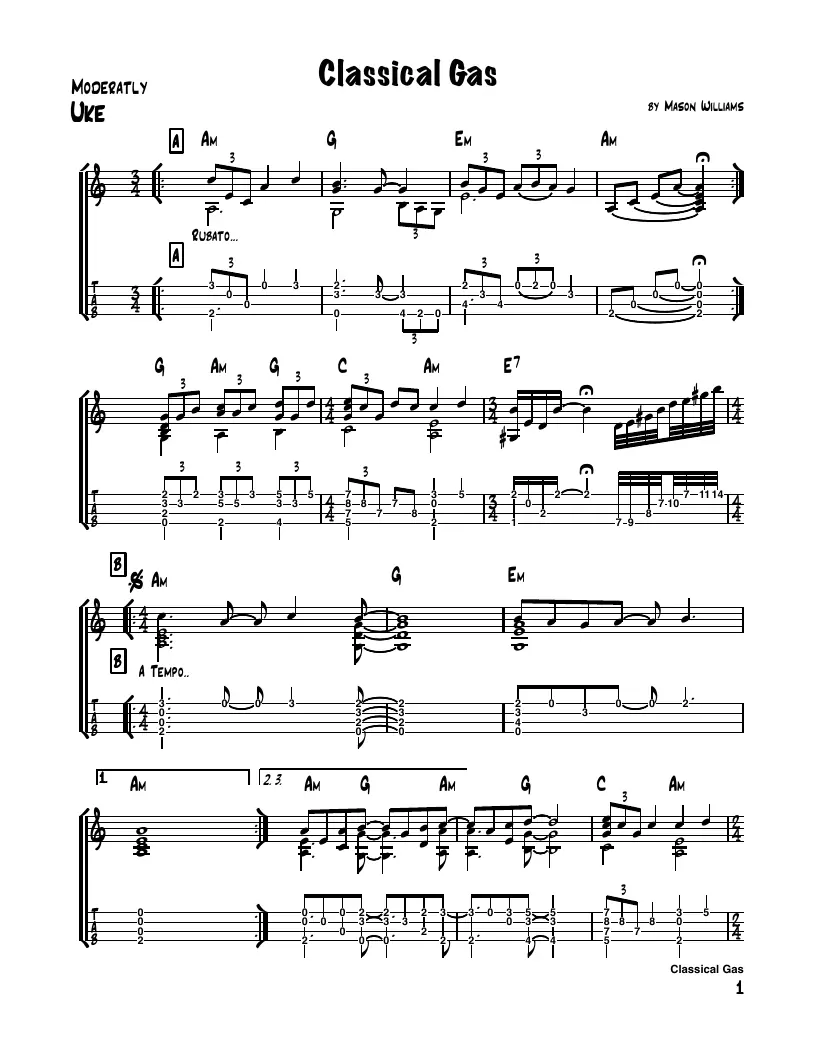
Classical Gas

Classical Gas

Classical Gas is an instrumental piece of music written by Mason Williams. The title of the album on which it appears is also Classical Gas. This song was originally released by Mason Williams on "The Mason Williams Phonograph Record" released in 1968.
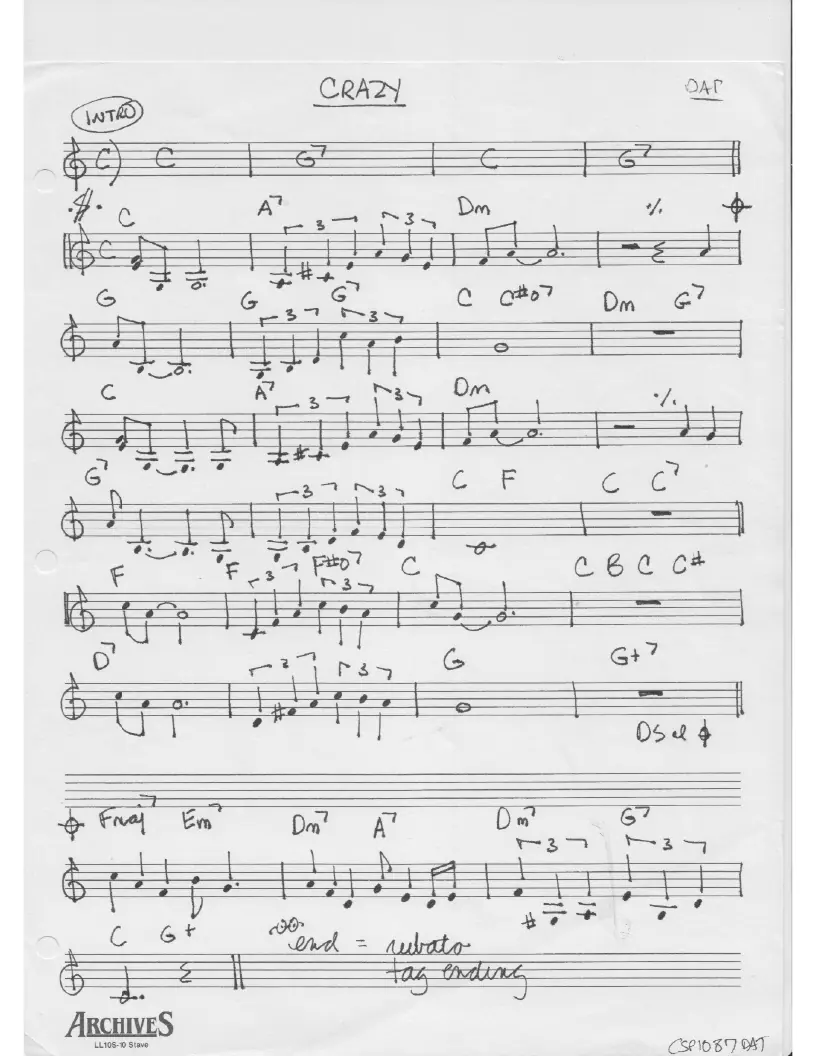
Crazy

Crazy

Crazy is a ballad composed by Willie Nelson. It has been recorded by several artists, most notably by Patsy Cline, whose version was a #2 country hit in 1962. Partly due to the genre-blending nature of the song, it has been covered by dozens of artists in several genres over the years; nevertheless, the song remains inextricably linked with Cline.
Cute

Cute

Written by Neal Hefti (October 29, 1922 – October 11, 2008) was an American jazz trumpeter, composer, tune writer, and arranger. He was perhaps best known for composing the theme music for the Batman television series of the 1960s, and for scoring the 1968 film The Odd Couple and the subsequent TV series of the same name.
Danny Boy

Danny Boy

Danny Boy is a ballad written by Frederic Weatherly and usually set to the tune of the "Londonderry Air". It is most closely associated with Irish communities. The words to "Danny Boy" were written by English lawyer and lyricist Frederic Weatherly in 1910.
Days Of Wine And Roses

Days Of Wine And Roses

Days of Wine and Roses is a popular song, from the 1962 movie of the same name. The music was written by Henry Mancini with lyrics by Johnny Mercer. They received the Academy Award for Best Original Song for their work. In 2004 it finished at #39 in AFI's 100 Years...100 Songs survey of top tunes in American cinema.
Desafinado

Desafinado

Desafinado, a Portuguese word (usually rendered into English as "Out of Tune", or as "Off Key"), is the title of a bossa nova song composed by Antônio Carlos Jobim with lyrics (in Portuguese) by Newton Mendonça.. The English language lyrics were written by Jon Hendricks and "Jessie Cavanaugh" (a pseudonym used by The Richmond Organisation). Another English lyric, more closely based on the original Portuguese lyric (but not a translation) was written by Gene Lees, and appears on some recordings as well.
Don't Get Around Much Anymore

Don't Get Around Much Anymore

Don't Get Around Much Anymore is a jazz standard with music by Duke Ellington and lyrics by Bob Russell. The tune was originally titled "Never No Lament" and was first recorded by Ellington in 1940 as a big band instrumental. Russell's lyrics and the new title were added in 1942.
Donna Lee

Donna Lee

Donna Lee is a bebop jazz standard attributed to Charlie Parker, although Miles Davis has also claimed authorship. Written in A-flat, it is based on the chord changes of the jazz standard "(Back Home Again in) Indiana". Beginning with an unusual half-bar rest, "Donna Lee" is a very complex, fast-moving chart with a compositional style based on four-note groups over each change.

Eleanor Rigby

Eleanor Rigby

Eleanor Rigby is a song by The Beatles, originally released on the 1966 album Revolver. The song was primarily written by Paul McCartney, although in an interview conducted by Playboy magazine in 1980, John Lennon claimed that "the first verse was his and the rest are basically mine." Pete Shotton, a close friend of Lennon who was present at the time, said "Though John (whose memory could be extremely erratic) was to take credit, in one of his last interviews, for most of the lyrics, my own recollection is that 'Eleanor Rigby' was one 'Lennon-McCartney' classic in which John's contribution was virtually nil."
Embraceable You

Embraceable You

Embraceable You is a popular jazz song, with music by George Gershwin and lyrics by Ira Gershwin. The song was originally written in 1928 for an unpublished operetta named East Is West. It was eventually published in 1930 and included in the Broadway musical Girl Crazy where it was performed by Ginger Rogers in a song and dance routine choreographed by Fred Astaire. Billie Holiday's 1944 recording was inducted into the Grammy Hall of Fame in 2005.
Every Breath You Take

Every Breath You Take

Every Breath You Take is a song by English rock band The Police from their 1983 album Synchronicity. Written by Sting, the single was the biggest hit of 1983, topping the Billboard Hot 100 singles chart for eight weeks (the band's only number-one hit on that chart), and the UK Singles Chart for four weeks. It also topped the Billboard Top Tracks chart for nine weeks.
Feliz Navidad

Feliz Navidad

Feliz Navidad is a Christmas song written in 1970 by the Puerto Rican singer-songwriter José Feliciano. With its simple Spanish chorus (the traditional Christmas/New Year greeting, "Feliz Navidad, próspero año y felicidad" meaning "Merry Christmas, a prosperous year and happiness") and equally simple English verse "I wanna wish you a Merry Christmas from the bottom of my heart", it has become a classic Christmas pop song in the United States, throughout the Spanish-speaking world and internationally.
Finding Love

Finding Love

Original song by Curt Sheller. This is one of the first songs that I wrote where I actually wrote it down and recorded it.
Five Foot Two, Eyes of Blue

Five Foot Two, Eyes of Blue

"Has Anybody Seen My Girl? (Five Foot Two, Eyes of Blue)" is an American popular song that achieved its greatest popularity in the 1920s. It is sometimes known simply as "Has Anybody Seen My Girl?" and sometimes simply as "Five Foot Two, Eyes of Blue"; the 1925 Leo Feist, Inc. sheet music gives both of these.
Fly Me to the Moon

Fly Me to the Moon

Fly Me to the Moon is a popular standard song written by Bart Howard in 1954. It was titled originally “In Other Words”, and was introduced by Felicia Sanders in cabarets. The song became known popularly as “Fly Me to the Moon” from its first line, and after a few years the publishers changed the title to that officially.
Fm Blues

Fm Blues

A standard 12 bar blues in Fm.

Georgia

Georgia

Georgia on My Mind is a 1930 song written by Hoagy Carmichael and Stuart Gorrell and first recorded that year. It has often been associated with Ray Charles, a native of the U.S. state of Georgia, who recorded it for his 1960 album The Genius Hits the Road. In 1979, the State of Georgia designated Ray Charles's version the official state song.
Giant Steps

Giant Steps

Giant Steps is a jazz composition by John Coltrane, first appearing as the first track on the album of the same name (1960). The composition is a milestone in jazz, given the difficulty of improvising its rapid progression of chord changes that progress through three keys, shifted by major thirds, creating an augmented triad. The song title comes from the relatively giant leaps between the roots of consecutive chords.
Girl From Ipanema

Girl From Ipanema

The Girl from Ipanema (Garota de Ipanema) is an essential jazz standard that every jazz musician should know. The A sections chord progression, basically a I II7 II V is functionally the same as Take the A Train, Jersey Bounce, Desafinado and a few others.
God Bless This Child

God Bless This Child

God Bless the Child is a song written by Billie Holiday and Arthur Herzog Jr. in 1939. It was first recorded on May 9, 1941 and released by the Okeh Records in 1942.
Happy Birthday

Happy Birthday

Happy Birthday to You, also known more simply as Happy Birthday, is a song that is traditionally sung to celebrate the anniversary of a person's birth. According to the 1998 Guinness Book of World Records, "Happy Birthday to You" is the most recognized song in the English language, followed by "For He's a Jolly Good Fellow" and "Auld Lang Syne".
Happy Together

Happy Together

"Happy Together" is a song written by Garry Bonner and Alan Gordon and recorded by American rock band the Turtles. It was released as a single, b/w "Like the Seasons", in January 1967, and peaked at number one on the US Billboard Hot 100, becoming the band's first and only chart-topper there. The song also reached the top 20 in diverse countries, including number 2 in Canada and number 12 in the UK. It was later included on their third studio album, Happy Together (1967).
Have You Meet Miss Jones

Have You Meet Miss Jones

Have You Met Miss Jones? is a popular song that was written for the musical comedy, I'd Rather Be Right. The music was written by Richard Rodgers and the lyrics by Lorenz Hart. The song was published in 1937. The song's bridge, featuring key motion by major thirds, may have served as an inspiration to John Coltrane in the development of "Coltrane changes".

Heat Wave

Heat Wave

Heat Wave is a 1963 hit single by Holland-Dozier-Holland made popular by Motown girl group Martha and the Vandellas on the Gordy (Motown) label and later by Rock vocalist Linda Ronstadt from her Platinum-selling 1975 album Prisoner in Disguise.
Hello Dolly, Mame, Cabaret Medley

Hello Dolly, Mame, Cabaret Medley

A medley of three popular show / broadway songs.
Here's that Rainy Day

Here's that Rainy Day

Here's That Rainy Day is a popular song with music by Jimmy Van Heusen and lyrics by Johnny Burke, published in 1953. It was introduced by Dolores Gray in the Broadway musical Carnival in Flanders.
Hey, Good Lookin

Hey, Good Lookin

Hey, Good Lookin' is a song created and recorded by Hank Williams as a variation of a song of the same name, similar lyrics, and similar melody written by Cole Porter in 1942. Williams version was inducted into the Grammy Hall of Fame in 2001. Since its original 1951 recording it has been covered by a variety of artists.
Hide Away

Hide Away

The Freddie King Blues classic arranged for C Tuning Ukulele and capturing the classic licks.
How High the Moon

How High the Moon

How High the Moon is a jazz standard with lyrics by Nancy Hamilton and music by Morgan Lewis. It was first featured in the 1940 Broadway revue Two for the Show, where it was sung by Alfred Drake and Frances Comstock.
How Insensitive

How Insensitive

Insensatez (usually translated toHow Insensitive in English, although the Portuguese word really means 'absurdity' or 'folly') is a bossa nova jazz standard composed by Antonio Carlos Jobim, loosely based on Frédéric Chopin's Prelude No.4 with lyrics by Vinícius de Moraes. The English lyrics were written by Norman Gimbel.
I'll Remember April

I'll Remember April

I’ll Remember April was written by Gene de Paul with the lyrics by Patricia Johnston and Don Raye. The song was published in 1942. It was once sung by Judy Garland. The song debuted in the 1942 Abbott and Costello comedy Ride 'em Cowboy, sung by Dick Foran.
I'm A Believer

I'm A Believer

"I'm a Believer" is a song written by Neil Diamond and recorded by the Monkees in 1966 with the lead vocals by Micky Dolenz. The single, produced by Jeff Barry, hit the number-one spot on the U.S. Billboard Hot 100 chart for the week ending December 31, 1966, and remained there for seven weeks becoming the last No. 1 hit of 1966 and the biggest-selling single for all of 1967.
Inspector Gadget

Inspector Gadget

Inspector Gadget is an animated television series about a clumsy, absent-minded, and oblivious detective, Inspector Gadget, who is a cyborg with various "gadgets" built into his anatomy.

Irish Washerwoman

Irish Washerwoman

The Irish Washerwoman is a traditional Irish jig whose melody is familiar to many people in the British Isles and North America. It repeats its refrain several times, sometimes by gradually increasing in tempo until being played very fast before coming to a sudden stop. The tune has lyrics, but is typically rendered as an instrumental. It is one of the melodies played when Scottish highland dancers dance a Scottish dance to the tune of an Irish Jig.
Jingle Bells

Jingle Bells

"Jingle Bells" is one of the best-known and most commonly sung American songs in the world. It was written by James Lord Pierpont (1822–1893) and published under the title "The One Horse Open Sleigh" in the autumn of 1857.
Jordu

Jordu

Jordu is a jazz standard written by Irving "Duke" Jordan in 1953. This song was first made popular by Clifford Brown and Max Roach, but many other jazz musicians have performed or recorded renditions of it, including Stan Getz, Chet Baker, and Charlie Byrd.

Joy Spring

Joy Spring

Clifford Brown (October 30, 1930 – June 26, 1956), aka "Brownie," was an influential and highly rated American jazz trumpeter.
Just the Way Your Are

Just the Way Your Are

Just the Way You Are is a song by Billy Joel; it is the third track from his album The Stranger (1977). It became both Joel's first US Top 10 and UK Top 20 single (reaching #3 and #19 respectively), as well as Joel's first gold single in the US. The song also topped the Billboard Easy Listening Chart for the entire month of January 1978.
Kelle Belle

Kelle Belle

An original jazz blues by Curt Sheller for his youngest daughter Kelly from his 2002 "Midnight at the Jazz Cafe" CD.
Lady Is A Tramp

Lady Is A Tramp

The Lady Is a Tramp is a show tune from the 1937 Rodgers and Hart musical Babes in Arms in which it was introduced by former child star Mitzi Green. This song is a spoof of New York high society and its strict etiquette (the first line of the verse is "I get too hungry for dinner at eight..."). It has become a popular standard.
Light My Fire

Light My Fire

Light My Fire is a song by The Doors which was recorded in August 1966 and released the first week of January 1967 on the Doors' debut album. Released as a single in April, it spent three weeks at number one on the Billboard Hot 100 chart, and one week on the Cash Box Top 100, nearly a year after its recording. A year later, it re-entered the Billboard Hot 100 in 1968 following the success of Jose Feliciano's version of the song, peaking at number 87.
London Bridge

London Bridge

Presented here in two keys. The key of C Major in the open position and the key of D Major in position II. This is a simple melody that can be used as a reference fingering and position with the Playing by Ear series of lessons. London Bridge Is Falling Down (also known as My Fair Lady or simply London Bridge) is a traditional nursery rhyme and singing game, which is found in different versions all over the world. It deals with the depredations of London Bridge and attempts, realistic or fanciful, to repair it.
Lullaby of Birdland

Lullaby of Birdland

Lullaby of Birdland is a 1952 popular song with music by George Shearing and lyrics by George David Weiss under the pseudonym "B. Y. Forster" in order to circumvent the rule that ASCAP and BMI composers could not collaborate. The song has become a jazz standard.
Maui Hawai'ian Sup'pa Man

Maui Hawai'ian Sup'pa Man

Maui Hawai'ian Sup'pa Man by Del Beazley & Mel Amina immortalizes Maui, the mischievous demi-god and the great hero of Polynesian/Hawaiian folklore in song.
Mele Kalikimaka

Mele Kalikimaka

Mele Kalikimaka (pronounced [ˈmɛlɛ kəˌlikiˈmɐkə]) is a Hawaiian-themed Christmas song written in 1949 by Robert Alex Anderson. A chord chart with lyrics in the format typically used for ukulele beginner groups. A classis you can start playing around end of Novemeber into January. The season of holiday songs.
Michelle

Michelle

Michelle is a love ballad by the Beatles, composed principally by Paul McCartney, with the middle eight co-written with John Lennon. It is featured on their Rubber Soul album, released in December 1965. The song is unusual among Beatles recordings in that some of its lead vocals are in French, although "Paperback Writer" contains the backing vocals "Frère Jacques". "Michelle" won the Grammy Award for Song of the Year in 1967 and has since become one of the best known and most often recorded of all Beatles songs.

Midnight Cafe

Midnight Cafe

An original jazz blues by Curt Sheller from The Curt Sheller Trio 2002 "Midnight at the Jazz Cafe" CD using more contemporary 4-part chords.
Misty

Misty

Misty  is a jazz standard written in 1954 by the pianist Erroll Garner. Originally composed as an instrumental following the traditional 32-bar format, the tune later had lyrics by Johnny Burke and became the signature song of Johnny Mathis, reaching #12 on the U.S. Pop Singles chart in 1959. It has been covered numerous times, perhaps most notably by Ella Fitzgerald, Sarah Vaughan (1959), Frank Sinatra and Earl Grant (1961), Lloyd Price (1963), and also by Ray Stevens (1975) as a country song.
Moanin

Moanin

Moanin'is a composition by Bobby Timmons, first recorded by Art Blakey's band on the 1958 album of the same title.
Moon River

Moon River

Moon River is a song composed by Johnny Mercer (lyrics) and Henry Mancini (music) in 1961, for whom it won that year's Academy Award for Best Original Song. It was originally sung in the movie Breakfast at Tiffany's by Audrey Hepburn, although it has been covered by many other artists. The song also won the 1962 Grammy Award for Record of the Year.
Moondance

Moondance

Moondance is a popular song written by Northern Irish singer-songwriter an Morrison and is the title song on his 1970 album Moondance. Morrison did not release the song as a single until November 1977, seven and a half years after the album was released. It reached the Billboard Hot 100, charting at #92. The single's B-side, "Cold Wind in August" had been released in the same year, on his latest album at the time, A Period of Transition.
Moonlight In Vermont

Moonlight In Vermont

Moonlight in Vermont is a popular song about the U.S. state of Vermont, written by John Blackburn (lyrics) and Karl Suessdorf (music) and published in 1944. The lyrics are unusual in that they do not rhyme. John Blackburn, the lyricist, has been quoted as saying, "After completing the first 12 bars of the lyric, I realized there was no rhyme and then said to Karl, 'Let’s follow the pattern of no rhyme throughout the song. It seemed right.' The lyrics are also unconventional in that each verse (not counting the bridge) is a haiku.
Moonlight Serenade

Moonlight Serenade

Moonlight Serenade is an American swing ballad composed by Glenn Miller with subsequent lyrics by Mitchell Parish. It was an immediate phenomenon when released in May 1939 as an instrumental arrangement, though it had been adopted and performed as Miller's signature tune as early as 1938, even before it had been given the name "Moonlight Serenade." In 1991, Miller's recording of "Moonlight Serenade" was inducted into the Grammy Hall of Fame.
My Favorite Things

My Favorite Things

My Favorite Things is a show tune from the 1959 Rodgers and Hammerstein musical The Sound of Music. The song was first introduced by Mary Martin in the original Broadway production, and sung by Julie Andrews in the 1965 film adaptation.
My Funny Valentine

My Funny Valentine

My Funny Valentine is a show tune from the 1937 Richard Rodgers and Lorenz Hart musical Babes in Arms in which it was introduced by former child star Mitzi Green. Recorded by Chet Baker, Frank Sinatra, Ella Fitzgerald, Andy Williams, Miles Davis, Nico and Chaka Khan. The song is a popular jazz standard, appearing on over 1300 albums performed by over 600 artists.
Norwegian Wood

Norwegian Wood

"Norwegian Wood (This Bird Has Flown)" is a song by the Beatles from their 1965 album Rubber Soul. It was written mainly by John Lennon and credited to the Lennon–McCartney songwriting partnership. Influenced by the introspective lyrics of Bob Dylan, the song is considered a milestone in the Beatles' development as songwriters. The track features a sitar part, played by George Harrison, that marked the first appearance of the Indian string instrument on a Western rock recording. The song was a number 1 hit in Australia when released on a single there in 1966, coupled with "Nowhere Man".
Ob-La-Di, Ob-La-Da

Ob-La-Di, Ob-La-Da

Ob-La-Di, Ob-La-Da is a song credited to Lennon–McCartney, but written by Paul McCartney and released by The Beatles on their 1968 album The Beatles ( also referred to as The White Album ). It was released as a single that same year in many countries, but not in the United Kingdom, nor in the United States until 1976.
Oh! Susanna

Oh! Susanna

Oh! Susanna is a minstrel song by Stephen Foster (1826-1864). It was published by W. C. Peters & Co. in Cincinnati, Ohio in 1848. The song was introduced by a local quintette at a concert in Andrews' Eagle Ice Cream Saloon in Pittsburgh, Pennsylvania on September 11, 1847. Foster was said to have written the song for his men's social club.
Old MacDonald Had a Farm

Old MacDonald Had a Farm

Old MacDonald Had a Farm is a children's song and nursery rhyme about a farmer named MacDonald (or McDonald, Macdonald) and the various animals he keeps on his farm. Each verse of the song changes the name of the animal and its respective noise. In many versions, the song is cumulative, with the noises from all the earlier verses added to each subsequent verse. It has a Roud Folk Song Index number of 745.
On Broadway

On Broadway

"On Broadway" is a song written by Barry Mann and Cynthia Weil in collaboration with the team of Jerry Leiber and Mike Stoller. Weil and Mann were based at Aldon Music, located at 1650 Broadway, New York City, and the song as written by Mann/Weil was originally recorded by the Cookies (although the Crystals' version beat them to release) and featured an upbeat lyric in which the protagonist is still on her way to Broadway and sings "I got to get there soon, or I'll just die." Additionally the melody was in compound time and the backing riff modulated between the root and the minor 2nd.
On Green Dolphin Street

On Green Dolphin Street

On Green Dolphin Street (originally entitled "Green Dolphin Street") is a 1947 popular song composed by Bronisław Kaper with lyrics by Ned Washington. The song, composed for the film Green Dolphin Street (which was based on a 1944 novel of the same name by Elizabeth Goudge), went on to become a jazz standard after being recorded by Miles Davis in 1958
Pink Panther

Pink Panther

The Pink Panther Theme is an instrumental composition by Henry Mancini written as the theme for the 1963 film The Pink Panther and subsequently nominated for the 1964 Academy Award for Original Music Score. The cartoon character created for the opening credits of the movie by David DePatie and Friz Freleng was animated in time to the tune. The soloist of this song was Plas Johnson.
Pony Express

Pony Express

An original, bluegrass inspired song by Curt Sheller in the key of C. Originally inspired by Tommy Emmanuel's song Tall Fiddler. The tune has evolved over the years as a bluegrass improvisational vehicle.
QuickStart Aeolian Playalong Tracks

QuickStart Aeolian Playalong Tracks

The QuickStart Aeolian Play-along Tracks play-along tracks from the QuickStart Chord Progressions for Lead Guitar. These tracks are suitable for any instruments.
QuickStart Blues Playalong Tracks

QuickStart Blues Playalong Tracks

The QuickStart Blues Play-along Tracks from the QuickStart Chord Progressions for Lead Guitar. These tracks are suitable for any instruments. The Blues scale is also known by as: Minor Pentatonic and can be though of as a sub set of the Natural Minor / Aeolian scale.
QuickStart Dorian Playalong Tracks

QuickStart Dorian Playalong Tracks

The "QuickStart Ionian Play-along Tracks" Dorian play-along tracks from the QuickStart Chord Progressions for Lead Guitar.
QuickStart Ionian Playalong Tracks

QuickStart Ionian Playalong Tracks

The "QuickStart Ionian Play-along Tracks" play-along tracks from the QuickStart Chord Progressions for Lead Guitar. The Ionian scale is also known by it's traditional name: Major.
QuickStart Mixolydian Playalong Tracks

QuickStart Mixolydian Playalong Tracks

The QuickStart Mixolydian Play-along Tracks play-along tracks from the QuickStart Chord Progressions for Lead Guitar. These tracks are suitable for any instruments. The Mixolydian scale is also known by it's traditional name: Dominant.
QuickStart Pentatonic Playalong Tracks

QuickStart Pentatonic Playalong Tracks

The QuickStart Pentatonic Play-along Tracks from the QuickStart Chord Progressions for Lead Guitar. These tracks are suitable for any instruments.
Red River Valley

Red River Valley

Red River Valley is a folk song and cowboy music standard of controversial origins that has gone by different names—e.g., "Cowboy Love Song", "Bright Sherman Valley", "Bright Laurel Valley", "In the Bright Mohawk Valley", and "Bright Little Valley" — depending on where it has been sung.
Road Song

Road Song

Road Song by jazz guitarist Wes Montgomery, released in 1968. It reached number one on the Billboard Jazz album chart and number 39 on the R&B chart. It also reached number 94 on the Billboard 200. It was his final recording before his death of a heart attack on June 15, 1968.
Rockin' Around the Christmas Tree

Rockin' Around the Christmas Tree

Rockin' Around the Christmas Tree is a Christmas song written by Johnny Marks and recorded by Brenda Lee in 1958 on Decca. Despite her mature-sounding voice, Lee recorded this song when she was only thirteen years old. The song's declaration of a rock and roll sound notwithstanding, its instrumentation also fits the country music genre, which Brenda Lee more fully embraced as her career evolved. The recording features Grady Martin's ringing guitar and Boots Randolph's swinging solo sax break. The song is written in the key of A-flat major.
Row, Row, Row Your Boat

Row, Row, Row Your Boat

Row, Row, Row Your Boat is an English language nursery rhyme, and a popular childrens song, often sung as a round. Presented here in two keys. The key of C Major in the open position and the key of D Major in position II. This is a simple melody that can be used as a reference fingering and position with the Playing by Ear series of lessons.
Sailors Hornpipe

Sailors Hornpipe

The Sailor's Hornpipe (also known as The College Hornpipe and Jack's the Lad) is a traditional hornpipe melody. The tune was played in the animated Popeye cartoons beginning in the 1930s, usually as the first part of the opening credits theme, which then segued into an instrumental of "I'm Popeye the Sailor Man".
Satin Doll

Satin Doll

Satin Doll - is a jazz standard written by Duke Ellington and Billy Strayhorn with lyrics by Johnny Mercer. Written in 1953, the song has been recorded countless times, by such artists as Ella Fitzgerald, Frank Sinatra, 101 Strings, and Nancy Wilson. Its chord progression is well known for its unusual use of chords and opening with a ii-V-I turnaround.
Scrapple The Apple

Scrapple The Apple

Scrapple from the Apple is a bebop composition by Charlie Parker written in 1947, commonly recognized today as a jazz standard, written in F major. The song borrows its chord progression from "Honeysuckle Rose", a common practice for Parker, as he based many of his successful tunes over already well-known chord changes. While the A section is based on "Honeysuckle Rose", the B section or "middle eight" comes from the rhythm changes, which are based on George Gershwin's "I Got Rhythm".
Shadow of Your Smile

Shadow of Your Smile

The Shadow of Your Smile, also known as "Love Theme from The Sandpiper", is a popular song. The music was written by Johnny Mandel with the lyrics written by Paul Francis Webster.[1] The song was introduced in the 1965 film The Sandpiper,[1] with a trumpet solo by Jack Sheldon and later became a minor hit for Tony Bennett (Johnny Mandel arranged and conducted his version as well). It won the Grammy Award for Song of the Year and the Academy Award for Best Original Song.
Shiny Stockings

Shiny Stockings

A melody and chord arrangement of the Frank Foster song for ukulele in G Tuning with a low "D" tuning "D G B E".
Silent Night

Silent Night

Silent Night (German: Stille Nacht, heilige Nacht) is a popular Christmas carol, composed in 1818 by Franz Xaver Gruber to lyrics by Joseph Mohr in the small town of Oberndorf bei Salzburg, Austria. It was declared an intangible cultural heritage by UNESCO in March 2011. The song has been recorded by a large number of singers from every music genre.
Soft Winds

Soft Winds

Soft Winds is a 1940 jazz standard composed by Benny Goodman, with lyrics by Fred Royal. Charlie Parker performed it regularly in the 1940s. In 1961, jazz harpist Dorothy Ashby released an album of the same name with the song as the title track, recorded at the Plaza Sound Studios in New York City. Canadian jazz pianist Oscar Peterson regularly performed the song in the 1970s and 1980s with the Oscar Peterson Quartet. Chet Baker, Dinah Washington and numerous others recorded it. The theme song to the British dating show Blind Date closely resembles the standard but Goodman is not credited.
Solar

Solar

Solar is a musical composition attributed to Miles Davis on the studio album Walkin' (1954), considered a modern jazz standard. The tune has been played and recorded by many musicians including his former bandmates/collaborators Lee Konitz, Bill Evans, Dave Holland, Keith Jarrett or Jack DeJohnette.
Someday My Prince Will Come

Someday My Prince Will Come

Some Day My Prince Will Come is a popular song from Walt Disney's 1937 animated movie Snow White and the Seven Dwarfs. It was written by Larry Morey (lyrics) & Frank Churchill (music), and performed by Adriana Caselotti (Snow White's voice in the movie). It was also featured in the 1979 stage adaptation of the 1937 animated musical movie. In AFI's 100 Years...100 Songs, it was ranked as the 19th greatest film song of all time.
Somewhere Over the Rainbow

Somewhere Over the Rainbow

Over the Rainbow (often referred to as "Somewhere Over the Rainbow") is a classic ballad song with music by Harold Arlen and lyrics by E.Y. Harburg. It was written for the movie The Wizard of Oz, and was sung by Judy Garland in that movie. (This is a re-print from the Ukulele magazine)
Spain

Spain

Spain is an instrumental jazz fusion composition by jazz pianist and composer Chick Corea. It is probably Corea's most prominent piece, and some would consider it a modern jazz standard. Spain was composed in 1971 and appeared in its original (and most well-known) rendition on the album Light as a Feather, with performances by Corea (Rhodes electric piano), Airto Moreira (drums), Flora Purim (vocals and percussion), Stanley Clarke (bass), and Joe Farrell (flute). It has been recorded in several versions, by Corea himself as well as by other artists.
Spanish Eyes

Spanish Eyes

The earliest vocal version was recorded by Freddy Quinn in 1965 titled as Spanish Eyes; soon after its release, the single was pulled from the market when Polydor (Quinn's label) and Decca (Kaempfert's label) threatened to sue, claiming ownership of the song. A version by Sergio Franchi with lyrics by Charles Singleton was recorded in late 1965 titled "Moon Over Naples", but did not chart. It would become a hit single in 1966 for Al Martino when a new set of lyrics were written by composer Eddie Snyder, now titled "Spanish Eyes".
St. James Infirmary Blues

St. James Infirmary Blues

"St. James Infirmary Blues" is an American blues song of uncertain origin. Louis Armstrong made the song famous in his 1928 recording on which Don Redman was credited as composer; later releases gave the name Joe Primrose, a pseudonym of Irving Mills. The melody is 8 bars long, unlike songs in the classic blues genre, where there are 12 bars. It is in a minor key, and has a 4/4 time signature, but has also been played in 3/4.
St. Thomas

St. Thomas

St. Thomas - This is perhaps the most recognizable instrumental in the repertoire of American jazz tenor saxophonist Sonny Rollins, who is usually credited as its composer. However, it is actually based on a traditional nursery song from the Virgin Islands, which Rollins' mother sang to him when he was a child. As such, it has a distinct Caribbean vibe to it.
Stairway to Heaven

Stairway to Heaven

Stairway to Heaven is a song by the English rock band Led Zeppelin, released in late 1971. It was composed by guitarist Jimmy Page and vocalist Robert Plant for the band's untitled fourth studio album (usually referred to as Led Zeppelin IV). The song, running eight minutes and two seconds, is composed of several sections, which increase in tempo and volume as the song progresses. The song begins as a slow acoustic-based folk song accompanied by pan flutes (recorder per Jimmy Page), before electric instrumentation is introduced.
Star Spangled Banner

Star Spangled Banner

The Star-Spangled Banner is the national anthem of the United States of America. The lyrics come from a poem written in 1814 by Francis Scott Key, a then 35-year-old amateur poet who wrote Defence of Fort McHenry after seeing the bombardment of Fort McHenry at Baltimore, Maryland, by Royal Navy ships in Chesapeake Bay during the War of 1812.
Summer Samba

Summer Samba

Summer Samba (also known as So Nice or its original Portuguese title, "Samba de Verão") is a 1964 bossa nova song by Brazilian composer Marcos Valle, with English-language lyrics by Norman Gimbel; the original Portuguese lyrics came from Paulo Sérgio Valle, brother to the composer.
Summers Dawn

Summers Dawn

Ukulele leadsheet for this orginal composition from The Curt Sheller Jazz Trio, How About More Uke CD.
Summertime

Summertime

Summertime is an aria composed in 1934 by George Gershwin for the 1935 opera Porgy and Bess. The lyrics are by DuBose Heyward, the author of the novel Porgy on which the opera was based, although the song is also co-credited to Ira Gershwin by ASCAP.
Sunny

Sunny

Sunny is the name of a song written by Bobby Hebb. It is one of the most covered popular songs, with hundreds of versions released. BMI rates "Sunny" number 25 in its "Top 100 songs of the century".
Super Mario Bros - Main Theme

Super Mario Bros - Main Theme

Super Mario Bros is a 1985 platform video game developed by Nintendo, published for the Nintendo Entertainment System as a sequel to the 1983 game Mario Bros.
Super Mario Bros - Underwater Theme

Super Mario Bros - Underwater Theme

Super Mario Bros is a 1985 platform video game developed by Nintendo, published for the Nintendo Entertainment System as a sequel to the 1983 game Mario Bros.
Super Mario Bros - Underworld Theme

Super Mario Bros - Underworld Theme

Super Mario Bros is a 1985 platform video game developed by Nintendo, published for the Nintendo Entertainment System as a sequel to the 1983 game Mario Bros.
Surf

Surf

Surf is mainly a 1 6 4 5 chord progression like a lot of songs written in the fifties. In the key of C the chords are: C Am F G7. The bridge is Dm G7 Dm D7 G7.
Sway

Sway

Sway is the English version of "¿Quién será?", a 1953 mambo song by Mexican composer and bandleader Pablo Beltrán Ruiz. In 1954 the English lyrics were written by Norman Gimbel and recorded by Dean Martin. The Dean Martin recording reached number fifteen on the Billboard magazine best-seller chart and number six on the UK chart.
Take Five

Take Five

Take Five is a jazz piece written by Paul Desmond and performed by The Dave Brubeck Quartet on their 1959 album Time Out. Recorded at Columbia's 30th Street Studios in New York City on June 25, July 1, and August 18, 1959, this piece became one of the group's best-known records. It is famous for its distinctive catchy saxophone melody; imaginative, jolting drum solo; and use of the unusual quintuple (5/4) time, from which its name is derived.
Take the A Train

Take the A Train

Take the 'A' Train is a jazz standard by Billy Strayhorn that was the signature tune of the Duke Ellington orchestra. It is arguably the most famous of the many compositions to emerge from the collaboration of Ellington and Strayhorn.
Tenderly

Tenderly

"Tenderly" is a popular song published in 1946 with music by Walter Gross and lyrics by Jack Lawrence. Written in the key of E♭ as a waltz in 3/4 time, it has since been performed in 4/4 and has become a popular jazz standard.
That's Right

That's Right

From the 1996 George Benson album of the same name, "That's Right".
The Lion Sleeps Tonight

The Lion Sleeps Tonight

The Lion Sleeps Tonight, also known as "Wimoweh", "Wimba Way" or "Awimbawe", is a song written and recorded originally by Solomon Linda with the Evening Birds for the South African Gallo Record Company in 1939, under the title "Mbube". Composed in Zulu, it was adapted and covered internationally by many 1950s pop and folk revival artists, including Pete Seeger, the Weavers, Jimmy Dorsey, Yma Sumac, Miriam Makeba and the Kingston Trio.
There Will Never Be Another You

There Will Never Be Another You

There Will Never Be Another You is a popular song with music by Harry Warren and lyrics by Mack Gordon for the Twentieth Century Fox musical Iceland (1942) starring Sonja Henie. The song was published in 1942, and is one of the most widely known and performed standards of the jazz repertoire.
This Land - Handwritten Melody and Chord Leadsheet

This Land - Handwritten Melody and Chord Leadsheet

This Land is a song by American blues rock artist Gary Clark Jr., from his fourth studio album of the same name. The song, released on January 10, 2019, as the album's lead single, through Warner Bros. Records with official music video released the same day. "This Land" received positive reviews from music critics, and won both Best Rock Performance and Best Rock Song at the 62nd Annual Grammy Awards.
This Old Man

This Old Man

This Old Man is an English language children's song, counting and nursery rhyme Presented here in two keys. The key of C Major in the open position and the key of D Major in position II. This is a simple melody that can be used as a reference fingering and position with the Playing by Ear series of lessons.
This Train

This Train

This Train (is Bound for Glory) by Woody Guthrie.
Three Blind Mice

Three Blind Mice

Three Blind Mice is an English nursery rhyme and musical round. Presented here in two keys. The key of C Major in the open position and the key of D Major in position II. This is a simple melody that can be used as a reference fingering and position with the Playing by Ear series of lessons.
Tweaking the Daily Ukulele a.k.a, the Yellow Book

Tweaking the Daily Ukulele a.k.a, the Yellow Book

Jim Beloff has put together a great book, The Daily Ukulele, 365 Songs for Better Living. This book know as the "Yellow Book" is great for ukulele jam sessions. Here are some of the changes that I've made to the Daily Uke book affectionately know as the Yellow Book. This book is one of the go to books for ukulele jams. However, there a few tweaks and changes that I point out at our jams. I'll use this song / lesson to document them for your own jams and ukulele groups.

Walk Don't Run

Walk Don't Run

Walk Don't Run is a rock'n'roll instrumental composition written and first performed by Johnny Smith in 1955. It became a hit single in the autumn of 1960 for the Seattle-based instrumental rock band The Ventures. In the UK, the tune was covered by the John Barry Seven, whose version, while only peaking at #11 on the Record Retailer chart, compared with the Ventures' #8, outcharted them to reach the Top 10 on other UK charts such as that of the NME.
Wave

Wave

Wave (also known as "Vou Te Contar" in Portuguese) is a song written by Antonio Carlos Jobim. Recorded as an instrumental on Jobim's 1967 album of the same name, English lyrics were added by Jobim for a November 11, 1969 recording by Frank Sinatra, released on his 1970 album Sinatra & Company.
West Coast Blues

West Coast Blues

A jazz classic by the late jazz guitarist Wes Montgomery. Wes is widely considered one of the major jazz guitarists, emerging after such seminal figures as Django Reinhardt and Charlie Christian and influencing countless others, including George Benson, Kenny Burrell, Grant Green, Jimi Hendrix, Steve Howe, Russell Malone, Pat Martino, Pat Metheny, Randy Napoleon, and Emily Remler.
What What Happens

What What Happens

Written by Michel Jean Legrand (born 24 February 1932) is a French musical composer, arranger, conductor, and pianist. Legrand is a prolific composer, having written over 200 film and television scores in addition to many memorable songs. He is best known for his often haunting film music and scores, such as The Umbrellas of Cherbourg (1964) and The Thomas Crown Affair (1968) featuring the song "The Windmills of Your Mind" for which he won his first Academy Award.
What's New?

What's New?

What's New? is a 1939 popular song composed by Bob Haggart, with lyrics by Johnny Burke. It was originally an instrumental tune titled "I'm Free" by Haggart in 1938, when Haggart was a member of Bob Crosby and His Orchestra. The tune was written with a trumpet solo, meant to showcase the talents of band-mate Billy Butterfield. Crosby's orchestra recorded "I'm Free" the same day it was written.
When Sunny Gets Blue

When Sunny Gets Blue

When Sunny Gets Blue is a song written by Marvin Fisher and Jack Segal, which has become a jazz standard. The song was originally recorded by Johnny Mathis and Ray Conniff and his Orchestra in 1956 and became a big hit.
While My Guitar Gently Weeps

While My Guitar Gently Weeps

While My Guitar Gently Weeps is a song written by George Harrison of The Beatles for their double album The Beatles (also known as The White Album). The song was ranked #135 on Rolling Stone's list of the 500 greatest songs of all time and #7 on their list of the 100 greatest guitar songs of all time.
Witchcraft

Witchcraft

Witchcraft is a popular song from 1957 composed by Cy Coleman with lyrics by Carolyn Leigh. It was released as a single by Frank Sinatra, and reached number twenty in the U.S., spending sixteen weeks on the charts.
Yesterday

Yesterday

Yesterday is a song originally recorded by The Beatles for their 1965 album Help!. The song first hit the United Kingdom top 10 three months after the release of Help!. The song remains popular today with more than 1,600 cover versions, one of the most covered songs in the history of recorded music. The song was not released as a single in the UK at the time of its release in the United States, and thus never gained number 1 single status in that country. However, “Yesterday” was voted the best song of the 20th century in a 1999 BBC Radio 2 poll of music experts and listeners.
You Are The Sunshine of My Life

You Are The Sunshine of My Life

You Are the Sunshine of My Life is a 1973 R&B pop single released by Stevie Wonder. The song became Wonder's third #1 single on the Billboard Hot 100 chart and his first #1 on the Easy Listening chart. It won Wonder a Grammy Award for Best Male Pop Vocal Performance. This song was the second single released from the 1972 album entitled Talking Book. The song opened 194 Radio City on 21 October 1974.
You Send Me

You Send Me

You Send Me is a song by American singer-songwriter Sam Cooke, released on September 7, 1957 by Keen Records. Produced by Bumps Blackwell and arranged and conducted by René Hall, the song was the A-side to "Summertime". The song, Cooke's debut single, was a massive commercial success, becoming a number one hit on both Billboar's Rhythm & Blues Records chart and the Billboard Hot 100.
You've Got A Friend In Me

You've Got A Friend In Me

"You've Got a Friend in Me" is a song by Randy Newman. Used as the theme song for the 1995 Disney/Pixar animated film Toy Story, it has since become a major musical component for its sequels, Toy Story 2 (1999), Toy Story 3 (2010) and Toy Story 4 (2019) as well as a musical leitmotif throughout the whole Toy Story franchise. The song was nominated for both the Academy Award for Best Original Song and the Golden Globe Award for Best Original Song, but lost both to "Colors of the Wind" from Disney's Pocahontas.