Learning Ukulele with Curt
The Mighty `Ukulele
My favorite and your favorite instrument — The `Ukulele (from the Hawaiian, OO-koo-LEH-leh), is a light weight, affordable, portable, four stringed (great for our four fingers) instrument with not initial strumming accuracy required and did I mention very low expectations. The Ukulele is the new social instrument for this millennium and IS here to stay this go around.
20 May 2026
- Ukulele Central
- Parts of the Ukulele
- The Ukulele History - 1879 to today
- The Ukulele Timeline
A `Ukulele is:
- Light Weight, Affordable and Portable
- Easy on the Fingers ( Four Strings, Four Fingers )
- Less Need for Strumming Accuracy
- A Low Level of Expectation — so we can get away with a lot.
The music you play can be as simple or complex as you want. The Ukulele is a powerful musical instrument for communication and expression in its own right.
And where else in the musical world can you go, sing and play, and have a blast with your fellow cohorts.
The ukulele offers a wide range of musical possibilities, the music you play/make can be as simple or intricate as you desire. The ukulele is a remarkable instrument and powerful musical instrument for communication in its own right. And, did I mention it's a blast and a lot of fun to play and explore?
In this day and age, the ukulele has become the instrument of choice, firmly establishing its presence. The initial frenzy has subsided, and it is here to stay. Embrace this fact and embark on an exhilarating journey of ukulele exploration.
When you join, and you should join, a local ukulele gathering, you will discover an incredibly welcoming and supportive community. You'll forge lasting friendships and have an amazing time together.
Parts of the Ukulele
Say hello to my lil` friend.
—Learn your way around your new found friend.
So what's stopping you? Go get Yourself a `Ukulele and get going. You'll discover a life-long friend.
A Ukulele has two nuts, the one on the ukulele, shown above and the person holding it!
The Ukulele History
The Ravenscrag arrived in Hawai'i, 23 August 1879
The `Ukulele's Long 1879 Journey
The Ukulele Timeline
1990s to Today
Virtuoso musicians such as Jake Shimabukuro and James Hill are altering traditional perceptions of ukulele music. As well as singer / songwriters such as Victoria Vox touring the world and spreading the Aloha!.
Checkout UKEtopia!-Adventures in the Ukulele World
by Jim Beloff
Jim's new memoir of his journey and his part of this Third Wave
of ukulele popularity. Little did Jim know when he purchased his first ukulele at the Rose Bowl Flea Market in 1992 and with no ukulele songbook collections on the market—none—just a few vintage instructional books. That he would would be at the forefront of this Third Wave of Ukulele.
The current Third Wave
of the ukulele corresponding to the influence of YouTube and the Internet®.
Check out all the famous people and musicians associated with the ukulele on the Ukulele Musicians Page .
1960s
Can't have a Ukulele timeline without a mention of Tiny Tim
…
In 1959 Herbert Butros Khaury a.k.a., Tiny Tim dropped all his other stage names and performed as "Larry Love, the Singing Canary" at Hubert's Museum and Live Flea Circus in New York City's Times Square. While performing there, he signed with a manager who sent him on auditions throughout the Greenwich Village section of New York, where he performed unpaid amateur gigs, playing the ukulele and singing in his falsetto voice the song which became his signature, "Tiptoe Through the Tulips".
NOTE: Tiny Tim was quite the historian and musical archivist on all the songs he performed and from that era. He even knew the recording dates, personal on the recording, etc…
1950s
Weekly TV host Arthur Godfrey keeps ukuleles in the spotlight.
A shift from the popularity of radio to most households having access to a TV and the second wave of the ukulele craze.
Arthur Godfrey is responsible for selling 9,000,000 Mario Maccaferri plastic ukuleles during the 50s.
1940s
Ukulele craze revived by the solders and sailors returning home from South Pacific after World War II.
This is the start of the Second Wave
of the ukulele corresponding to the influence of TV
1920s
After the Panama Pacific International Exposition Ukuleles all the rage. This corresponds to the popularity and availability of radio in the decade of the 20s to 40s. The First truly fast way of disseminating news, entertainment, and information to a mass audience. This was a big shift in the technology for communication around the world.
This is the First Wave
of the ukulele corresponding to the influence of Radio.
1915
Panama Pacific International Exposition in San Francisco, California USA unveils ukulele to the world. The Panama–Pacific International Exposition (PPIE) was a world's fair held in San Francisco, in the United States, between February 20 and December 4 in 1915. Its ostensible purpose was to celebrate the completion of the Panama Canal, but it was widely seen in the city as an opportunity to showcase its recovery from the 1906 earthquake.
NOTE: Prior the Panama Pacific International Exposition Hawi`ian performers did tour the US to a great reception. However the Ukulele craze really took off at the Hawai`in pavilion as a result of the year long Panama Pacific International Exposition .
Hawai'i, 23 August 1879
Portuguese sailors introduced Hawaiians to small four-stringed instrument that gave rise to the ukulele. King David Kalakaua was influential in the initial rise of popularity of the ukulele.
Among the passengers of the Ravenscrag that arrived in Hawai'i, 23 August 1879, were migrant sugar cane workers, Manuel Nunes, Augusto Dias, Jose do Espirito Santo, and Joao Fernandes, who are credited with introducing the ukulele to Hawaii. This was the second ship of Portuguese immigrants to reach the Islands, having been preceded on 30 September 1878 by the German bark SS Priscilla.
We can count our blessings that the Hawai'ian's weren't introduced to the Accordion or Tuba, the traditional, popular German instruments at the time. Or the Bladder Fiddle, Dudelsack, Hackbrett, Nyckelharpa from previous ships arriving in Honolulu with migrant workers. (Curt — Dodged a musical bullet with that one.)
The Island of Madeira, Portugal
Before 1879 it really started on the /> Island of Madeira, Portugal with the Bargina and /> Machete . Historians believe the machete was introduced in Madeira from Braga as a braguinha and subsequently brought to Hawaii by Portuguese immigrants in the late 19th century as a possible predecessor of the ukulele.
Emigrants from Madeira also influenced the creation of new musical instruments. In the 1880s, the ukulele was created, based on two small guitar-like instruments of Madeiran origin, the cavaquinho and the rajao. The ukulele was introduced to the Hawaiian Islands by Portuguese immigrants from Madeira and Cape Verde. Three immigrants in particular, Madeiran cabinet makers Manuel Nunes, José do Espírito Santo, and Augusto Dias, are generally credited as the first ukulele makers. Two weeks after they disembarked from the SS Ravenscrag in late August 1879, the Hawaiian Gazette reported that Madeira Islanders recently arrived here, have been delighting the people with nightly street concerts.
Each ukulele craze corresponded to a new form a media for disseminating information fast and to a wide audience.
What's next? Some might say that AI is next – AI will be your teacher. And, that is something that Curt is looking into helping you out right here on LearningUkulele.com and Learning Ukulele with Curt. Using it right now to help optimize the site and clean things up.
Good Trade!
Woman is at a uke festival with a lovely soprano ukulele under her arm. Another woman walks up and gazes admiringly at the first woman's uke, at which point the woman holding the uke looks over and says with a smile: got it for my husband. Second woman nods and says, good trade
.
Common Ukulele Sizes
The Four Most Common types of ukuleles include:.
Less common are the sopranino (also called piccolo, bambino, or "pocket uke"), Bass (uBass) , and contrabass ukuleles. The soprano, often called "standard" in Hawaii, is the smallest and was the original size. The concert size was developed in the 1920s as an enhanced soprano, slightly larger and louder with a deeper tone. Shortly thereafter, the tenor was created, having more volume and deeper bass tone. The baritone ( resembling a smaller tenor guitar ) was created in the 1940s, and the contrabass and bass are recent innovations (2010 and 2014, respectively).
Super Tenors, Long Neck ( insert uke size here )
There's a trend of putting the next sized uke's scale length neck uke on a smaller sized body and call it a super
or long neck
so and so ukulele.
It can also simply be the longer baritone 19in scale length neck on a tenor body for a Super Tenor and using C Tuning.
Soprano
Standard
Often called Standard
in Hawaii. This is the size that most people not familiar with the ukulele think of when someone mentions the ukulele.
Standard – this is the size that most people associate a ukulele with is they are not already familiar with the ukulele family of instruments.
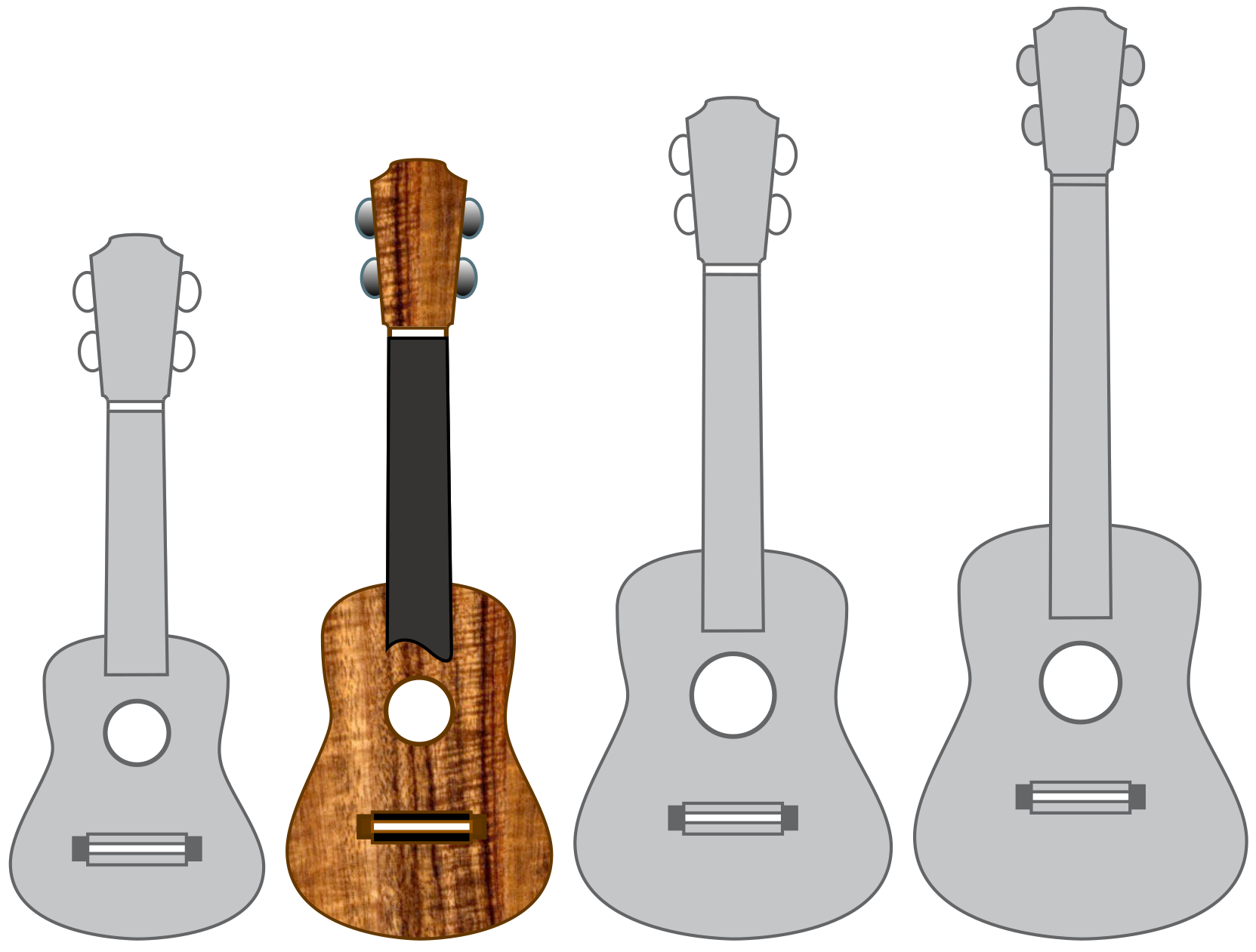
Concert
Super Soprano, Alto
This is the next size up from the standard soprano ukulele. The concert size was developed in the 1920s as an enhanced soprano, slightly larger and louder with a deeper tone. Actually created to be louder in un-amplified situations as was typical in the 1920s and 30s. No PA (public address) systems back then.
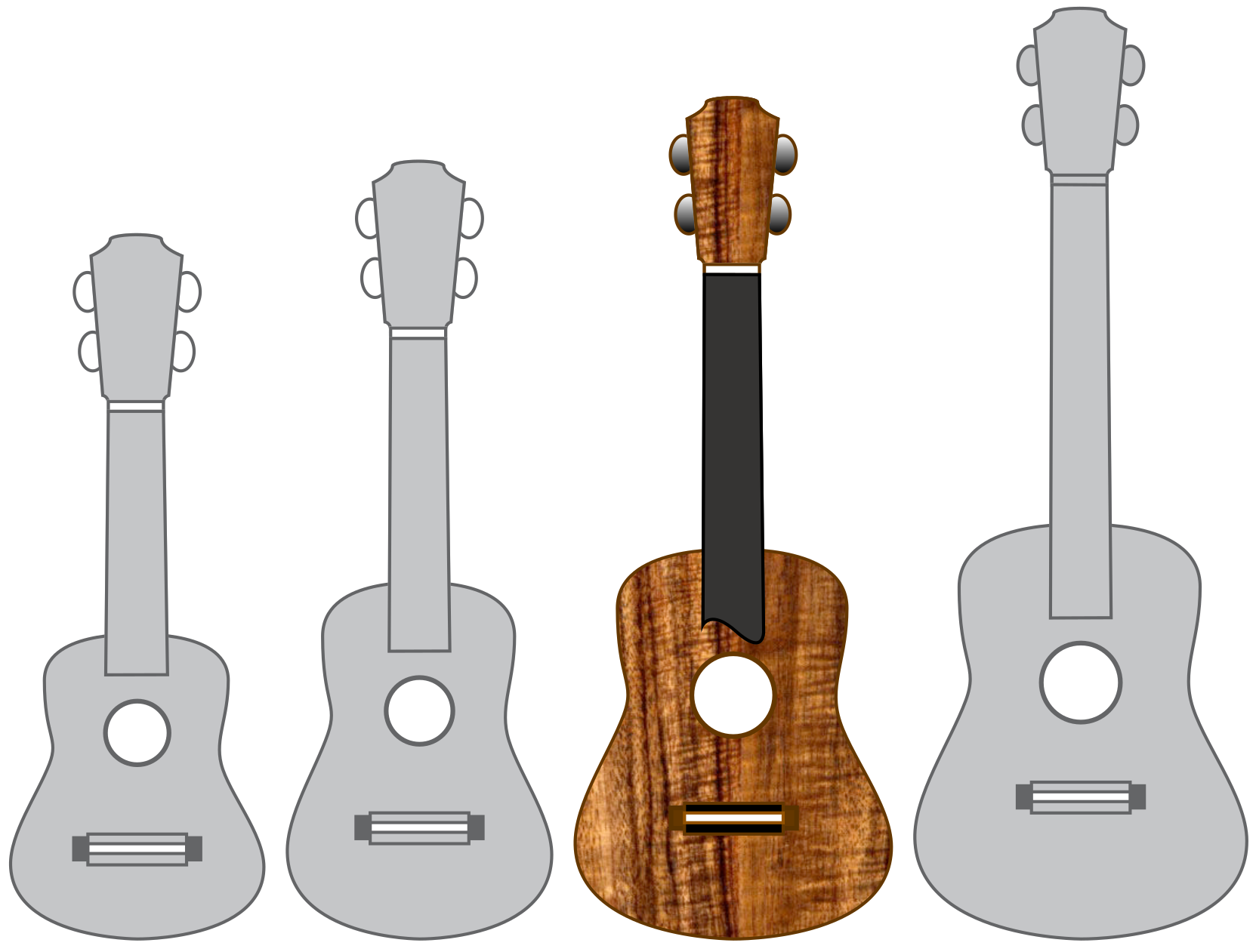
Tenor
Taro patch, Liliʻu, Long Neck Tenor
This is the next size up from the standard soprano ukulele. The concert size was developed in the 1920s as an enhanced soprano, slightly larger and louder with a deeper tone. Actually created to be louder in un-amplified situations as was typical in the 1920s and 30s. No PA (public address) systems back then.
Baritone
Taro patch, Liliʻu, Long Neck Tenor
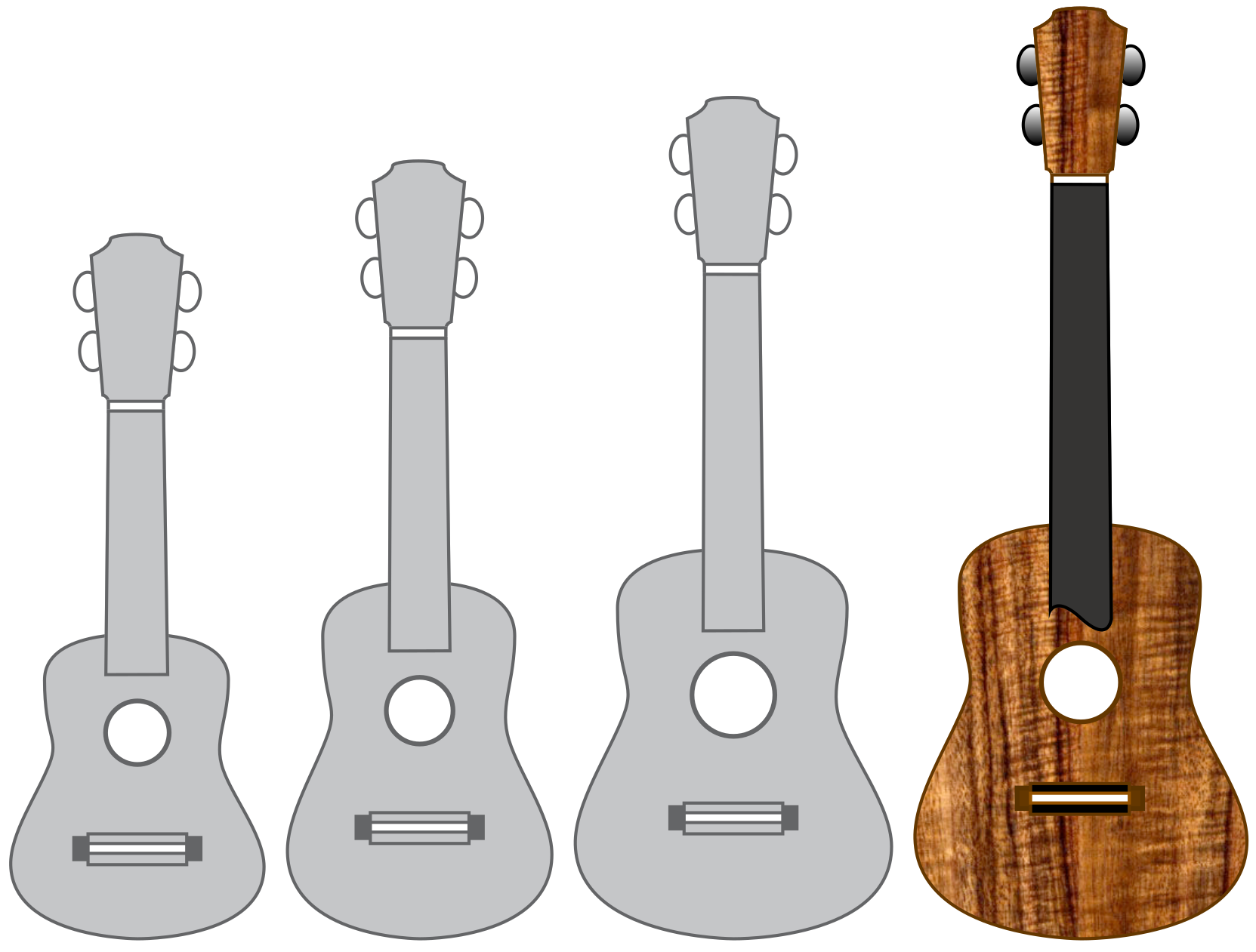
Often considered a small guitar as is tuned the same as the thin four strings a standard tuned guitar.
Resembling a smaller tenor guitar was created in the 1940s. Author Godfery's instrument of choice.
Should You Study Music With A Teacher or Should You "Wing" It On You Own?
This question always comes up in this type of discussion about music.
Here is Chuck Anderson's take on the question.
An objective assessment of the two alternative approaches leads me (Chuck Anderson) invariably towards the formal route. Why? Because without guidance, there is a tendency to go in circles, What do you practice, when do you move to the next topic? When are you doing something wrong? How do you practice what doesn't exist to you?
— Chuck Anderson.

Chuck Anderson, who I studied with for many, many years is on of the most knowledgeable musicians and teachers I've ever had the privilege to know. And, could communicate this vast music knowledge to his students, myself included. - Curt Sheller