Published:
2013-01-01
Updated:
2024-04-05
Learning Ukulele with Curt
Whoo!!!, Too Many Chord Shapes to Memorize!!!
Too many chord shapes to memorize Hopefully, that is something you might have realized after three months into the Chord a Day saga. There are way too many chord shapes to memorize.
Author(s): Curt Sheller Publisher: Curt Sheller Publications Code: ULCAD-END
Main Category: Chords Main Instrument: Ukulele
Categories: Chords, Beginner, Intermediate, Core, Music Keys, Beginner

2026-08-23
RelatedLessonAssets
Where is Today's Chord?
Congrats on making it through three months of A Chord A Day
. You should know a lot about plenty of chords at this time.
Hopefully, that is something you might have realized three months into the Chord a Day saga, that – After a core set of Basic Open Position Chords
, a few Movable Form Chords
, and Jazz
Chords
foundation — it's learning how chords are created and how to derive new chords from your core set of ever-expanding existing chords.
Next Steps … on to Your 4-part Jazz
Chords
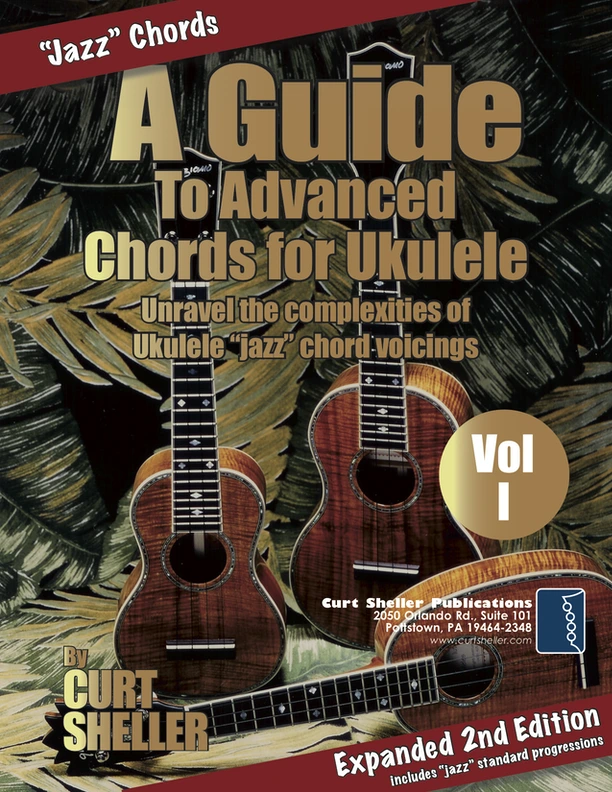
A Guide to Advanced Chords for Ukulele — presents a highly organized and efficient approach to the mysterious subject of advanced chords. Chord dictionaries are not the answer. Even chord theory does not offer any insight into unraveling the complexity of Ukulele chord voicings.
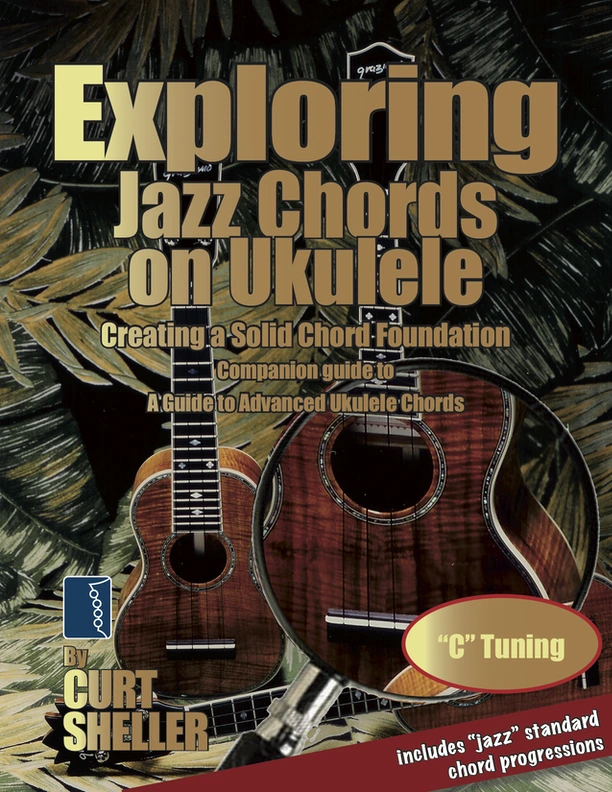
Exploring Jazz Chords on Ukulele using a variety of common chord progressions based on songs from the standard jazz repertoire. Core Chords are the basic set of chords needed to play a wide range of music, in a variety of styles. This set of chords includes basic open position chords, basic movable form chords and the core 4-part "jazz" chords. These "Jazz" chords are advanced chords that find their way into a wide range of music.
Series History
It never was the intention to do a whole year's worth of chords. Started in 2013 and I'm surprised it went three months (January, February, and March). And, as you was with March's chord it really just variations on a solid foundation of basic 4-part chords. The Big Six .
And, in 2020 videos for each chord for 91 videos were added. 2023 brought the addition of the common harmonic functions for each chord. The three months of the series covered the Basic Open Position Chords
, Movable Form Chords
, a few Free Form Chords
, and a start of 4-part Jazz
Chords
in March. Quite a series for reviewing your chords and learning a lot of new chords.
Although I did miss one really popular chord that should have be included. It's a basic 4-part chord that I was shocked I had missed. Here is a hint: '5500'. I did add it as The Forgotten Chord below.
It's time to get out and start using all these new chords and really learn how they are used and what you can do with them.
See You Next Year!!!
So what's next? Here are a series of lessons to get you going towards that ultimate goal of being to play any chord you ever need. Or, at least say that you can create any chord you ever need. I've never ran across a chord that I couldn't out what it was. Even mis-named chords.
- Basic Open Position Chords – These are the core set of chords that the January covered. These are the basic chords that every ukulele player should know.
- Movable Chords – movable form of the open position chords
Jazz
Chords – these chords all start with the Big Six core chords.Free Form
Chords – this is where you know how chords are created, constructed and used and don't fit into one of the above categories. With a low G, C tuning, these chords are a kin to closed voicing chords, where all the notes are within one octave - just like most of the chords with a high G, C tuning.
The Forgotten Chord(s)
Fmaj7
Fmaj7 — The Forgotten Chord. Fmaj7 should have been in January or February somewhere. I actually play this chord a lot, and it's a big part of my and most players chord vocabulary.

This is a great voicing as a substitute for this Fmaj7 voicing to the right or below (depending on you screen size), which tends to be a bit dissonant when used out of a voice leading harmonic context.



End of Lesson - Thanks, Hope You Enjoyed It!
Related Lessons, Videos, Lesson Series, Songs, Books & Reference Charts, Resources & Assets, Workshops are below.
A Guide to Advanced Ukulele Chords - Volume I
Beyond learning basic Ukulele chords, most players struggle with advanced chords. Commonly called "jazz" chords, these more sophisticated voicings find a wide use in all forms of music. A Guide to Advanced Chords for Ukulele - presents a highly organized and efficient approach to the mysterious subject of advanced chords. Chord dictionaries are not the answer.
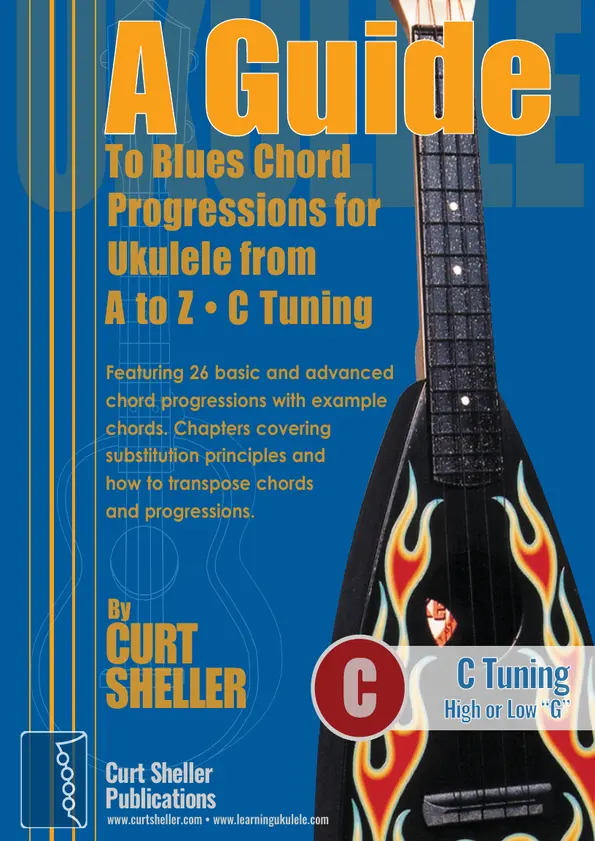
A Guide to Blues Chord Progression for Ukulele A to Z - C Tuning
The Blues are at the heart of all American music. It has influenced Country, Rock, Folk, Jazz, Bluegrass and just about every form of American music we listen to today. 26 blues progression in C and G tuning, progressing from basic to advanced jazz progression, with chord grids and substitutions explained.
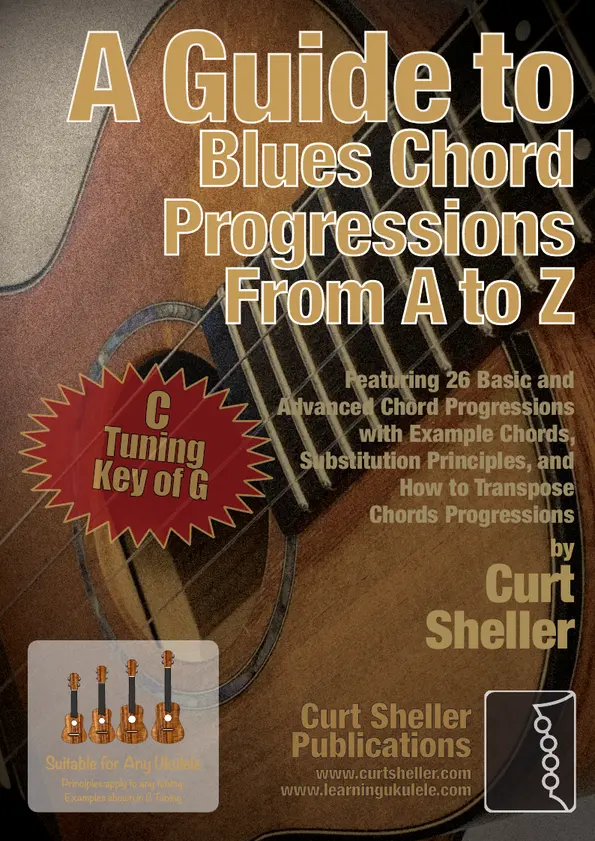
A Guide to Blues Chord Progressions for Ukulele A to Z - G Tuning
The Blues are at the heart of all American music. It has influenced Country, Rock, Folk, Jazz, Bluegrass and just about every form of American music we listen to today. 26 blues progression in C and G tuning, progressing from basic to advanced jazz progression, with chord grids and substitutions explained.
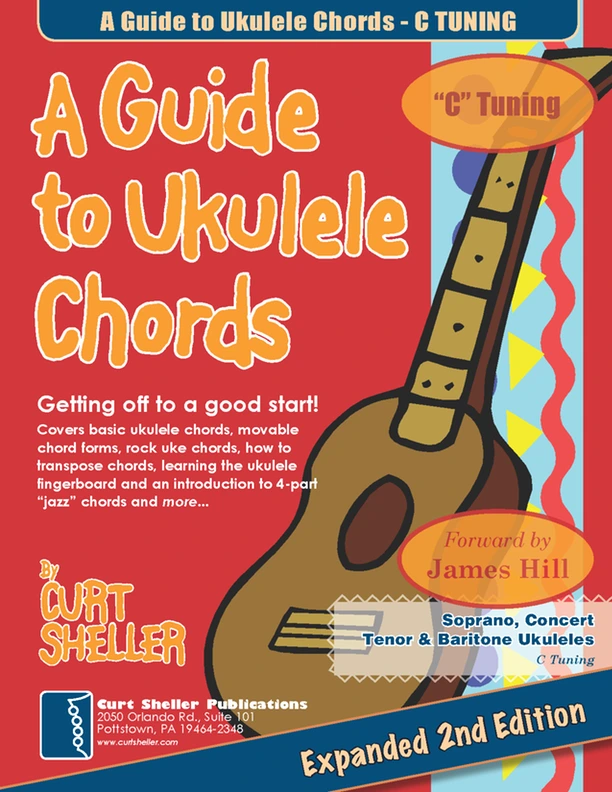
A Guide to Ukulele Chords, 2nd Edition
A Guide to Ukulele Chords, Second Edition is designed as a guide to ukulele chords. Covering the basic ukulele chords that ALL ukulele players SHOULD know. A Guide to Ukulele Chords covers movable chord forms, rock chords, how to transpose chords, learning the ukulele fingerboard and includes an introduction to 4-part, a.k.a jazz chords and more...
Exploring Jazz Chords on Ukulele
Exploring jazz chords using a variety of common chord progressions based on songs from the standard jazz repertoire. Core Chords are the basic set of chords needed to play a wide range of music, in a variety of styles. This set of chords includes basic open position chords, basic movable form chords and the core 4-part "jazz" chords.
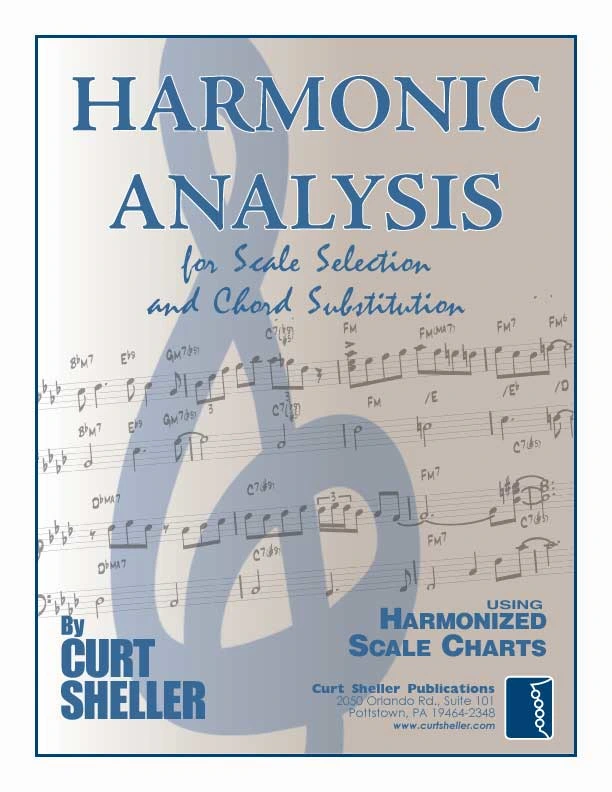
Harmonic Analysis for Scale Selection and Chord Substitution
Harmonic Analysis is the understanding of the functional sequence of chords. It is the process used to analyze the harmonic structure of a progression, song or composition. This analysis is then used to make scale selections for improvisation and chord substitution.
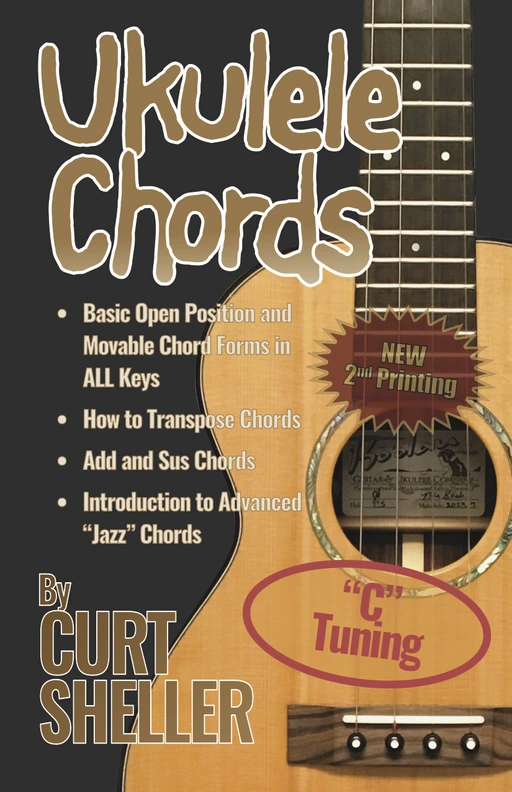
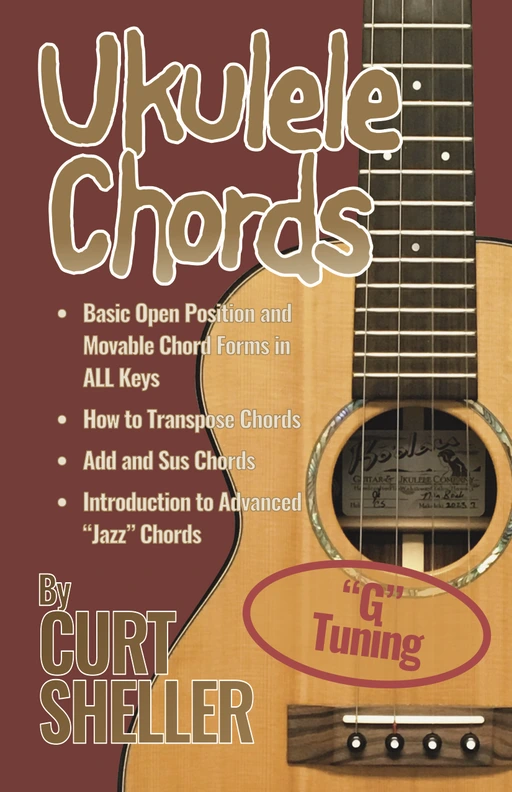
Ukulele Chords - G Tuning
This chord book is the perfect size for every ukulele gig bag or case and a great addition to you music book library. Ukulele Chords covers basic open position and basic movable form chords. From these two chord categories a variety of songs and styles can be played. Seventh chords, Major Sevenths, Minor Sevenths, Diminished, Augmented chords sus and add chords. Tunings: G with low or high D - (DGBE or dGBE).






Core “Jazz” Ukulele Chords - The Big Six
Core Chords for Ukulele, The Big Six - From four F7 chord voicings or shapes, your can build your massive 4-part, a.k.a., “jazz” chord vocabulary. Beyond basic open position chords, basic movable form chords and a core set of 4-part chords. There are just too many chords shapes too memorize.