
Common types and sizes of ukuleles.
Common Ukulele Sizes
The `ukulele (/juːkəˈleɪliː/ yoo-kə-LAY-lee, from Hawaiian: ʻukulele [ˈʔukuˈlɛlɛ] (oo-koo-leh-leh); variant: ukelele) is a member of the lute family of instruments. It generally employs four nylon or gut strings or four courses of strings. Some strings may be paired in courses, giving the instrument a total of six or eight strings.

24 September 2026
A `Ukulele is:
- Light Weight, Portable, and Affordable
- Easy on the Fingers with Four Strings and Four Fingers - a perfect match
- Less Need for Strumming Accuracy
- There isn't a lot expected from a ukulele player
- And, Where else can you go and jam with like minded friends, play poorly, sing poorly, and have a blast.
And where else in the musical world can you go, sing and play, and have a blast with your fellow cohorts.
The ukulele offers a wide range of musical possibilities, the music you play/make can be as simple or intricate as you desire. The ukulele is a remarkable instrument and powerful musical instrument for communication in its own right. And, did I mention it's a blast and a lot of fun to play and explore?
In this day and age, the ukulele has become the instrument of choice, firmly establishing its presence. The initial frenzy has subsided, and it is here to stay. Embrace this fact and embark on an exhilarating journey of ukulele exploration.
When you join, and you should join, a local ukulele gathering, you will discover an incredibly welcoming and supportive community. You'll forge lasting friendships and have an amazing time together.
The music you play can be as simple or complex as you want. The Ukulele is a powerful musical instrument for communication and expression in its own right.
And, did I mention it’s a lot of fun to play and explore.
Common Sizes
Common types of ukuleles include:.
Less common are the sopranino (also called piccolo, bambino, or "pocket uke"), Bass (uBass) , and contrabass ukuleles. The soprano, often called "standard" in Hawaii, is the smallest and was the original size. The concert size was developed in the 1920s as an enhanced soprano, slightly larger and louder with a deeper tone. Shortly thereafter, the tenor was created, having more volume and deeper bass tone. The baritone ( resembling a smaller tenor guitar ) was created in the 1940s, and the contrabass and bass are recent innovations (2010 and 2014, respectively).
Super Tenors, Long Neck ( Typical Scale Length: 17.080" (433.832mm) )
There's a trend of putting the next sized uke's scale length neck uke on a smaller sized body and call it a super
or long neck
so and so ukulele.
It can also simply be the longer baritone 19in scale length neck on a tenor body for a Super Tenor and using C Tuning.
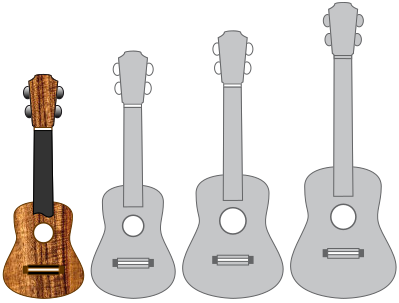
Soprano
Often called Standard
in Hawaii
This is the size that most people not familiar with the ukulele think of when someone mentions the ukulele.
Standard – this is the size that most people associate a ukulele with is they are not already familiar with the ukulele family of instruments.
- Typical Length: 21 in (530 mm). This is helpful if you need a gigbag or case.
- Scale Length (range): 13 in (330mm), 14in (356mm)
- Number of Frets: 10 to 12
- Common Tunings: G4* C4 E4 A4 (C Tuning)
- Alternate Tunings: G3 C4 E4 A4 (Low G, C Tuning), A4 D4 F♯4 B4 (D Tuning)
- String Tension (approx.): 21 lbs
Here is a Lesson on Selecting a Soprano `Ukulele .

*NOTE: This represents the Name and Octave of the note. Middle C is C4 with the number representing a higher (5,6,7...) or a lower (3 2 1 0 -1...) octave.
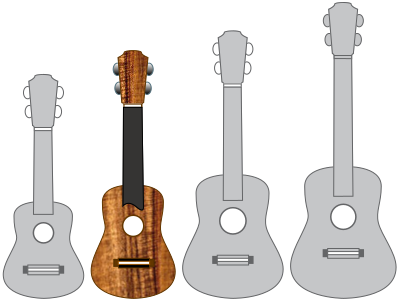
Concert
Super Soprano, Alto
This is the next size up from the standard soprano ukulele. The concert size was developed in the 1920s as an enhanced soprano, slightly larger and louder with a deeper tone. Actually created to be louder in un-amplified situations as was typical in the 1920s and 30s. No PA (public address) systems back then.
- Typical Length: 23 in (58 cm). This is helpful if yu need a gigbag or case.
- Scale Length (range): 15in (381mm), 16in (406mm)
- No. Frets: 15 to 18
- Common Tunings: C Tuning G4* C4 E4 A4, D Tuning: A4 D4 F♯4 B4
- Alternate Tunings: C Tuning G4* C4 E4 A (
Low
G), D Tuning: A4 D4 F♯4 B4 (Low
A) - String Tension (approx.): 33 lbs
Here is a Lesson on Selecting a Concert `Ukulele .
C Tuning(s) Range
*NOTE: This represents the Name and Octave of the note. Middle C is C4 with the number representing a higher (5,6,7...) or a lower (3 2 1 0 -1...) octave.
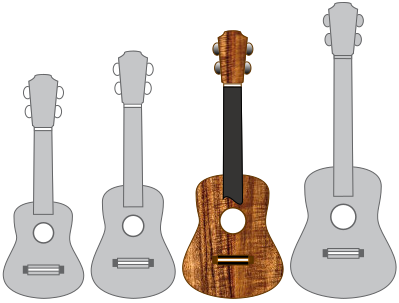
Tenor
Taro patch, Liliʻu, Long Neck Tenor
- Typical Length: 26 in (66 cm). This is helpful if you need a gigbag or case.
- Scale Length (range): 17in (432mm) to 19in (482mm) for the long neck tenor
- No. Frets: 17–20
- Common Tunings: C Tuning G4* C4 E4 A4 (
High
G), G3 C4 E4 A4 (Low
G) - Alternate Tunings: D Tuning: A4 D4 F♯4 B4 (
High
A), A3 D4 F♯4 B4 (Low
A) - String Tension (approx.): 40 lbs
Here is a Lesson on Selecting a Tenor `Ukulele .
C Tuning(s) Range
*NOTE: This represents the Name and Octave of the note. Middle C is C4 with the number representing a higher (5,6,7...) or a lower (3 2 1 0 -1...) octave.
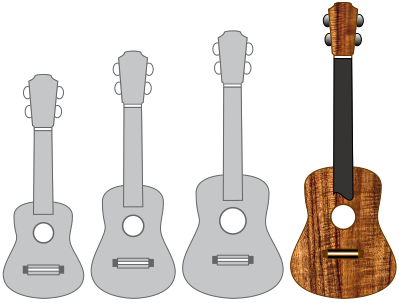
Baritone
small
Guitar
- Typical Length: 29 in (74 cm). This is helpful if yu need a gigbag or case.
- Scale Length (range): 19in (482mm), 20in (508mm)
- No. Frets: 18 to 22
- Common Tunings: G Tuning: D3* G3 B3 E4
- Alternate Tunings: C Tuning G4* C4 E4 A4 (
High
D), G3 C4 E4 A4 (Low
D) - String Tension (approx.): 52 lbs
Here is a Lesson on Selecting a Baritone `Ukulele .
G Tuning(s) Range

*NOTE: This represents the Name and Octave of the note. Middle C is C4 with the number representing a higher (5,6,7...) or a lower (3 2 1 0 -1...) octave.