Learning Ukulele with Curt

All 46 Play-alongs

There is nothing better than working on you chops and upping your game then by playing with others. The next best thing is using play-along backing tracks. These are Custom, one-of-a-kind, Pro Level play-along tracks Curt created several years ago with the help and guidance of Chuck Anderson and are making available for FREE to site members (for now). Gigging Musician's have actually used these on gigs.
2026-08-22

Access:
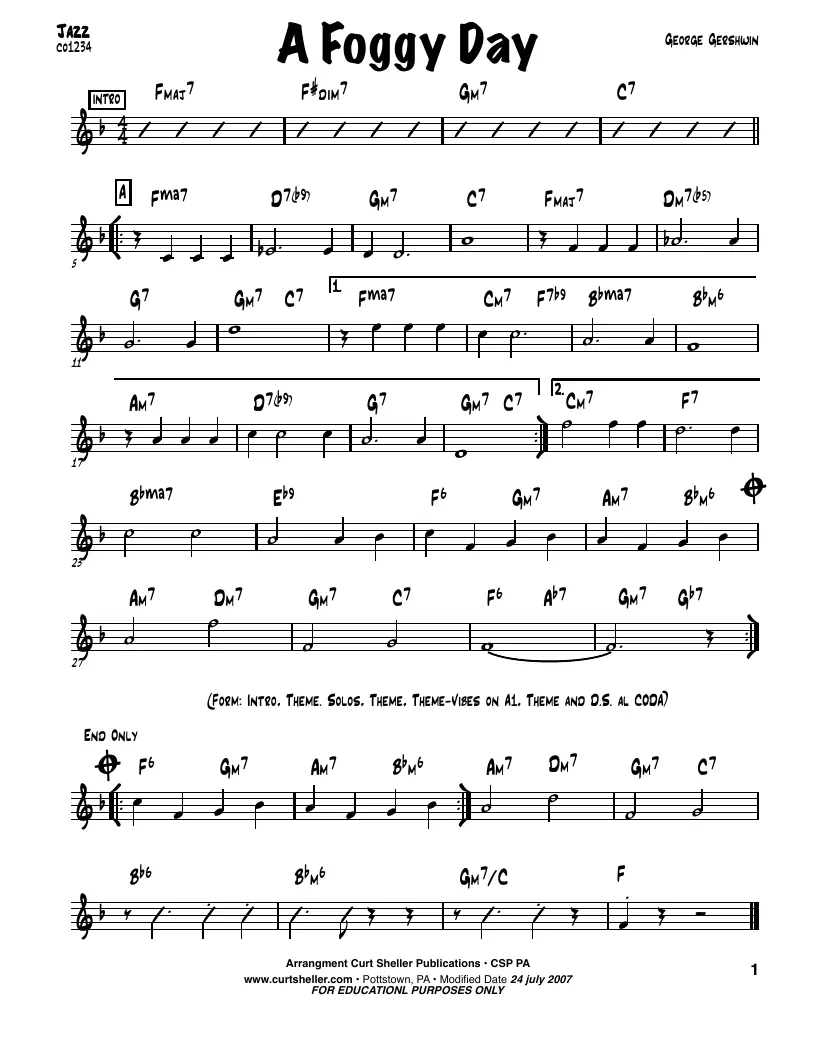
A Foggy Day (In London Town)

A Foggy Day (In London Town)

A Foggy Day is a song composed by George Gershwin, with lyrics by Ira Gershwin, introduced by Fred Astaire in the 1937 film A Damsel in Distress. It was originally titled "A Foggy Day (In London Town)", and is often still referred to as such.

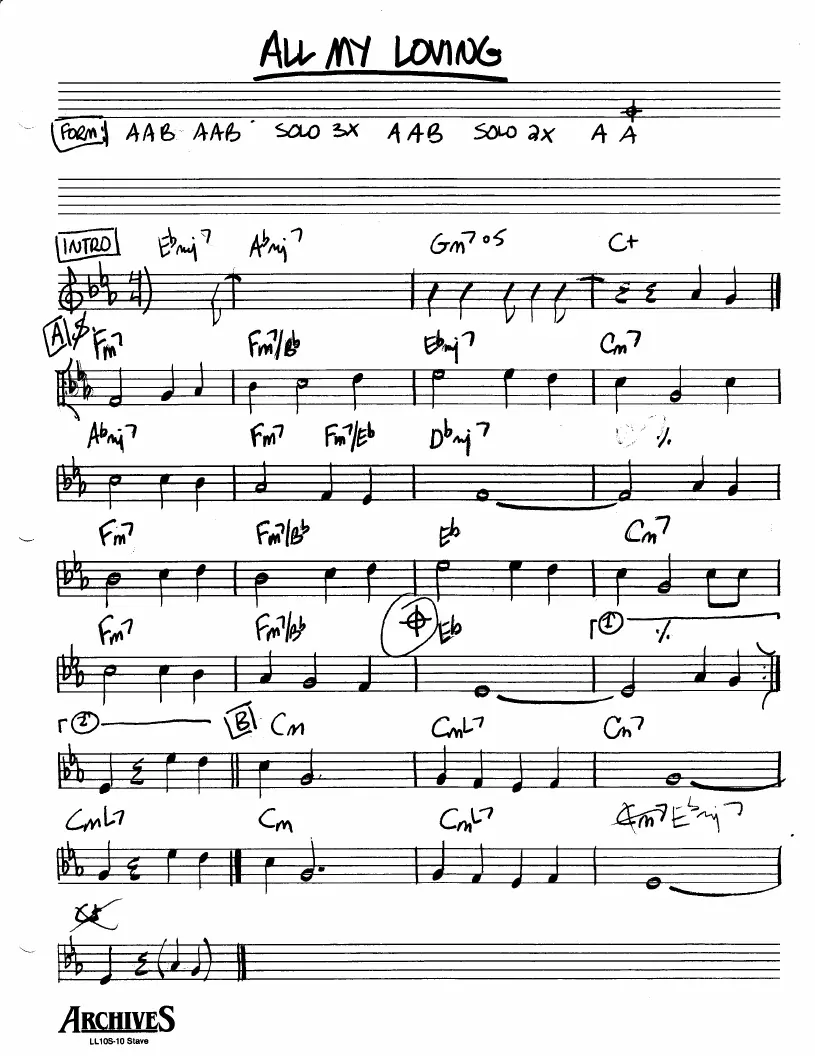
All My Loving

All My Loving

All My Loving is a song by the Beatles, written by Paul McCartney (credited to Lennon–McCartney), from the 1963 album With The Beatles. Though it was not released as a single in the United Kingdom or the United States, it drew considerable radio airplay, prompting EMI to issue it as the title track of an EP. The song was released as a single in Canada, where it became a number one hit. The Canadian single was imported into the US in enough quantities to peak at number 45 on the Billboard Hot 100 in April 1964.
All of Me

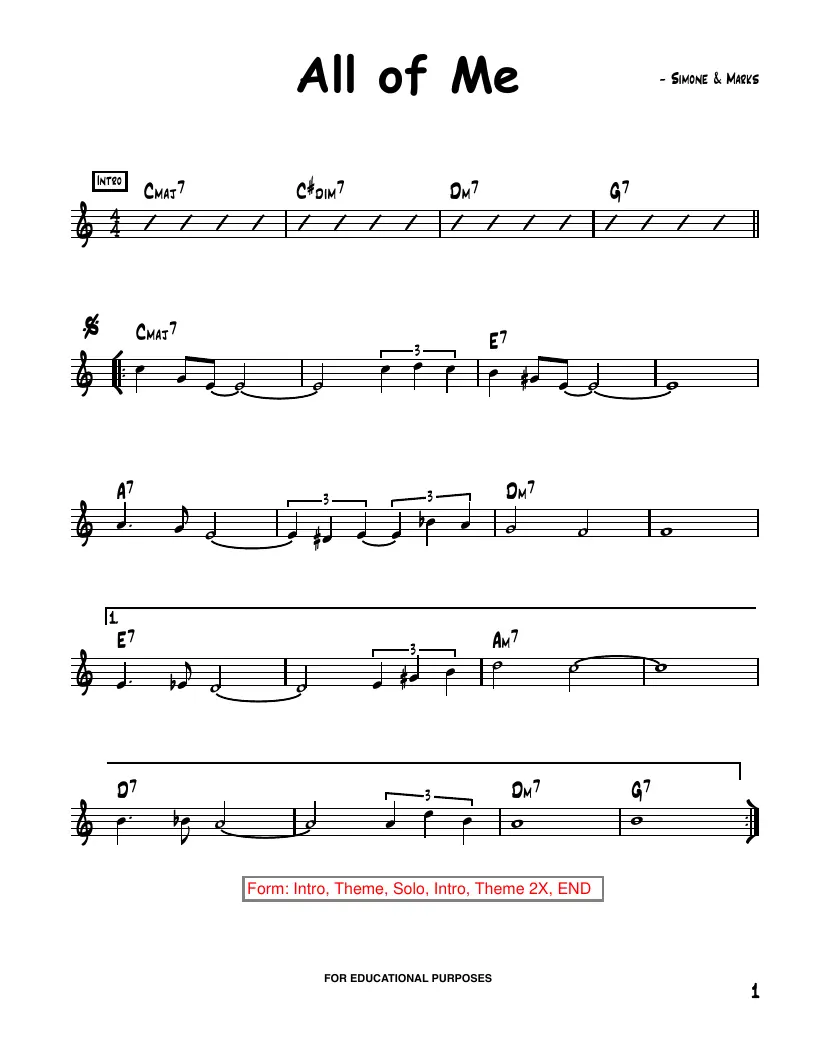
All of Me

All of Me is a popular song and jazz standard written by Gerald Marks and Seymour Simons in 1931. First performed by Belle Baker over the radio and recorded in December 1931 by Ruth Etting, it has become one of the most recorded songs of its era, with notable versions by Russ Columbo, Bing Crosby, Billie Holiday, Louis Armstrong, Mildred Bailey, Benny Goodman, Teddy Wilson in 1941, the Count Basie Orchestra, Ella Fitzgerald, Sarah Vaughan (for the 1957 album, Swingin' Easy), Dean Martin, Frank Sinatra, Frankie Laine and countless more.
All the Things You Are

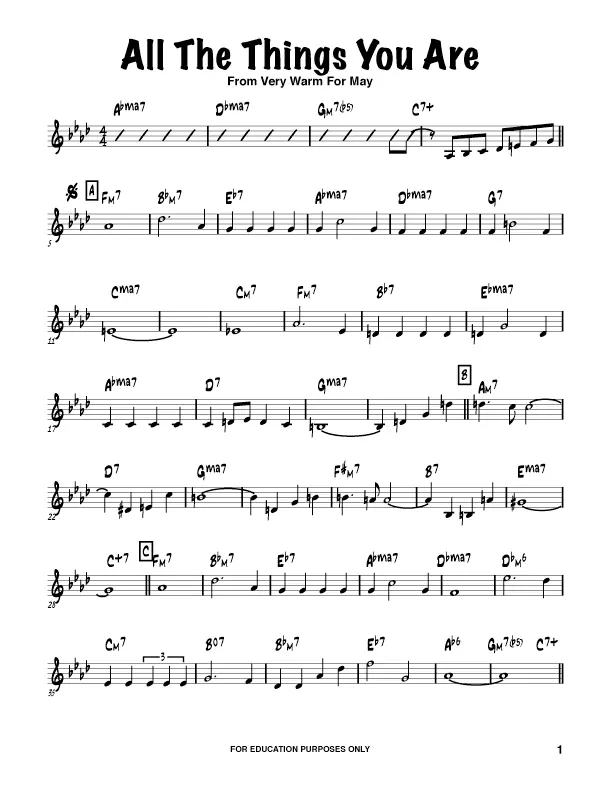
All the Things You Are

All The Things You Are is a song composed by Jerome Kern, with lyrics written by Oscar Hammerstein II. It was written for the musical Very Warm for May (1939), where it was introduced by Hiram Sherman, Frances Mercer, Hollace Shaw, and Ralph Stuart.

Black Orpheus

Black Orpheus

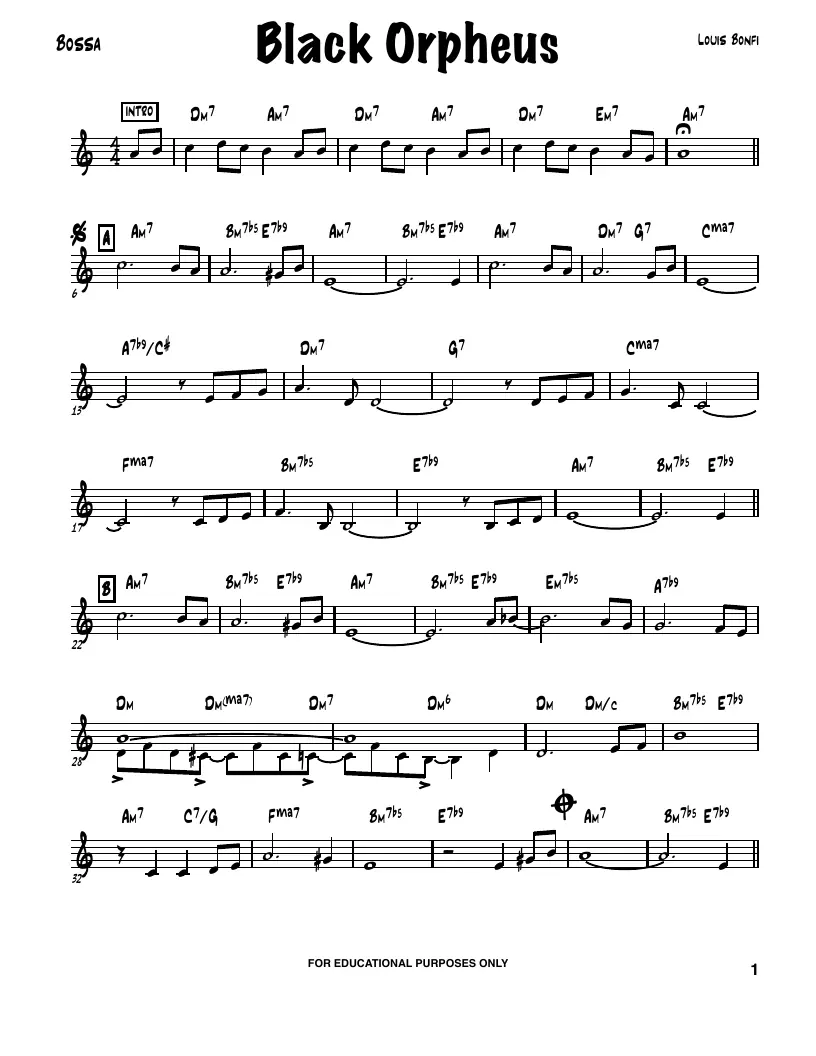
"Manhã de Carnaval" ("Carnival Morning"), often referred to as "Black Orpheus", is a song by Brazilian composer Luiz Bonfá and lyricist Antônio Maria. From the movie, Black Orpheus (Portuguese: Orfeu Negro [ɔhˈfew ˈnegɾu]) is a 1959 romantic tragedy.

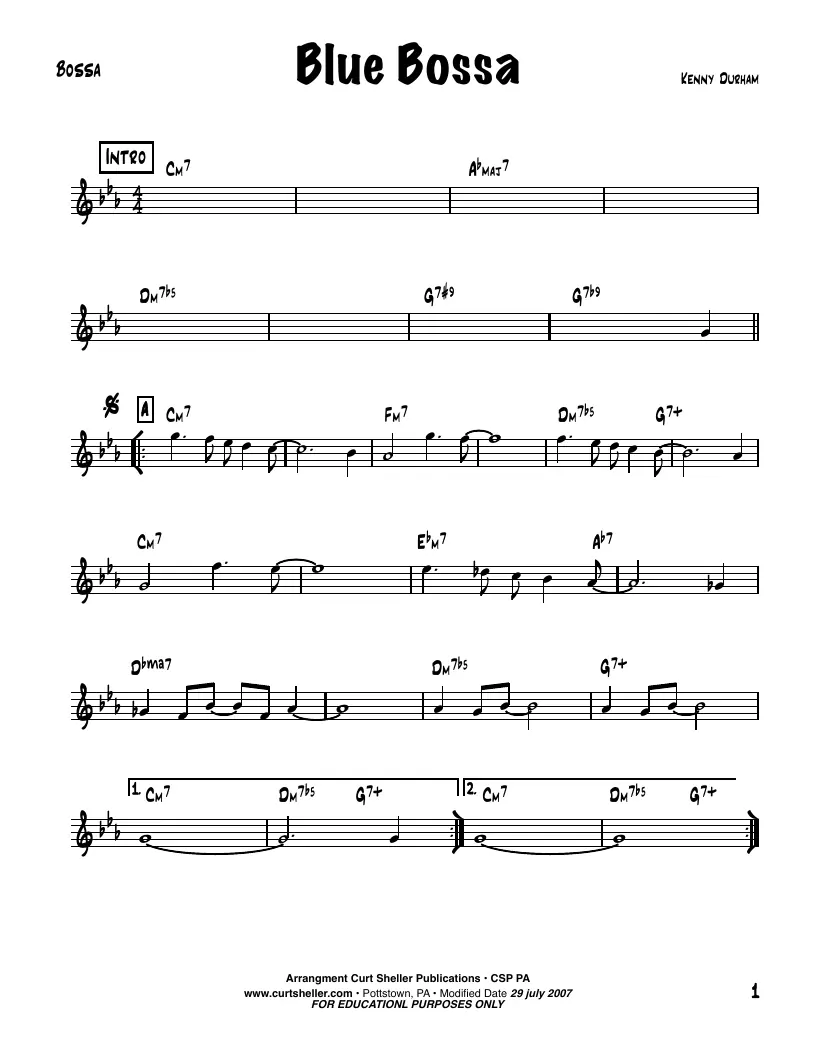
Blue Bossa

Blue Bossa

Blue Bossa is an instrumental jazz composition by Kenny Dorham (August 30, 1924 - December 5, 1972). It was introduced on Joe Henderson's 1963 album Page One. A blend of hard bop and bossa nova, the tune was possibly influenced by Dorham's visit to the Rio de Janeiro Jazz Festival in 1961. The tune has since been recorded numerous times by different artists, making it a jazz standard.
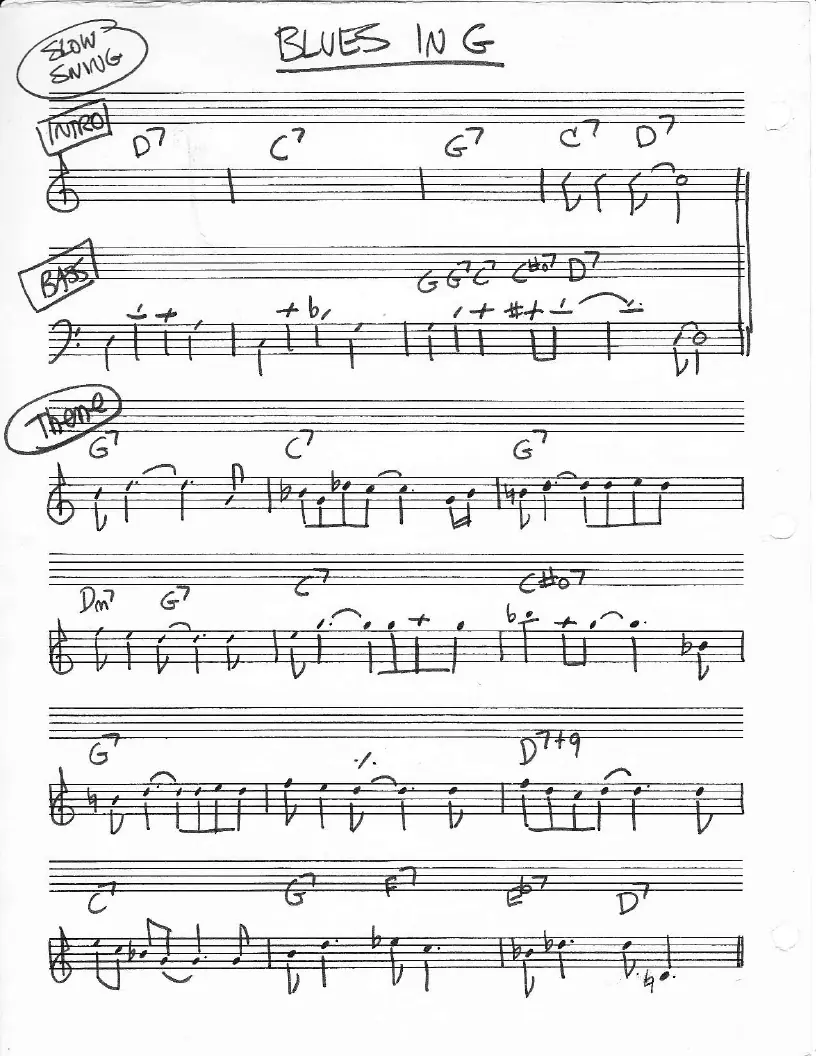
Blues In G

Blues In G

A basic / standard I, IV, V blues in the key of G major.

Call Me

Call Me

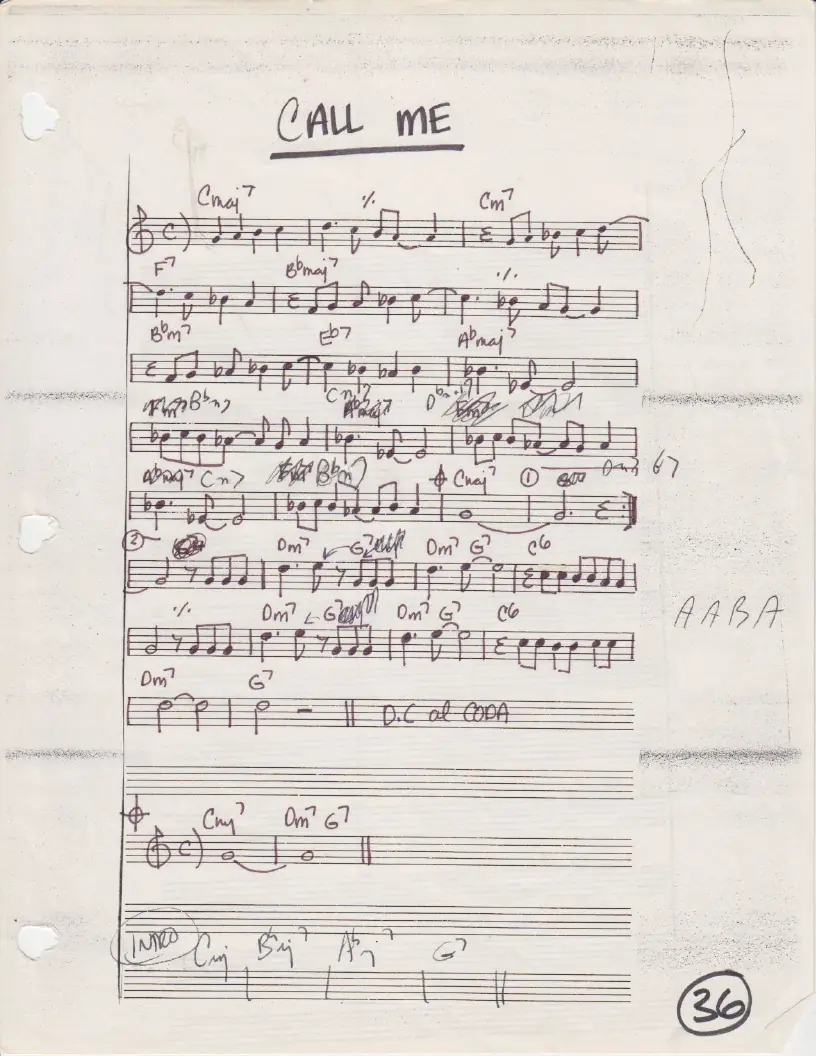
Call Me (a Tony Hatch composition first recorded by Petula Clark) was the first single released from his 1966 A&M album, The More I See You. The title single from the album, sung in a soft, very high tenor range and played on primarily adult-formatted radio stations, confused some disc jockeys, who were unfamiliar with Montez's past work.
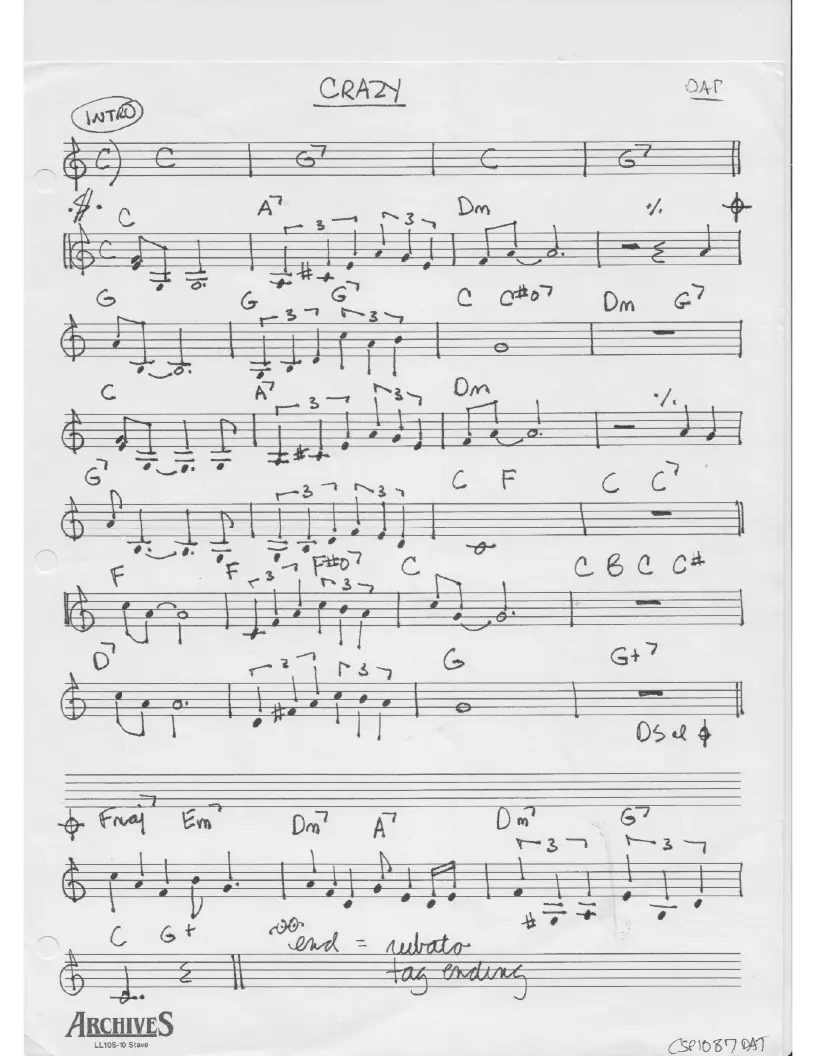
Crazy

Crazy

Crazy is a ballad composed by Willie Nelson. It has been recorded by several artists, most notably by Patsy Cline, whose version was a #2 country hit in 1962. Partly due to the genre-blending nature of the song, it has been covered by dozens of artists in several genres over the years; nevertheless, the song remains inextricably linked with Cline.

Days Of Wine And Roses

Days Of Wine And Roses

Days of Wine and Roses is a popular song, from the 1962 movie of the same name. The music was written by Henry Mancini with lyrics by Johnny Mercer. They received the Academy Award for Best Original Song for their work. In 2004 it finished at #39 in AFI's 100 Years...100 Songs survey of top tunes in American cinema.
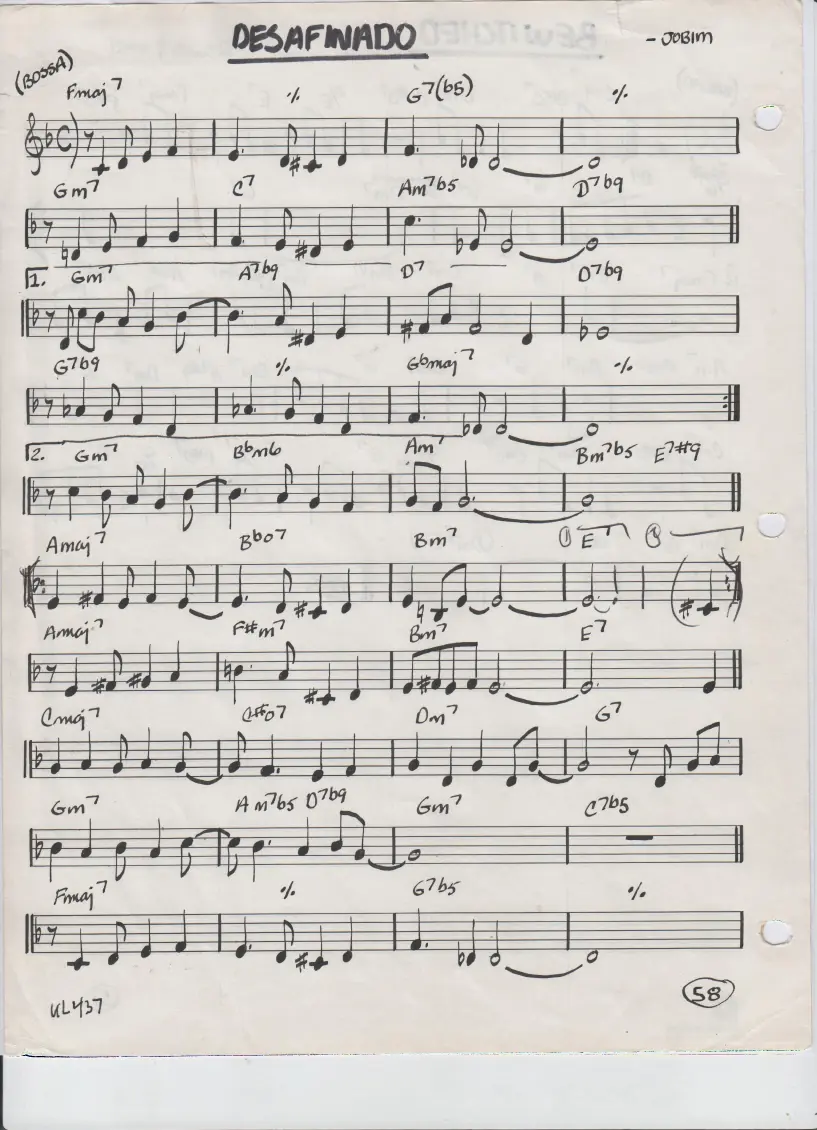
Desafinado

Desafinado

Desafinado, a Portuguese word (usually rendered into English as "Out of Tune", or as "Off Key"), is the title of a bossa nova song composed by Antônio Carlos Jobim with lyrics (in Portuguese) by Newton Mendonça.. The English language lyrics were written by Jon Hendricks and "Jessie Cavanaugh" (a pseudonym used by The Richmond Organisation). Another English lyric, more closely based on the original Portuguese lyric (but not a translation) was written by Gene Lees, and appears on some recordings as well.
Donna Lee

Donna Lee

Donna Lee is a bebop jazz standard attributed to Charlie Parker, although Miles Davis has also claimed authorship. Written in A-flat, it is based on the chord changes of the jazz standard "(Back Home Again in) Indiana". Beginning with an unusual half-bar rest, "Donna Lee" is a very complex, fast-moving chart with a compositional style based on four-note groups over each change.
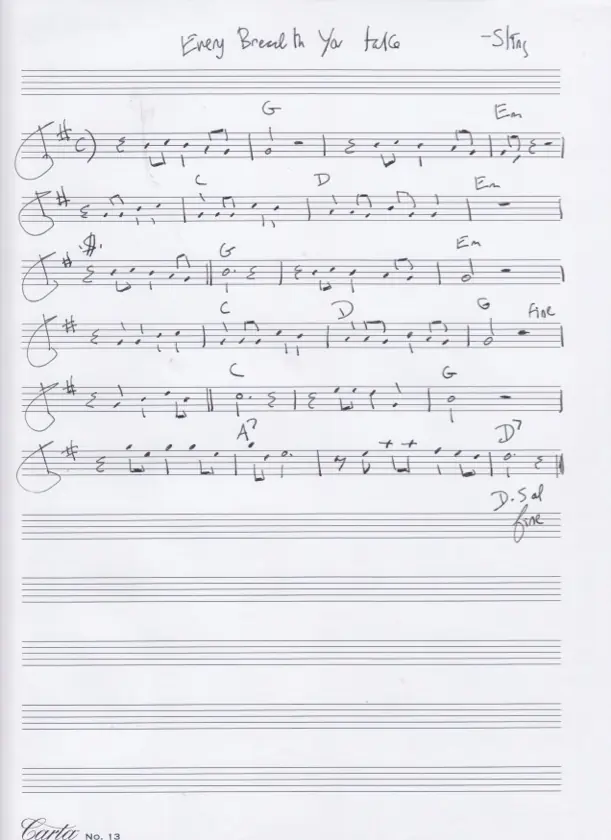
Every Breadth You Take

Every Breadth You Take

Every Breath You Take is a song by English rock band The Police from their 1983 album Synchronicity. Written by Sting, the single was the biggest hit of 1983, topping the Billboard Hot 100 singles chart for eight weeks (the band's only number-one hit on that chart), and the UK Singles Chart for four weeks. It also topped the Billboard Top Tracks chart for nine weeks.
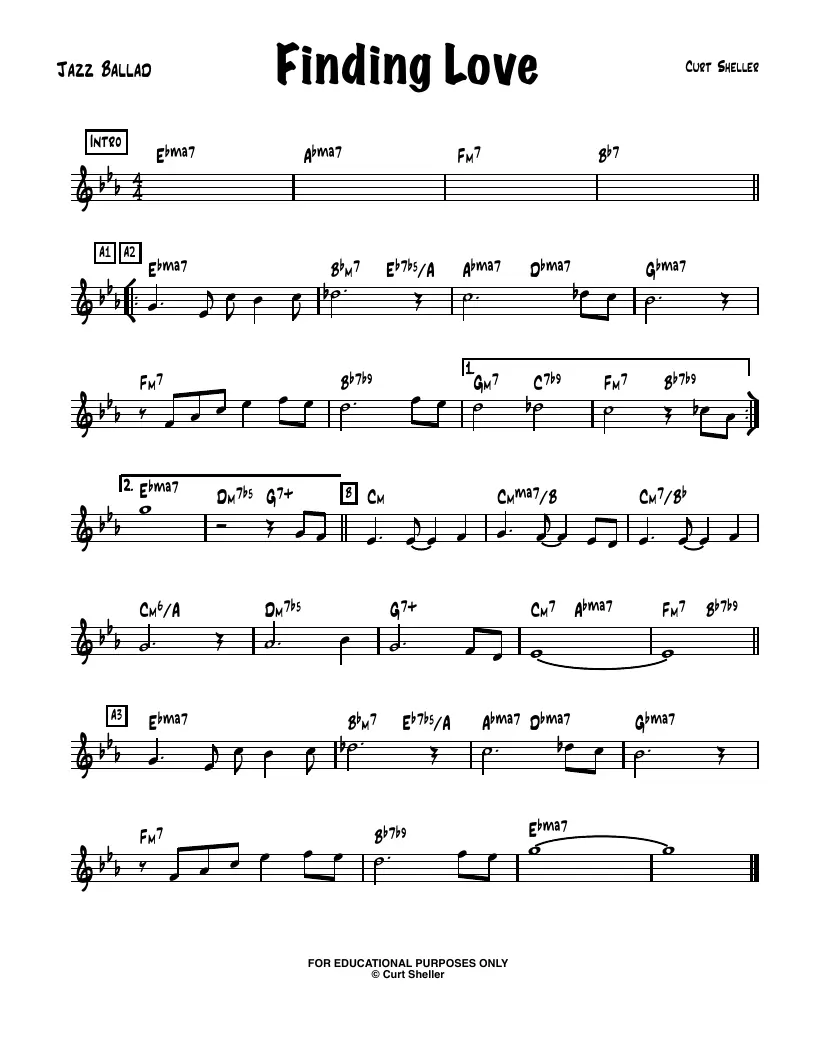
Finding Love

Finding Love

Original song by Curt Sheller. This is one of the first songs that I wrote where I actually wrote it down and recorded it.

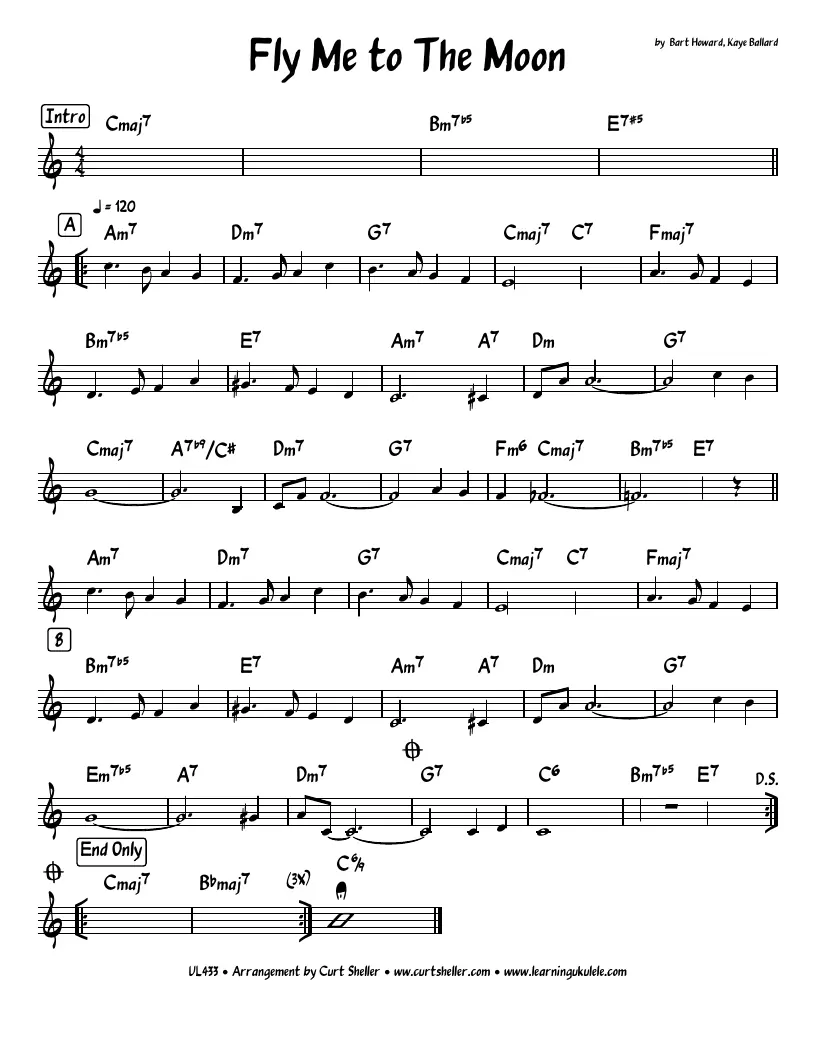
Fly Me To The Moon

Fly Me To The Moon

Fly Me to the Moon is a popular standard song written by Bart Howard in 1954. It was titled originally “In Other Words”, and was introduced by Felicia Sanders in cabarets. The song became known popularly as “Fly Me to the Moon” from its first line, and after a few years the publishers changed the title to that officially.

Fm Blues

Fm Blues

A standard 12 bar blues in Fm.

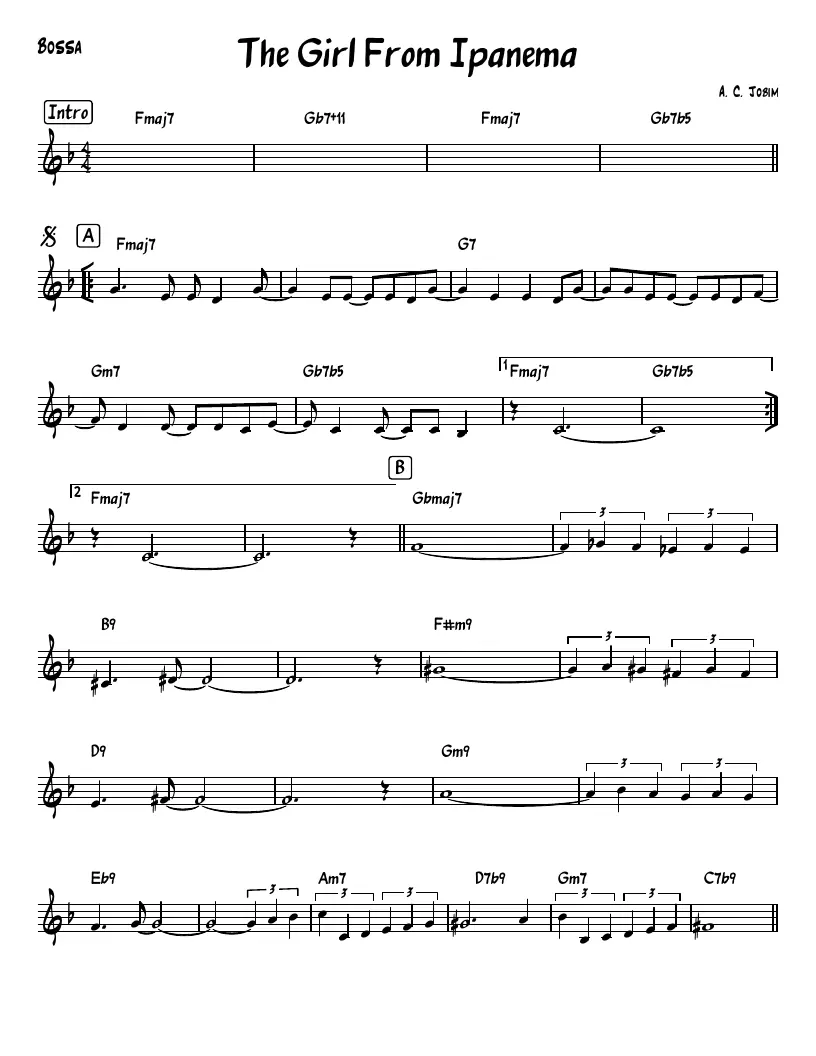
Girl From Ipanema

Girl From Ipanema

The Girl from Ipanema (Garota de Ipanema) is an essential jazz standard that every jazz musician should know. The A sections chord progression, basically a I II7 II V is functionally the same as Take the A Train, Jersey Bounce, Desafinado and a few others.

Have You Met Miss Jones

Have You Met Miss Jones

Have You Met Miss Jones? is a popular song that was written for the musical comedy, I'd Rather Be Right. The music was written by Richard Rodgers and the lyrics by Lorenz Hart. The song was published in 1937. The song's bridge, featuring key motion by major thirds, may have served as an inspiration to John Coltrane in the development of "Coltrane changes".
Hello Dolly, Mame, Cabaret

Hello Dolly, Mame, Cabaret

A medley of three popular show / Broadway songs.

Jordu

Jordu

Jordu is a jazz standard written by Irving "Duke" Jordan in 1953. This song was first made popular by Clifford Brown and Max Roach, but many other jazz musicians have performed or recorded renditions of it, including Stan Getz, Chet Baker, and Charlie Byrd.

Joy Spring

Joy Spring

Clifford Brown (October 30, 1930 – June 26, 1956), aka "Brownie," was an influential and highly rated American jazz trumpeter.

Lady Is A Tramp

Lady Is A Tramp

The Lady Is a Tramp is a show tune from the 1937 Rodgers and Hart musical Babes in Arms in which it was introduced by former child star Mitzi Green. This song is a spoof of New York high society and its strict etiquette (the first line of the verse is "I get too hungry for dinner at eight..."). It has become a popular standard.

Light My Fire

Light My Fire

Light My Fire is a song by The Doors which was recorded in August 1966 and released the first week of January 1967 on the Doors' debut album. Released as a single in April, it spent three weeks at number one on the Billboard Hot 100 chart, and one week on the Cash Box Top 100, nearly a year after its recording. A year later, it re-entered the Billboard Hot 100 in 1968 following the success of Jose Feliciano's version of the song, peaking at number 87.

Michelle

Michelle

Michelle is a love ballad by the Beatles, composed principally by Paul McCartney, with the middle eight co-written with John Lennon. It is featured on their Rubber Soul album, released in December 1965. The song is unusual among Beatles recordings in that some of its lead vocals are in French, although "Paperback Writer" contains the backing vocals "Frère Jacques". "Michelle" won the Grammy Award for Song of the Year in 1967 and has since become one of the best known and most often recorded of all Beatles songs.

Misty

Misty

Misty is a jazz standard written in 1954 by the pianist Erroll Garner. Originally composed as an instrumental following the traditional 32-bar format, the tune later had lyrics by Johnny Burke and became the signature song of Johnny Mathis, reaching #12 on the U.S. Pop Singles chart in 1959. It has been covered numerous times, perhaps most notably by Ella Fitzgerald, Sarah Vaughan (1959), Frank Sinatra and Earl Grant (1961), Lloyd Price (1963), and also by Ray Stevens (1975) as a country song.

Moondance

Moondance

Moondance is a popular song written by Northern Irish singer-songwriter an Morrison and is the title song on his 1970 album Moondance. Morrison did not release the song as a single until November 1977, seven and a half years after the album was released. It reached the Billboard Hot 100, charting at #92. The single's B-side, "Cold Wind in August" had been released in the same year, on his latest album at the time, A Period of Transition.

Moonlight In Vermont

Moonlight In Vermont

Moonlight in Vermont is a popular song about the U.S. state of Vermont, written by John Blackburn (lyrics) and Karl Suessdorf (music) and published in 1944. The lyrics are unusual in that they do not rhyme. John Blackburn, the lyricist, has been quoted as saying, "After completing the first 12 bars of the lyric, I realized there was no rhyme and then said to Karl, 'Let’s follow the pattern of no rhyme throughout the song. It seemed right.' The lyrics are also unconventional in that each verse (not counting the bridge) is a haiku.

Moonlight Serenade

Moonlight Serenade

Moonlight Serenade is an American swing ballad composed by Glenn Miller with subsequent lyrics by Mitchell Parish. It was an immediate phenomenon when released in May 1939 as an instrumental arrangement, though it had been adopted and performed as Miller's signature tune as early as 1938, even before it had been given the name "Moonlight Serenade." In 1991, Miller's recording of "Moonlight Serenade" was inducted into the Grammy Hall of Fame.

My Favorite Things

My Favorite Things

My Favorite Things is a show tune from the 1959 Rodgers and Hammerstein musical The Sound of Music. The song was first introduced by Mary Martin in the original Broadway production, and sung by Julie Andrews in the 1965 film adaptation. The John Coltrane version can be credited for inserting this into the Jazz Standard repertoire.

My Funny Valentine

My Funny Valentine

My Funny Valentine is a show tune from the 1937 Richard Rodgers and Lorenz Hart musical Babes in Arms in which it was introduced by former child star Mitzi Green. Recorded by Chet Baker, Frank Sinatra, Ella Fitzgerald, Andy Williams, Miles Davis, Nico and Chaka Khan. The song is a popular jazz standard, appearing on over 1300 albums performed by over 600 artists.

Satin Doll

Satin Doll

Satin Doll is a jazz standard written by Duke Ellington and Billy Strayhorn with lyrics by Johnny Mercer. Written in 1953, the song has been recorded countless times, by such artists as Ella Fitzgerald, Frank Sinatra, 101 Strings, and Nancy Wilson. Its chord progression is well known for its unusual use of chords and opening with a II-V-I turnaround.

Scrapple The Apple

Scrapple The Apple

Scrapple from the Apple is a bebop composition by Charlie Parker written in 1947, commonly recognized today as a jazz standard, written in F major. The song borrows its chord progression from "Honeysuckle Rose", a common practice for Parker, as he based many of his successful tunes over already well-known chord changes. While the A section is based on "Honeysuckle Rose", the B section or "middle eight" comes from the rhythm changes, which are based on George Gershwin's "I Got Rhythm".

Shadow of Your Smile

Shadow of Your Smile

The Shadow of Your Smile, also known as "Love Theme from The Sandpiper", is a popular song. The music was written by Johnny Mandel with the lyrics written by Paul Francis Webster. The song was introduced in the 1965 film The Sandpiper, with a trumpet solo by Jack Sheldon and later became a minor hit for Tony Bennett (Johnny Mandel arranged and conducted his version as well). It won the Grammy Award for Song of the Year and the Academy Award for Best Original Song.

Soft Winds

Soft Winds

Soft Winds is a 1940 jazz standard composed by Benny Goodman, with lyrics by Fred Royal. Charlie Parker performed it regularly in the 1940s. In 1961, jazz harpist Dorothy Ashby released an album of the same name with the song as the title track, recorded at the Plaza Sound Studios in New York City. Canadian jazz pianist Oscar Peterson regularly performed the song in the 1970s and 1980s with the Oscar Peterson Quartet. Chet Baker, Dinah Washington and numerous others recorded it. The theme song to the British dating show Blind Date closely resembles the standard but Goodman is not credited.

Someday My Prince Will Come

Someday My Prince Will Come

Some Day My Prince Will Come is a popular song from Walt Disney's 1937 animated movie Snow White and the Seven Dwarfs. It was written by Larry Morey (lyrics) & Frank Churchill (music), and performed by Adriana Caselotti (Snow White's voice in the movie). It was also featured in the 1979 stage adaptation of the 1937 animated musical movie. In AFI's 100 Years...100 Songs, it was ranked as the 19th greatest film song of all time.

Spanish Eyes - Long Version

Spanish Eyes - Long Version

NULL
Sunny

Sunny

NULL
Take the 'A' Train

Take the 'A' Train

Take the 'A' Train is a jazz standard by Billy Strayhorn that was the signature tune of the Duke Ellington orchestra. It is arguably the most famous of the many compositions to emerge from the collaboration of Ellington and Strayhorn.

There Will Never Be Another You

There Will Never Be Another You

There Will Never Be Another You is a popular song with music by Harry Warren and lyrics by Mack Gordon for the Twentieth Century Fox musical Iceland (1942) starring Sonja Henie. The song was published in 1942, and is one of the most widely known and performed standards of the jazz repertoire.

Watch What Happens

Watch What Happens

Written by Michel Jean Legrand (born 24 February 1932) is a French musical composer, arranger, conductor, and pianist. Legrand is a prolific composer, having written over 200 film and television scores in addition to many memorable songs. He is best known for his often haunting film music and scores, such as The Umbrellas of Cherbourg (1964) and The Thomas Crown Affair (1968) featuring the song "The Windmills of Your Mind" for which he won his first Academy Award.

Wave

Wave

Wave (also known as "Vou Te Contar" in Portuguese) is a song written by Antonio Carlos Jobim. Recorded as an instrumental on Jobim's 1967 album of the same name, English lyrics were added by Jobim for a November 11, 1969 recording by Frank Sinatra, released on his 1970 album Sinatra & Company.

West Coast Blues

West Coast Blues

A jazz classic by the late jazz guitarist Wes Montgomery. Wes is widely considered one of the major jazz guitarists, emerging after such seminal figures as Django Reinhardt and Charlie Christian and influencing countless others, including George Benson, Kenny Burrell, Grant Green, Jimi Hendrix, Steve Howe, Russell Malone, Pat Martino, Pat Metheny, Randy Napoleon, and Emily Remler.

What's New

What's New

What's New? is a 1939 popular song composed by Bob Haggart, with lyrics by Johnny Burke. It was originally an instrumental tune titled "I'm Free" by Haggart in 1938, when Haggart was a member of Bob Crosby and His Orchestra. The tune was written with a trumpet solo, meant to showcase the talents of band-mate Billy Butterfield. Crosby's orchestra recorded "I'm Free" the same day it was written.

When Sunny Gets Blue

When Sunny Gets Blue

When Sunny Gets Blue is a song written by Marvin Fisher and Jack Segal, which has become a jazz standard. The song was originally recorded by Johnny Mathis and Ray Conniff and his Orchestra in 1956 and became a big hit.

Witchcraft

Witchcraft

Witchcraft is a popular song from 1957 composed by Cy Coleman with lyrics by Carolyn Leigh. It was released as a single by Frank Sinatra, and reached number twenty in the U.S., spending sixteen weeks on the charts.

Yesterday

Yesterday

Yesterday is a song originally recorded by The Beatles for their 1965 album Help!. The song first hit the United Kingdom top 10 three months after the release of Help!. The song remains popular today with more than 1,600 cover versions, one of the most covered songs in the history of recorded music. The song was not released as a single in the UK at the time of its release in the United States, and thus never gained number 1 single status in that country. However, “Yesterday” was voted the best song of the 20th century in a 1999 BBC Radio 2 poll of music experts and listeners.