Published:
2003-01-01
Updated:
2023-06-08
Learning Ukulele with Curt
Types of Chords Available on Ukulele
On the ukulele, there are various types of chords that you can explore, including open position chords, movable form chords, 4-part chords (commonly known as jazz chords), and free form chords.
Main Category: Chords Main Instrument: Ukulele

6 August 2026
On the ukulele, there are various types of chords that you can explore, including open position chords, movable form chords, 4-part chords (commonly known as jazz chords), and free form chords.
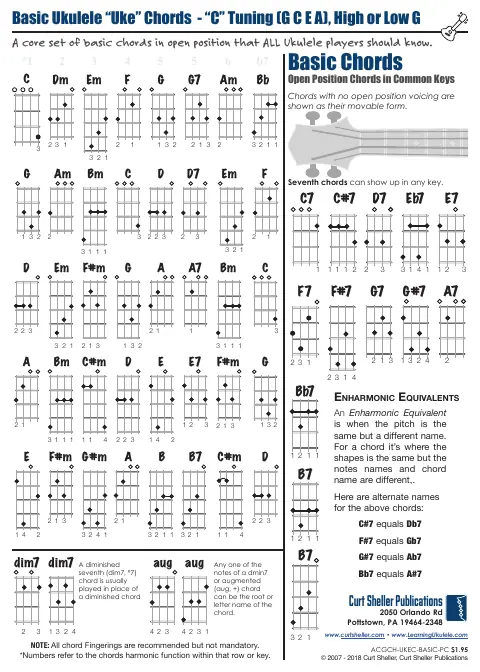
These are the fundamental chords, basic first chords most players learn. These are the chords in the first one, two, three, and fours frets of the ukulele and include at least one open string.
Basic Movable Form Chords
Sometimes called "barre" chords, these chords are the basic open position chords that venture beyond the third fret and do not include open strings.
4-part Contemporary Chords, a.k.a. Jazz Chords
Beyond basic open position chords and basic movable form chords these are the core set of 4-part chords that are used to build ALL your contemporary, more advanced chords. Commonly referred to as Jazz
chords, they require knowledge of chord construction principles, understanding the names of notes on the ukulele fingerboard, and offer great versatility in expanding your chord vocabulary. With these chords, you can create complex variations like
Free Form Chords
Free Form chords are those chords that do not fall into one of the above categories. They typically don't show up in chord dictionaries or software programs. These chords can be created when you have a deep understanding of the notes on the ukulele fingerboard, chord construction principles, and the names of the notes and intervals that make up the chord.
Here are a few chords that would fit the Free Form definition.
- Creating Cool `Ukulele Chords
- Cool `Ukulele Chords - G7
- Cool `Ukulele Chords - A7
- Cool `Ukulele Chords - F Sharp Minor Seven Flat Five
- Cool Chords: C7
Traditional and Contemporary Triads
Somewhere in the mix of the above four chord categories, triads should be explored. Triads are the foundation of most chords. They are amazing versatile chords that can be used harmonically as chords or melodically in solos. The student and the type of music determines when triads are introduced.
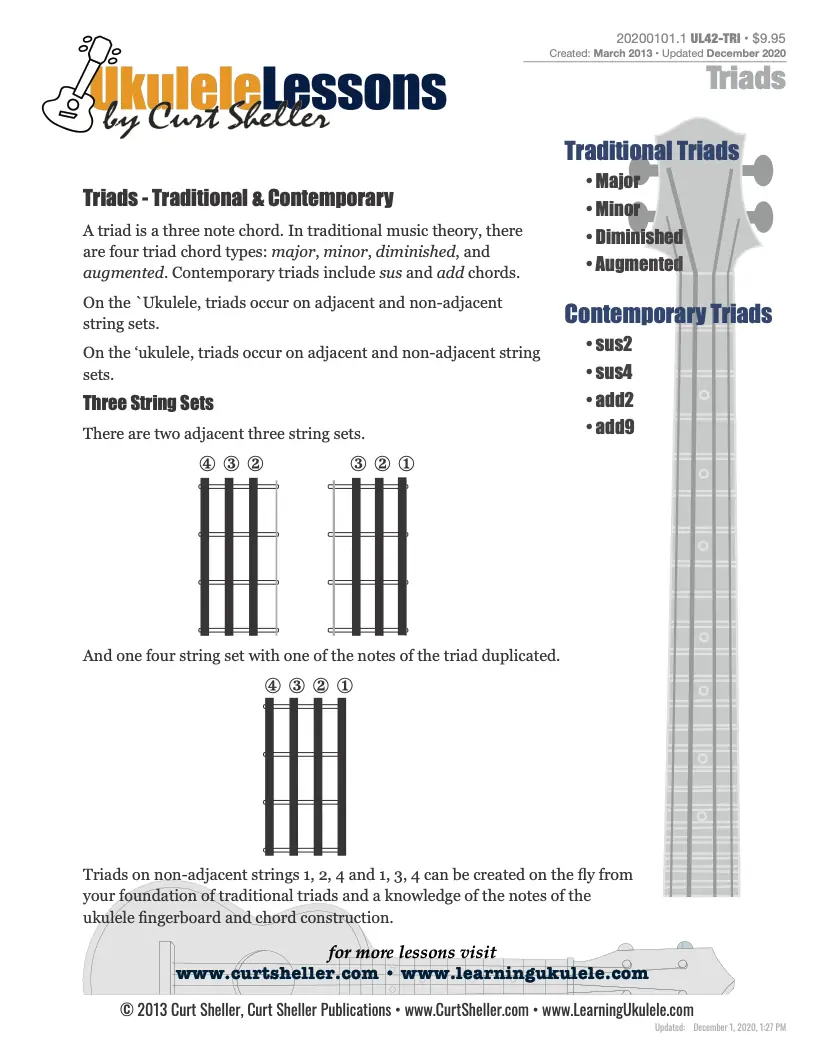
A triad is a three note chord. In traditional chord theory there are four traditional triad chord types: major, minor, diminished and augmented. And four contemporary triad chord types: sus2, sus4, add2 and add9.
Triads can be used harmonically, as chords and melodically, as single notes. Triads are a great way to get started with creating melodic solos and improvising.
In my personal experience as a teacher and musician, I have found that triads pose a significant challenge after mastering the basic open position chords and basic movable chords. They can be even more challenging than 4-part jazz chords. However, by dedicating time and practice, you can conquer them and unlock a whole new level of musical exploration on the ukulele.
8 lessons in the Types of Chords Available on Ukulele LessonSERIES :
Series Info
Chords
Ukulele
358 visits
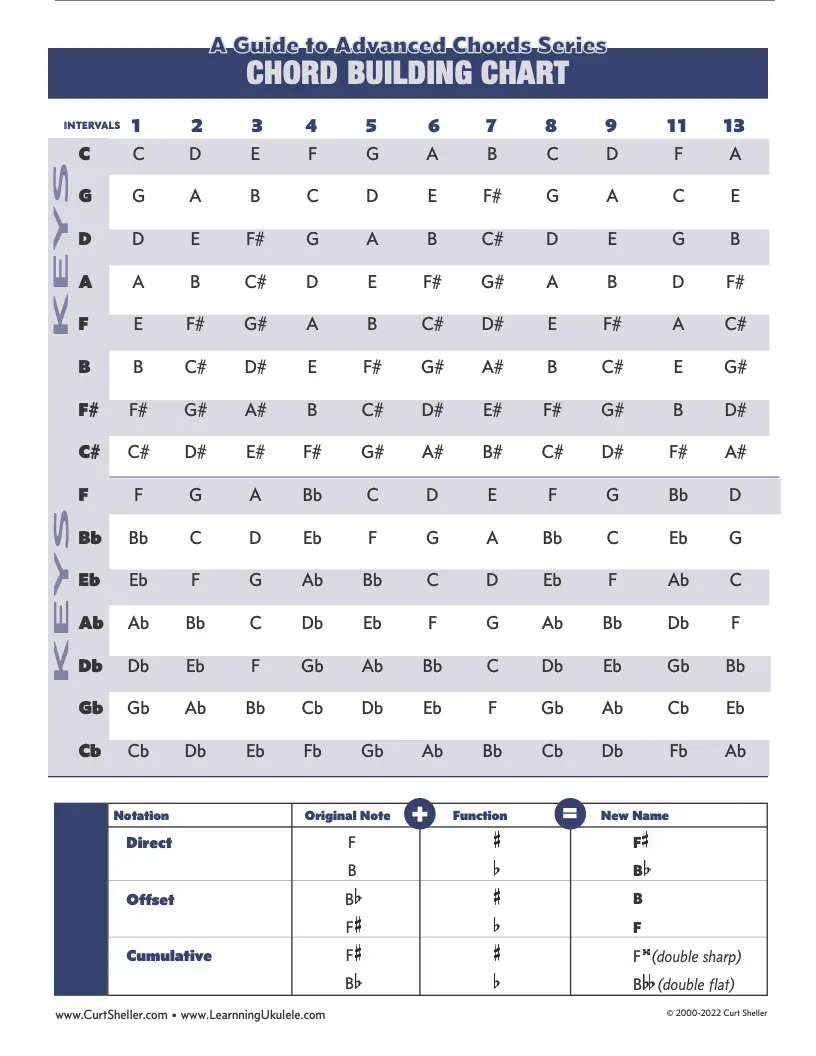
Advanced Guide to Chords - Chord Building Chart
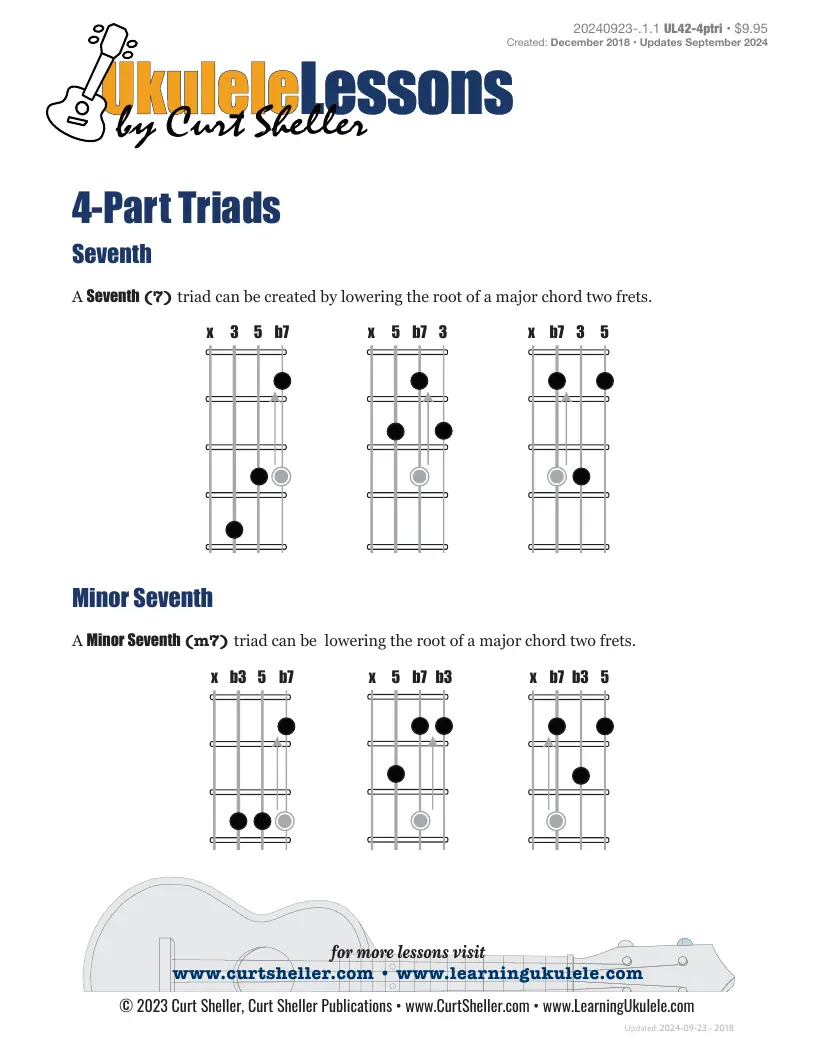
Chords can be categorized into four basic chord types; Major, Minor, Diminished and Augmented. Here are the formulas for building the 11 basic 4-part chord types as well as the traditional triads. This chart can be used as a companion to any volume of The Advanced Guide to Guitar Chords and A Guide to Advanced Chords for Ukulele, which presents a highly organized and efficient approach to the mysterious subject of 4-part chords.
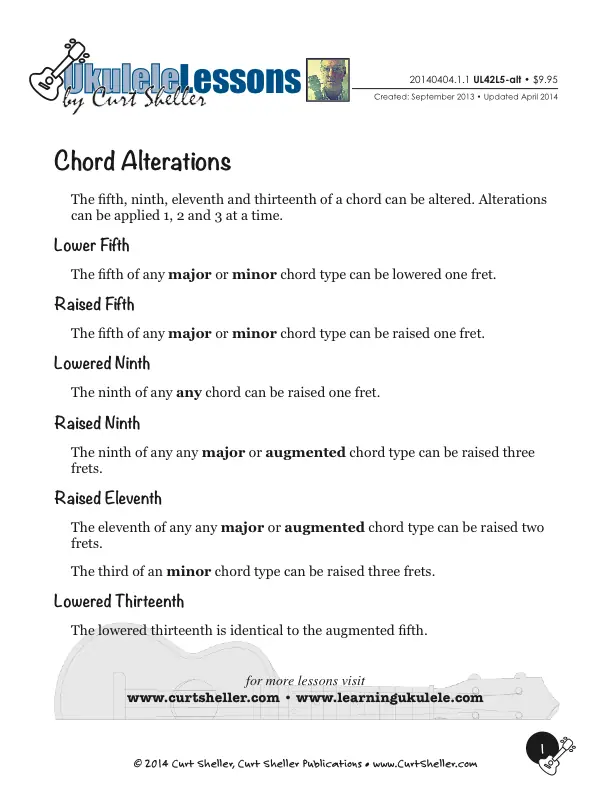
Altered Seventh Chords on `Ukulele
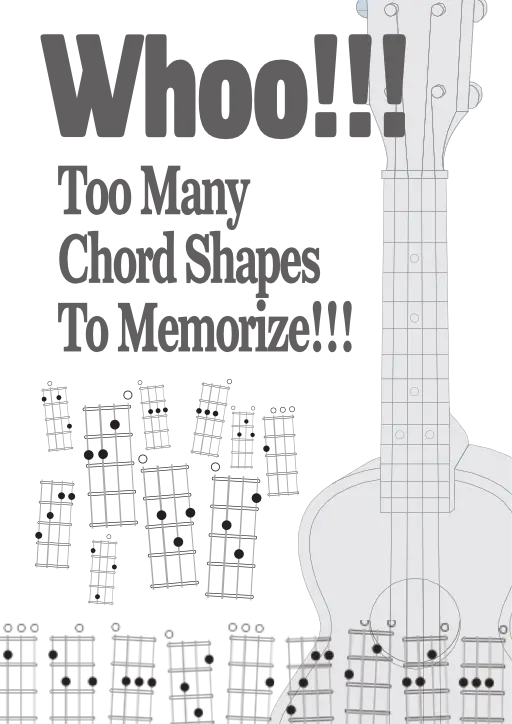
Beyond basic open position chords, basic movable form chords, and a core set of 4-part chords. There are just too many chords shapes too memorize. Learning the principles of how chords are constructed and the ukulele fingerboard are the way to go. You can then create more advanced chords like 9#11, 7#5-9, 13b5, 7+9 on the fly as needed from your core set of chords.
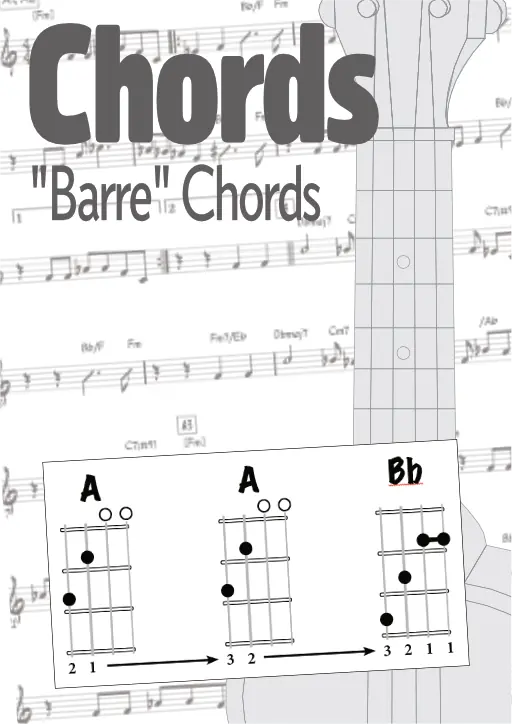
Barre Chords
"barre", the old English spelling vs. bar which refers to a measure of music, is used to indicate a placing of a finger across two or more strings. If covering all the strings it's called a full barre and if fewer than all the strings it’s a partial barre. It’s a classical guitar technic used for guitar, ukulele, mandolin and other fretted string instruments regardless of style.
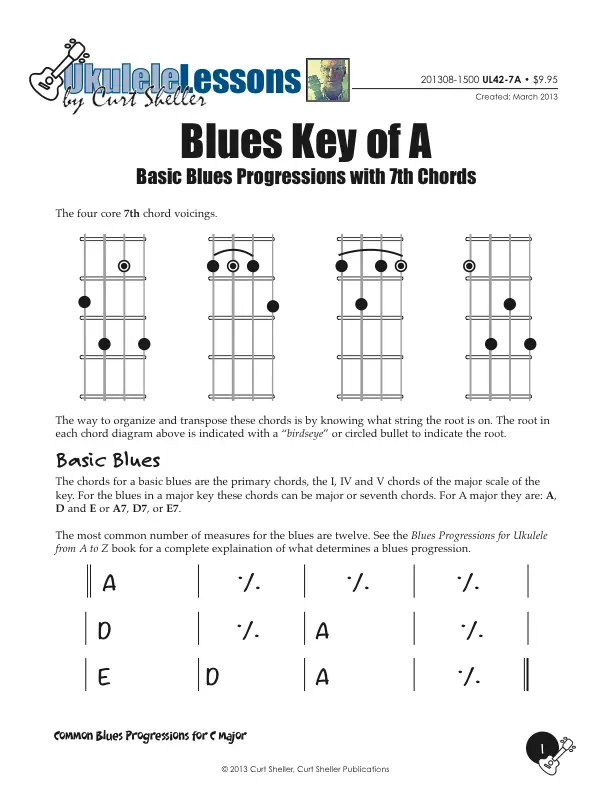
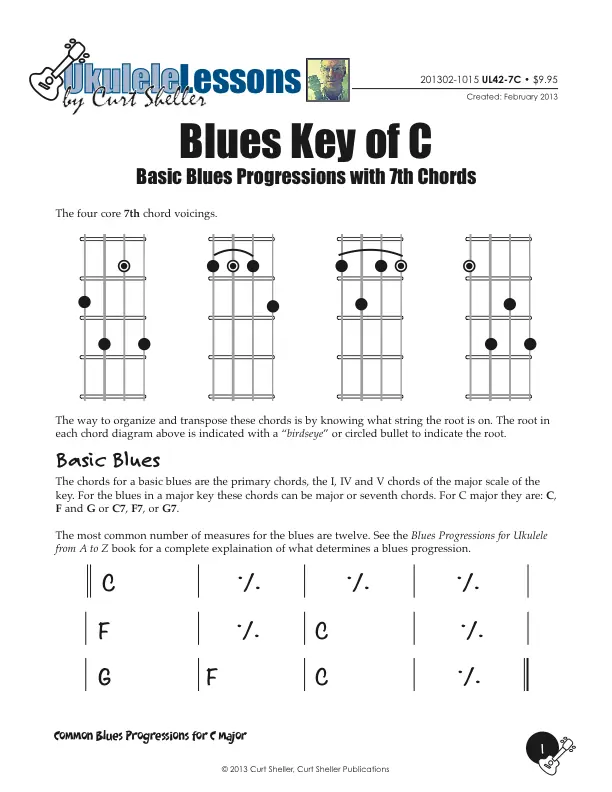
Basic Blues Progressions in C Major
Basic and Quick Change blues chord progressions in the key of C major using the core 7th chords from the Big Six series of lessons. This is a great way to explore this core chord in various keys. These are the two most common blues progressions used in traditional and contemporary music.
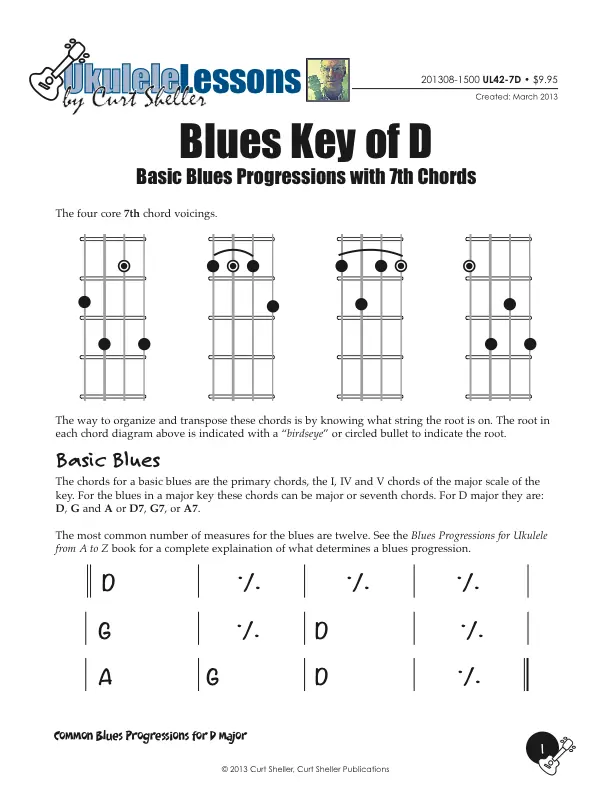
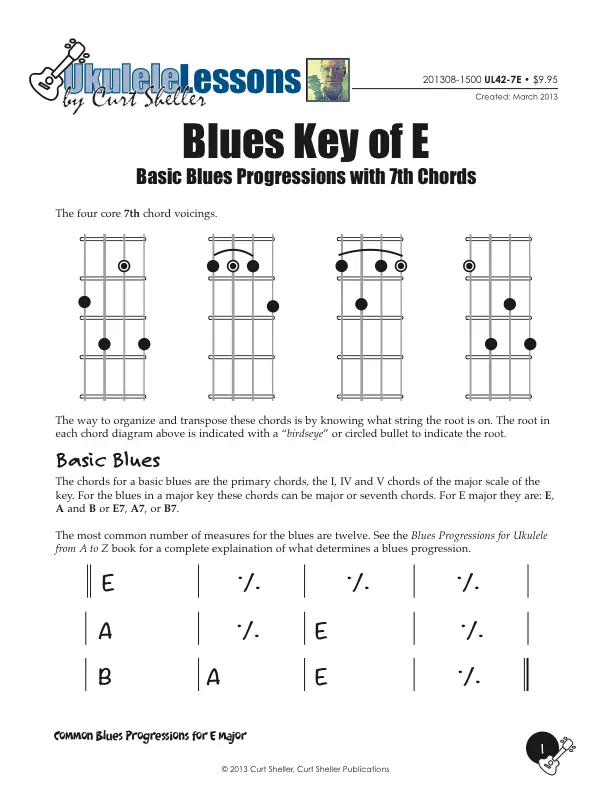
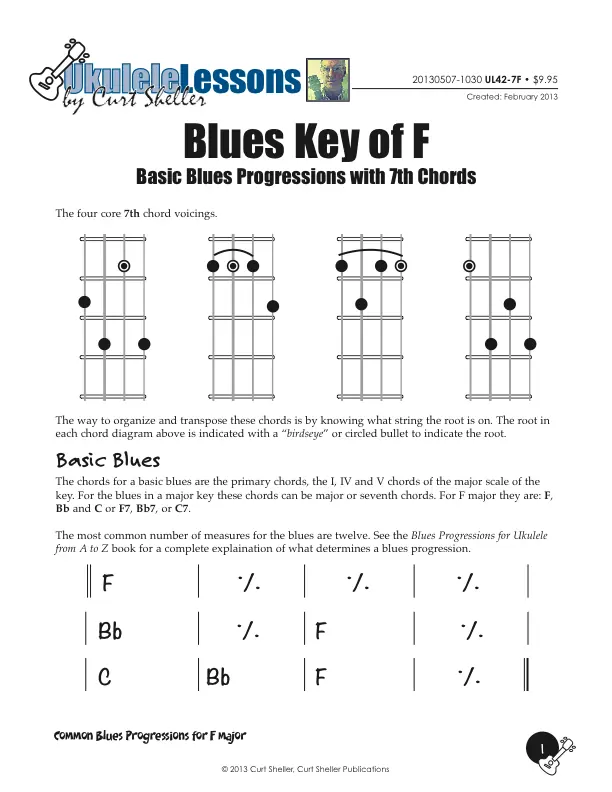
Basic Blues Progressions in G Major
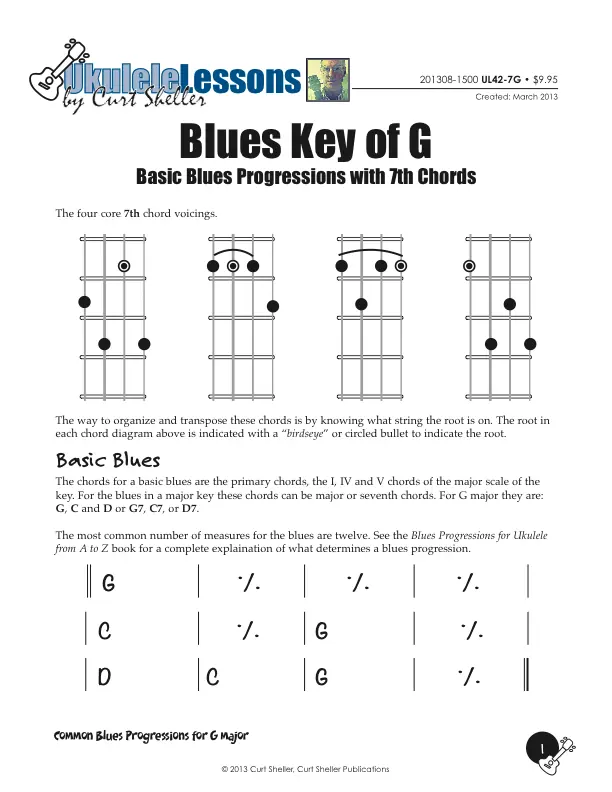
Basic and Quick Change blues chord progressions in the key of G major using the core 7th chords from the Big Six series of lessons. This is great way to explore this core chord in various keys. These are the two most common blues progressions used in traditional and contemporary music.
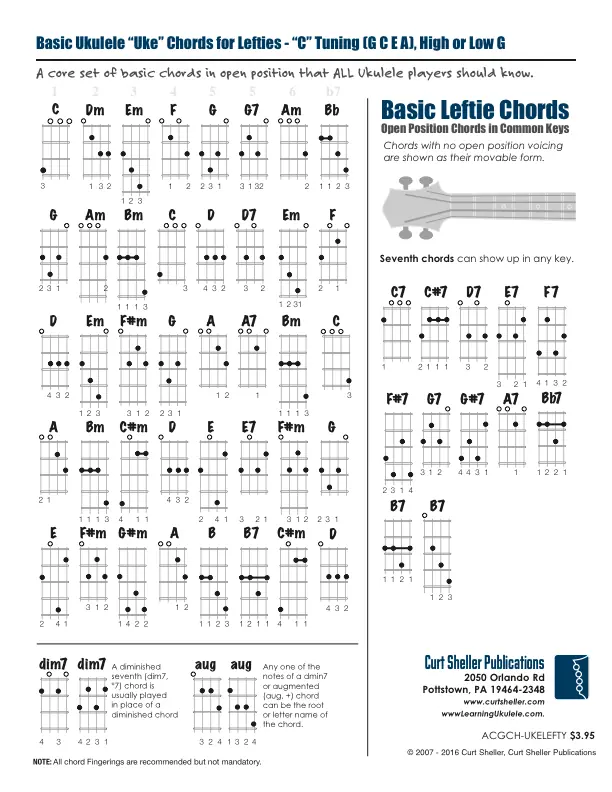
Basic Open Position `Ukulele Chord Chart for Lefties
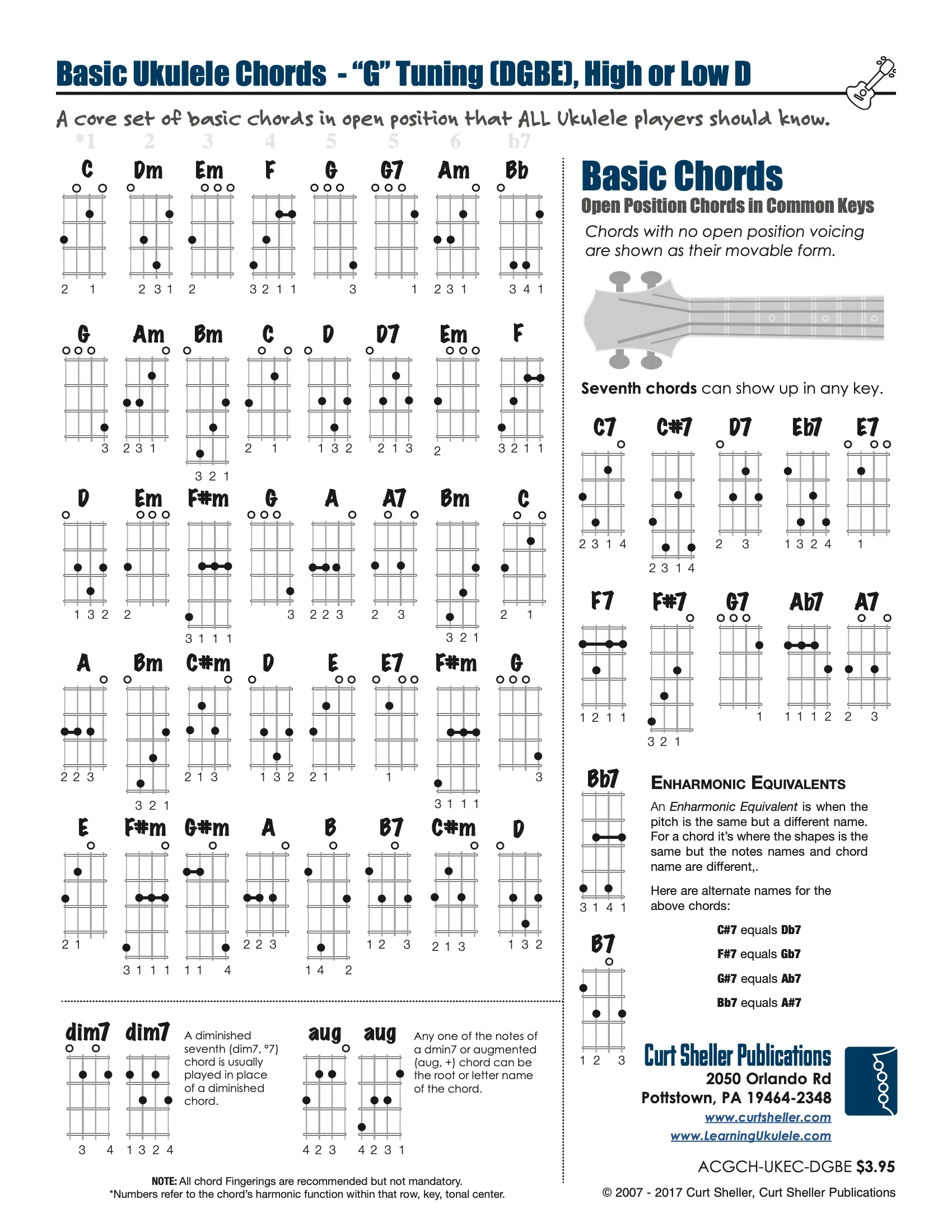
A core set of basic ukulele chords that ALL Left Handed Ukulele players should know in the five common keys of C, G, D, A and E. With the possible seventh chords for the same common keys. The chart is organized in common keys and covers basic chords in these keys.
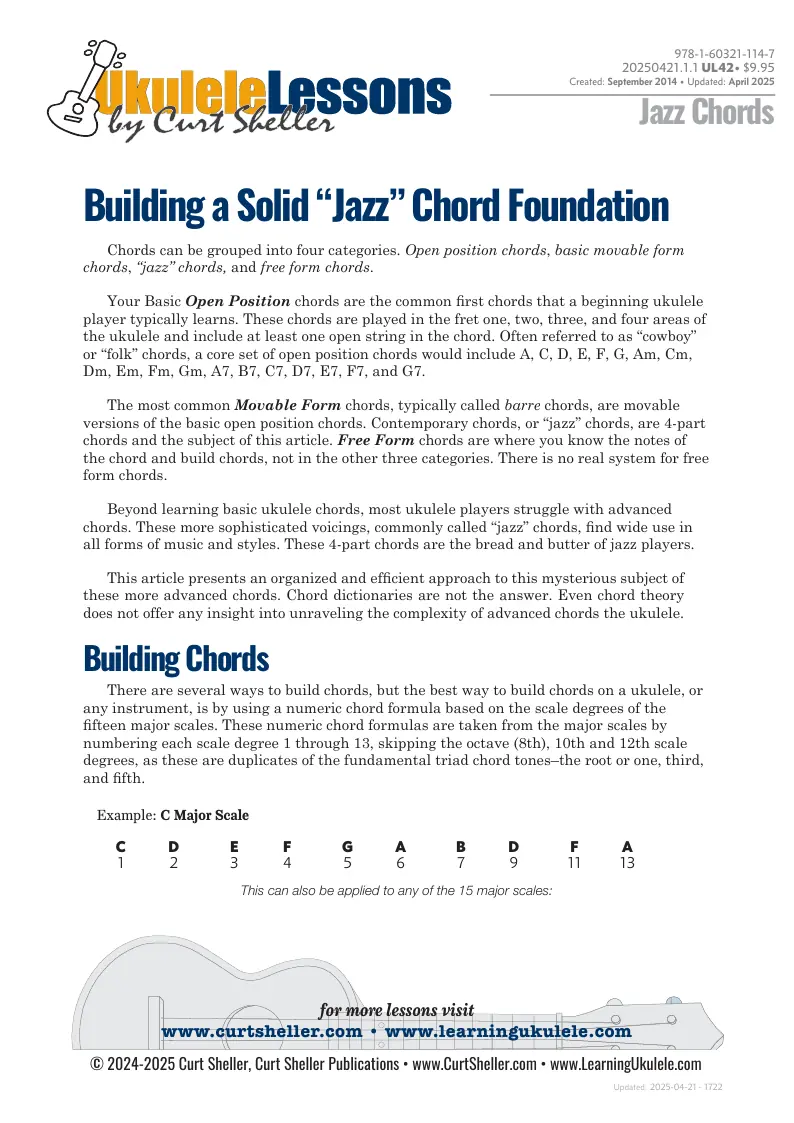

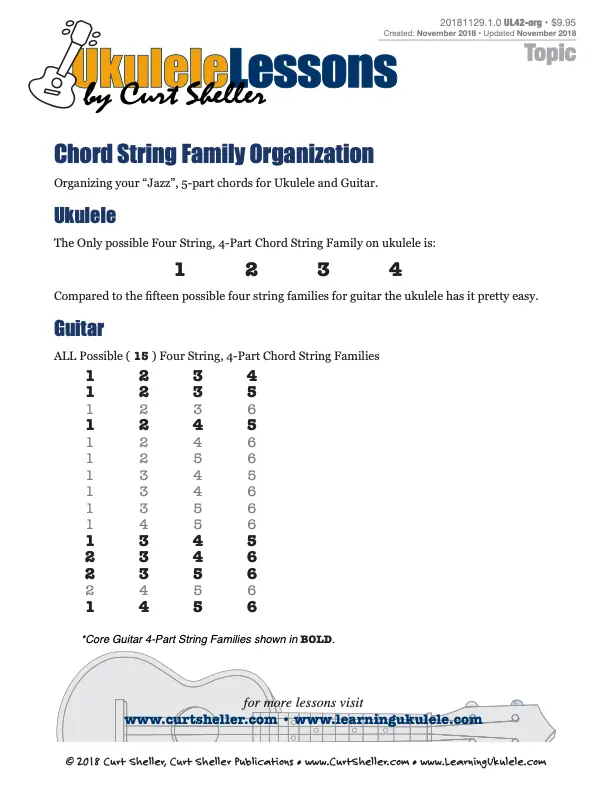



Chord a Day, January 11th - D7
Learn a new Ukulele chord every day of the year. The chord for January 11th is D7. This partial D7 is ofter referred to as the Hawaiian D7 chord after its use in the Chord sequence C D7 G7, a common turnaround in Hawaiian music. So much so that it's called the Hawaiian Turnaround.
Chord a Day, March 3rd - F7
Learn a new Ukulele chord every day of the year. The chord for March 3rd is F7. We are now entering into the so-called “Jazz” chord, world of chords. Technically “Jazz” chords are simply 4-part contemporary chords that find the use in a wide variety of traditional and contemporary music.
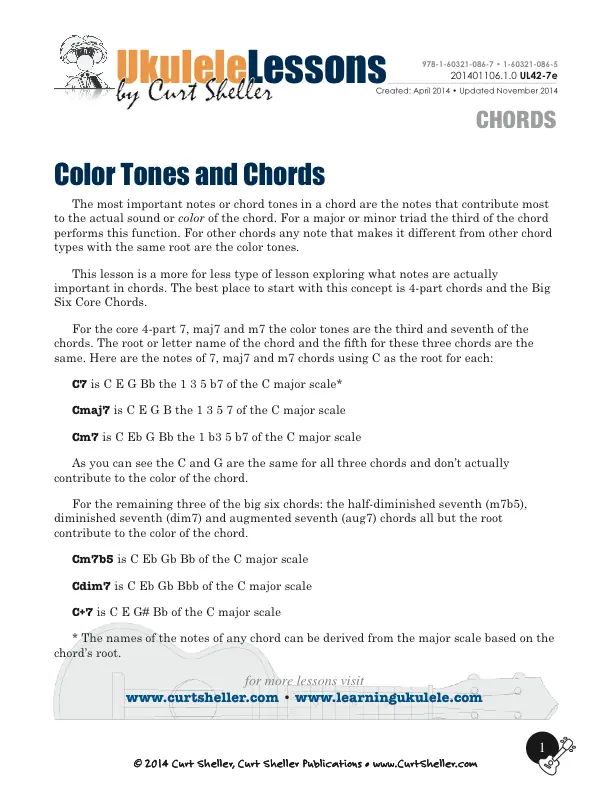
Color Tones and Chords
The most important notes or chord tones in a chord are the notes that contribute most to the actual sound or “color” of the chord. For a major or minor triad, the third of the chord performs this function. For other chords, any note that makes it different from other chord types with the same root are the color tones.
This lesson is a more for less type of lesson exploring what notes are actually important in chords. The best place to start with this concept is 4-part chords and the Big Six Core Chords.

Core Chords - Building a Solid Foundation of Contemporary Chords
"Core Chords" are a concept that I typically apply to 4-part chords and your more contemporary modern chords. This where a solid foundation of a core set of chords really help in learning the massive amount of chords that are required for play contemporary music or jazz on ukulele or guitar. Not such a task on ukulele with on one four string set of strings to build your 4-part chords vs. the theoretically possible 15 sets available for guitar.
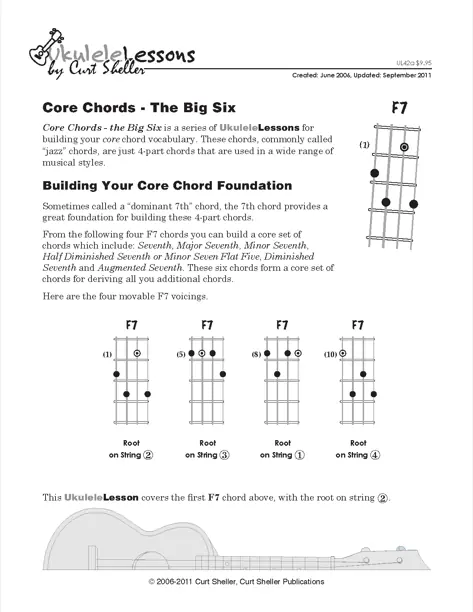
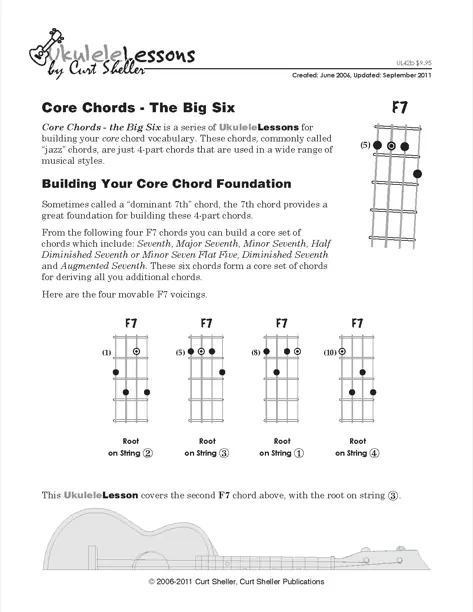
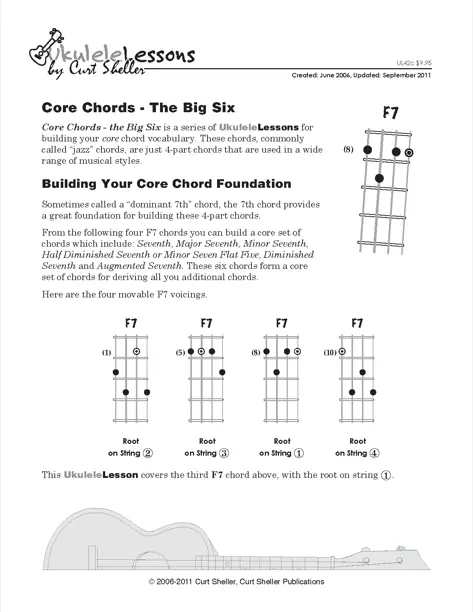
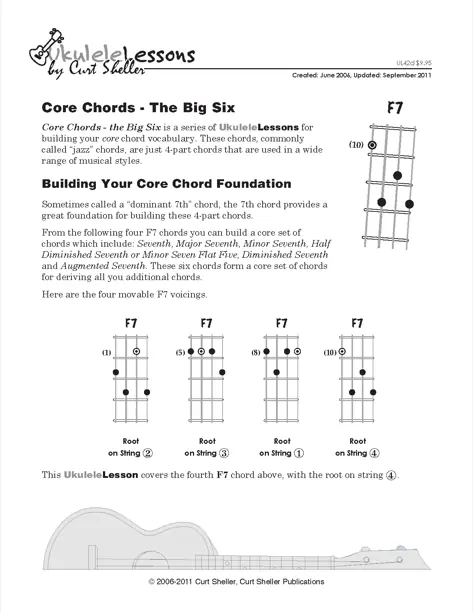
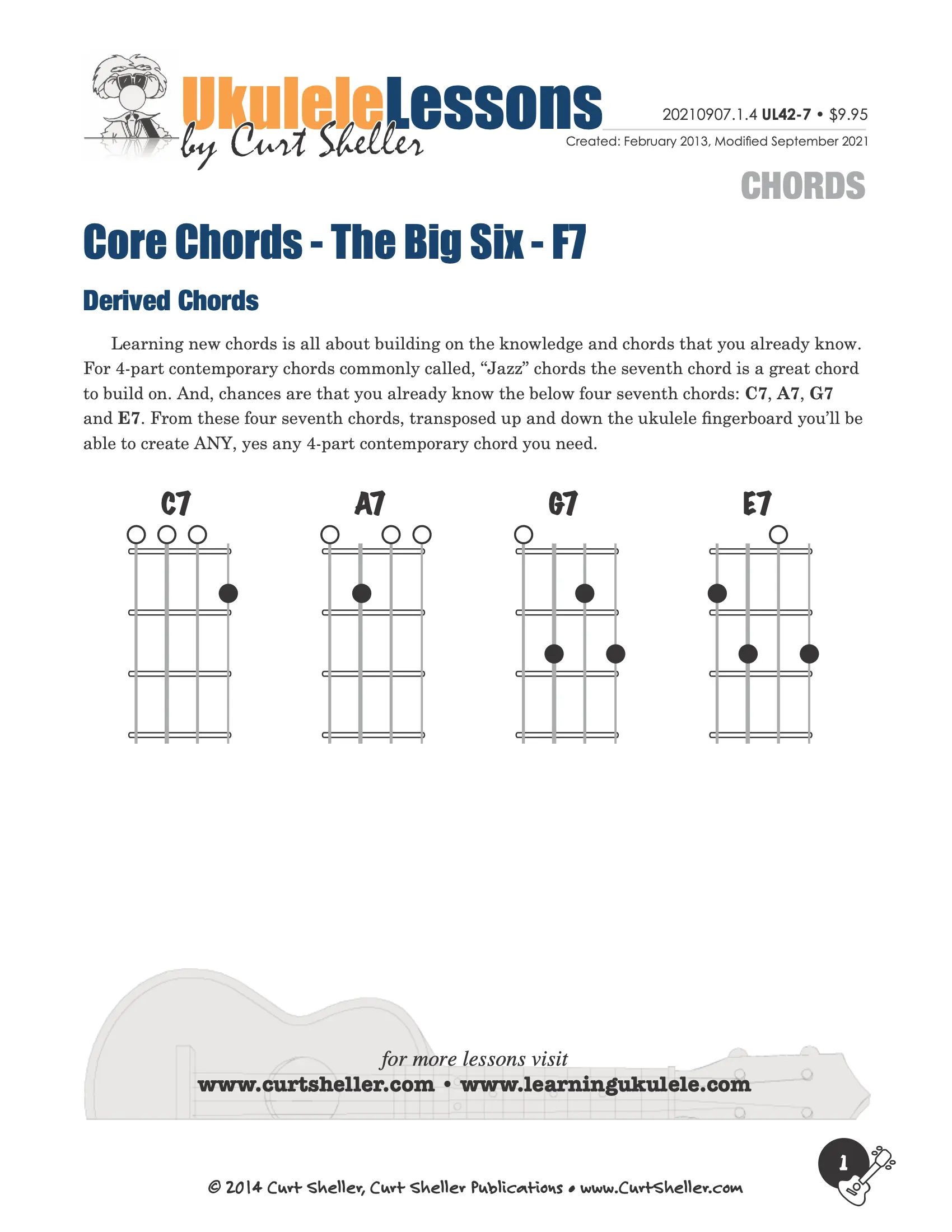
Core Chords - The Big Six - Building a Solid Chord Foundation
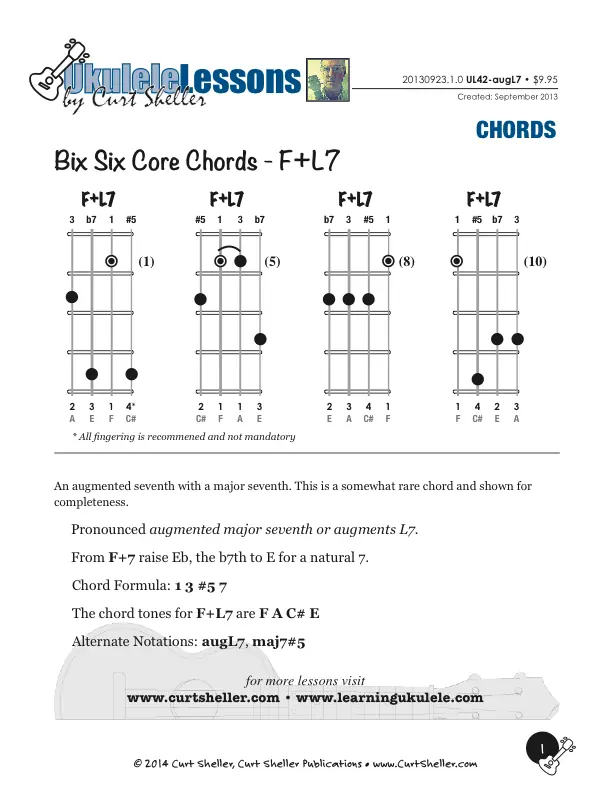
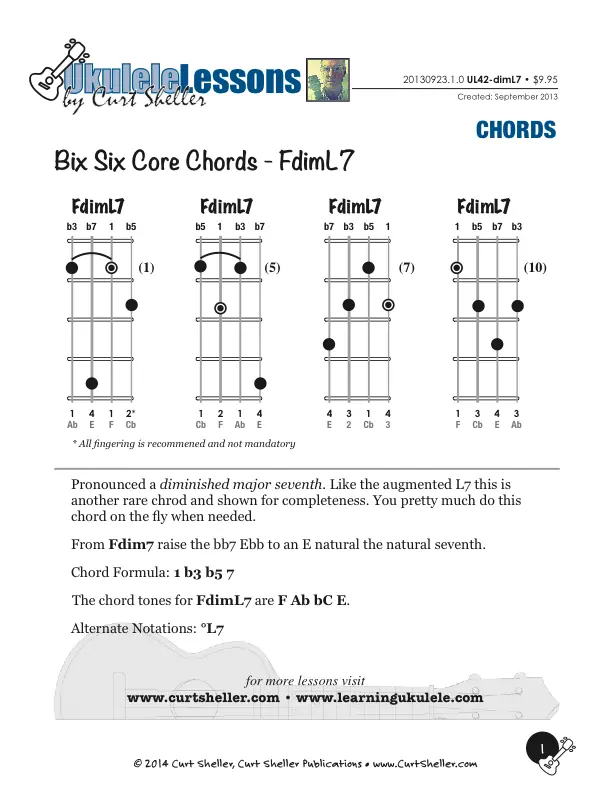
The Big Six Core Chords is a series of lessons for building your core, essential 4-part chords. These chords commonly called jazz chords, are really just 4-part chords used in a wide range of musical styles. These chords include: Seventh , Major Seventh, Minor Seventh, Half Diminished Seventh or Minor Seven Flat Five, Diminished Seventh, and Augmented Seventh. These six chords form a core set of chords.

Core Ukulele Chords - Level One
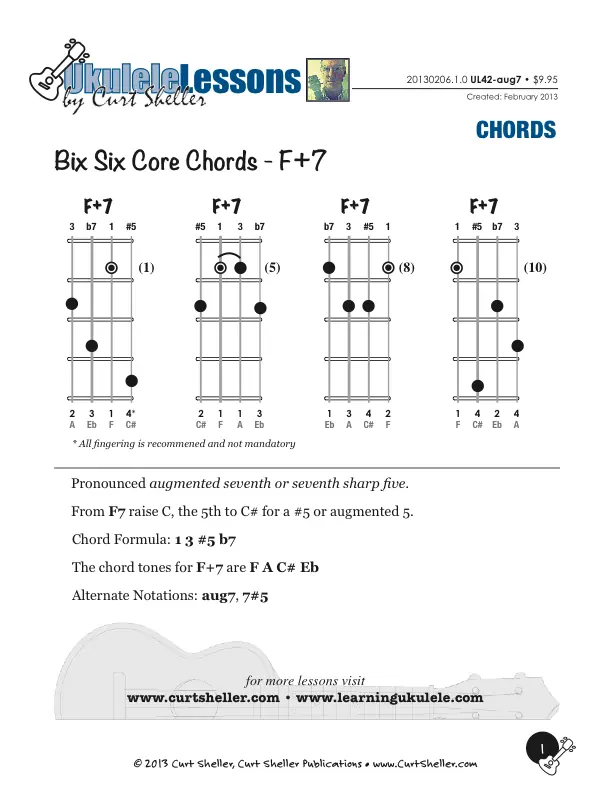
The remaining chords for The Big Six, Level I Core Chords. The Big Six chords include: Seventh 7, Major Seventh maj7, Minor Seventh m7, Half Diminished Seventh or Minor Seven Flat Five diminished 7 m7b5, Diminished Seventh o7 and Augmented Seventh +7. These six chords form a core set of chords.
Core Ukulele Chords - Triads, Add Chords
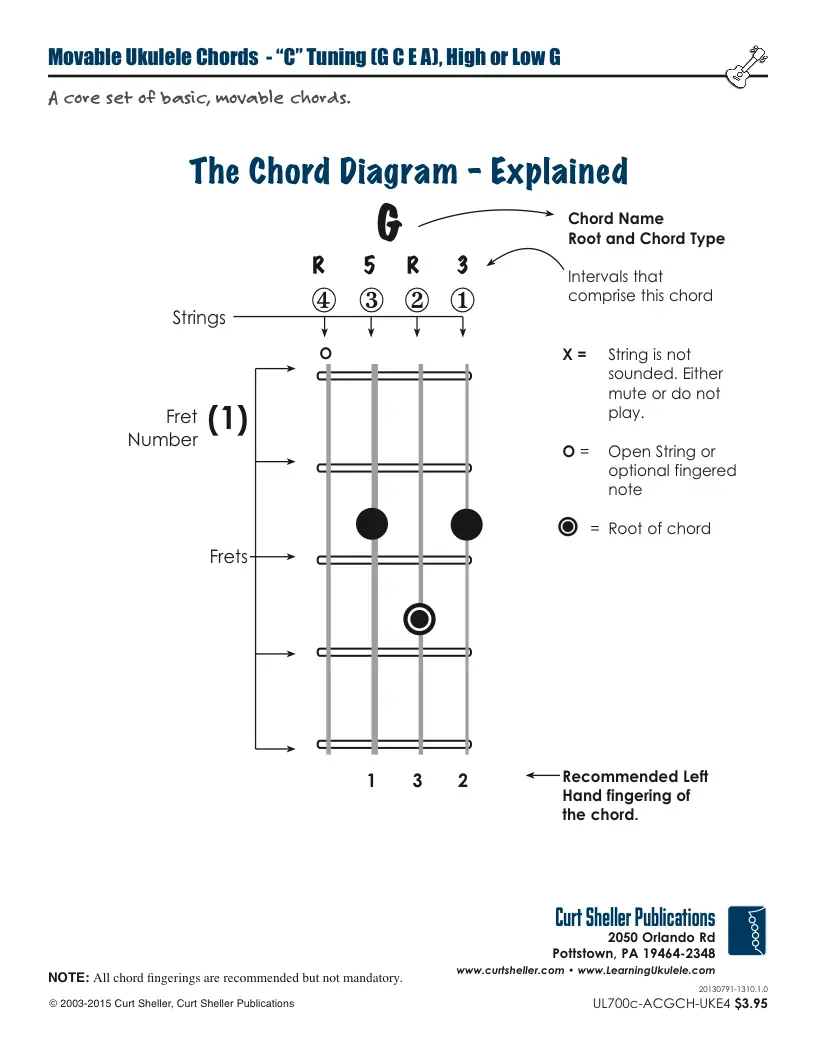
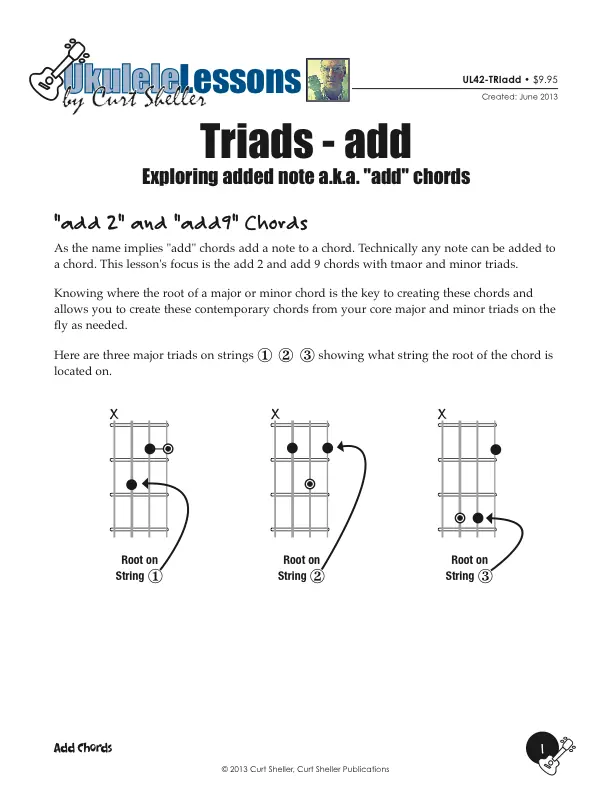
A triad is a three note chord. In traditional chord theory there are four traditional triad chord types: major, minor, diminished and augmented. And four contemporary triad chord types: sus2, sus4, add2 and add9. This series of lessons explores contemporary add chords using triads covered in earlier lessons of this series.
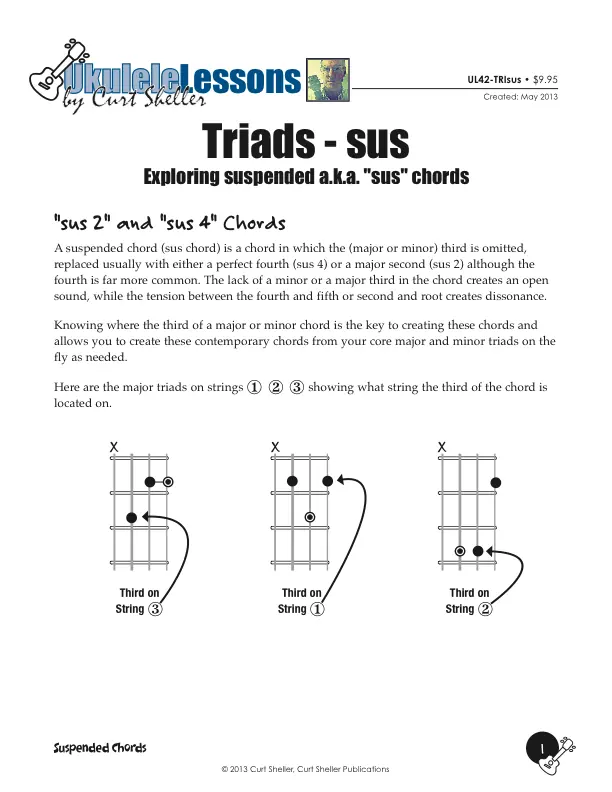
Core Ukulele Chords - Triads, Suspended Chords
A triad is a three note chord. In traditional chord theory there are four traditional triad chord types: major, minor, diminished and augmented. And four contemporary triad chord types: sus2, sus4, add2 and add9.
This series of lessons explores contemporary suspended or sus chords using triads cover is earlier lessons of this series.
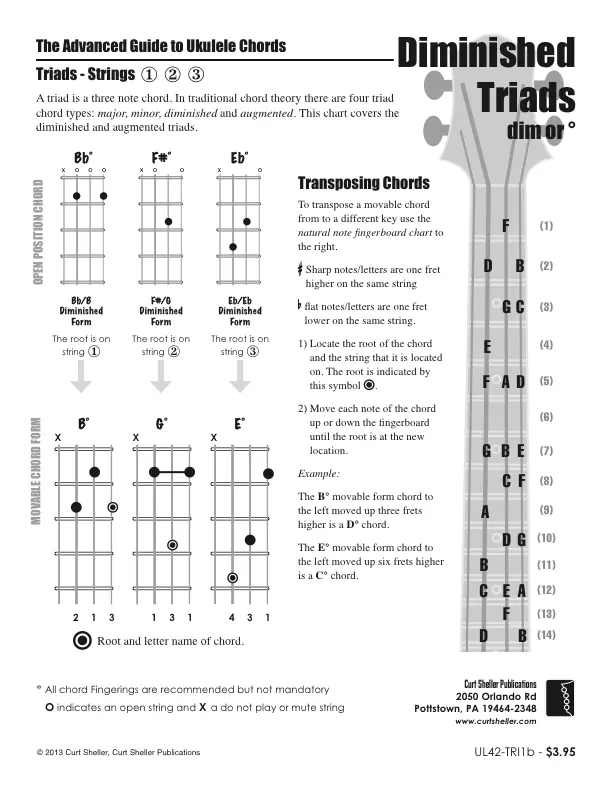
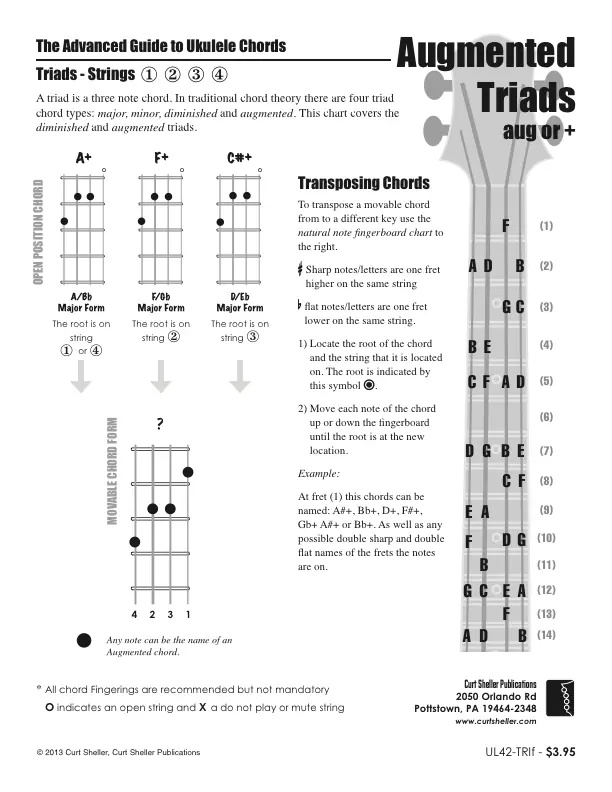
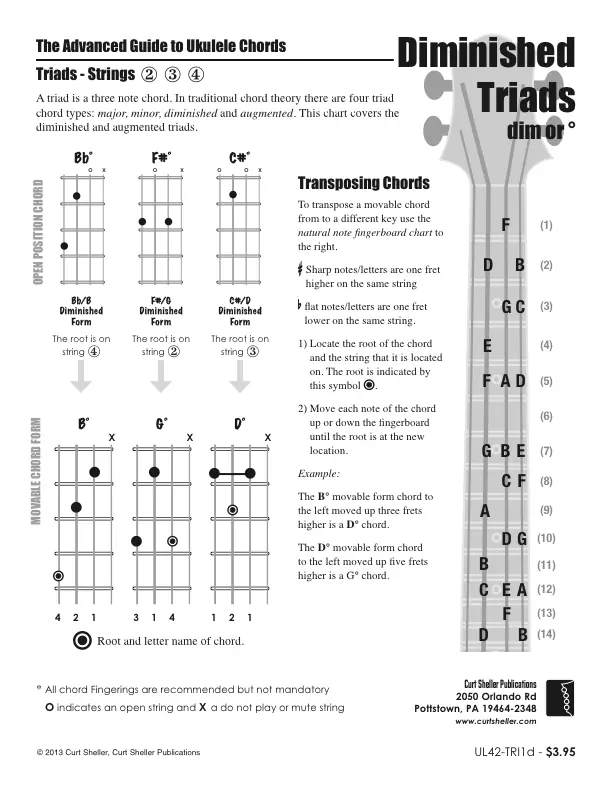
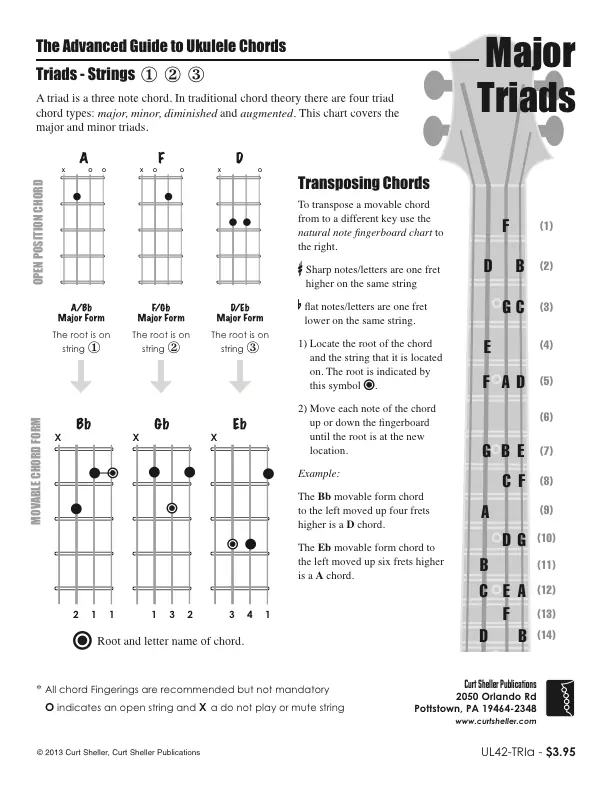
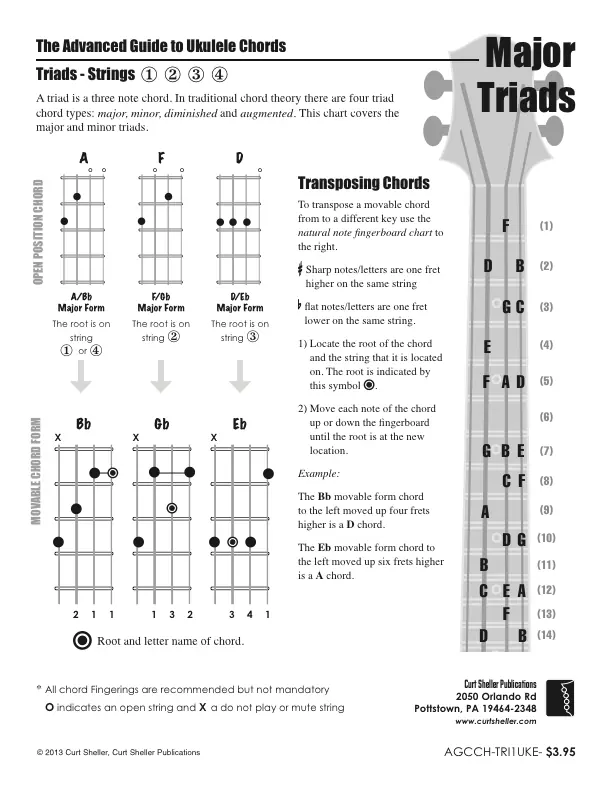
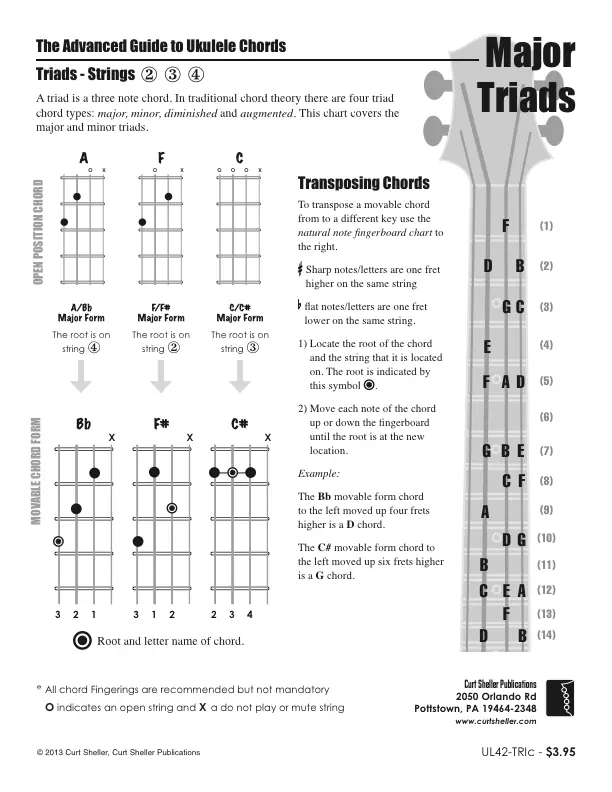
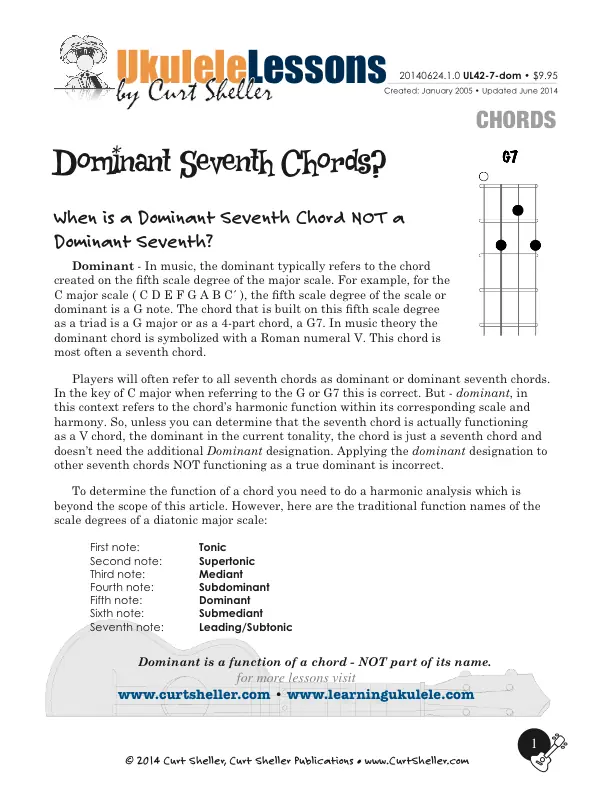
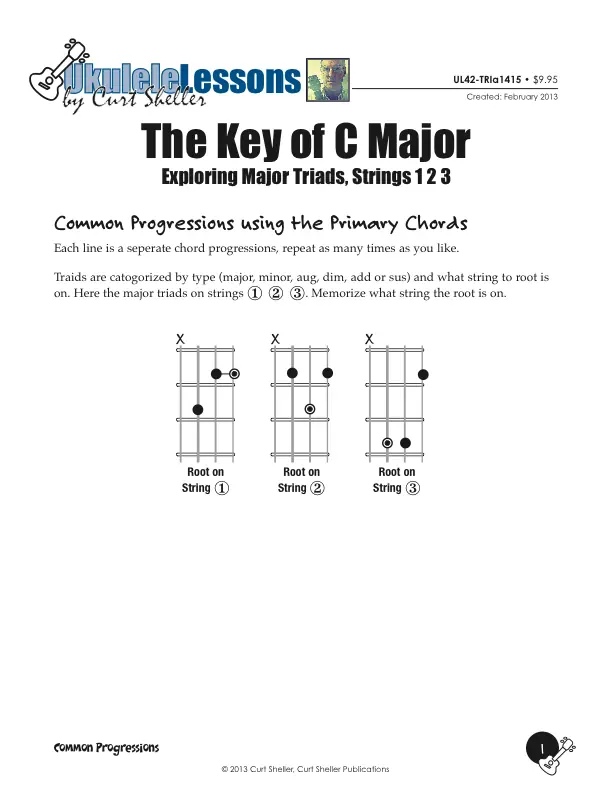
Exploring Major Triads on Ukulele Using a I IV I V Progression - C Major
Building major triads using the primary chords of C major. Triads are one of the first chords that really bring to light the need to know the notes of the neck. This lesson shows the three voicings and the solutions for playing a common "1 4 1 5" progression using C, F and G triads on the string 1 2 3 set.

Exploring Major Triads on `Ukulele Using a I IV I V Progression - Key of D
Exploring major triads using the primary chords of D major. Triads are one of the first chords that really bring to light the need to know the notes of the neck. This lessons shows the three voicings and the solutions for playing a common 1 4 1 5 progression using D, G and A triads on the string 1 2 3 set.
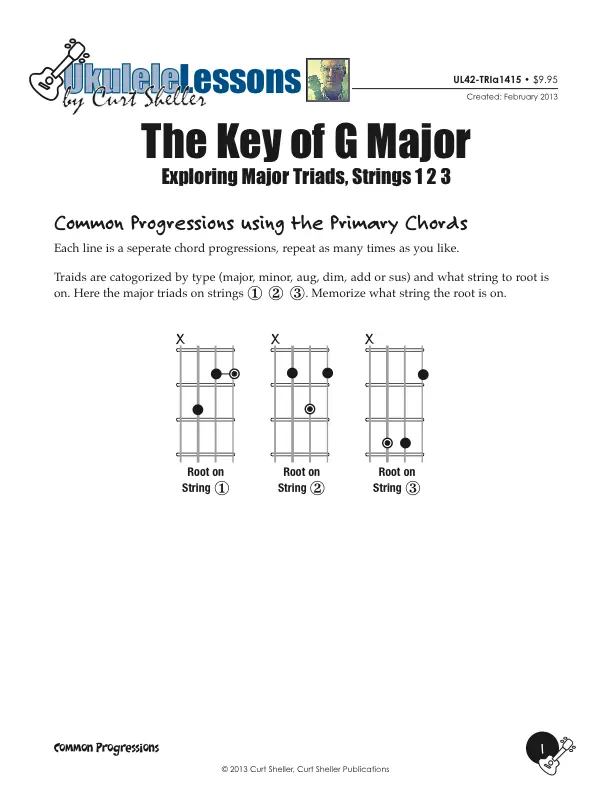
Exploring Major Triads on `Ukulele Using a I IV I V Progression - Key of G
Exploring major triads using the primary chords of G major. Triads are one of the first chords that really bring to light the need to know the notes of the neck. This lesson shows the three voicings and the solutions for playing a common 1 4 1 5 progression using G, C and D triads on the string 1 2 3 set.

Learning Core Seventh Chords on `Ukulele
Beyond basic open position chords, basic movable form chords and a core set of 4-part chords. There are just too many chords shapes too memorize. Learning the principles of how chords are constructed and the ukulele fingerboard are the way to go. Then you can create more advanced chords like 9#11, 7#5-9, 13b5, 7+9 on the fly as needed.
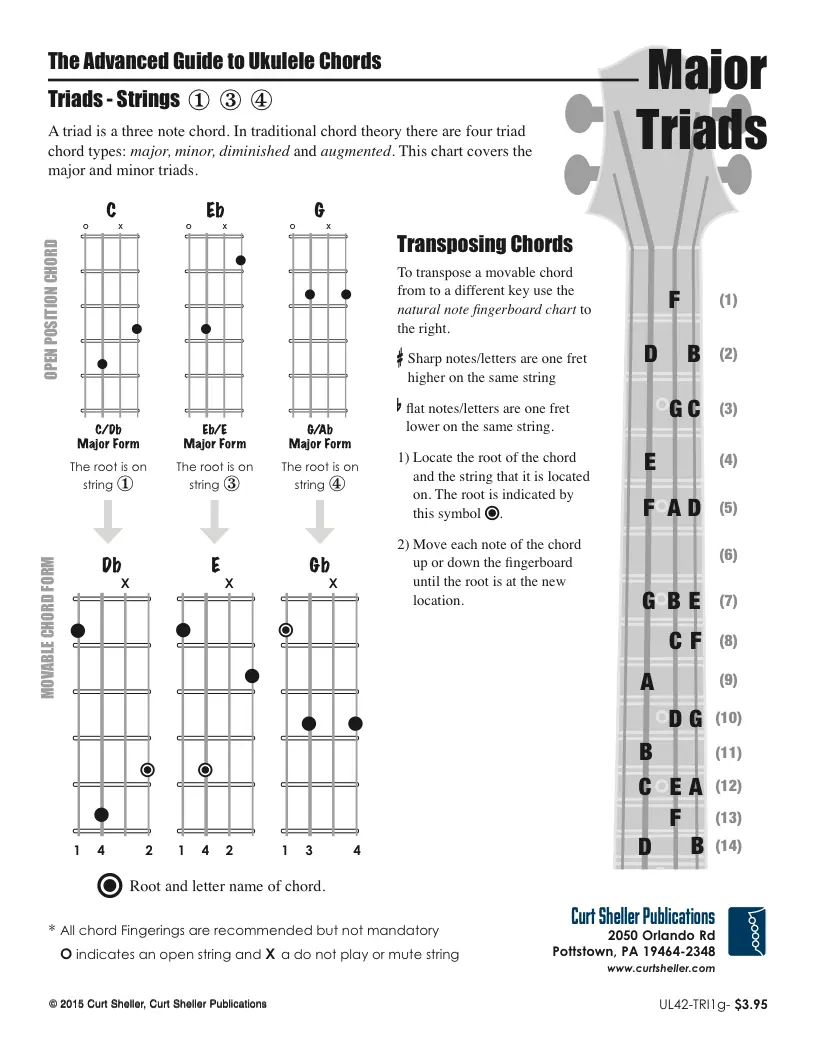
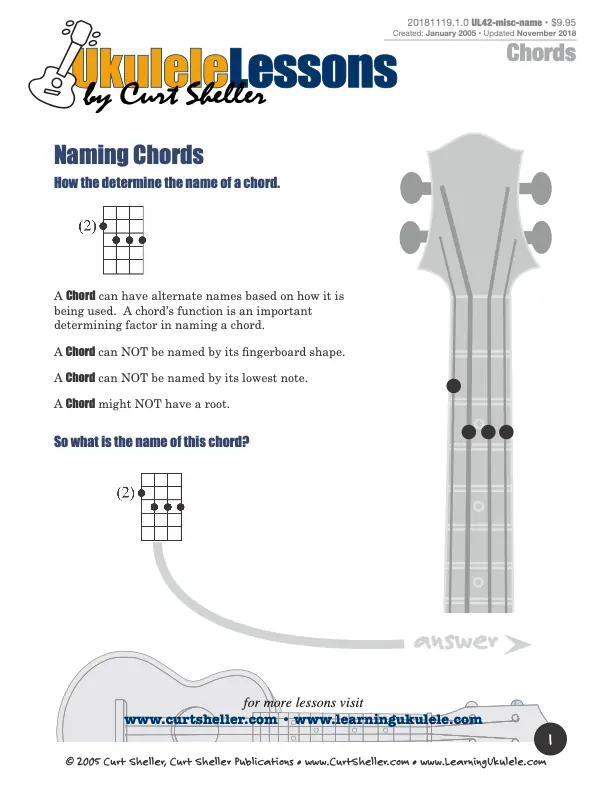
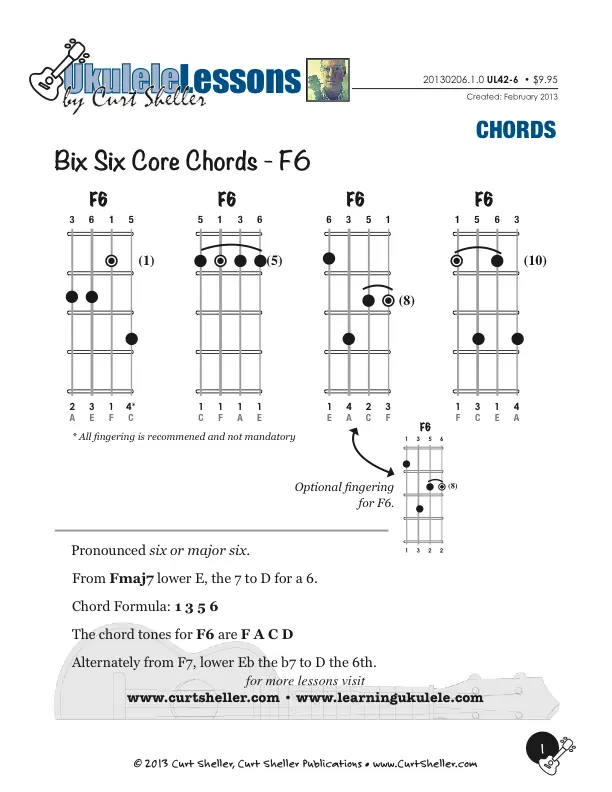
The Big Six Core Chords - F6, Four Voicings
The Big Six Core Chords: "F6". This is the Level II of your core 4-part "Jazz" chords. The F6 is a 1 3 5 6 of the major scale, based on the root of the chord. A major 6th chord can be derived either from a seventh or major seventh chord. From a seventh chord lower the flat seventh one fret. From a major seventh chord lower the natural seventh two frets.
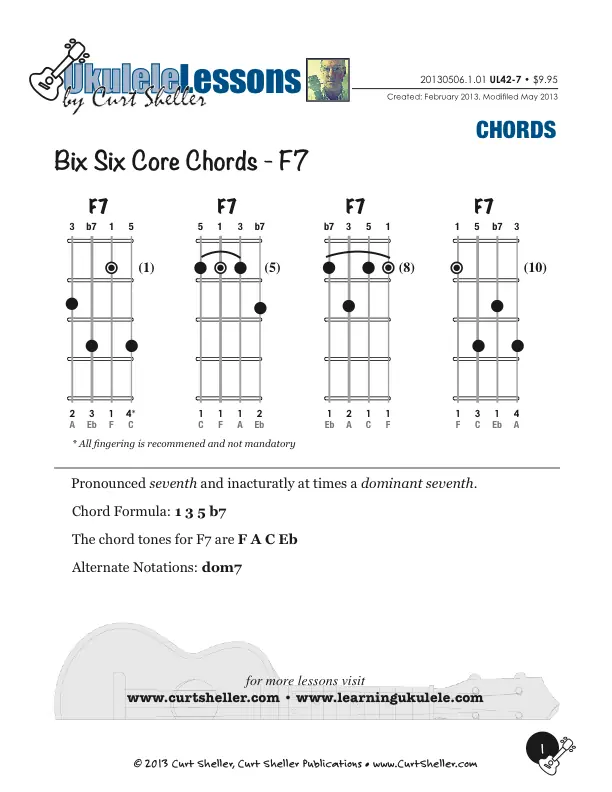
The Big Six Core Chords - F7, Four Voicings
The Big Six Core Chords, Level I - F7, four voicings. The F7 is a 1 3 5 b7 of the major scale, based on the root of the chord. For F7 the chord tones are: F A C Eb. These ARE the four F7 chord voicings that are used for deriving other chords. If all else fails when trying to remember a particular chord you can go back to your base seventh chords and go through the chord formula for deriving the chord you need.
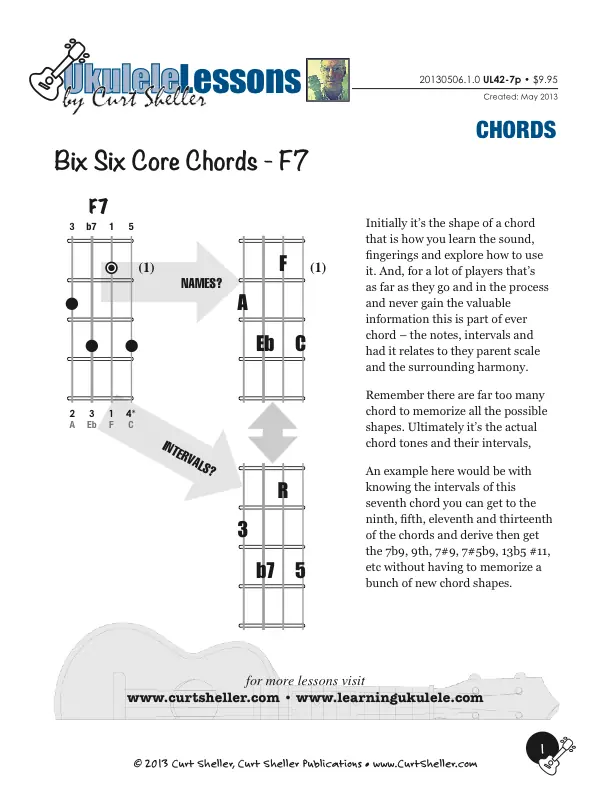
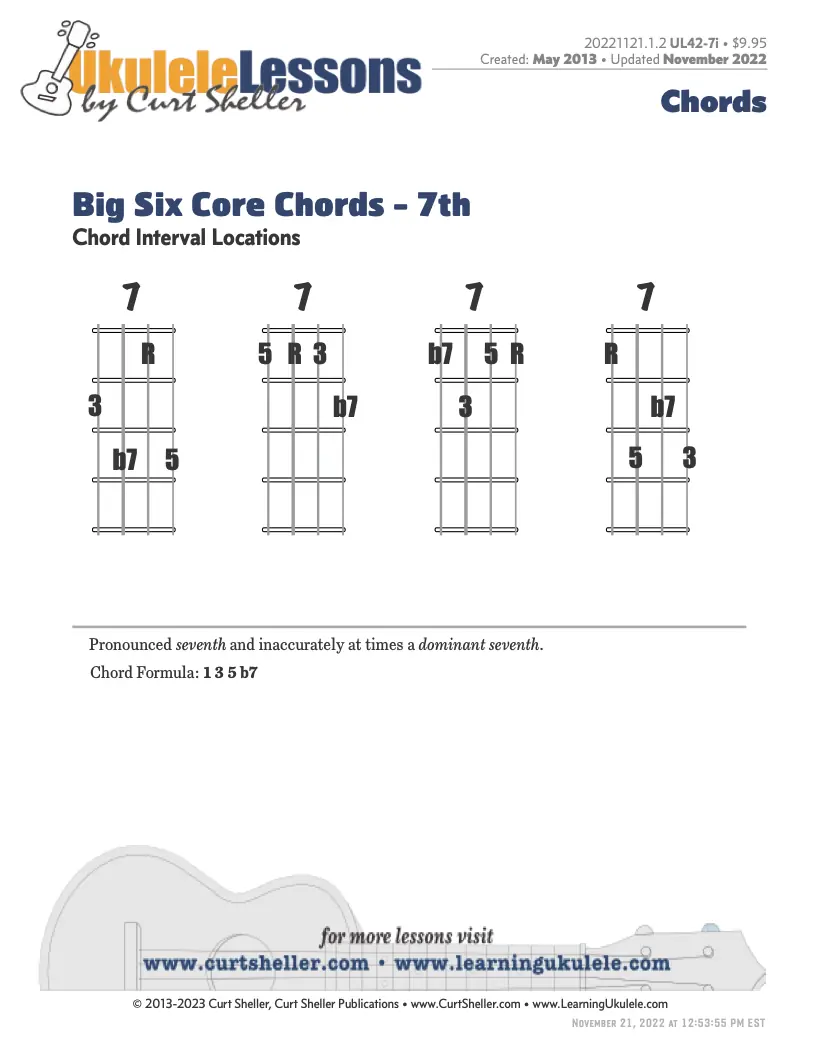
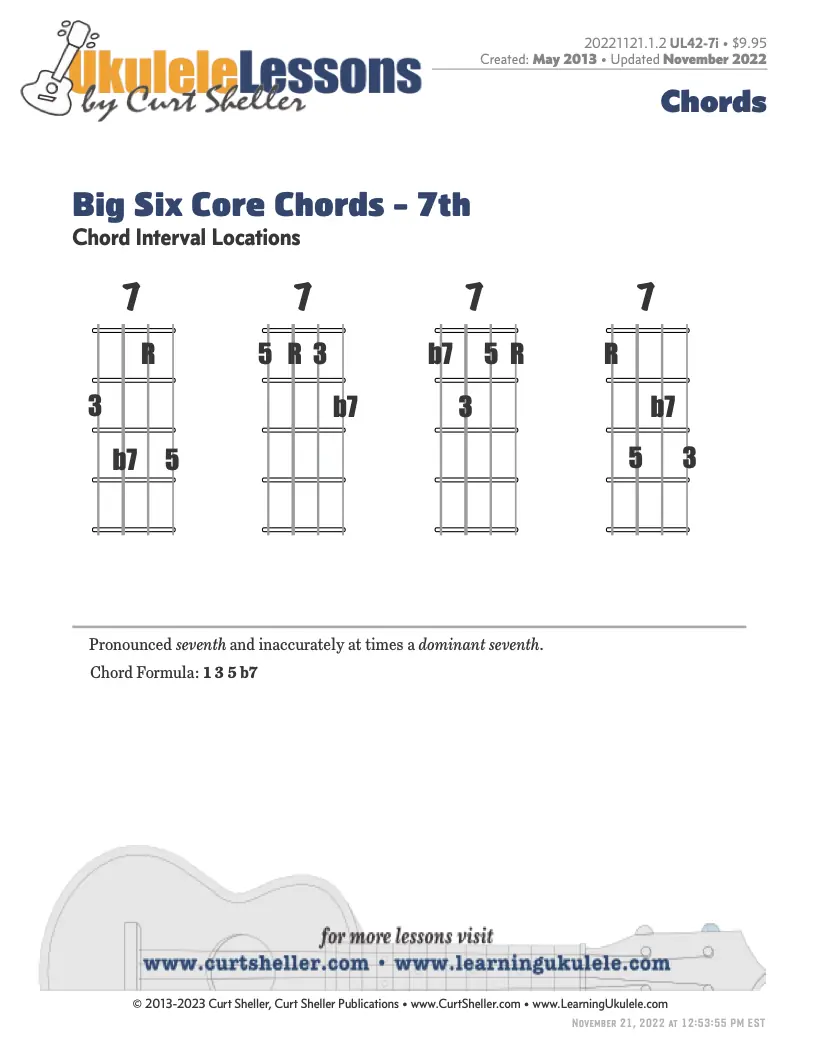
The Big Six Core Chords - F7, four voicings, Chord Intervals
The Big Six Core Chords - Level I: "F7" is created from the "1 3 5 b7" of the major scale, based on the root of the chord. For "F7" the chord tones are: F A C Eb. This lesson introduces the four "F7" voicings on the string set, strings 1, 2. 3, and 4. The Chords are shown for C Tuning, Low and High G.
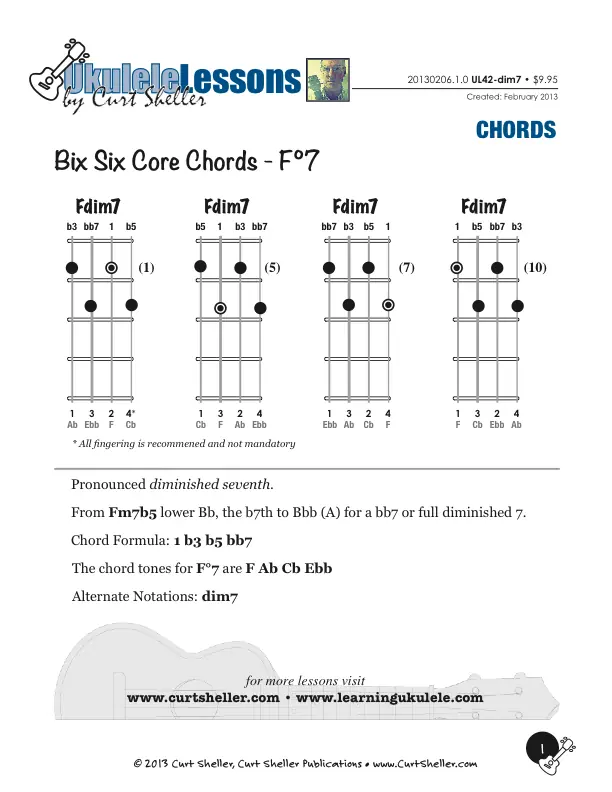
The Big Six Core Chords - Fdim7, Four Voicings
The Big Six Core Chords, Level I - Fdim7, four voicings. Fdim7 is a 1 b3 b5 bb7 of the major scale, based on the root of the chord. These are the four Fdim7 chord voicings that will be used for deriving other chords. There are far too many chord shapes to memorize thousands of shapes.
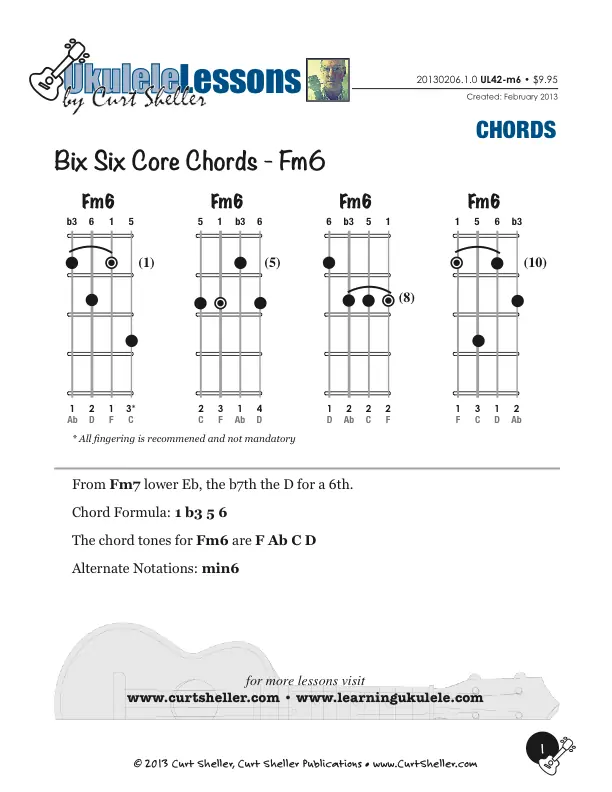
The Big Six Core Chords - Fm6, Four Vocings
The Big Six Core Chords: "Fm6". This is the Level II of your core 4-part "Jazz" chords. The Fm6 is a 1 b3 5 6 of the major scale, based on the root of the chord. A minor 6th chord can be derived either from a minor seventh or major sixth chord. From a minor seventh chord lower the flat seventh one fret. From a major sixth chord lower the natural third one fret.
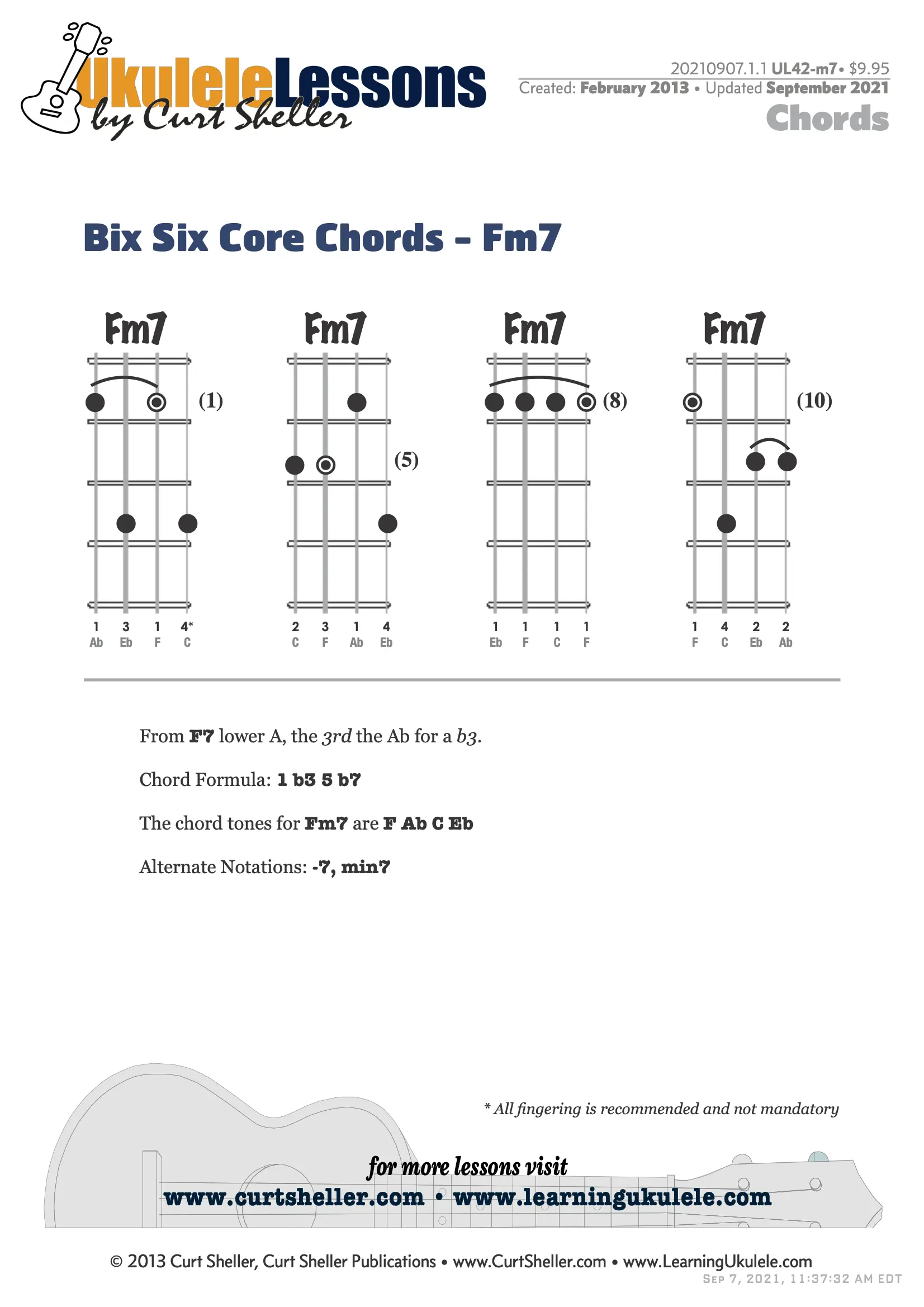
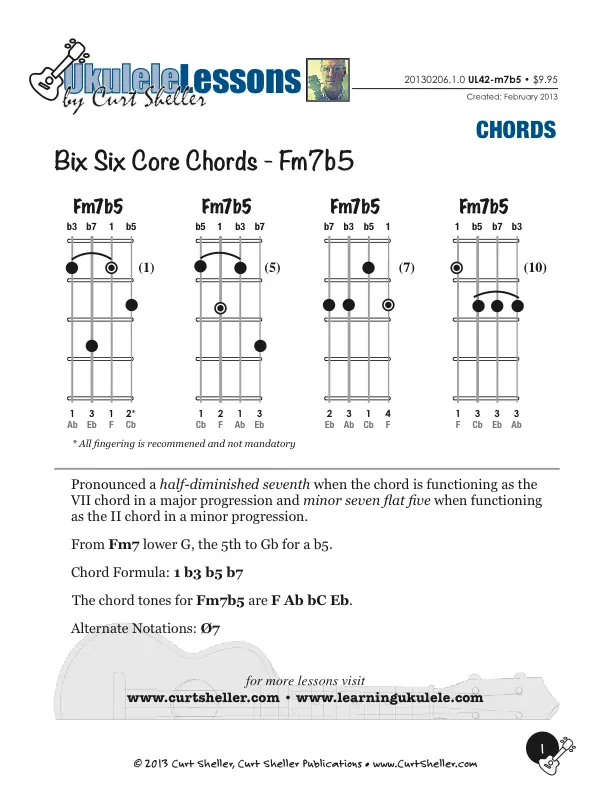
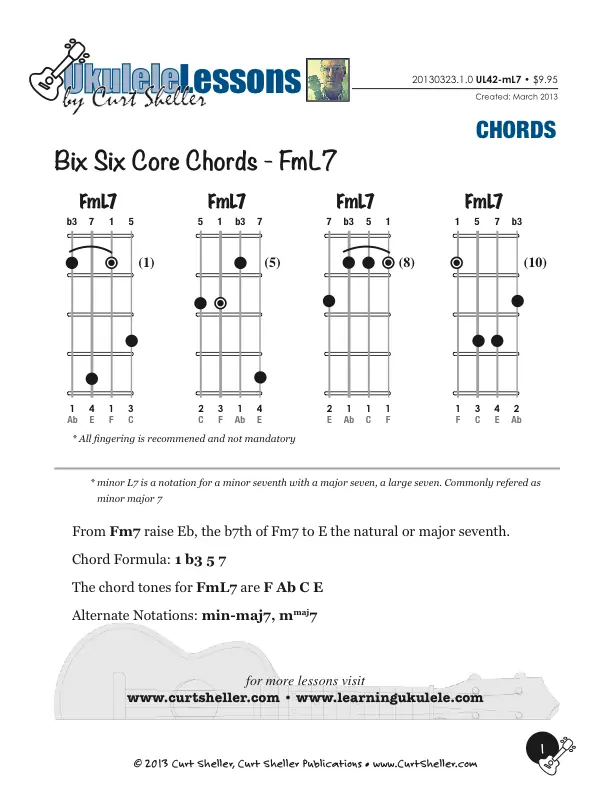
The Big Six Core Chords - FmL7, Four Voicings
The Big Six Core Chords - Level II: "FmL7" is created from the "1 b3 5 7" of the major scale, based on the root of the chord. For "FmL7" the chord tones are: F Ab C E. The L is a contemporary chord designation and refers to a large seventh, a major seventh.
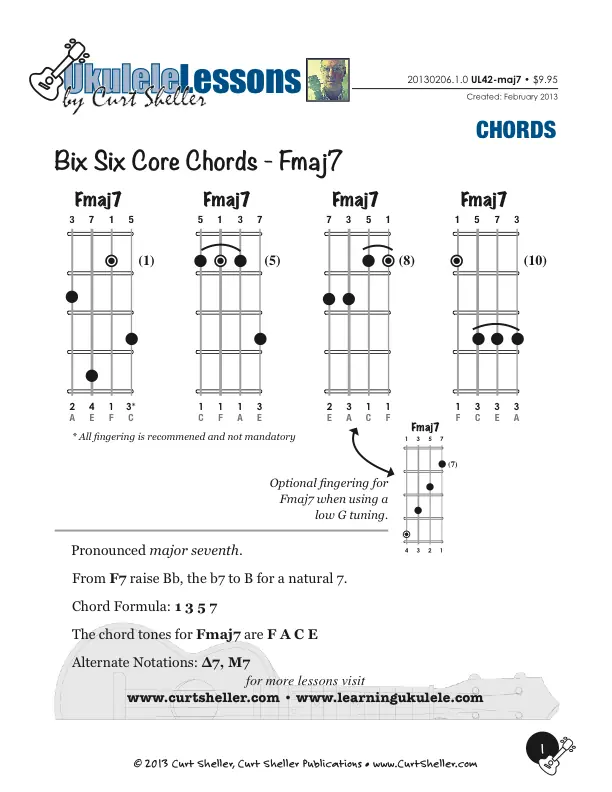
The Big Six Core Chords - Fmaj7, Four Voicings
The Big Six Core Chords, Level I - Fmaj7, four voicings. Fmaj7 is a 1 3 5 7 of the major scale, based on the root of the chord. These are the four Fmaj7 chord voicings that will be used for deriving other major seventh derived chords. There are far too many chord shapes to memorize thousands of shapes.
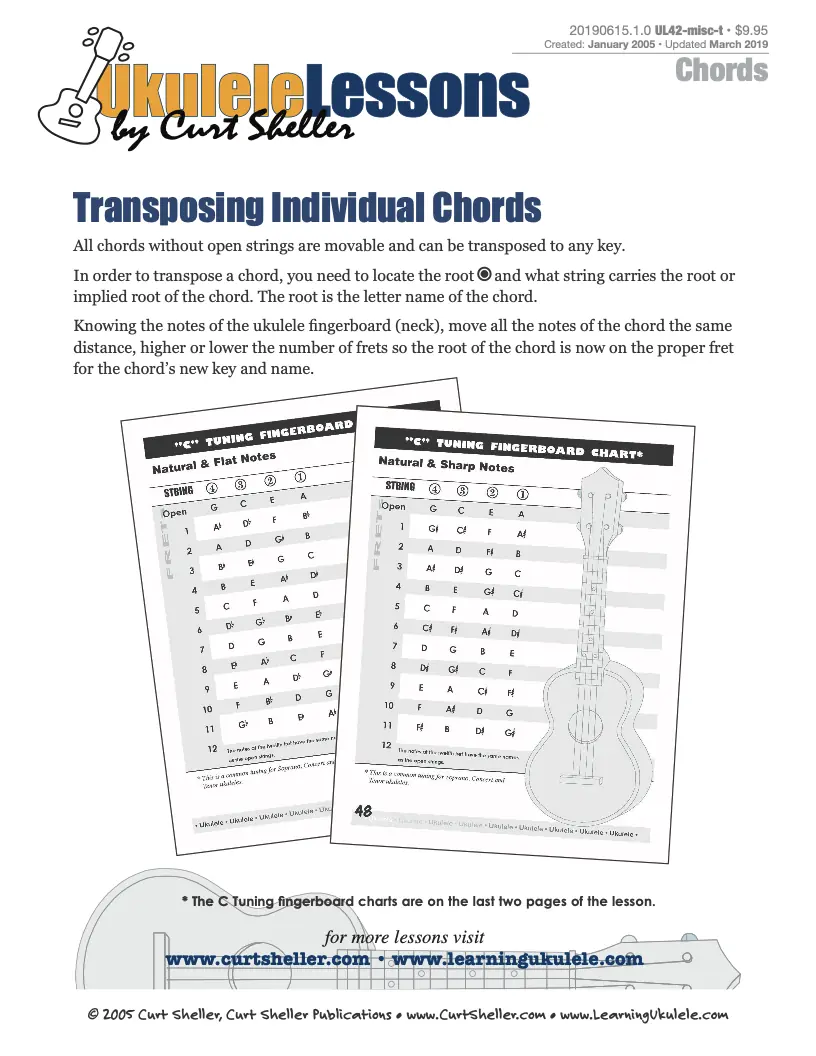
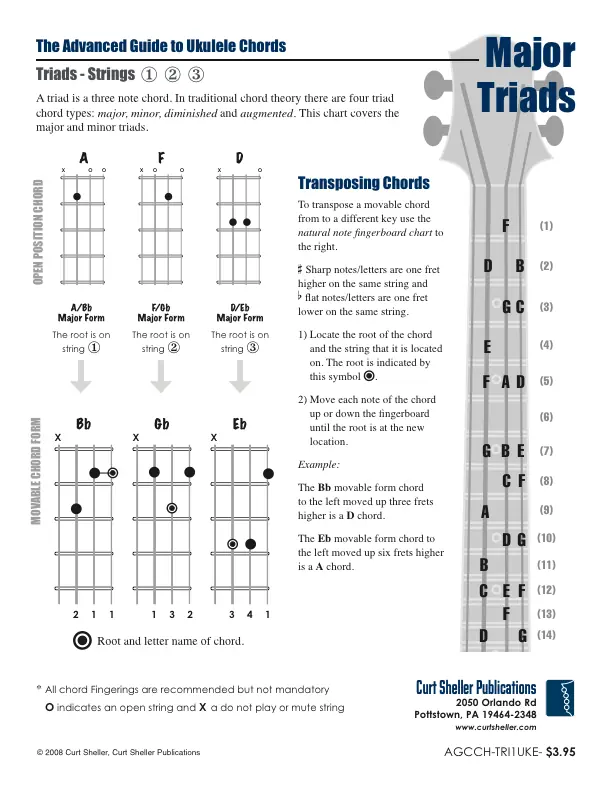
Transposing Individual `Ukulele Chords
"Transposition" is the process of moving a note, chord, scale or any musical passage from one key to another key. All music can be transposed, from a single note to a complex musical score. This lesson deals with transposing chords on ukulele and transposing chords.

Upper Partial Chord Tones
Upper Partials or extensions for chords are the 9th, 11th, and 13ths of a chord. The 9, 11 and 13 can be altered chord tones depending on the type: e.g: b9, #9, #11, b13. These numbers, the 9, 11 and 13 refer to the scale tone/chord tone relative to the major scale used for building all chords.
Upper Partials and Chord Extensions
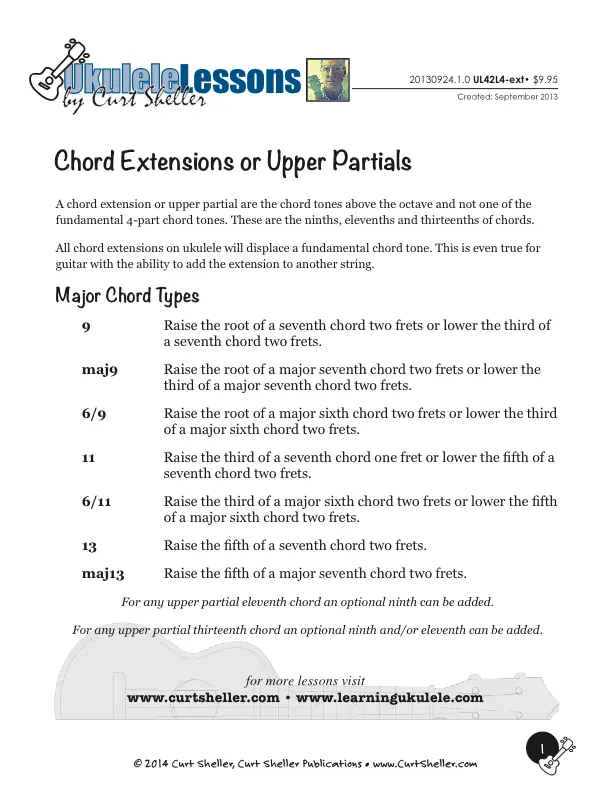
A chord extension or upper partial are the chord tones above the octave and not one of the fundamental 4-part chord tones. These are the ninths, elevenths and thirteenths of chords. All chord extensions on ukulele will displace a fundamental chord tone. This is even true for guitar with the ability to add the extension to another string.