
Published:
2018-04-25
Updated:
2020-07-07
Learning Ukulele with Curt
Moonlight In Vermont
Moonlight in Vermont is a popular song about the U.S. state of Vermont, written by John Blackburn (lyrics) and Karl Suessdorf (music) and published in 1944. The lyrics are unusual in that they do not rhyme. John Blackburn, the lyricist, has been quoted as saying, "After completing the first 12 bars of the lyric, I realized there was no rhyme and then said to Karl, 'Let’s follow the pattern of no rhyme throughout the song. It seemed right.' The lyrics are also unconventional in that each verse (not counting the bridge) is a haiku.
Author(s): Publisher: Code: UL444
Main Category: Jazz Main Instrument: Any
Categories: Jazz, Playalongs, Ballad
2026-08-19
RelatedSongAssets
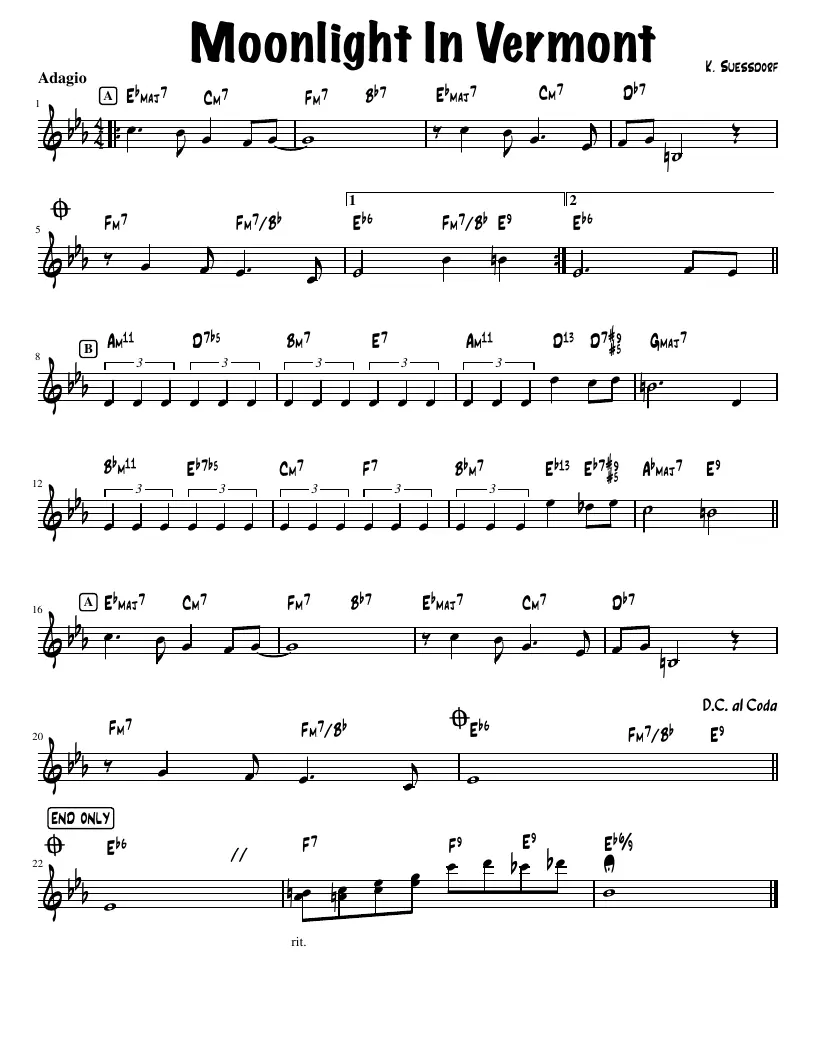
If you're a registered site member and have the correct permissions you can view ALL the pages of this PDF or Samples pages at a larger size using the LearningUkulele.com Online PDF Viewer.
This Download is NOT part of your LearningUkulele.com & Learning Ukulele with Curt membership level.
Sign-up for Premium Site Access or Upgrade Your Plan to download this PDF or your can purchase a copy for download
Sign In for Access…Contact Us if there are any issues.
Moonlight in Vermont is a popular song about the U.S. state of Vermont, written by John Blackburn (lyrics) and Karl Suessdorf (music) and published in 1944. The lyrics are unusual in that they do not rhyme. John Blackburn, the lyricist, has been quoted as saying, "After completing the first 12 bars of the lyric, I realized there was no rhyme and then said to Karl, 'Let’s follow the pattern of no rhyme throughout the song. It seemed right.' The lyrics are also unconventional in that each verse (not counting the bridge) is a haiku.
The lyrics are unusual in that they do not rhyme. John Blackburn, the lyricist, has been quoted as saying, "After completing the first 12 bars of the lyric, I realized there was no rhyme and then said to Karl, 'Let’s follow the pattern of no rhyme throughout the song. It seemed right.' The lyrics are also unconventional in that each verse (not counting the bridge) is a haiku.
Moonlight In Vermont
Premium Play-along Tracks are only available to Premium
members and Active/Private Students.
Here is a Demo of Desafinado to get an idea of the quality of these custom play-along tracks.
Play-along Demo: Desafinado
Desafinado — Premium Play-along Track with Guitar Melody Played
I, (Curt) originally created these tracks to perform over for gigs and this was a demo for booking gigs.
These Premium Play-along Tracks are available to LearningUkulele.com & Learning Ukulele with Curt. Site Members and are my personal one-of-kind tracks I (Curt) and Chuck Anderson recorded and arranged last century.
More Moonlight In Vermont
content below, continue exploring...
More Moonlight In Vermont
The song is considered an unofficial state song of Vermont and is frequently played as the first dance song at Vermont wedding receptions. It was first introduced by Margaret Whiting in a 1944 recording, and has been covered by numerous other artists over the years. Stan Getz and Gerry Mulligan recorded it several times apiece.
Johnny Smith Quintet - Moonlight in Vermont
One of my favorite guitarist of all-time. Johnny Smith had amazing chops an was a clean as can be.
Moonlight in Vermont is a 1956 compilation album by jazz guitarist Johnny Smith , featuring tenor saxophonist Stan Getz. The material on the album was recorded between 1952 and 1953, and was drawn from two 10-inch Lps, both titled "Jazz at NBC", which were previously issued by the Royal Roost label. The title track, Moonlight in Vermont - singled out for its virtuosity, was a highly influential rendition of a jazz standard that secured Smith's position in the public eye.
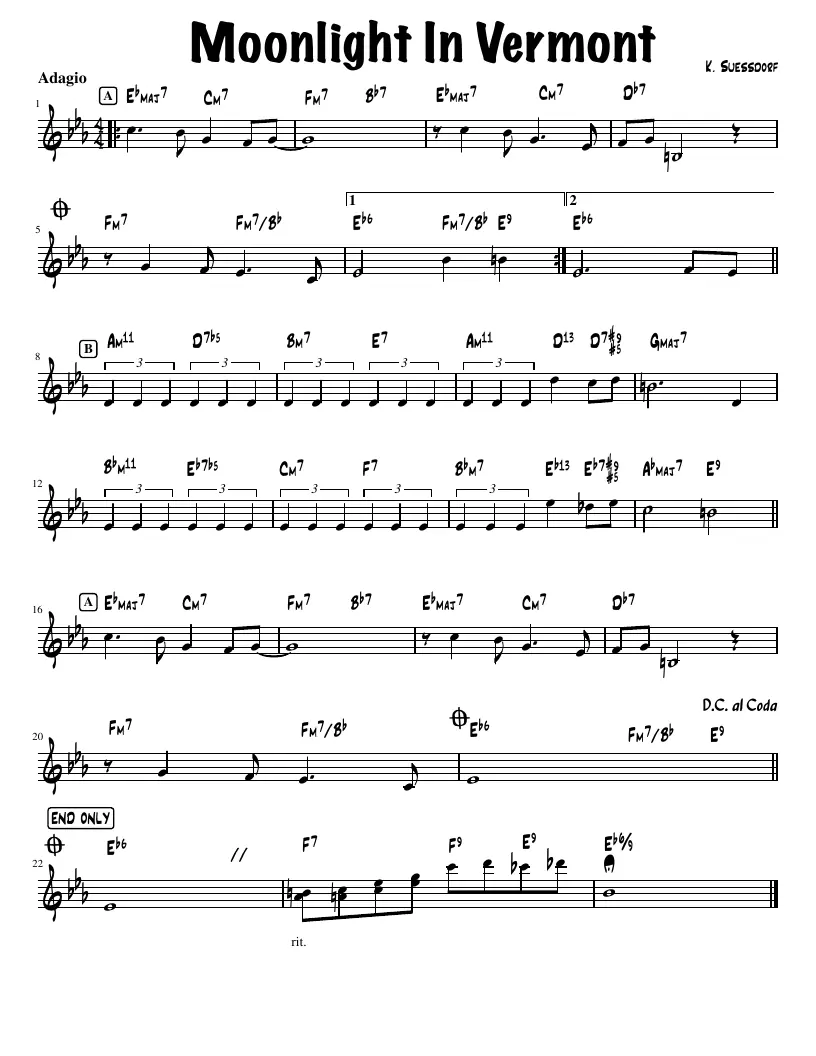
Moonlight In Vermont
Moonlight in Vermont is a popular song about the U.S. state of Vermont, written by John Blackburn (lyrics) and Karl Suessdorf (music) and published in 1944. The lyrics are unusual in that they do not rhyme. John Blackburn, the lyricist, has been quoted as saying, "After completing the first 12 bars of the lyric, I realized there was no rhyme and then said to Karl, 'Let’s follow the pattern of no rhyme throughout the song. It seemed right.' The lyrics are also unconventional in that each verse (not counting the bridge) is a haiku.