Published:
2003-01-01
Updated:
2026-09-23

Learning Ukulele with Curt

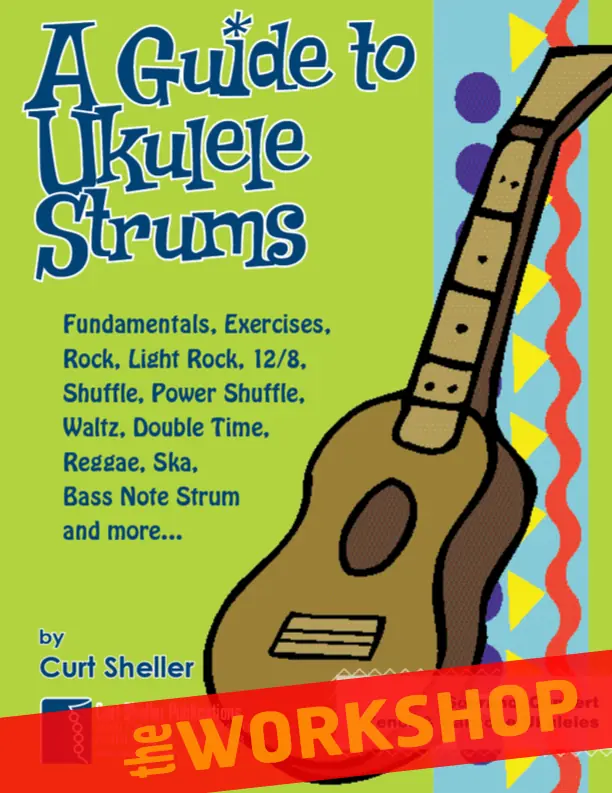
A Guide to Ukulele Strums

Learn a variety of strums and rhythmic patterns in wide range of musical styles. A strum refers to an accompaniment technique suitable for the singer, singer - songwriter or someone who plays a support role for another instrument.

Main Category: Strums Main Instrument: Ukulele

Categories: Rhythm, Strums

Louis-Martin/Curt-2020-FFUF

6 August 2026

A Guide to Ukulele Strums

Learn a variety of strums and rhythmic patterns in wide range of musical styles.

A strum refers to an accompaniment technique suitable for the singer, singer - songwriter or someone who plays a support role for another instrument.

Strumming requires a specific set of skills: Memorization of chords, The ability to switch chords smoothly, The ability to choose and execute a suitable rhythmic strum.

It's this 3rd skill that is our focus in A Guide to Ukulele Strums and Rhythmic Patterns.

One of the first skills a ukulele player learns is the art and craft of strumming, playing rhythm. This refers to an accompaniment technique suitable for the singer, singer - songwriter or someone who plays a support role for another instrument.

8 lessons in the A Guide to Ukulele Strums LessonSERIES :

    1

    A Guide to Ukulele Strums Introduction

    One of the first skills a ukulele player learns is the art and craft of strumming, playing rhythm. This refers to an accompaniment technique suitable for the singer, singer - songwriter or someone who plays a support role for another instrument.

    2

    Rock Heavy Strum

    The Rock Heavy Strum has application in Rock, Hard Rock, and Pop.

    3

    Rock Light

    The Rock Light Strum has applications in Light Rock, Pop, and Country.

    A Rock Light Strum is typically a four beat pattern where each beat is sub divided into two and counted 1 + 2 + 3 + 4 +. It is strummed with an alternating down and up pattern. With the downbeat typically always a down stroke.

    4

    12/8 Strum

    The 12/8 Strum has application in Blues, Broadway, and 50’s Ballads.

    The 12/8 Strum in a Level III rhythm with the beat sub divided into three and counted 1 2 3 for each beat.

    5

    Shuffle Strum

    The Shuffle Strum has applications in Blues, Jazz, and Country.

    This count is identical to the count of 12/8. The difference lies in the stroke pattern and the pulse. This strum will produce a loose, light feel.

    6

    Double Time Strum

    The Double Time Strum has application in R&B, Funk, and Disco.

    The Double Time Strum is a Level IV strum where the beat is sub divided into four and counted 1 2 3 4 for each beat. Strum down on the 1 and 3 an uo on the 2 and 4.

    7

    Gallop Strum

    The Gallop Strum has application in Metal, Country, and Tex Mex.

    The Gallop Strum is a Level IV strum where the beat is sub divided into four and counted 1 2 3 4 for each beat. Strum down on the 1 and down on the 3 and up on the 4.

    8

    Ska Strum

    The Ska Strum has applications in Ska, Reggae, and Cut Time.

Series Info

ACGCH-UKEC-4part-7th.png

Strums

Ukulele

383 visits

UL126-MPR

Ukulele Strums - Getting Started

Strums are in-separately linked to rhythm. Using the Modular Phonetic Rhythm System developed by Chuck Anderson this series of lessons starts with the core four strums all ukulele players use, need to know and throughly digs into the many variations possible.

UL126

Building Your Core Strums for Ukulele

Rhythm are in-separately linked to strums. Using the Modular Phonetic Rhythm System developed by Chuck Anderson this series of lessons start with the core four strums all ukulele players use and throughly digs in to the many variations possible.

UL125b-I-VI-II-V

Basic I VI II V Introduction in Key of C

A common variation of the** I V **chord progression and introduction: C Am Dm G

UL125c-Basie

Basie Ending

The Count Basie ending is one of the most recognizable endings in classic jazz. It is simple, effective and one ending that all gigging jazz musicians must know.

UL125c

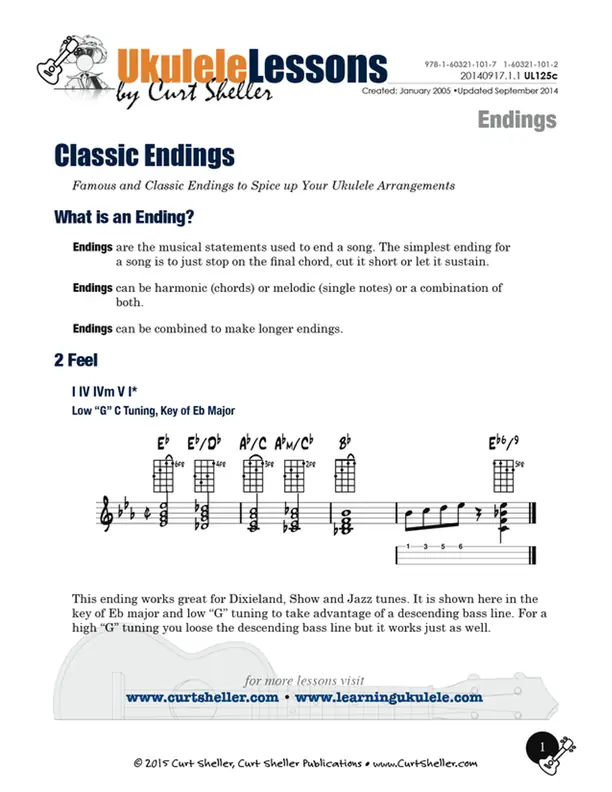
Classic Endings for `Ukulele

Two Feel, bVImaj7 bIImaj7, Basie Ending, Single, Double and Triple Tags, Chromatic, Take 'A' Train Ending, Shave and a Hair Cut, Lawrence Welk Ending. These are common classic songs ending that are used over and over in the standard song repertoire.

UL125b

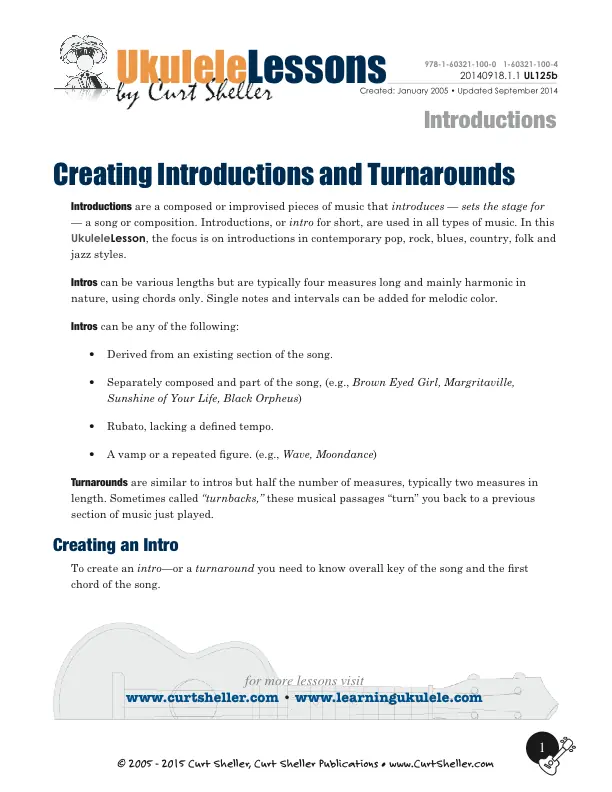
Creating Introductions and Turnarounds for `Ukulele

Introductions are a composed or improvised pieces of music that introduce - sets the stage for - a song or composition. Introductions, or intro for short, are used in all types of music. In this lesson, the focus is on introductions in contemporary pop, rock, blues, country, folk and jazz styles.


UL125b-Intro-I-V

Creating Intros, Basic I V on C Major

A basic I V introduction in the key of C major: C to G or G7. The Tonic to Dominant.

UL125b-I-Idim7-II-V

I Idim7 II V Introduction in Key of C

"I Idim7 II V in key of C" — A classic introduction and chord progression utilized in show tunes and old-time music.

UL125a

Melody and Chord Tips

Creating "Melody and Chord Arrangements", in theory are as simple as harmonizing the melody with a chord. Which is playing a chord that has the melody note as the top note of the chord voicing. In practice it is a little more involved, but not much more.

UL126-MPR-L2-6-of-6

Rhythm and Strums Level II Rhythmic Pairs - Lesson Five

Level II Rhythmic Syllables 6 of 6 from the Modular Phonetic Rhythm, The Foundation and Workbook 1 book.

UW-UKESTRUM1

Essential Strums for Ukulele - A Guide to Ukulele Strums

Don't know what to play or tired of playing the same old down-up-down-up strums? One of the first skills a ukulele player learns is the art and craft of strumming, playing rhythm. This refers to an accompaniment technique suitable for the singer-songwriter or someone who plays a support role for another instrument.
UW-RHYTHM

Rhythm, Avoid at Your Own Peril

The often neglected and taken for granted subject of "Rhythm". Music is Melody, Harmony, and "Rhythm." We are drawn, initially to music by melody at a very early age, with the instrument of our voice. With ukulele you typically learn chords - the harmony and never really dive into learning rhythm. Unless you're a drummer we take rhythm for granted.