
Published:
2013-03-12
Updated:
2026-09-03
Learning Ukulele with Curt
`Ukulele Strums and The Modular Phonetic Rhythm System
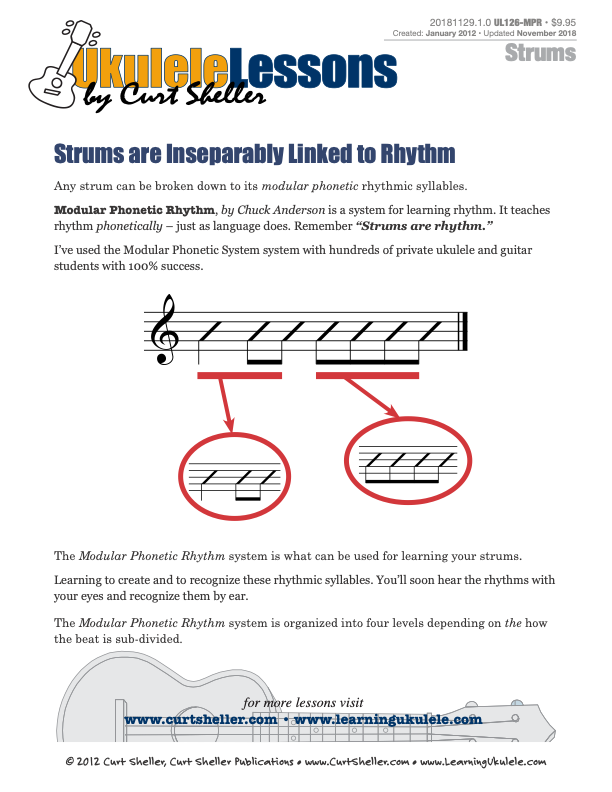
Strums are Inseparably Linked to Rhythm. Any strum can be broken down to its Modular Phonetic rhythmic syllables. Modular Phonetic Rhythm, by Chuck Anderson is a system for learning rhythm. It teaches rhythm phonetically - just as language does. Remember 'Strums ARE rhythm'
Author(s): Curt Sheller, Chuck Anderson Publisher: Curt Sheller Publications, Anderson Music Publications Code: UL126-MPR
Main Category: Strums Main Instrument: Ukulele
Categories: Chords, Rhythm, Strums

2026-08-23
Show Series Lessons
Series Home
Number of Pages: 2
If you're a registered site member and have the correct permissions you can view ALL the pages of this PDF at a larger size using the LearningUkulele.com Online PDF Viewer (button below).
Download PDFThis Download is NOT part of your LearningUkulele.com & Learning Ukulele with Curt membership level.
Sign-up for Premium Site Access or Upgrade Your Plan to download this PDF or your can purchase a copy for download
Sign In for Access…Contact Us if there are any issues.
Strums are Inseparably Linked to Rhythm. Any strum can be broken down to its Modular Phonetic rhythmic syllables. Modular Phonetic Rhythm, by Chuck Anderson is a system for learning rhythm. It teaches rhythm phonetically - just as language does. Remember 'Strums ARE rhythm'
Any strum can be broken down to its Modular Phonetic rhythmic syllables. Modular Phonetic Rhythm, by Chuck Anderson is a system for learning rhythm. It teaches rhythm phonetically - just as language does.
Remember Strums ARE Rhythm!!!.
I've used the Modular Phonetic System system with hundreds of private ukulele and guitar students with 100% success

The Modular Phonetic Rhythm system is what can be used for learning your strums. Learning to create and to recognize these rhythmic syllables. You’ll soon hear the rhythms with your eyes and recognize them by ear.
The Modular Phonetic Rhythm system is organized into four levels depending on the how the beat is sub-divided.
Level I
Level I in the Modular Phonetic system is where the beat is not sub-divided. This level contains four rhythmic syllables. Whole, Dotted Half, Half, and Quarter note.
NOTE: The levels are indicative of difficulty. However Level I is pretty easy and can lead to a false sense of confidence with the other levels.
Level II
In Level II the rhythmic syllables are two beats each and contain six rhythmic syllables.
NOTE: Level II & II are the two level's rhythmic syllables that comprise the overwhelming majority that you'll encounter in your musical journey.
Level III
In Level III there are eight rhythmic syllables that are one, two or four beats each.
Level IV
In Level IV the rhythmic syllables are one beat each and contains six rhythmic syllables.
Curt: I view Level IV as a Level II in cut time.


End of Lesson - Thanks, Hope You Enjoyed It!
Related Lessons, Videos, Lesson Series, Songs, Books & Reference Charts, Resources & Assets, Workshops are below.
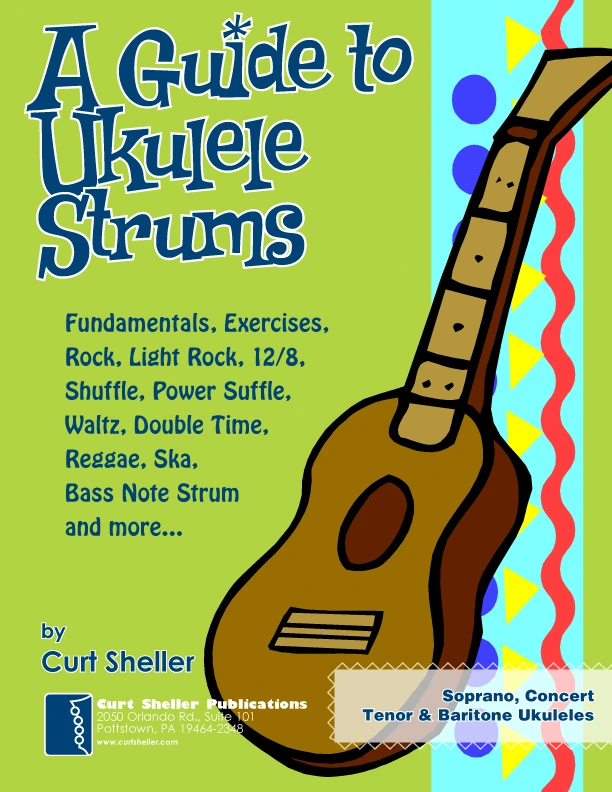
A Guide to Ukulele Strums
Learn a variety of strums and rhythmic patterns in wide range of musical styles. One of the first skills a ukulele player learns is the art and craft of strumming, playing rhythm. This refers to an accompaniment technique suitable for the singer, singer - songwriter or someone who plays a support role for another instrument.
Modular Phonetic Rhythm, The Foundation and Workbook 1
Modular Phonetic Rhythm represents a significant advance in the teaching and application of rhythm. Eliminating many inefficient aspects of rhythm education, Modular Phonetic Rhythm streamlines the traditional educational approach, resulting in a reflexive reaction to rhythm.

Rhythm, Avoid at Your Own Peril
The often neglected and taken for granted subject of "Rhythm". Music is Melody, Harmony, and "Rhythm." We are drawn, initially to music by melody at a very early age, with the instrument of our voice. With ukulele you typically learn chords - the harmony and never really dive into learning rhythm. Unless you're a drummer we take rhythm for granted.