
Published:
2020-04-01
Updated:
2022-05-31
Learning Ukulele with Curt
Altered Scales Choices
Alterted scale choices for improvisation.
Author(s): Curt Sheller Publisher: Curt Sheller Publications Code: UL04-alt
Main Category: Scales Main Instrument: Any
Categories: Chords, Scales, Theory, Altered

2026-08-23
Alterted scale choices for improvisation.
Altered Scales
Mixolydian +4
Lydian Dominant

C Mixolydiaan +4
Mixolydian -2 -6

C Mixolydiaan -2 -6
Additional Mixolydian Scale Alterations
b9 #9 #11/b5 #5/b13
Alterations of various scale degrees affect resolution. This resolution wants to resolve either major or minor. For major resolutions the thirteenth scale degree is typically not altered. For minor resolutions the thirteenth scale degree can be lowered ( b13 ).
-9, + 9
-13
9
13
Major or Minor Resolution
Minor Resolution
Major Resolution
Major Resolution
Other scale choices can provide altered notes as well. Here are a few common choices musicians have used to collect these alterations.
Keep in mind that the color tones of a chord are the third and seventh of the chord. In the key of C the G Mixolydian scale is used, the fifth mode of the C major scale.
In the key of C Major the G Mixolydian (Dominant) scale is used. The Mixolydian scale is the fifth mode of the C major scale.
Example C7: C E G Bb (1 3 5 b7)
CT
ST
ALT
Chord Tone
Scale Tone, a Diatonic Passing Tone based on the Mixolydian scale
Altered Tone
Mix -2 +2 -5 +5 • Locrian on the Root of Chord

The Locrian scale starting in the root of a seventh chord contains the seventh color tone but not the third. The C Locrian is the seventh mode of the Gb Ionian/Major scale.
Mix -2 +2 +5 • Locrian on the 5th of Chord
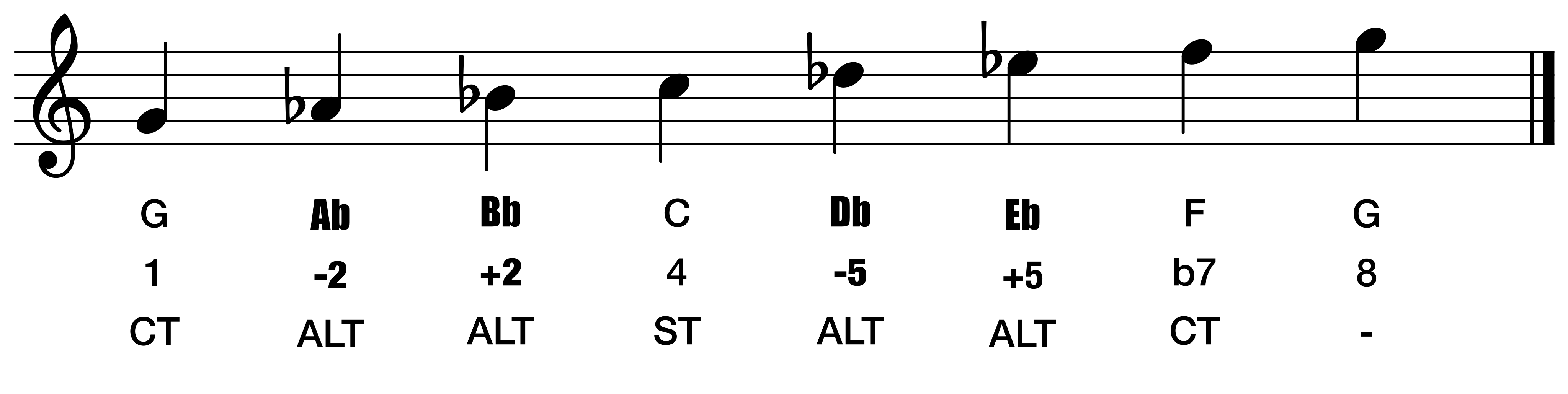
The Locrian scale starting in the fifth of a seventh chord contains the seventh color tone by not the third. The G Locrian is the seventh mode of the Ab Ionian/Major scale.
Mix -2 +2 -5 +5 Tonic Minor 1/2 Step Up From Root of Chord
Among jazz players, the most common approach to collecting all the possible alterations of a dominant chord. Sometimes referred to as the “Jazz” minor scale.
The scale contains both the third and seventh color tones.
Mixolydian Double Chromatic
NOTE: The -2 +2 with the third presents a Mixolydian/Dominant scale is a Double Chromatic scale. This gives you a ♭9 and ♯9 chord tones. This a great scale choice to 7♭9 and 7♯9 chords.
1 -2 +2 3 4 5 6 ♭7 8
This Double Chromatic concept can also be applied the the fifth (5) of a Seventh chord for a -5 +5 ( ♭5 ♯5 ). THis is a great choice for a 7♭5 and 7♯5 scale.
1 2 3 4 ♭5 ♯5 6 ♭7 8
My thinking on these altered scales is to REALLY know the notes of your instrument and derive these alterations (ALT), the altered notes from the core Mixolydian scales based on the root and eliminate and intervalic step(s) based on the root to get to the notes you want.
As you might see you can simply take you basic scale and alter the notes your need on the fly.
Mix +4 from Root of Target Chord
Jazz Minor
Among jazz players, the most common approach to collecting all the possible alterations of a dominant chord. Sometimes referred to as the “Jazz” minor scale.
The scale contains both the third and seventh color tones.
Bebop Scales
Dominant Seventh, Minor Seventh, Major Seventh - A Term coined by David Baker. This is just a traditional scale with a chromatic passing tone added to have the chord tones fall on every down beat. Useful when starting on the beat and on a chord tone then playing straight up the scale for one octave from the starting point.
This scale is a synthetic scale with and added chromatic passing tone and not really a new scale. Traditional diatonic scale theory dictates that a scale can not have two scale degrees using the same letter, whether the letter is altered or not.


End of Lesson - Thanks, Hope You Enjoyed It!
Related Lessons, Videos, Lesson Series, Songs, Books & Reference Charts, Resources & Assets, Workshops are below.