
Published:
2014-06-25
Updated:
2026-03-07
Learning Ukulele with Curt
Playing by Ear - Melodies
Playing Melodies, Licks, Riffs, Motifs, and Single Note Lines by ear is all about getting your ear to recognize intervals and train the fingers to follow your inner ear and play these melodies on demand.
Author(s): Curt Sheller Publisher: Curt Sheller Publications Code: UL06m
Main Category: Melody Main Instrument: Any
Categories: Chords, Melody

2026-08-23
Show Series Lessons
Series Home
Number of Pages: 6
If you're a registered site member and have the correct permissions you can view ALL the pages of this PDF at a larger size using the LearningUkulele.com Online PDF Viewer (button below).
Download PDFThis Download is NOT part of your LearningUkulele.com & Learning Ukulele with Curt membership level.
Sign-up for Premium Site Access or Upgrade Your Plan to download this PDF or your can purchase a copy for download
Sign In for Access…Contact Us if there are any issues.
Playing Melodies, Licks, Riffs, Motifs, and Single Note Lines by ear is all about getting your ear to recognize intervals and train the fingers to follow your inner ear and play these melodies on demand.
Ear training involves the Mind, Hands, and Ear connection. Of the three, the hands need the most work as they cannot heard, see, or make decisions on their own.
Melodies are a great place to start with for getting the fingers to follow your inner ear— what we have heard from before we could eve walk or talk.
Melodies come from four sources:
- Scales
- Intervals
- Arpeggios
- Sequences
All four of these can be addressed by training the ear and hands to work together.
Scales
Melodies come from scales. The most common being the Major
scales.
There are Six (6) Essentials Scales for contemporary music to master and 17 for someone exploring the jazz repertoire. All melodies will be from one of these scales. The Major(Ionian) being the overwhelming scale use for melodies.
Intervals
An interval is simply the distance between two notes. Scales, intervals, and sequences are all made up of intervals. If you play two notes, melodically or harmonically there is an interval involved. The most common intervals that are used for creating melodies are the close intervals, seconds and thirds. However, ALL common intervals of every scale need to be explored and are used. This typically means seconds, thirds, fourths, fifths, sixths, sevenths, and octaves. These intervals all show up in melodies and improvisation.
More Playing by Ear - Melodies
content below, continue exploring...
More Playing by Ear - Melodies
Here are the six essential scales, in open position, the key of C. Check out this video The Seven Scale Modes, Open Position Examples to see the Ionian, Dorian, Mixolydian, and Aeolian scales played on ukulele in open position.
Get these open-position scales under yous fingers and your ear (sing them as you play them), as these are used to determine what collection of notes, i.e. scale/key a melody or sequence of notes come from.
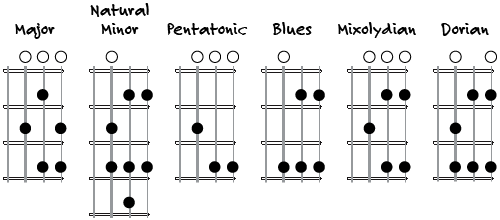
C Blues (Minor Pentatonic) C Eb F G Bb C`

Use the audio to compare the sounds of the individual scales.
C Pentatonic (Major) C D E F G A B C`

Use the audio to compare the sounds of the individual scales.
C Dorian (Minor) C D Eb F G A Bb C`

Use the audio to compare the sounds of the individual scales.
C Mixolydian C D E F G A Bb C`

Use the audio to compare the sounds of the individual scales.
C Aeolian (Natural Minor) C D Eb F G Ab Bb C`

Use the audio to compare the sounds of the individual scales.
C Ionian (Major) C D E F G A B C`

Use the audio to compare the sounds of the individual scales.
What IS a Scale?
A scale is simply a collection of pitches or notes, not really a "this is a Jazz scale", "this is a Blues" or "this is a Rock scale". It's how a scale is used that really matters, not its name.
Most music starts with a scale. The melody, chords, licks, and riffs all can be related back to a particular collection of notes, a.k., scale.
The Six Essential Scales ( in no particulate order ):
- Blues
- Blues (Minor Pentatonic)
- Pentatonic (Major Pentatonic)
- Dorian (Minor)
- Mixolydian (Dominant)
- Aeolian (Natural Minor)
- Ionian (Major)
Essential Reference Scales
There are two scales that can be the memorized and other essential scales referenced from these two. These two scales are the Ionian/Major and Aeolian/Natural Minor scales. The Major and Natural Minor scales are traditional scales and common scales in all forms of contemporary music.
This lesson explores the Major and Natural Minor scales and their derivations.
QuickStart Scale and Arpeggio Fingerings for Ukulele
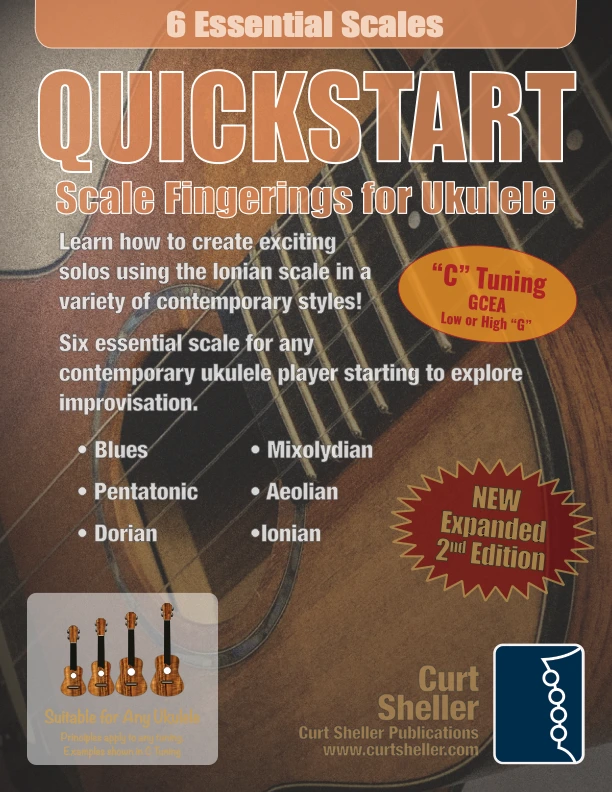
This lesson uses the same page format as the QuickStart Scale & Arpeggio Fingering series of books.
QuickStart Scale Fingerings for Ukulele 3 volumes.
C, G, and D tuning.
(QuickStart Scale Fingerings for Ukulele
)
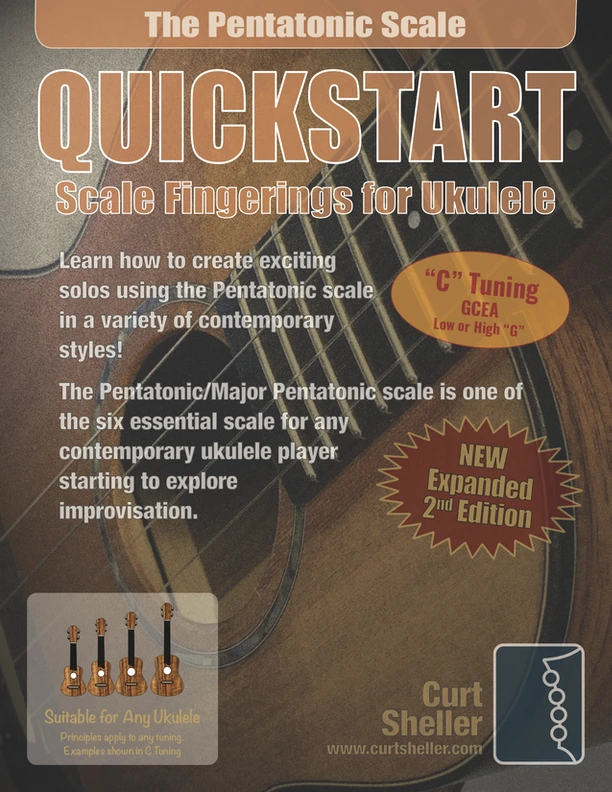
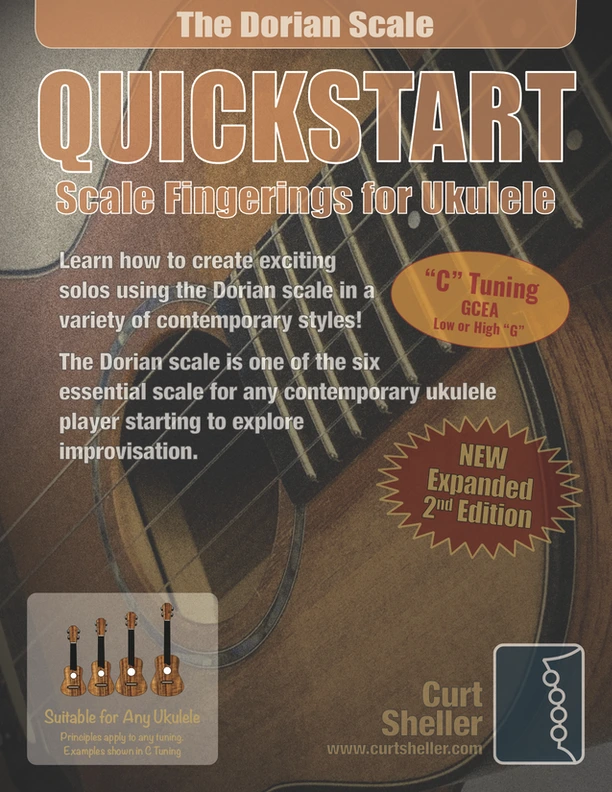
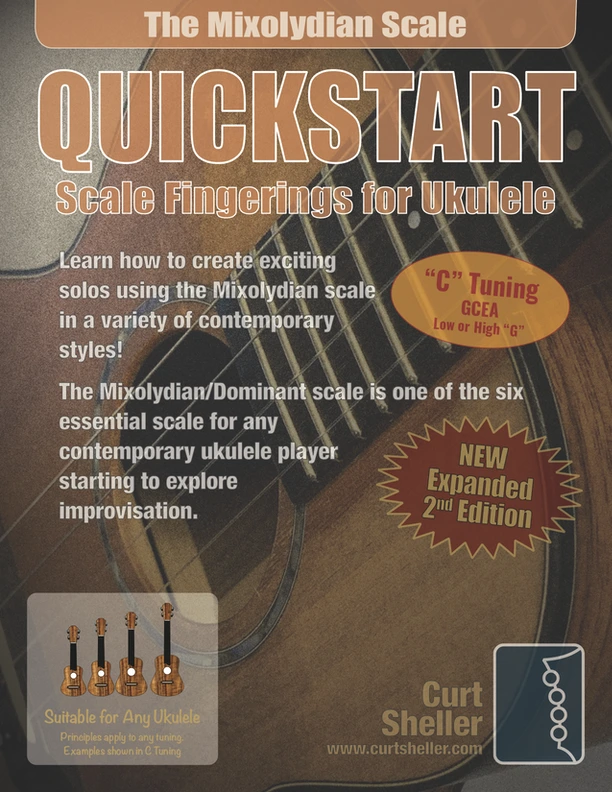
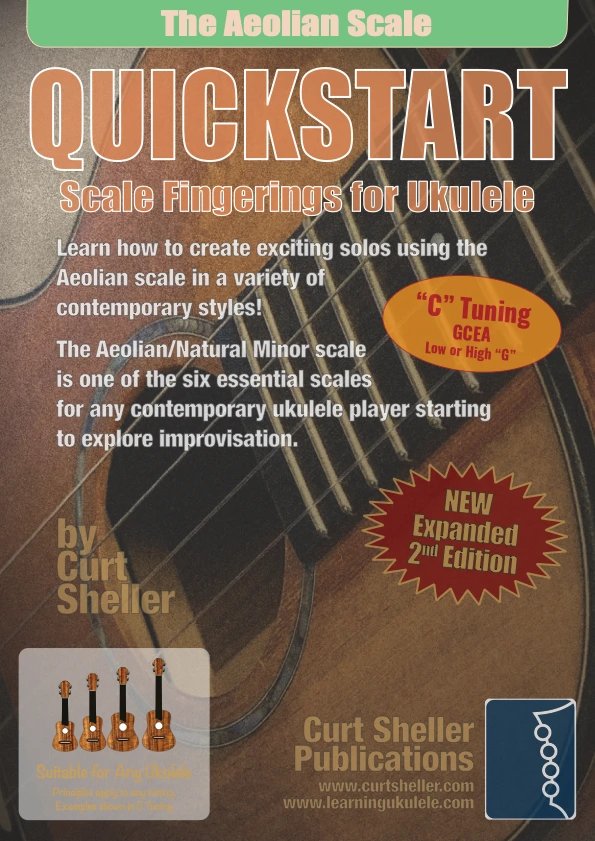
The QuickStart Scale Fingerings Vol 1 covers the Blues, Pentatonic, Dorian, Mixolydian, Aeolian, and Ionian scales.
Each scale is also available as an individual book. NOTE: the traditional name for each scale is shown in parentheses.


End of Lesson - Thanks, Hope You Enjoyed It!
Related Lessons, Videos, Lesson Series, Songs, Books & Reference Charts, Resources & Assets, Workshops are below.