Learning Ukulele with Curt

All 294 Lessons

With over 900+ lessons on LearningUkulele.com & Learning Ukulele with Curt, it can be a bit of an overwhelming task to navigate and find what you're looking for. The LessonSERIES section is a good place to start, as it presents a structured approach and curated list of lessons on a specific area of study.

Louis-Martin/Curt-2020-FFUF

29 August 2026

Access: Clear filters

Showing 241–260 of 294 results

Secondary Chords - B Major

Secondary Chords - B Major

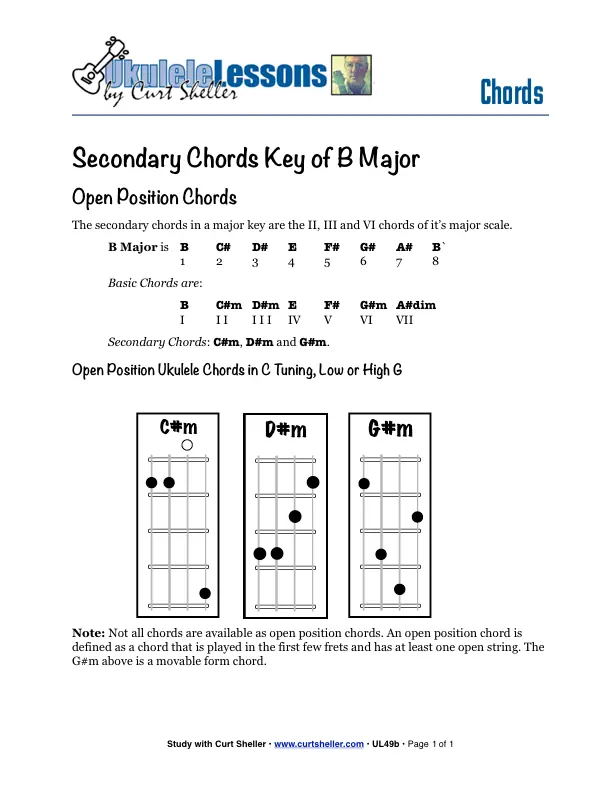
The secondary chords for any major key are the II, III and VI chords of its corresponding major scale. For B Major, the secondary chords are: C#m, D#m and G#m. From the primary and secondary chords of a major key, countless songs and chords progressions can be played.

Secondary Chords - Bb Major

Secondary Chords - Bb Major

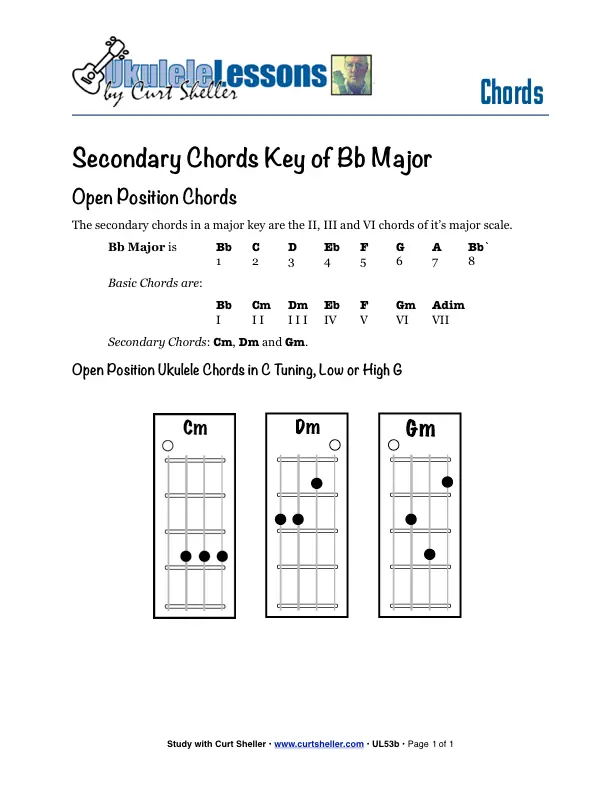
The secondary chords for any major key are the II, III and VI chords of it's corresponding major scale. For Bb Major the secondary chords are: Cm, Dm and Gm, From the primary and secondary chords of a major key countless songs and chords progressions can be played.

Secondary Chords - C Major

Secondary Chords - C Major

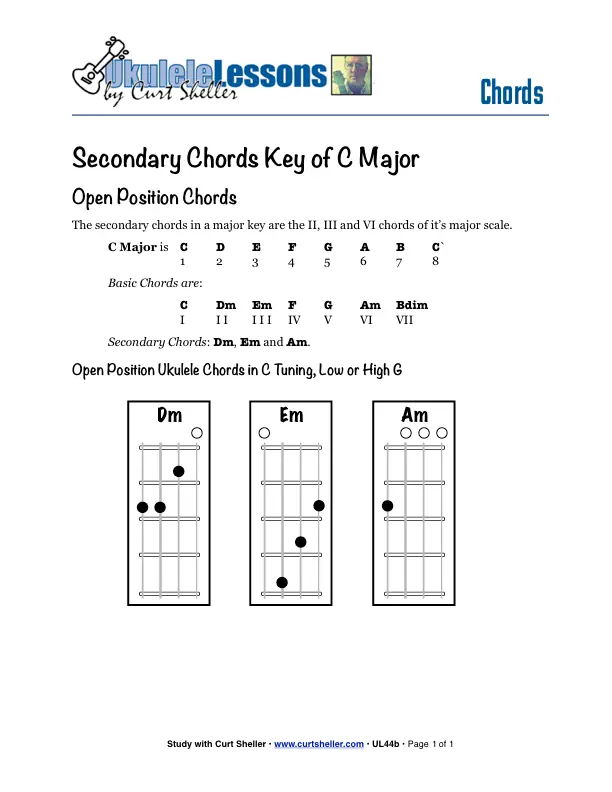
The secondary chords for any major key are the II, III and VI chords of it's corresponding major scale. For C Major, the secondary chords are: Dm, Em and Am. From the primary and secondary chords of a major key, countless songs and chords progressions can be played.

Secondary Chords - C# Major

Secondary Chords - C# Major

The secondary chords for any major key are the II, III and VI chords of its corresponding major scale. For C# Major, the secondary chords are: D#m, E#m and A#m. From the primary and secondary chords of a major key, countless songs and chords progressions can be played.

Secondary Chords - Cb Major

Secondary Chords - Cb Major

The secondary chords for any major key are the II, III and VI chords of it's corresponding major scale. For Cb Major, the secondary chords are: Dbm, Ebm and Abm. From the primary and secondary chords of a major key, countless songs and chords progressions can be played.

Secondary Chords - D Major

Secondary Chords - D Major

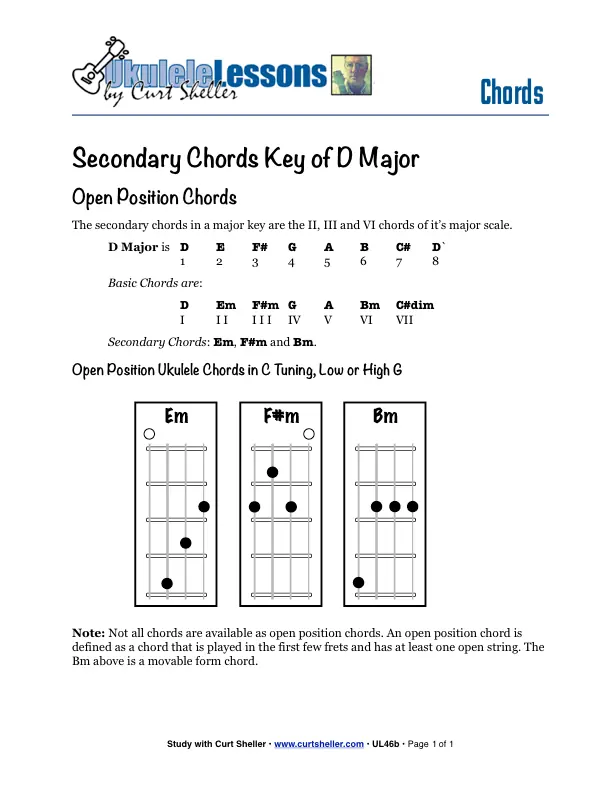
The secondary chords for any major key are the II, III and VI chords of its corresponding major scale. For D Major the secondary chords are: Em, F#m and Bm. From the primary and secondary chords of a major key countless songs and chords progressions can be played. This lesson covers the basic open position chords for D Major.

Secondary Chords - Db Major

Secondary Chords - Db Major

The secondary chords for any major key are the II, III and VI chords of it's corresponding major scale. For Db Major, the secondary chords are: Ebm, Fm and Bm. From the primary and secondary chords of a major key, countless songs and chords progressions can be played.

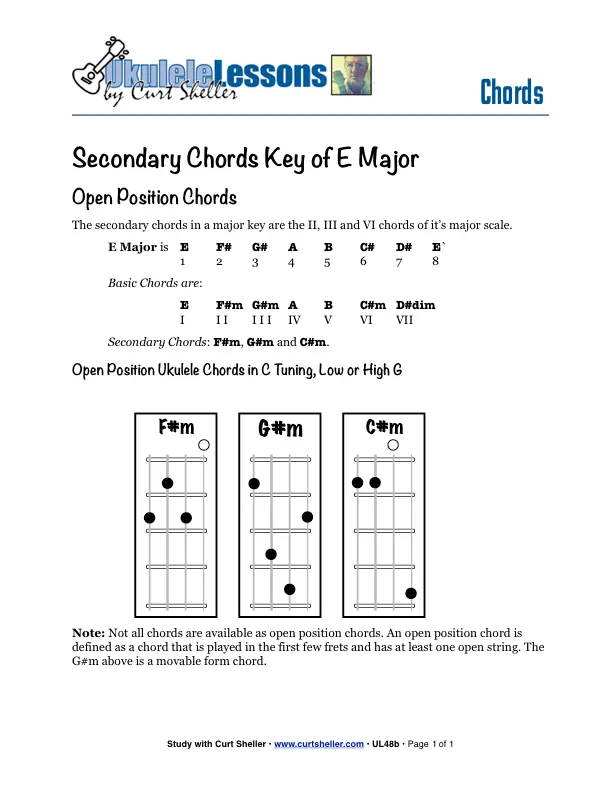
Secondary Chords - E Major

Secondary Chords - E Major

The secondary chords for any major key are the II, III and VI chords of its corresponding major scale. For E Major the secondary chords are: F#m, G#m and C#m. From the primary and secondary chords of a major key, countless songs and chords progressions can be played.

Secondary Chords - Eb Major

Secondary Chords - Eb Major

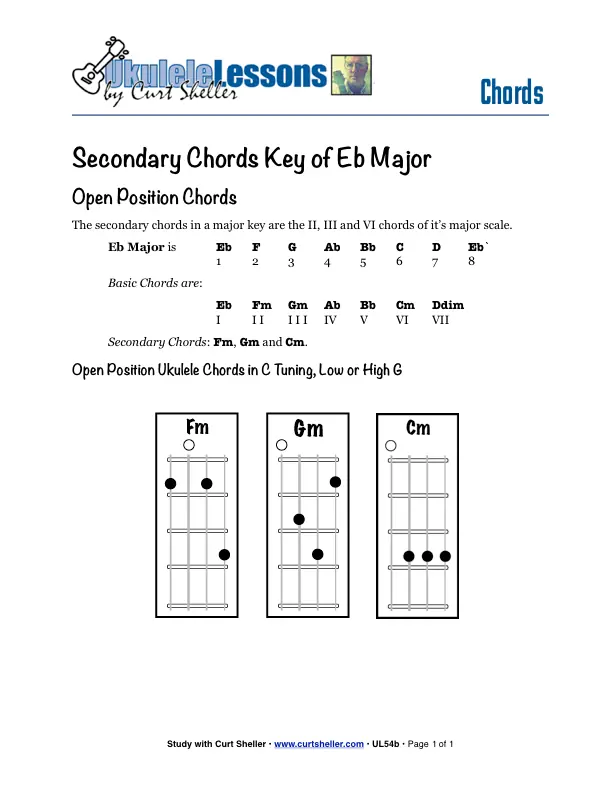
The secondary chords for any major key are the II, III and VI chords of it’s corresponding major scale. For Eb Major, the secondary chords are: Fm, Gm and Cm. From the primary and secondary chords of a major key, countless songs and chords progressions can be played.

Secondary Chords - F Major

Secondary Chords - F Major

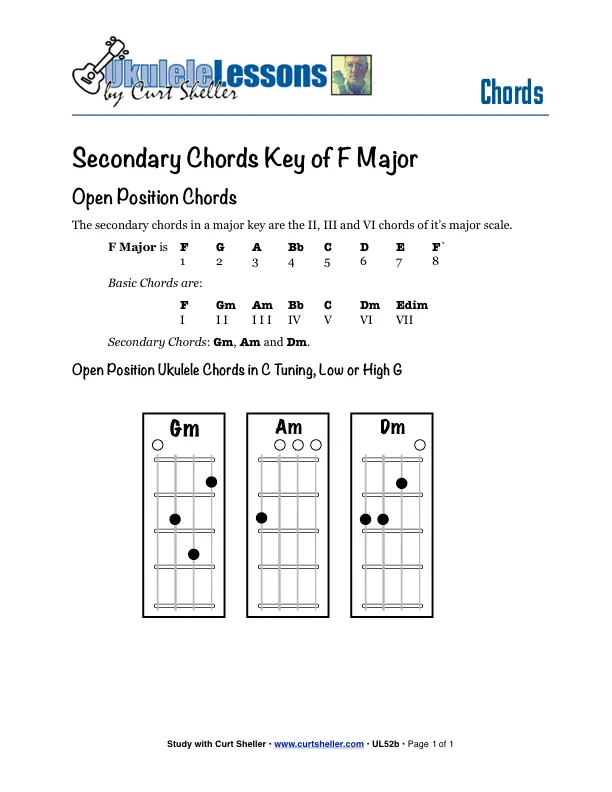
The secondary chords for any major key are the II, III and VI chords of it's corresponding major scale. For F Major, the secondary chords are: Gm, Am and Dm. From the primary and secondary chords of a major key, countless songs and chords progressions can be played.

Secondary Chords - F# Major

Secondary Chords - F# Major

The secondary chords for any major key are the II, III and VI chords of it's corresponding major scale. For F# Major, the secondary chords are: G#m, A#m and D#m. From the primary and secondary chords of a major key, countless songs and chords progressions can be played.

Secondary Chords - G Major

Secondary Chords - G Major

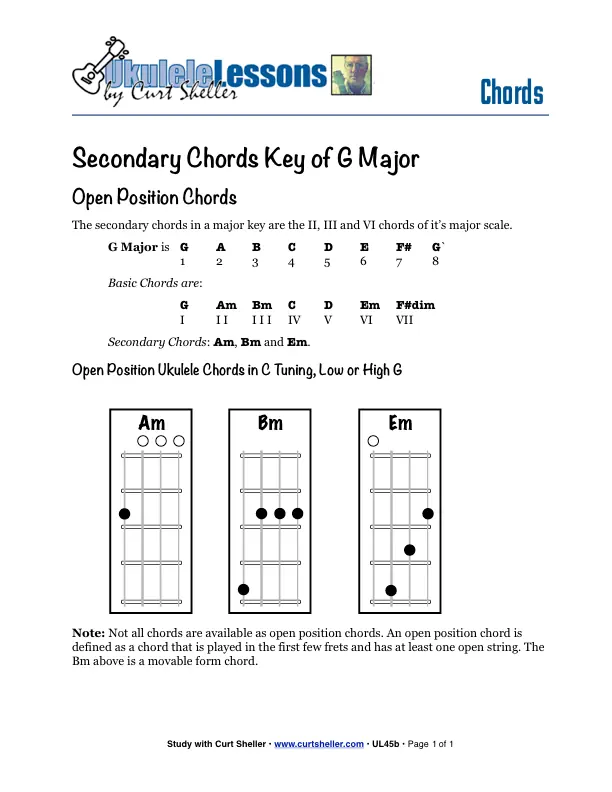
The secondary chords for any major key are the II, III and VI chords of it’s corresponding major scale. For G Major the secondary chords are: Am, Bm and Em. From the primary and secondary chords of a major key countless songs and chords progressions can be played.

Secondary Chords - Gb Major

Secondary Chords - Gb Major

The secondary chords for any major key are the II, III and VI chords of it's corresponding major scale. For Gb Major, the secondary chords are: Abm, Abm and Ebm. From the primary and secondary chords of a major key, countless songs and chords progressions can be played.

Simple - Basic Chord Progression

Simple - Basic Chord Progression

Diatonic scales such as the major and minor scales lend themselves particularly well to the construction of common chords because they contain a large number of perfect fifths. Such scales predominate in those regions where harmony is an essential part of music, as, for example, in the common practice period of western classical music.

Songs Using a Common 1 5 6 4 Chord Progression

Songs Using a Common 1 5 6 4 Chord Progression

There's actually a lot in common between songs when it comes to chord progressions. Here is an every growing list of songs that use the common 1 5 6 4 chord progression. This is a “Full Diatonic” chord progression, with each chord coming from its corresponding major scale. This common progression is called the “Four Chord, Pop Progression.”

Switching Chords

Switching Chords

A series of finger drills for developing finger independence, strength and coordination for switching chords.

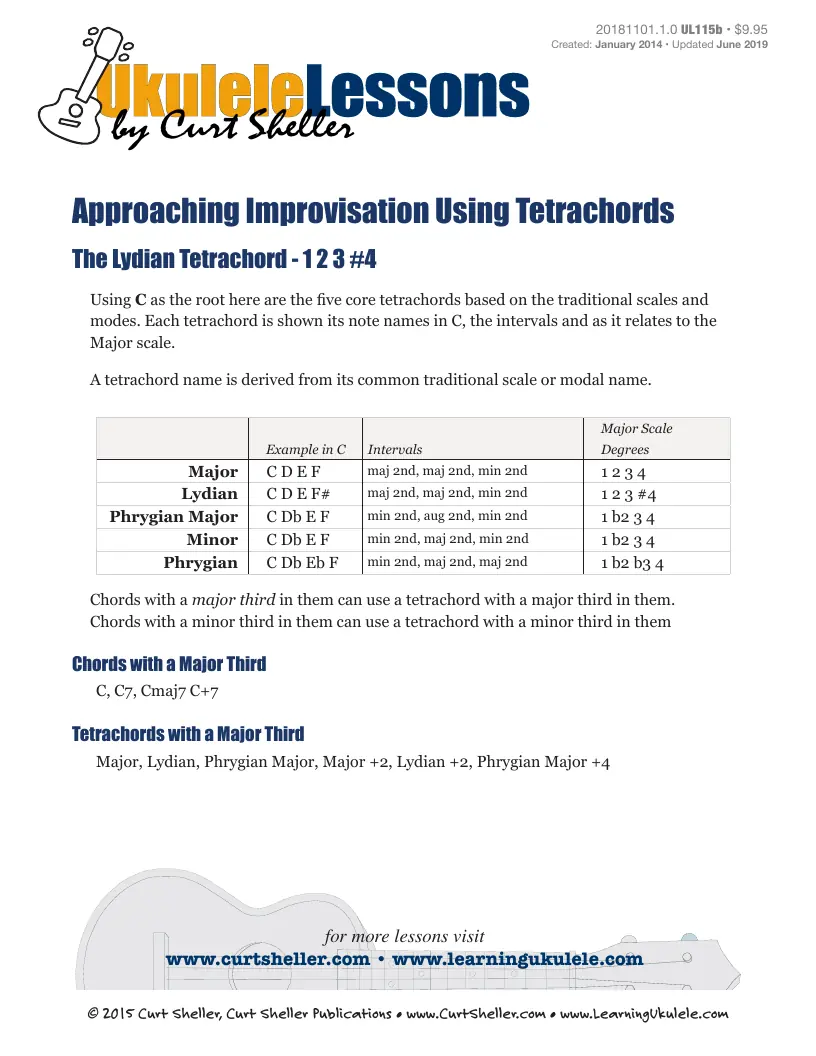
Tetrachords: Lydian (1 2 3 #4)

Tetrachords: Lydian (1 2 3 #4)

The Lydian tetrachord is the 1 2 3 #4 of a Lydian, Lydian Dominant, or Whole Tone scale.

Tetrachords: Major (1 2 3 4)

Tetrachords: Major (1 2 3 4)

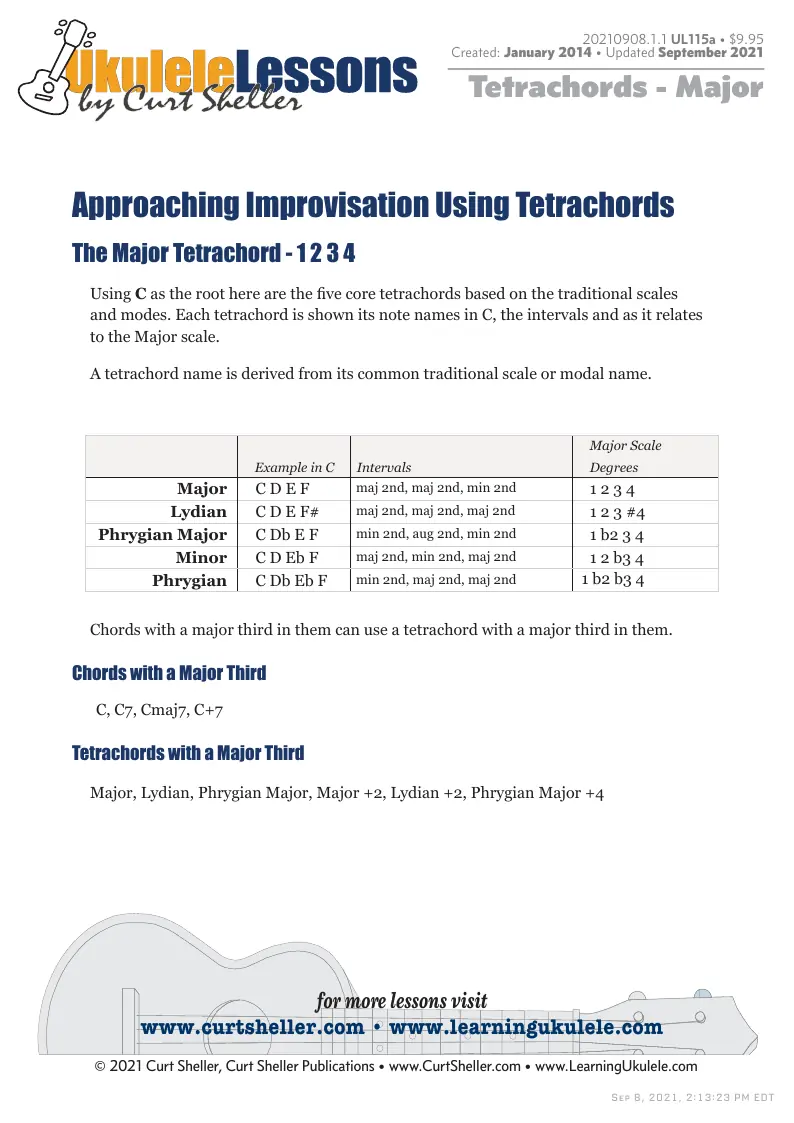
The Major tetrachord is the 1 2 3 4 of a Ionian (Major), or Mixolydian (Dominant) scale.

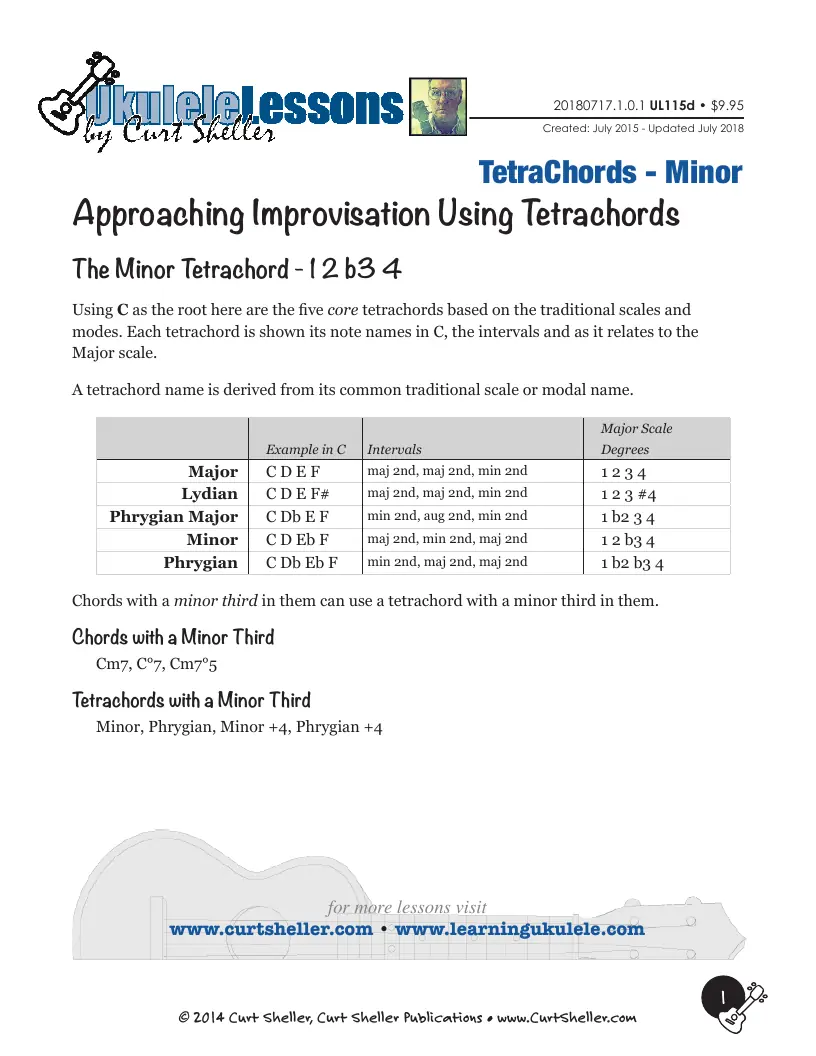
Tetrachords: Minor (1 2 b3 4)

Tetrachords: Minor (1 2 b3 4)

The Minor tetrachord is the 1 2 b3 4 of a Aeolian (Natural Minor) scale.

Tetrachords: Phrygian (1 b2 b3 4)

Tetrachords: Phrygian (1 b2 b3 4)

The Phrygian tetrachord is the 1 b2 b3 4 of a Phrygian scale.

Non-Searchable, NO-frills, Long List of All Available Lessons