Published:
2003-01-01
Updated:
2003-01-01
Learning Ukulele with Curt
Alternating Thumb Fingerpicking on Ukulele
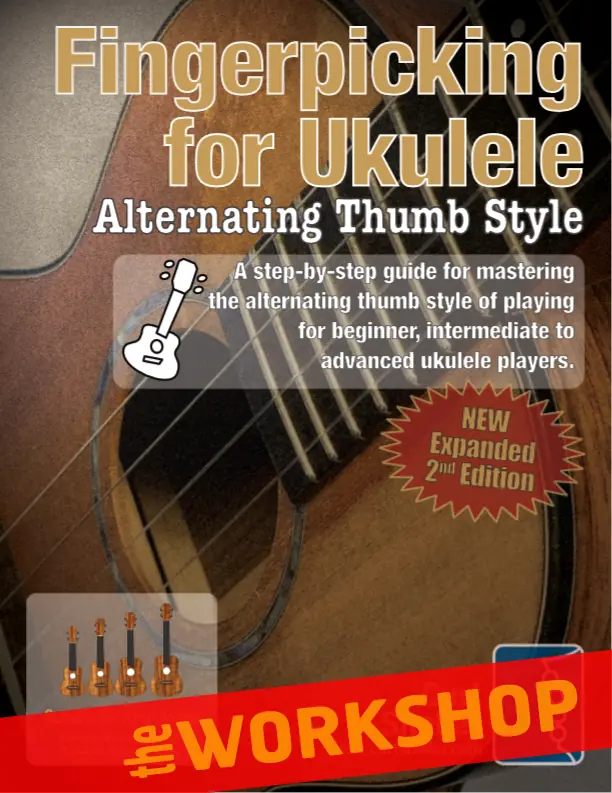
This is the common alternating thumb and two finger strumming style utilizing the thumb, index and middle fingers. Commonly called “Travis” picking in the guitar world. This series of lessons explores and adapts this style to ukulele. Travis Picking is a finger-style made famous by Merle Travis and Chet Atkins. This style is commonly played on steel string acoustic guitars.
Main Category: Fingerpicking Main Instrument: Ukulele

6 August 2026
This is the common alternating thumb and two finger strumming style utilizing the thumb, index and middle fingers. Commonly called “Travis” picking in the guitar world. This series of lessons explores and adapts this style to ukulele. Travis Picking is a finger-style made famous by Merle Travis and Chet Atkins. This style is commonly played on steel string acoustic guitars. You'll find this series of lessons to be the most complete, comprenhesive and organized series of lessons offered anywhere - GUARANTEED.
With a guarantee of being the most comprehensive, organized, and complete series of lessons available, you'll discover a valuable resource for learning this technique on the ukulele.
Nail Care Tips
When it comes to playing the ukulele with fingerstyle and fingerpicking techniques, maintaining the condition of your right hand fingernails can be a challenge. However, valuable insights on nail care can be gleaned from the classical guitar community, which has dealt with this issue for centuries. Here are a few tips I've accumulated over the years to help you safeguard your nails and avoid unnecessary trouble:
- Keep your nails short: Use nail files and avoid clipping the nails on your plucking hand.
- Be mindful of potential nail-damaging objects like keys: Organize your pockets to prevent accidental nail damage.
- Enhance the use of your fretting hand for daily non-musical tasks as it is already well-developed from playing.
- Watch out for door knobs: They tend to be a common source of nail-related mishaps.
- Consider wearing gloves when not playing: This can provide an added layer of protection for you hands especially when lugging equipment around.
By implementing these suggestions, you can better protect and maintain the health of your nails, ensuring optimal performance while playing the ukulele.
Bottom-line: Ultimately, as a musician, it is crucial to prioritize the maintenance and well-being of your tools. Among these tools, your hands play a vital role in bringing your music to life.
21 lessons in the Alternating Thumb Fingerpicking on Ukulele LessonSERIES :
Alternating Thumb Style, Building a Solid Foundation - The Basics
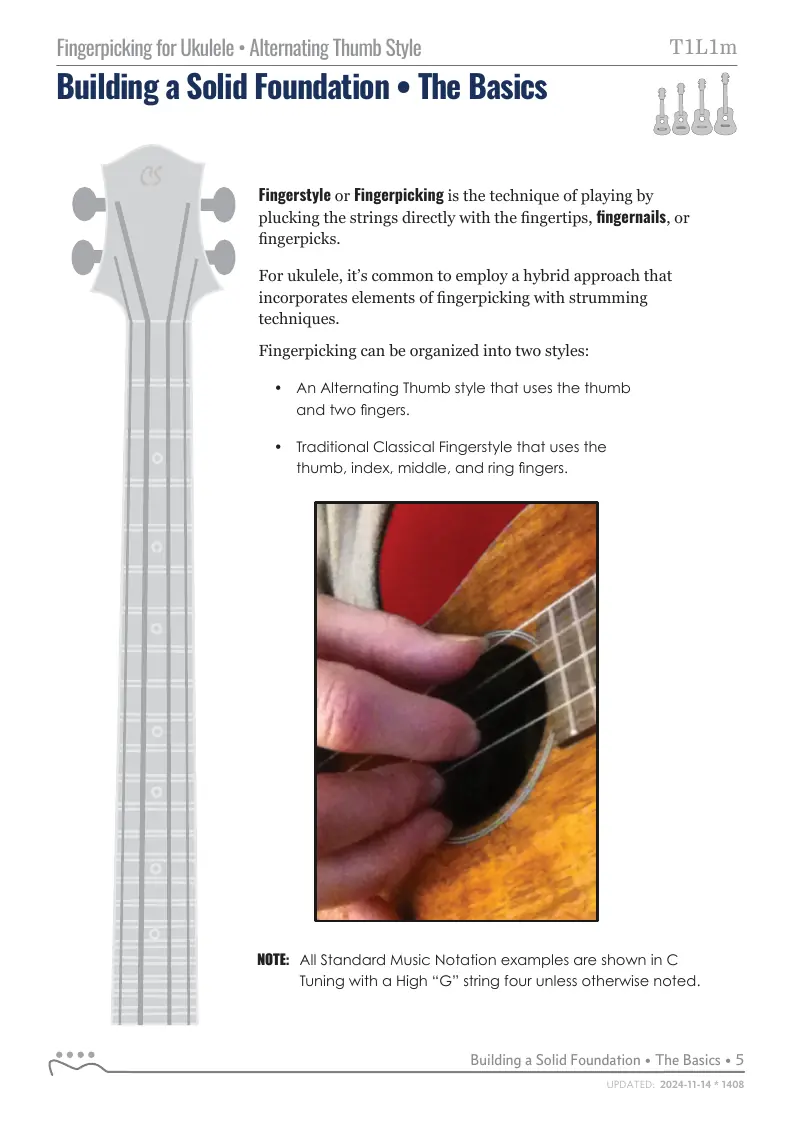
As the subtitle of this Fingerpicking Basics lesson for Ukulele implies, this lesson’s focus is on the alternating thumb part of the style. Commonly called Travis Picking on guitar and Scrugg's Style for banjo. For guitar it’s an alternating bass note style with the thumb playing the lower, bass notes. For ukulele, without any real bass notes, the thumb handles the lower two strings, four and three.
The alternating thumb fingerpicking style works in any tuning.
Alternating Thumb Style, Thumb and One Finger - Level One
In this lesson we’re introducing the index finger once to the alternating thumb pattern mastered in the Alternate Thumb Fingerpicking Style - Introduction. There are four possible patterns when adding the index finger once in common or cut time.
Alternating Thumb Style, The Pinch
All the previous lessons in the Fingerpicking for Ukulele, Alternating Thumb Style series where melodic, single notes only. This lesson introduces The Pinch, where any one of the thumb/index finger or thumb/middle finger combinations can be played together - harmonically.
Alternating Thumb Style, Rhythmic Variations
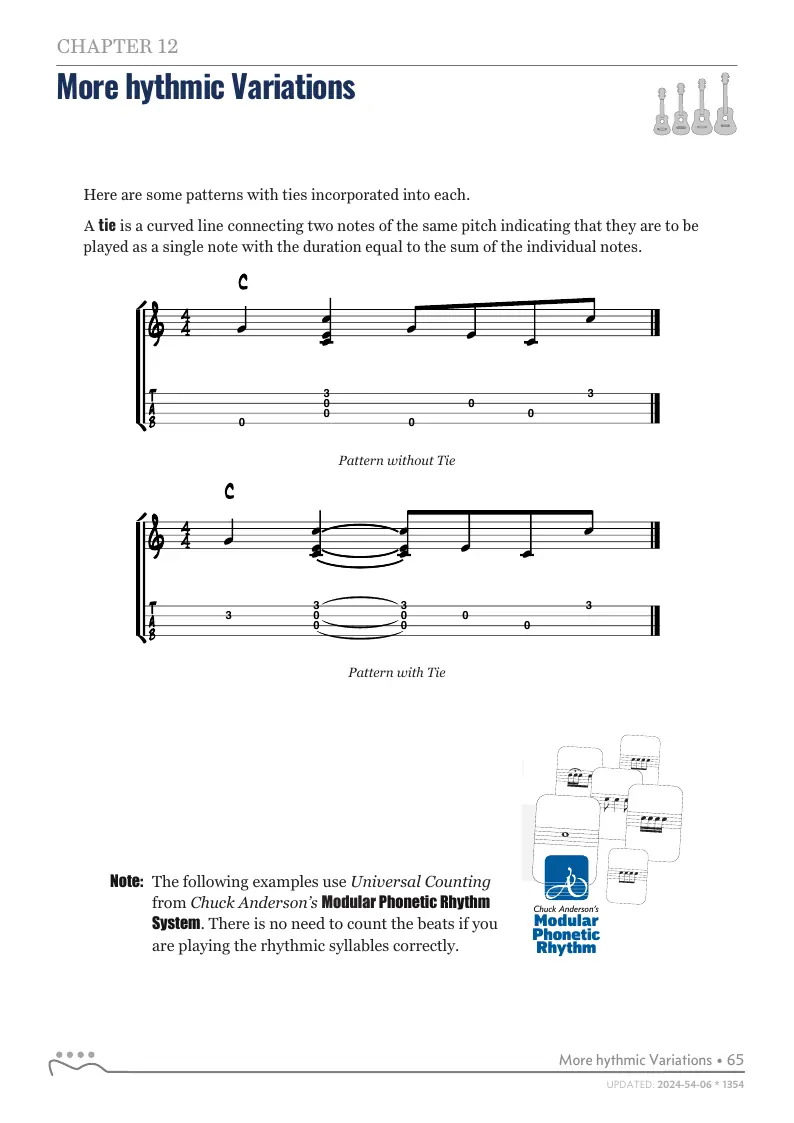
Rhythmic variations can be incorporated into this style of fingerpicking, creating a variety of syncopated patterns. All previous patterns were steady in nature, with the thumb alternating and playing on every downbeat.
Many of the following patterns are syncopated, creating rhythmic variety.
Alternating Thumb Style, Additional Time Signatures
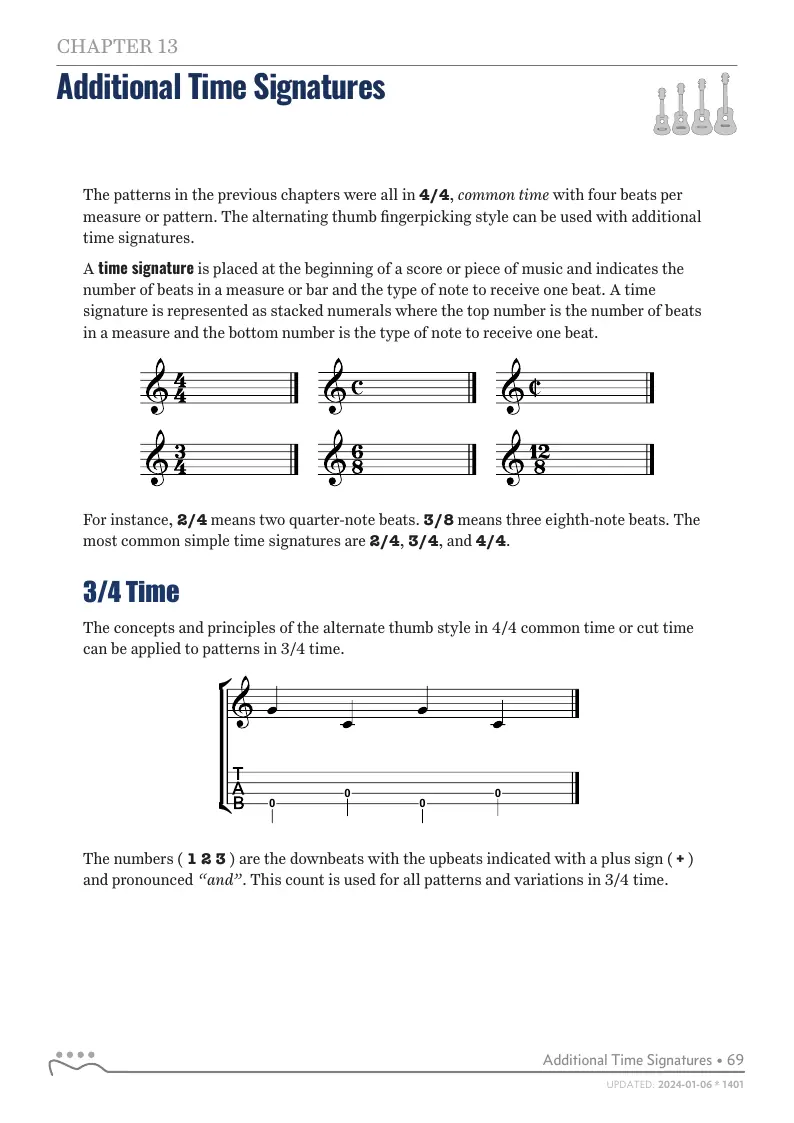
The patterns in the previous chapters were all in 4/4, common time with four beats per measure or pattern. The alternating thumb fingerpicking style can be used with additional time signatures.
A time signature is placed at the beginning of a score or piece of music and indicates the number of beats in a measure and the type of note to receive one beat. A time signature is represented as stacked numerals where the top number is the number of beats in a measure and the bottom number is the type of note to receive one beat.
Alternating Thumb Style, Banjo Rolls on Ukulele
Previous lessons covered a lot of material. With all the patterns starting with the thumb on string four and also suggested exploring the patterns starting with the thumb on string three.
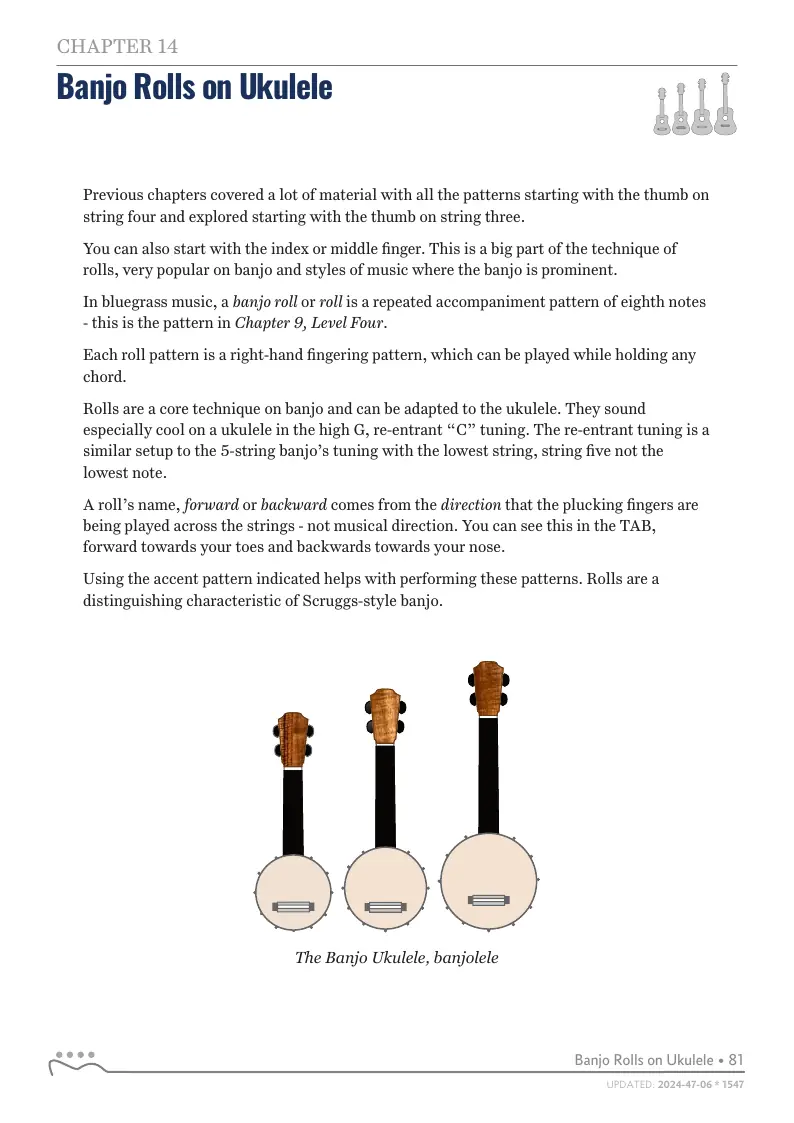
You can also start with the index or middle finger. This is a big part of the technique of rolls, very popular on banjo and styles of music such as bluegrass where the banjo is prominent instrument.
In bluegrass music, a banjo roll or roll is a repeated accompaniment pattern of eighth notes. Each roll pattern is a right hand fingering pattern, which can be played while holding any chord position.
Rolls are a core technique on banjo and can be adapted to ukulele. They sound especially cool on a ukulele in the high G, re-entrant 'C' tuning. The re-entrant tuning is a similar setup to the 5-string banjo's tuning with the lowest string not the lowest note.
Alternating Thumb Style, Reading TAB
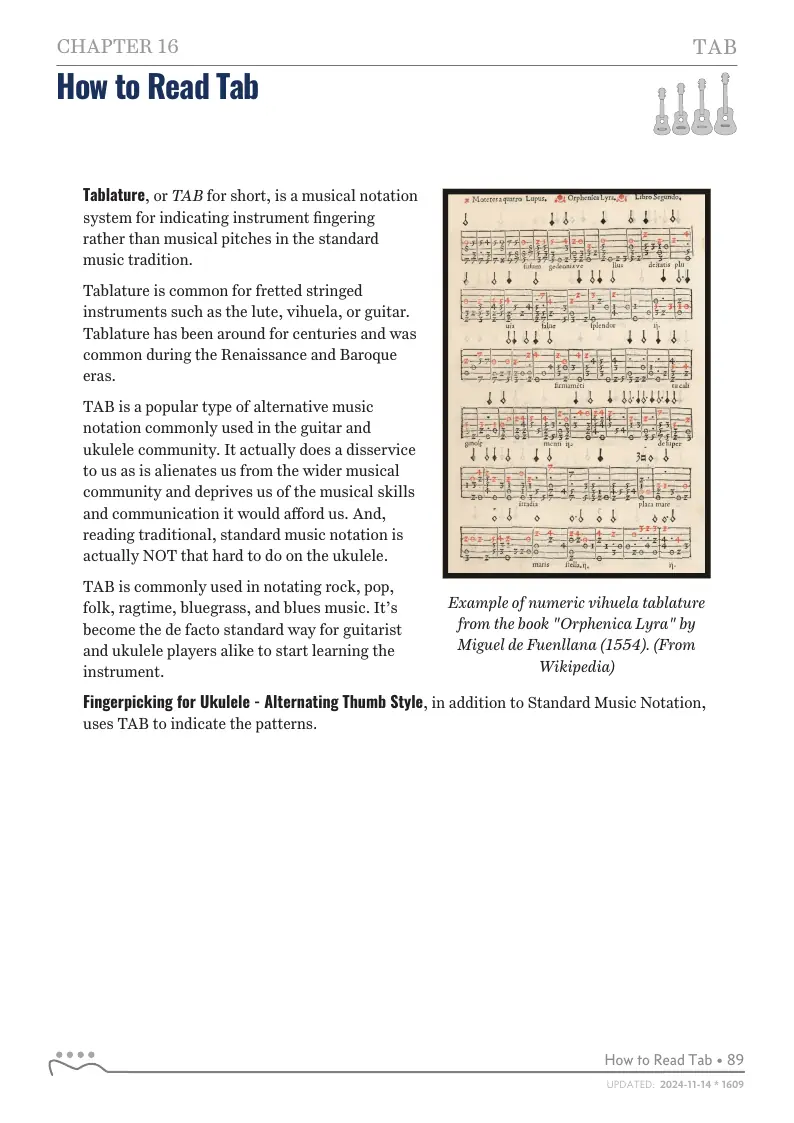
Tablature, or "TAB" for short, is a musical notation system for indicating instrument fingering rather than musical pitches in the standard music tradition.
Tablature is common for fretted stringed instruments such as the lute, vihuela, or guitar. Tablature has been around for centuries and was common during the Renaissance and Baroque eras.
Alternating Thumb Style, Remembering the Patterns
In addition to the individual rhythmic make-up of the pattern which is represented in the Standard Music Notation. Musical direction and the strings can help in remembering the patterns. The string pattern can really help with getting the plucking hand to actually execute the pattern as intended.
Series Info
Fingerpicking
Ukulele
328 visits


Alternating Thumb Style, Building a Solid Foundation - The Basics
As the subtitle of this Fingerpicking Basics lesson for Ukulele implies, this lesson's focus is on the alternating thumb part of the style. Commonly called Travis Picking on guitar and Scrugg's Style for banjo. For guitar it’s an alternating bass note style with the thumb playing the lower, bass notes.
Alternating Thumb Style, Conclusion
Fingerpicking for Ukulele – Alternating Thumb Style explored a lot of material. This style of fingerpicking or fingerstyle be can used in a wide variety of music. It’s a great addition to your music toolbox. A special thanks to my musical mentor Chuck Anderson, Glen Hirabayashi and Jan BroFka-Berends for their contributions to this book.
Alternating Thumb Style, Reading TAB
Tablature, or "TAB" for short, is a musical notation system for indicating instrument fingering rather than musical pitches in the standard music tradition. Tablature is common for fretted stringed instruments such as the lute, vihuela, or guitar. Tablature has been around for centuries and was common during the Renaissance and Baroque eras.
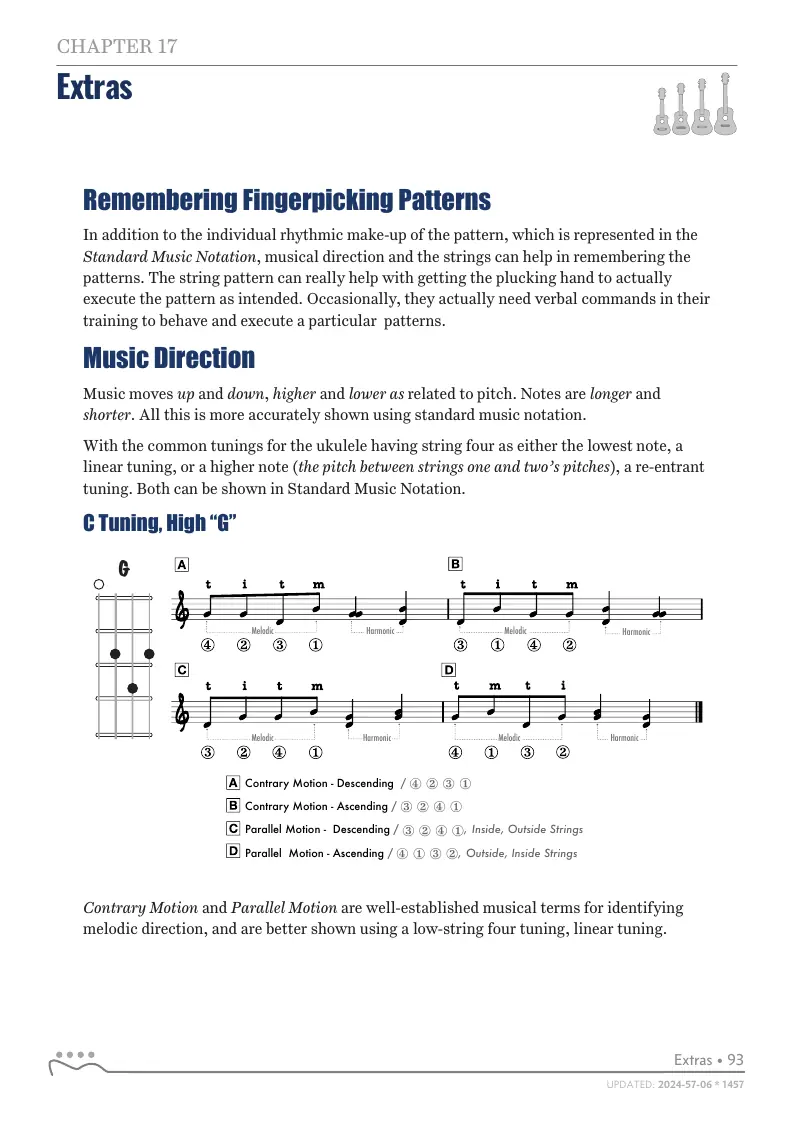
Alternating Thumb Style, Remembering the Patterns
In addition to the individual rhythmic make-up of the pattern which is represented in the Standard Music Notation. Musical direction and the strings can help in remembering the patterns. The string pattern can really help with getting the plucking hand to actually execute the pattern as intended.
Alternating Thumb Style, Rhythmic Variations
Rhythmic variations can be incorporated into this style of fingerpicking, creating a variety of syncopated patterns. All previous patterns were steady in nature, with the thumb alternating and playing on every downbeat. Many of the following patterns are syncopated, creating rhythmic variety.
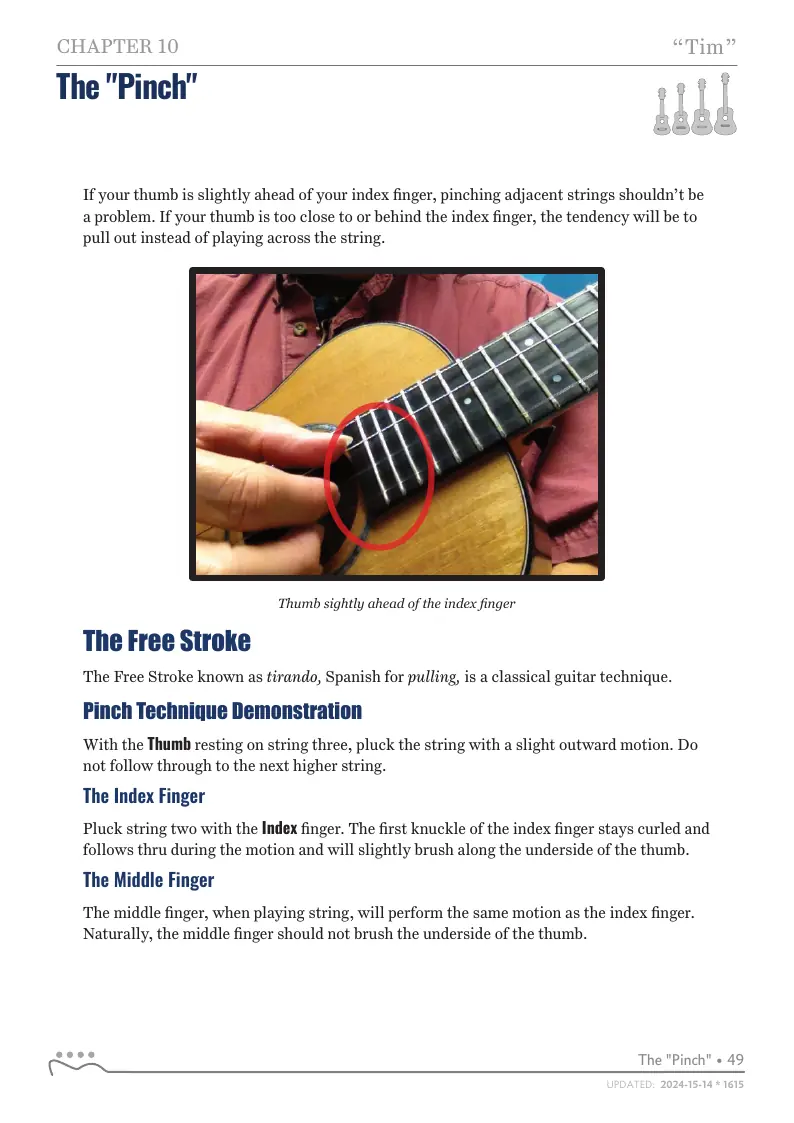
Alternating Thumb Style, The Pinch
All the previous lessons in the "Fingerpicking for Ukulele, Alternating Thumb Style Series" where melodic, single notes only. This lesson introduces The *Pinch, where any one of the thumb/index finger or thumb/middle finger combinations can be played together - harmonically.
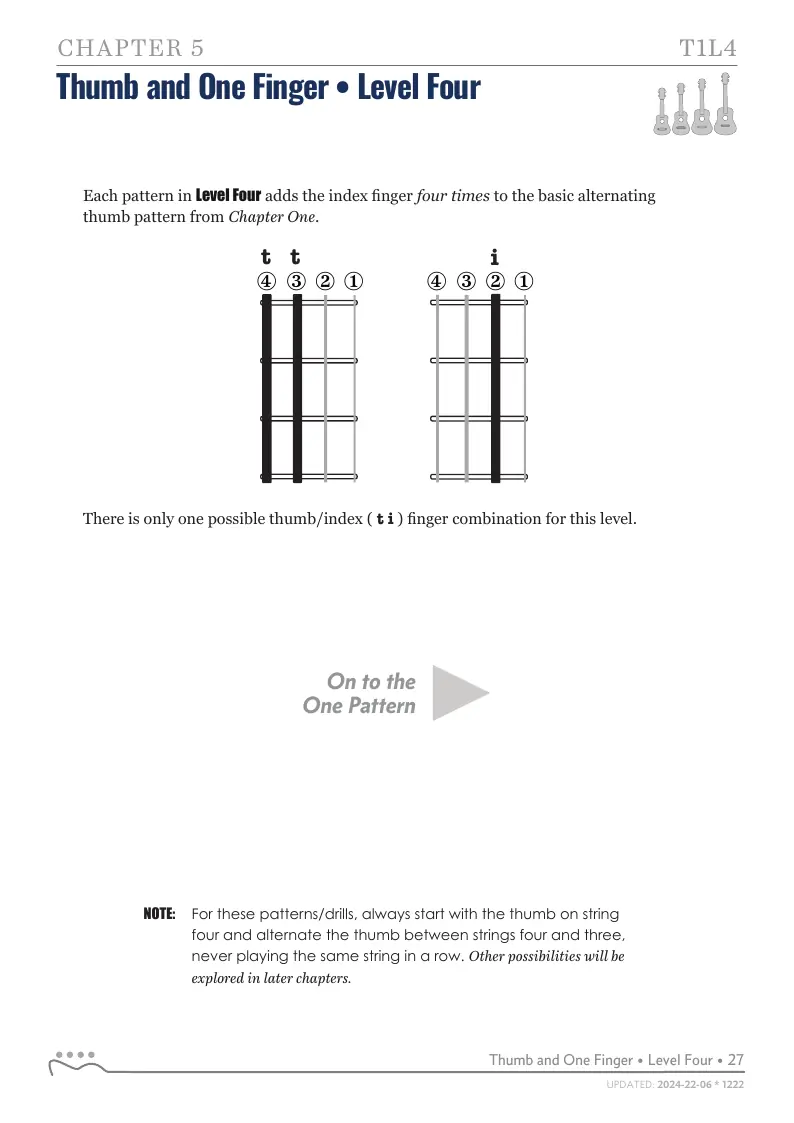
Alternating Thumb Style, Thumb and One Finger - Level Four
All the previous lessons in the "Fingerpicking for Ukulele, Alternating Thumb Style Series" where melodic, single notes only. This lesson introduces The *Pinch, where any one of the thumb/index finger or thumb/middle finger combinations can be played together - harmonically.
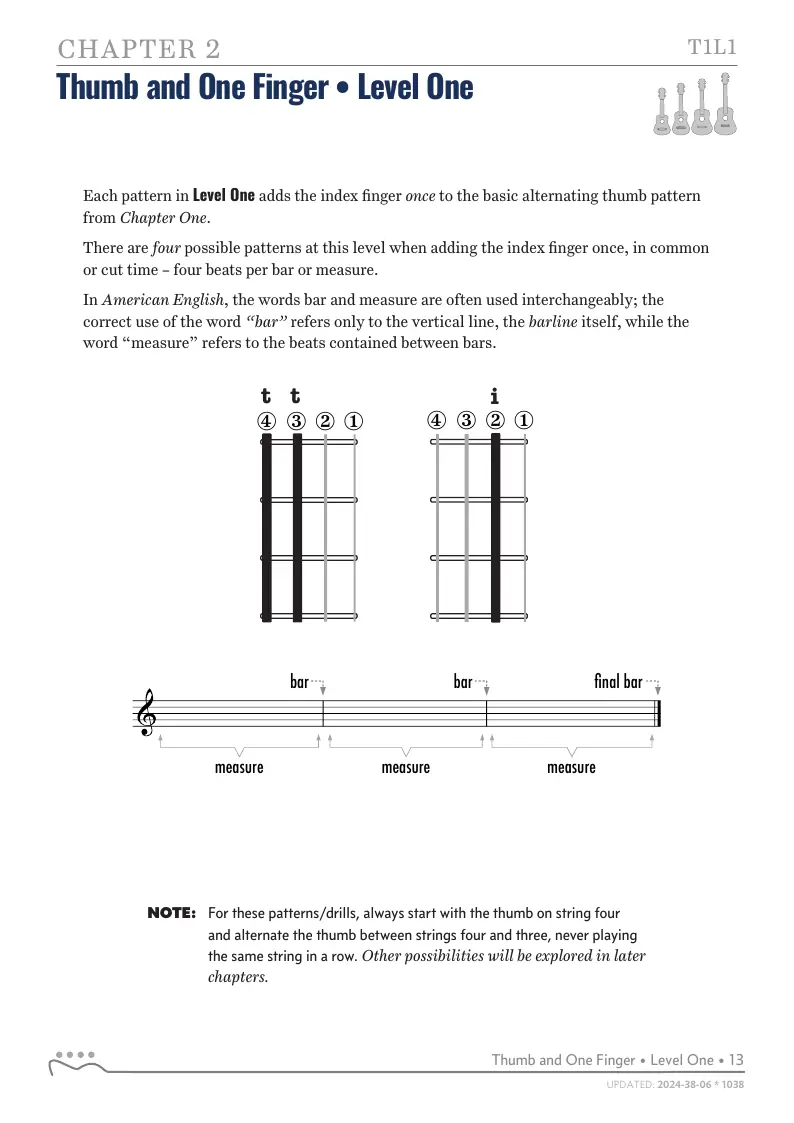
Alternating Thumb Style, Thumb and One Finger - Level One
In this lesson we’re introducing the index finger once to the alternating thumb pattern mastered in the Alternate Thumb Fingerpicking Style - Introduction. There are four possible patterns when adding the index finger once in common or cut time.
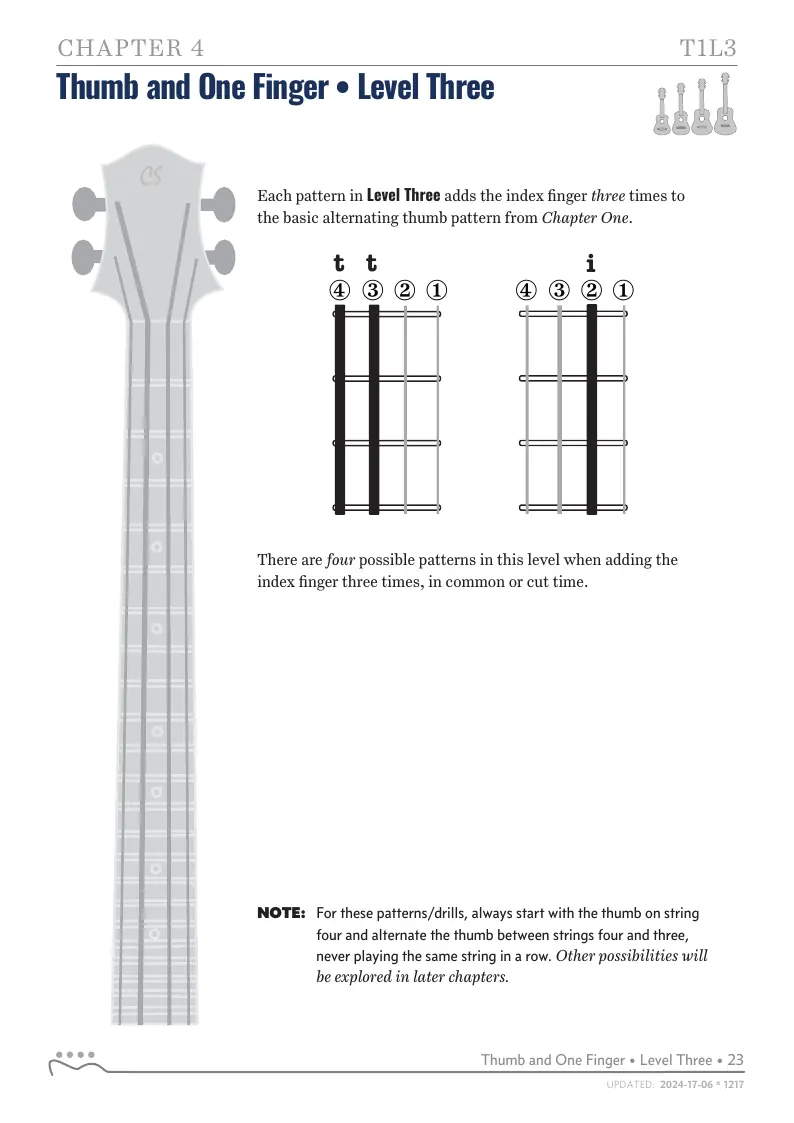
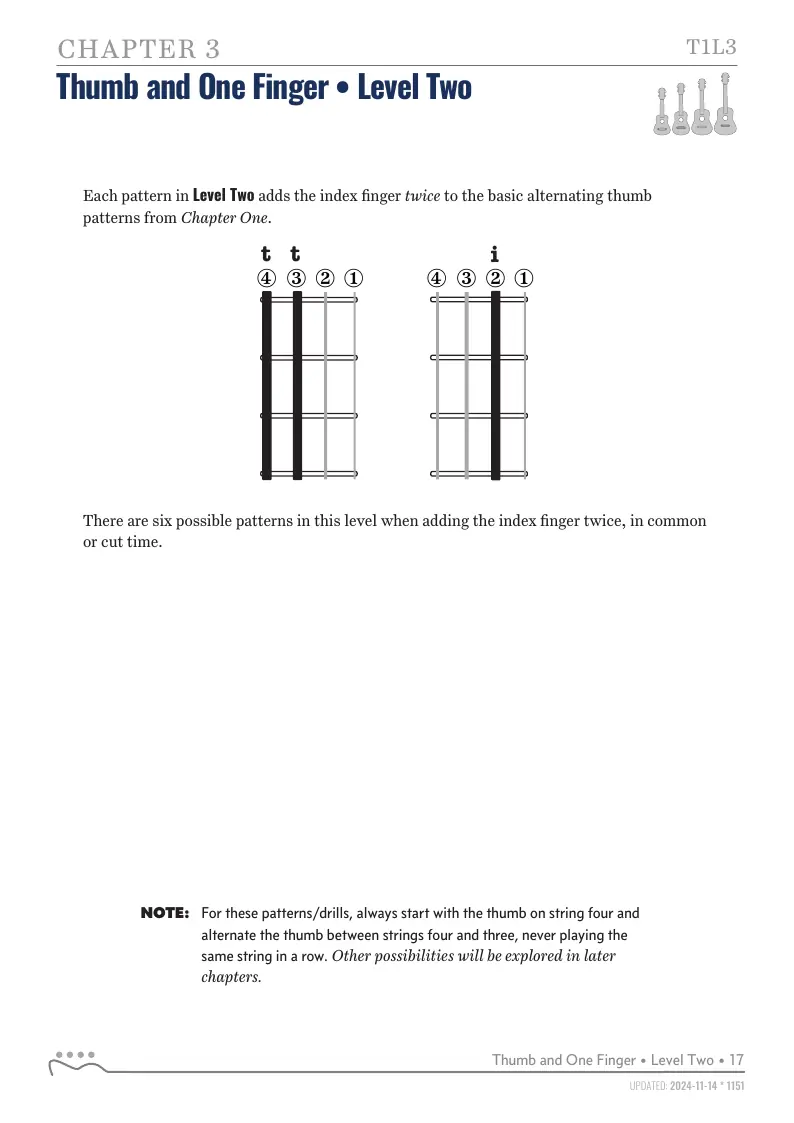
Alternating Thumb Style, Thumb and One Finger - Level Two
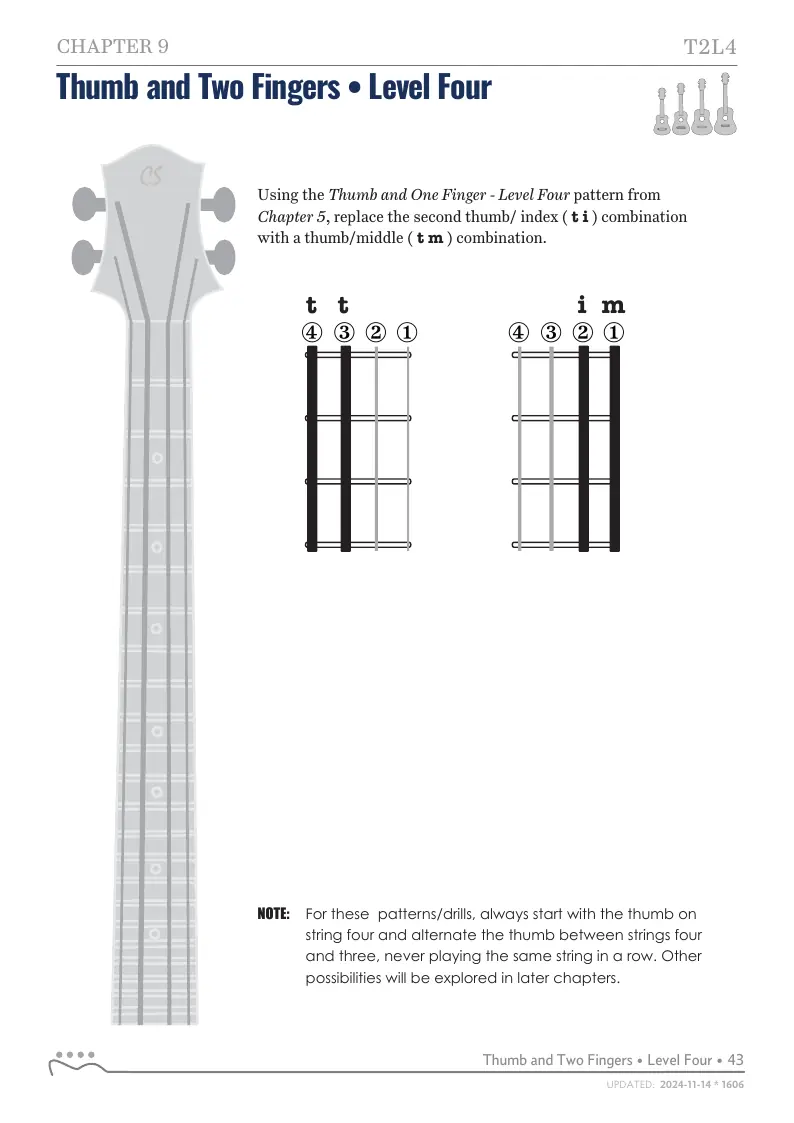
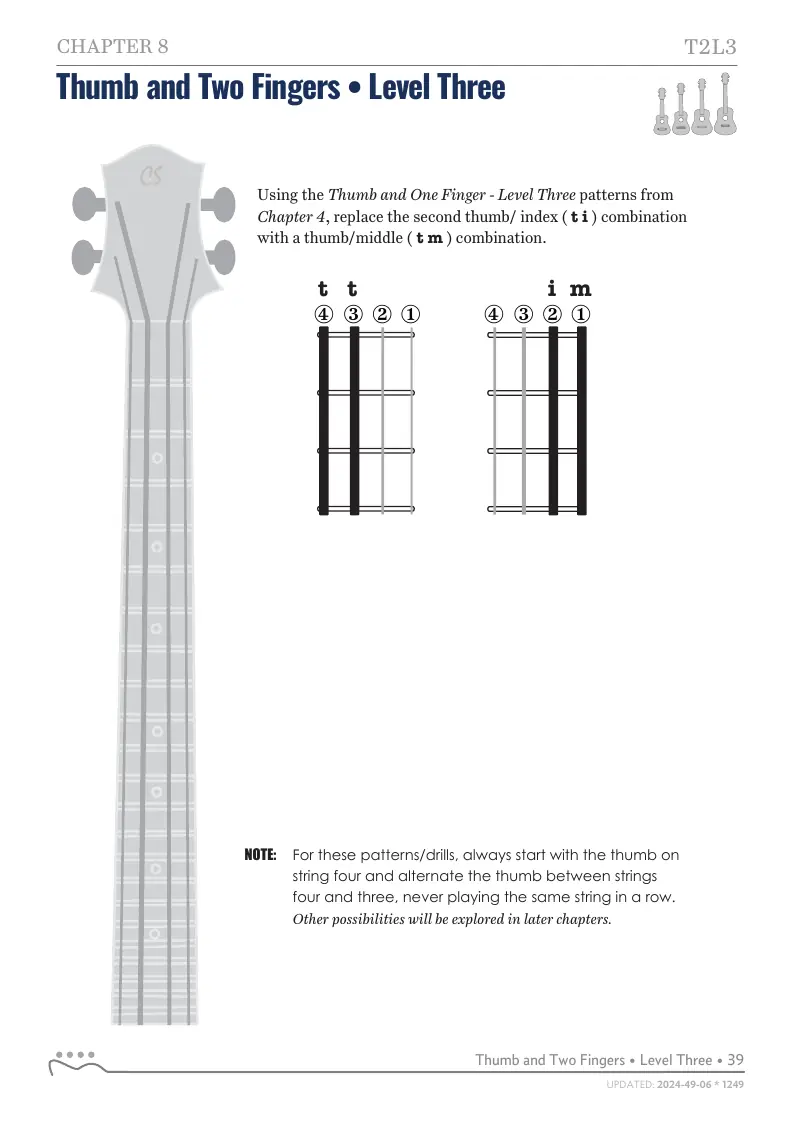
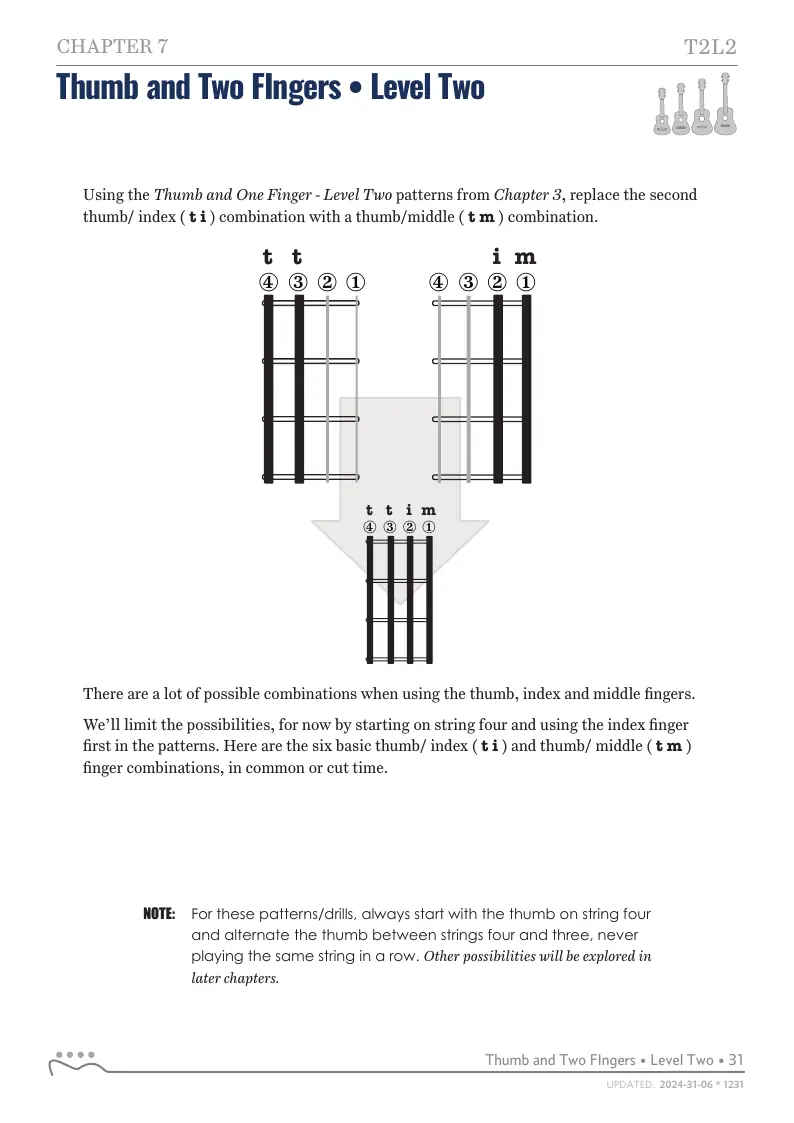
In this lesson we’re introducing the index finger twice to the alternating thumb pattern mastered in the Alternate Thumb Fingerpicking Style - Introduction. There are six possible patterns in common or cut time.ssible variations in this lesson.
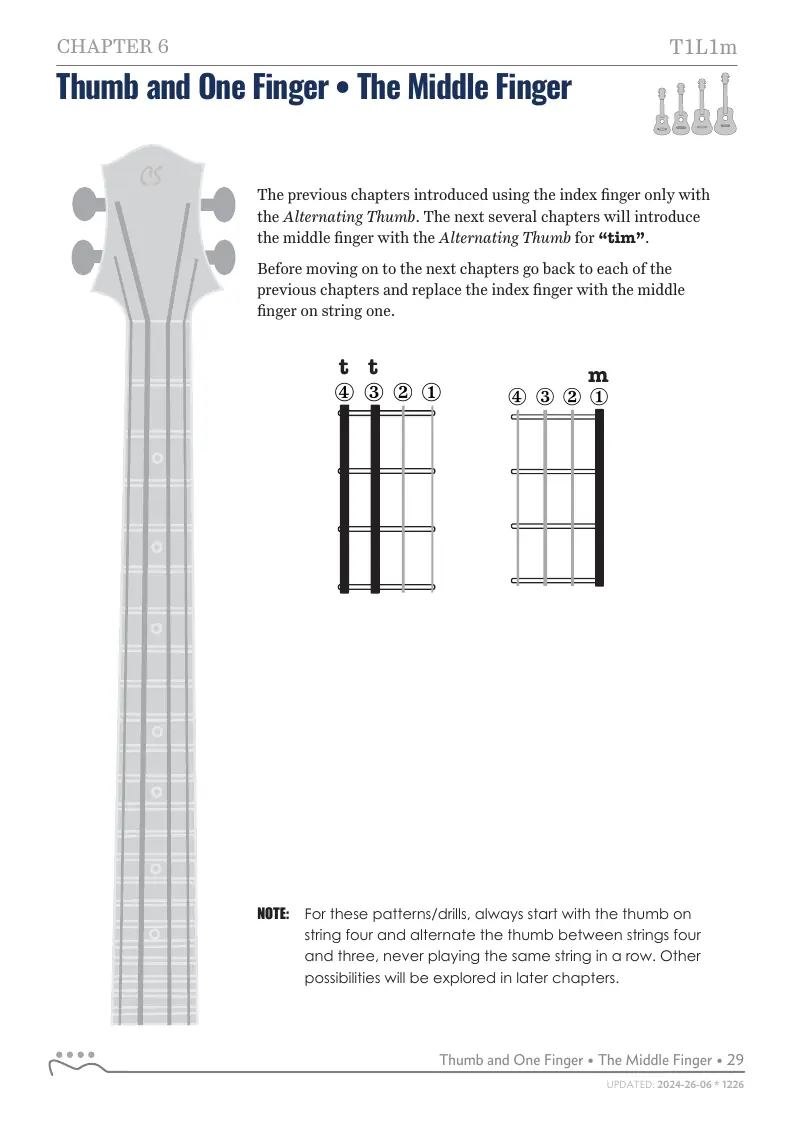
Fingerpicking on `Ukulele - Alternating Thumb Style
There are two common styles of fingerpicking on ukulele. This series of lessons explores the Alternating Thumb Style. A future series will explore the Thumb and three finger style, the traditional p i m a classical guitar style that we’ll adapt to ukulele.