
Published:
2006-07-12
Updated:
2020-01-03
Learning Ukulele with Curt
Ukulele- Reading Music Series - Primer
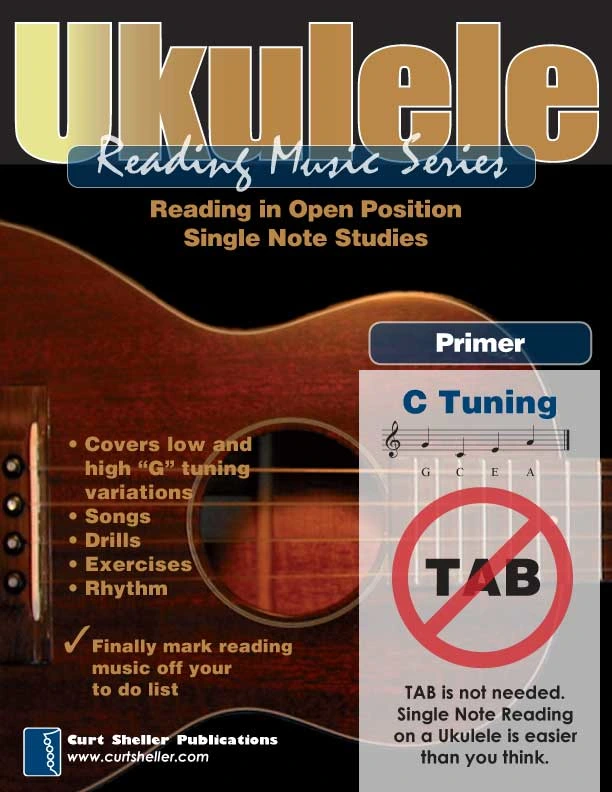
Learn to read single note melodies in the first/open position. It is a lot easier than you might think with this step-by-step easy to use approach. Tunings: C with low or high G - (GCEA or gCEA).
Author(s): Curt Sheller Publisher: Code: UKEREAD1
Main Category: Reading Main Instrument: Ukulele
Categories: Reading, Repertoire, Beginner, Methods

24 June 2026
If you're a registered site member and have the correct permissions you can view ALL the pages of this PDF or Samples pages at a larger size using the LearningUkulele.com Online PDF Viewer.
After purchasing a PDF a download link or PDF link will be sent to you.
This Download is NOT part of your LearningUkulele.com & Learning Ukulele with Curt membership level.
Sign-up for Premium Site Access or Upgrade Your Plan to download this PDF or your can purchase a copy for download
Sign In for Access…Contact Us if there are any issues.
However, if you'd like to support the site even more ❤️ you can buy the PDF.
After purchasing a PDF a download link or PDF link will be sent to you.
Product Info
- Product Code: UKEREAD1
- Author(s): Curt Sheller
- Publisher(s):
- Published: 12 July 2006
- Updated: 3 January 2020
- ISBN-13: 978-0-9714044-1-0
- Size*: ANSI A
- Pages: 80
- Hard Copy Price: $15.95
- PDF Price: $7.00
Regarding Book, Lesson and Charts Paper Sizes
• click to Hide more info
• click to Show more info
Starting 2020 LearningUkulele.com & Learning Ukulele with Curt moved to A4 paper sizes for all new books and new editions of books, lessons, and charts.
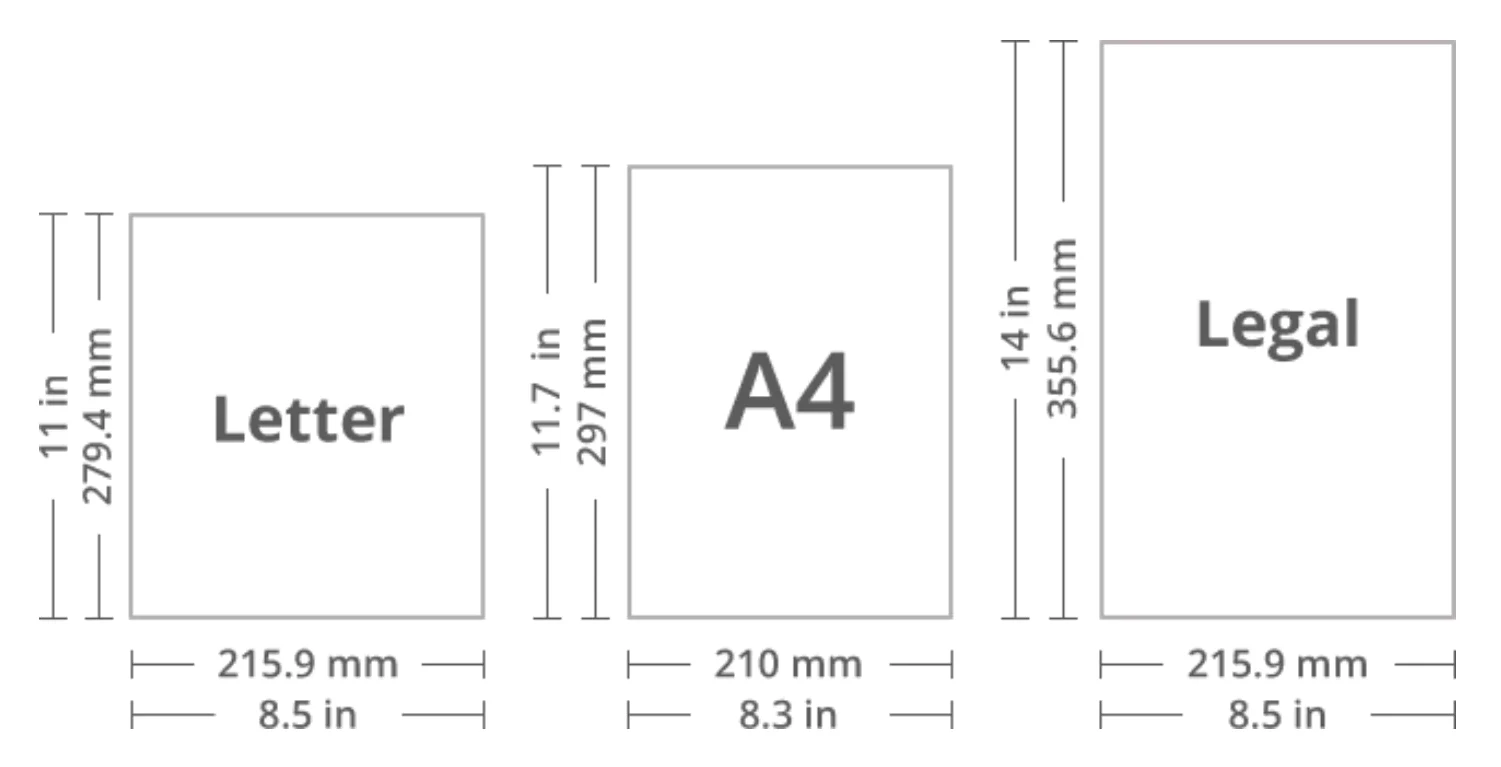
The A Series was adopted in Europe in the 19th century, and is currently used all around the world, apart from in the USA and Canada.
• Decoding Printer Paper Sizes: A4 vs Letter vs Legal. which is Standard?
NOTE: Printing A4 to US Letter Size: As the sizes are relatively close, simple select Scale to Fit
and the A4 size will print out fine.
Learn to read single note melodies in the first/open position. It is a lot easier than you might think with this step-by-step easy to use approach. Tunings: C with low or high G - (GCEA or gCEA).
Reading music is not as hard as one might think. It may be new and unfamiliar but is not hard when you have a proper plan of attack.
Reading music on the ukulele is easier than reading music on guitar or piano. There are only four strings with a smaller range of possible notes.
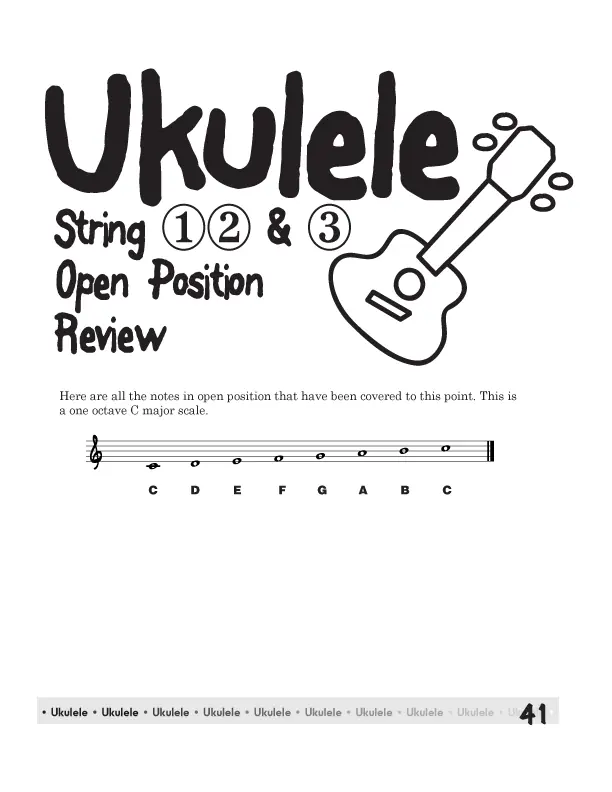
Music in the key of C with all natural notes, no flats or sharps is pretty easy to play in open position on a ukulele. This would be the same as playing the white keys of a piano.
Standard music notation has been the Lingua Franco of musicians, both professionals and hobbyists for many centuries.
Reading standard music notation opens you up to vast world of published music.
Reading simple melodies in open position is the first step to reading music on the uke.
Ukulele - Reading Music Series: Reading Music in Open Position, Single Note Studies- Primer uses Chuck Anderson's Modular Phonetic Rhythm System.
Future books cover reading accidentals, the signatures, chords charts as well as reading in different positions up and down the ukulele fingerboard. As well as covering reading music in additional popular ukulele tunings: "G", Tuning and "D" Tuning.
Tunings: C with low or high G - (GCEA or gCEA).
- Introduction
- Tuning Your Ukulele
- Reading Rhythm
- String One
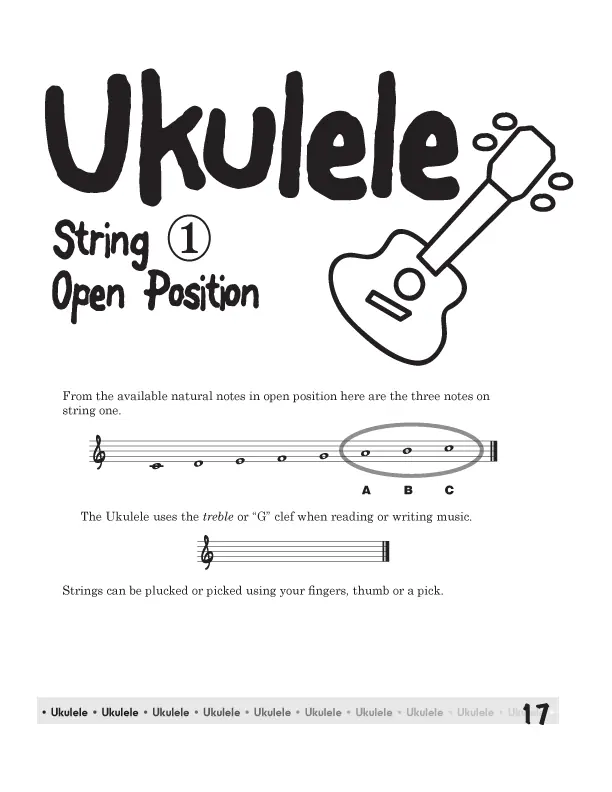
- Open A
- B
- C
- A B and C
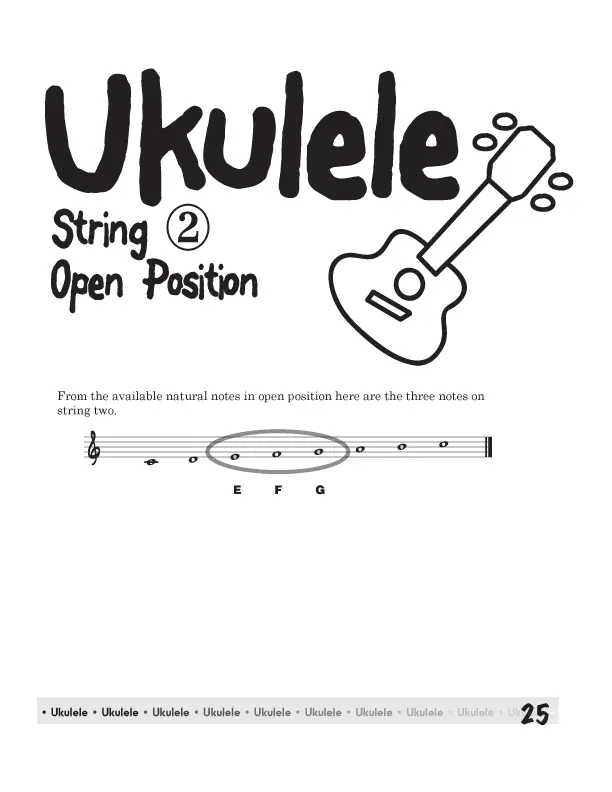
- String Two
- Open E
- F
- G
- E F and G
- String One and Two Review
- String Three
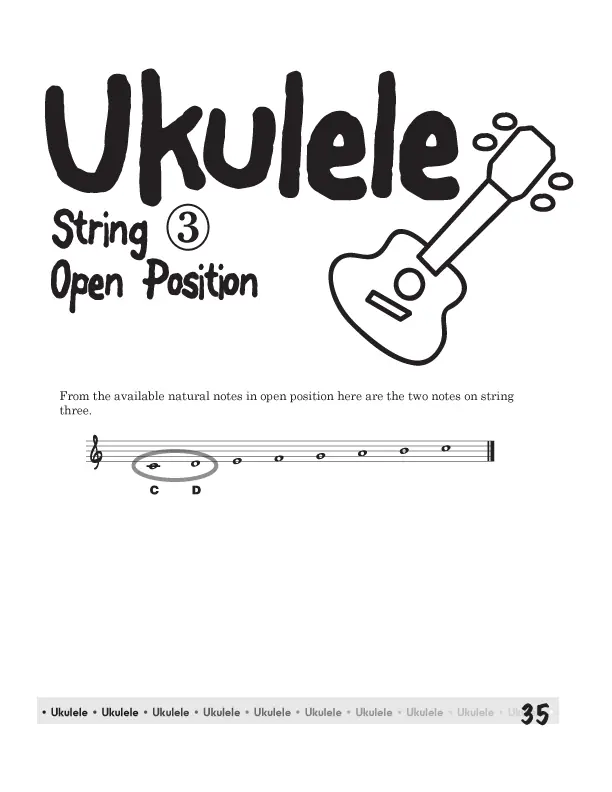
- Open C
- D
- C and D 40
- String One, Two & Three Review
- Alternate Note Locations
- Ties and Rests
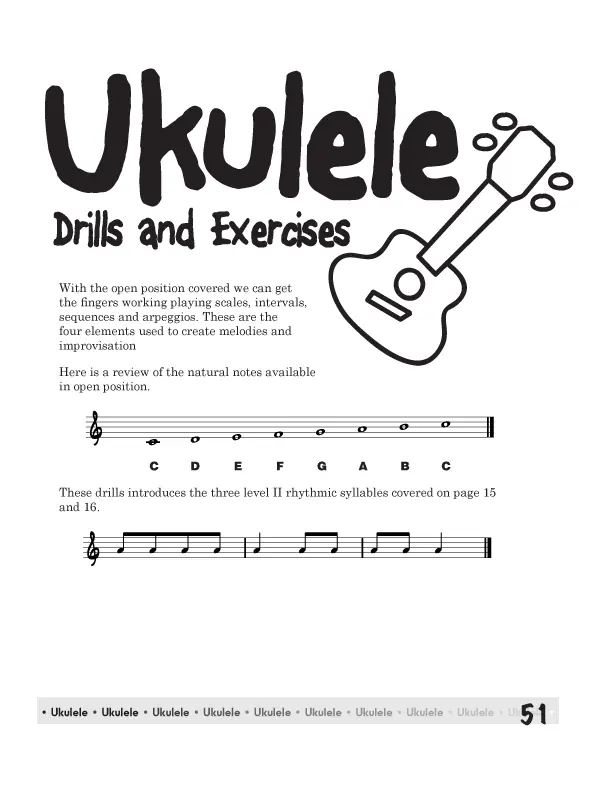
- Drills & Exercises
- String Four
- String Four, High “G”
- String Four, Low “G”
- Songs
- Preview
- 9/29/2006 - (20060930.1.3) Updated to reflect the changes to the Modular Phonetic Rhythm system.
Reading Music on Ukulele Series - Reading in Open Position, Alternate Note Locations
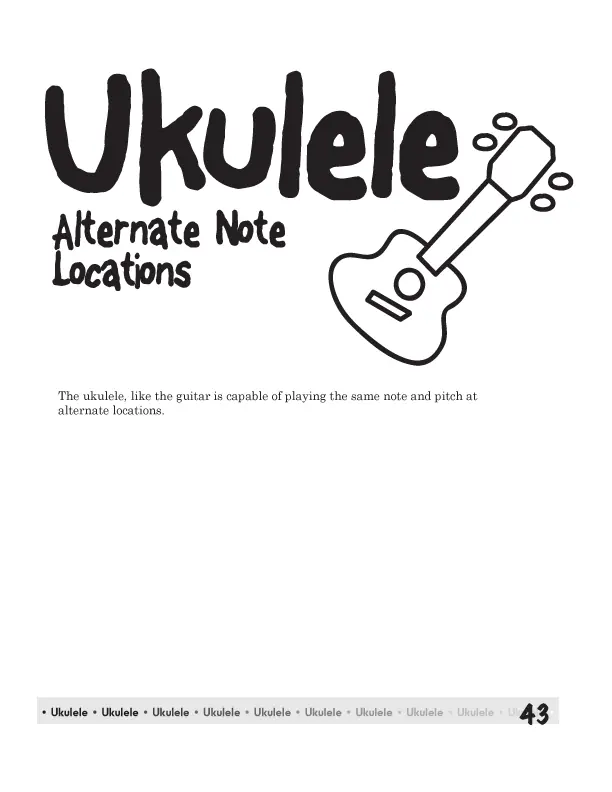
One of the reasons it is hard to read music on the guitar and the ukulele is, alternate note locations. In the open position there is one alternate note location. The open E, string two can also be played on string three, fret (3). If there is no overwhelming musical reason to play one location vs. the other. Then play the one that is easier to play. Use your ear as the final judge as to which one you prefer.
Reading Music on Ukulele Series - Reading in Open Position, Songs
The following songs can be played in open position using the natural notes covered in the previous lessons of this primer. These songs do not use any signatures, no time signature or key signature is shown. All songs are played with a quarter note taking one beat.
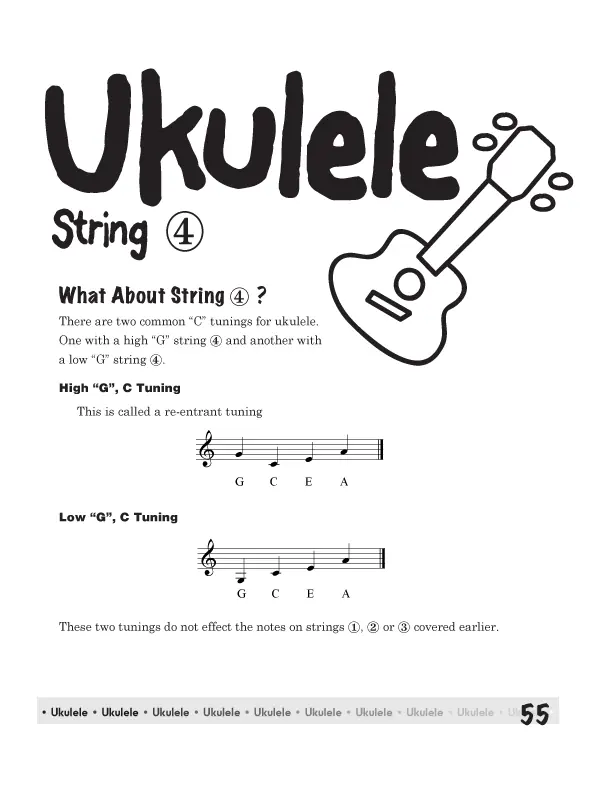
Reading Music on Ukulele Series - Reading in Open Position, What About String Four?
"C Tuning, Low G", extends the melodic range to G below middle C. This expanded range allows for a wider selection when selecting songs to play. The G, A and B are the same names as a high string four but sounding one octave lower.


Reading Music on `Ukulele Series - Reading in Open Position
This series of lessons will allow you finally, to check that Reading item off your music To Do list. Learning to read standard music notation opens a world of music to you. Music notation is the Lingua franca of amateur and professional musicians alike.
Reading Music on `Ukulele Series - Reading in Open Position, Introduction
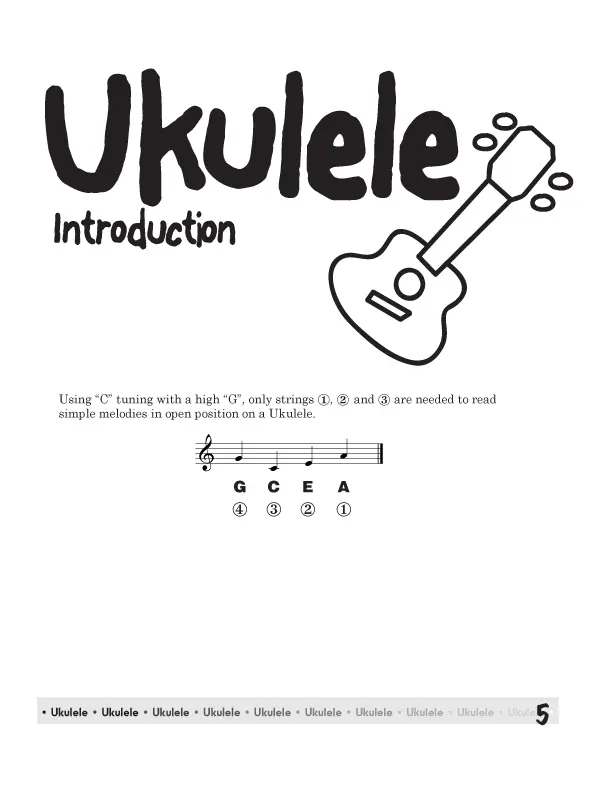
There are a few things in music that students and players avoid. These are things like learning to read and knowing the notes of their own instrument. It is hard on guitar - but not so hard on ukulele. With the right guidance and plan of attack. IT IS EASY. It is really quite easy on a uke. Starting with natural notes in in the open position you can finally check off the Reading Music to do item. Learning to read standard music notation is really, really easy.
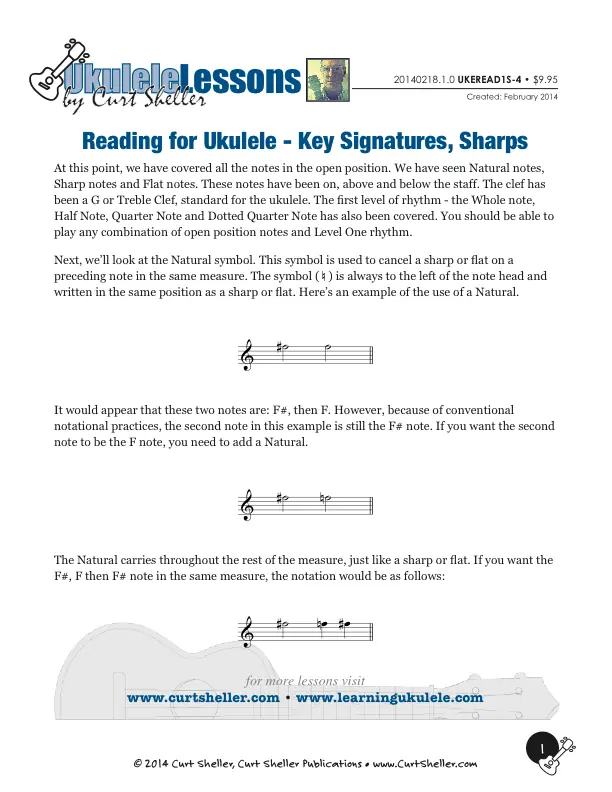
Reading for `Ukulele - Lesson Four, Key Signatures, Sharps
This lessons covers the natural symbol and the sharp key signatures keys. In musical notation, a key signature is a collection of sharp or flat symbols placed together on the staff. Key signatures are generally written immediately after the clef at the beginning of a line of musical notation, although they can appear in other parts of a score, notably after a double barline. A key signature is use to indicate the “auto sharping or flatting of specified notes. Key signatures are also used to identify the key of a composition.

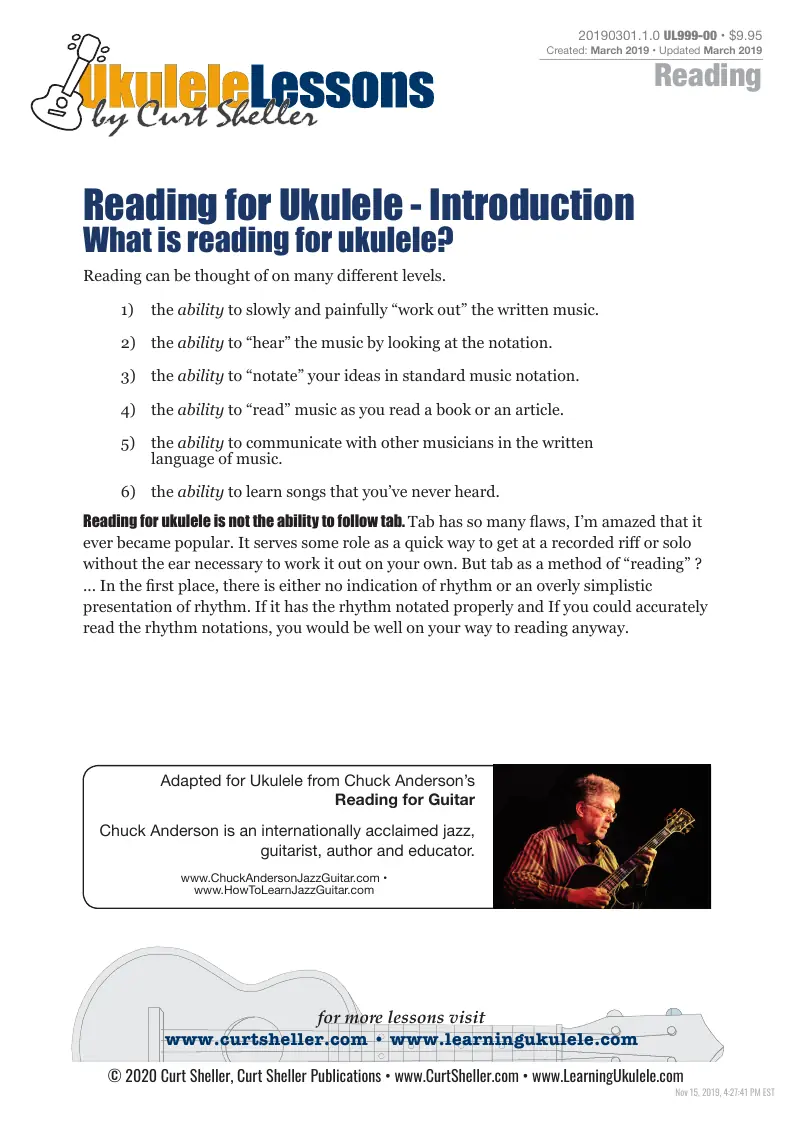
Reading for `Ukulele - Lesson One, Introduction
This is a series of lessons for reading music for ukulele at a pro level. Reading can be thought of on many different levels. 1) the ability to slowly and painfully “work out” the written music. 2) the ability to “hear” the music by looking at the notation. 3) the ability to “notate” your ideas in standard music notation. 4) the ability to “read” music as you read a book or an article. 5) the ability to communicate with other musicians in the written language of music. 6) the ability to learn songs that you’ve never heard.
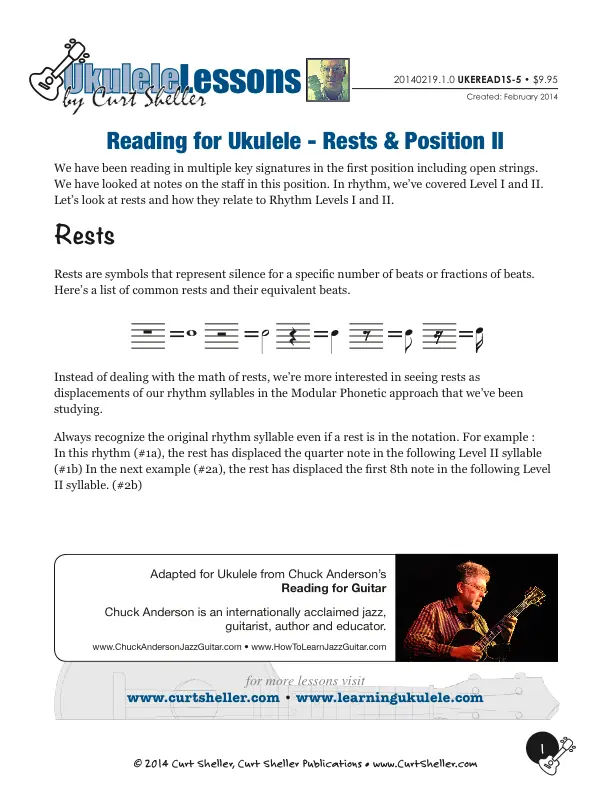
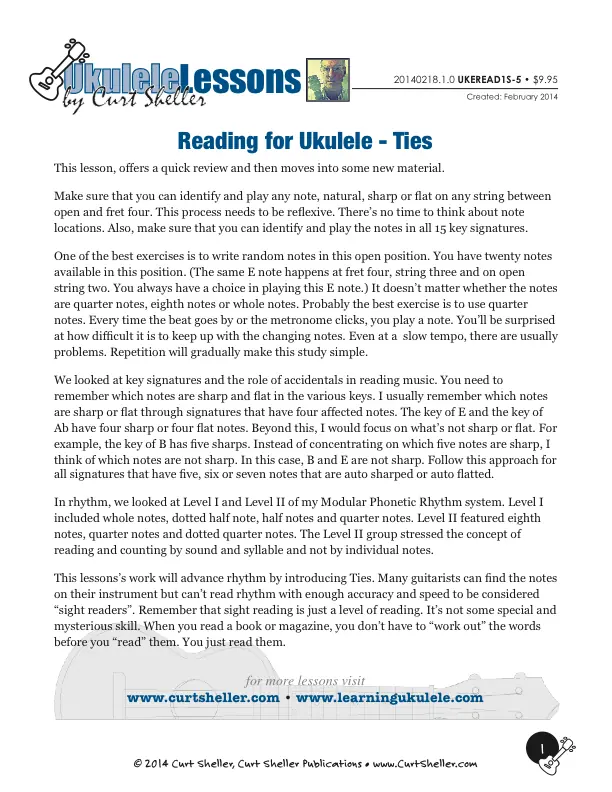
Reading for `Ukulele - Lesson Six, Ties
This lessons's work will advance rhythm by introducing Ties. Many ukulele players can find the notes on their instrument but can't read rhythm with enough accuracy and speed to be considered "sight readers". Remember that sight reading is just a level of reading. It's not some special and mysterious skill. When you read a book or magazine, you don't have to "work out" the words before you "read" them. You just read them.

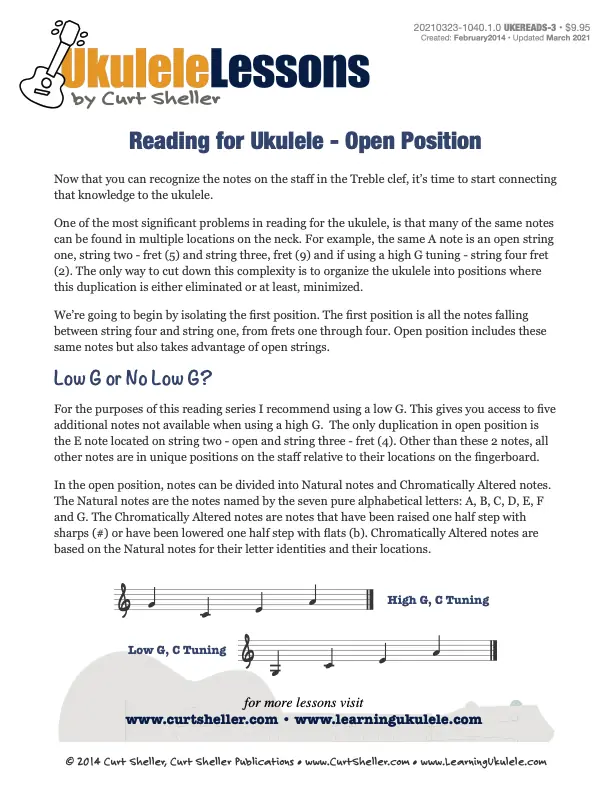
Reading for `Ukulele - Lesson Three, Open Position
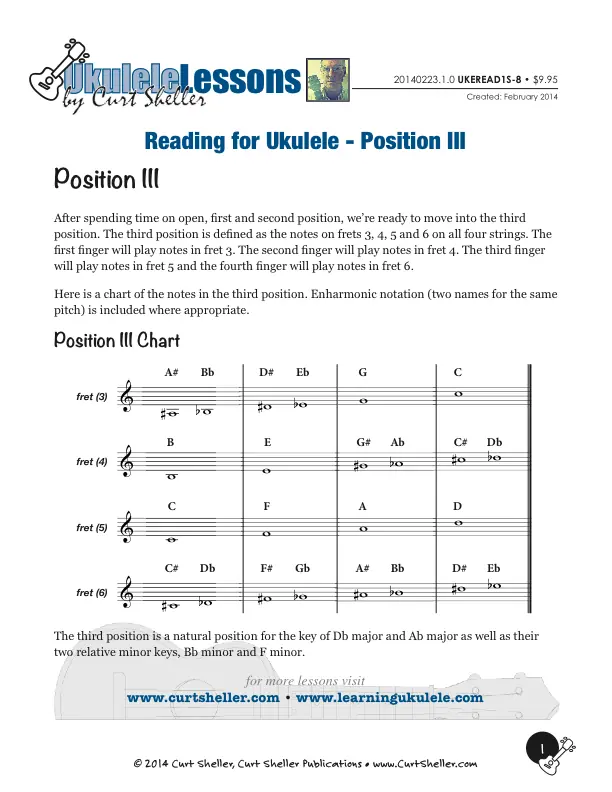
Now that you can recognize the notes on the staff in the Treble clef, it’s time to start connecting that knowledge to the ukulele. One of the most significant problems in reading for the ukulele, is that many of the same notes can be found in multiple locations on the neck. For example, the same A note is an open string one, string two - fret (5) and string three, fret (9) and if using a high G tuning - string four fret (2). The only way to cut down this complexity is to organize the ukulele into positions where this duplication is either eliminated or at least, minimized.
Reading for `Ukulele - Lesson Two, Note Recognition
Once you understand the basic concept of reading, it’s time to get down to the development of the skills. We know our goal is to read music as well as we read words. Now, how do we get there? Note Recognition - If you can’t recognize the notes on the staff, you certainly can’t read them. For anyone who is past this step, great! But in many cases, the recognition of notes on the staff is not as good as it should be. If you can’t read music, this skill doesn’t exist at all.
Reading for `Ukulele - Lessons Five, Key Signatures, Flats
This lessons covers the natural symbol and the flat key signatures keys. In musical notation, a key signature is a collection of sharp or flat symbols placed together on the staff. Key signatures are generally written immediately after the clef at the beginning of a line of musical notation, although they can appear in other parts of a score, notably after a double barline. A key signature is use to indicate the “auto sharping or flatting of specified notes. Key signatures are also used to identify the key of a composition.


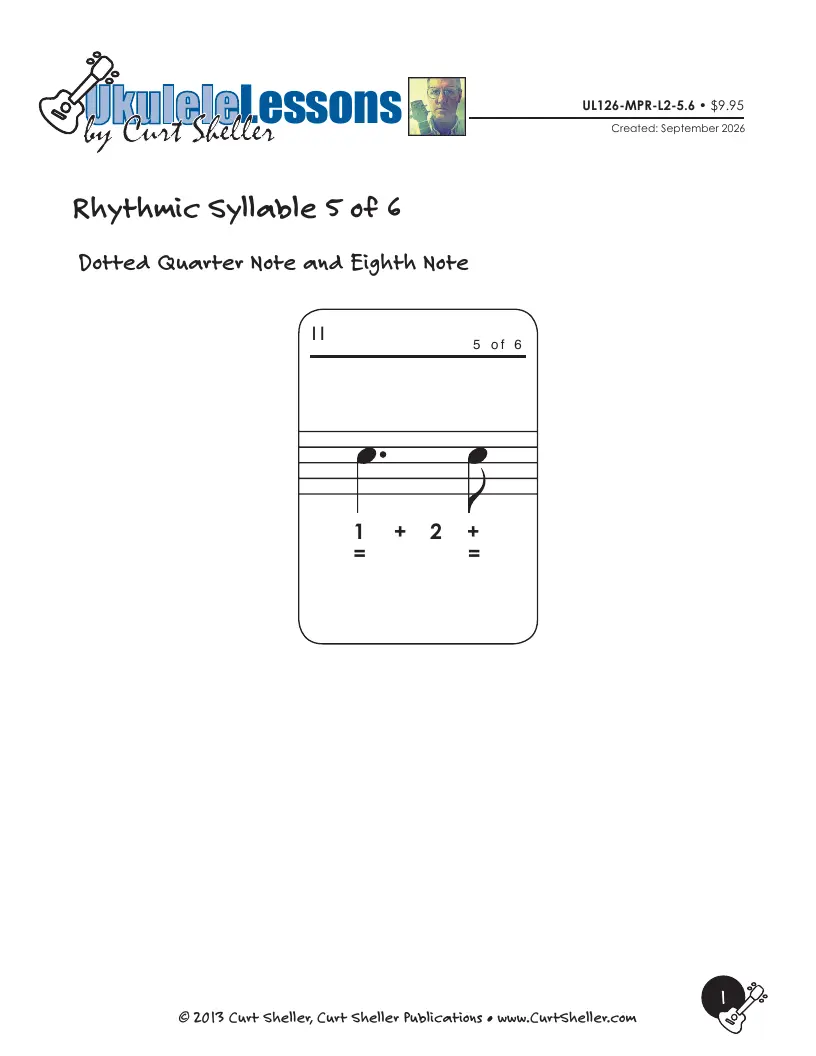

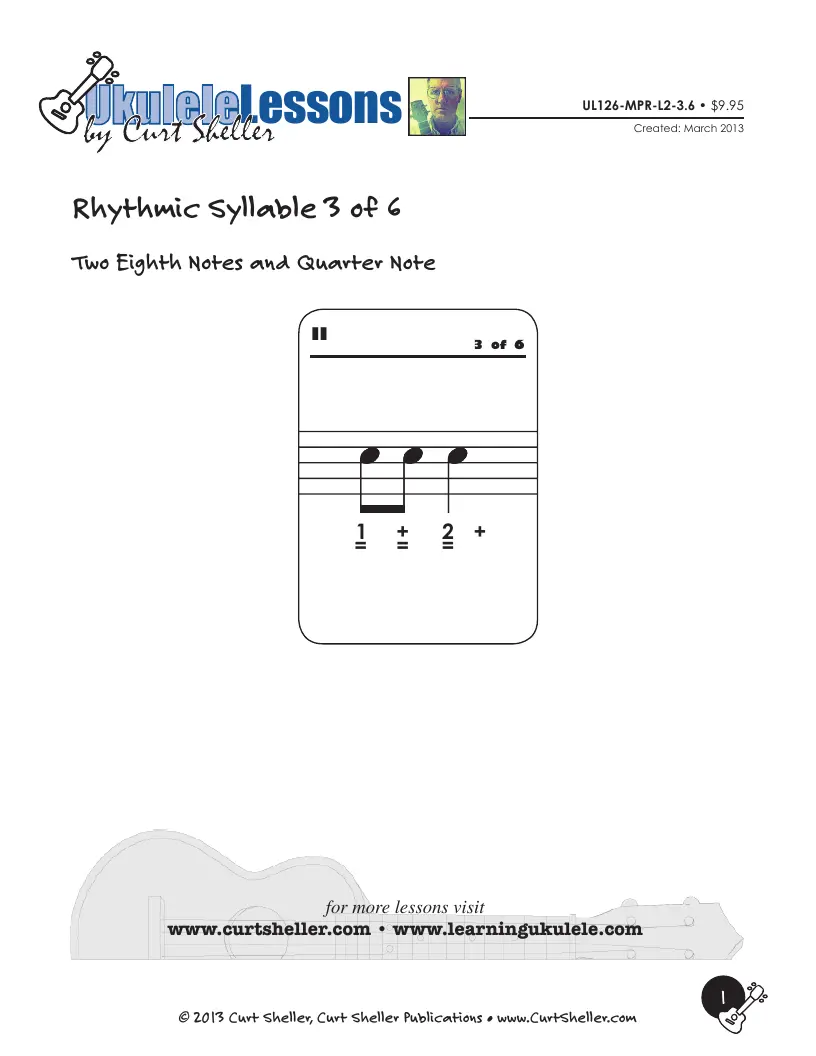
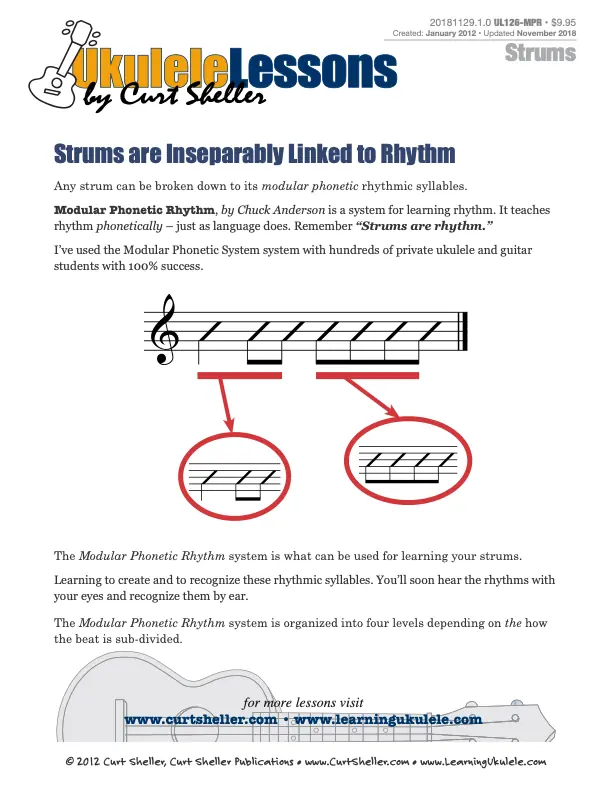
`Ukulele Strums and The Modular Phonetic Rhythm System
Strums are Inseparably Linked to Rhythm. Any strum can be broken down to its Modular Phonetic rhythmic syllables. Modular Phonetic Rhythm, by Chuck Anderson is a system for learning rhythm. It teaches rhythm phonetically - just as language does. Remember 'Strums ARE rhythm'