
Learning Ukulele with Curt
Jazz Ukulele: Chords
Your chord system for creating ANY chord you'll ever need. Really, ANY chord you ever encounter in a song or lead sheet you WILL be able to create – sometimes on the fly as needed.

9 August 2026
It's when you start exploring the Jazz
repertoire that you realize that there a far too many chord shapes to memorize. And, you are right, you really need to rely on a solid foundation of cores and the ability to derive any chord you need based on your understating of where chords come from and how to create any chord you need.
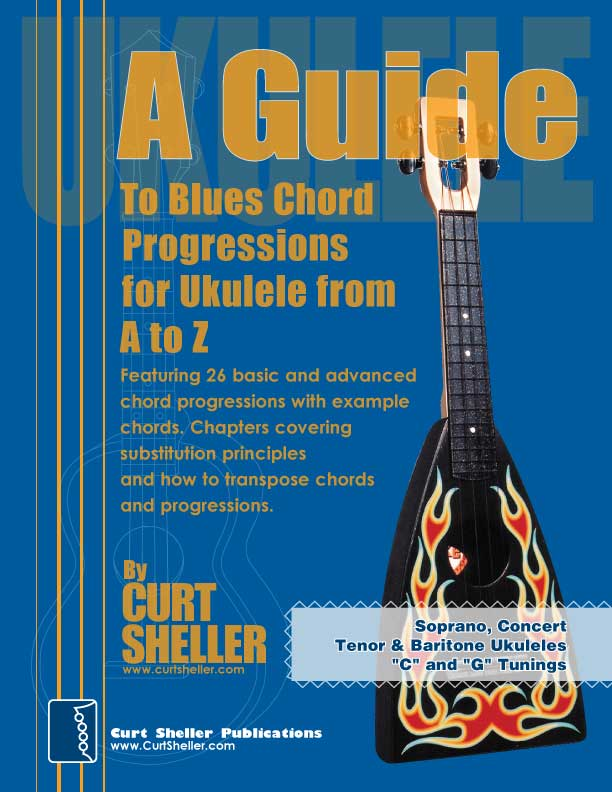
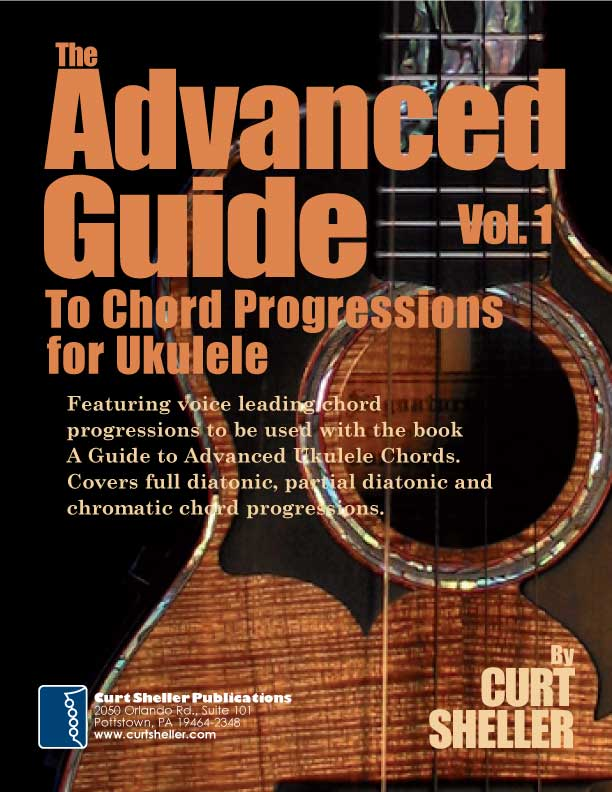
Just What is a “Jazz” Chord?
• There is no such thing as a jazz
chord. Jazz
chords are simply, contemporary 4-part chords that find their way into a wide range of contemporary music.
The Seventh Chord • Often referred to as a Dominant Seventh . This is a chord that can form the "core" foundation for ALL your jazz chords. For ukulele I use the F7 chord as this foundation. On, guitar we use C7.
Core Chords - The Big Six
• Your Jazz chord system for creating ANY chord you'll ever need. Really, ANY chord you ever encounter in a song or lead sheet you WILL be able to create.
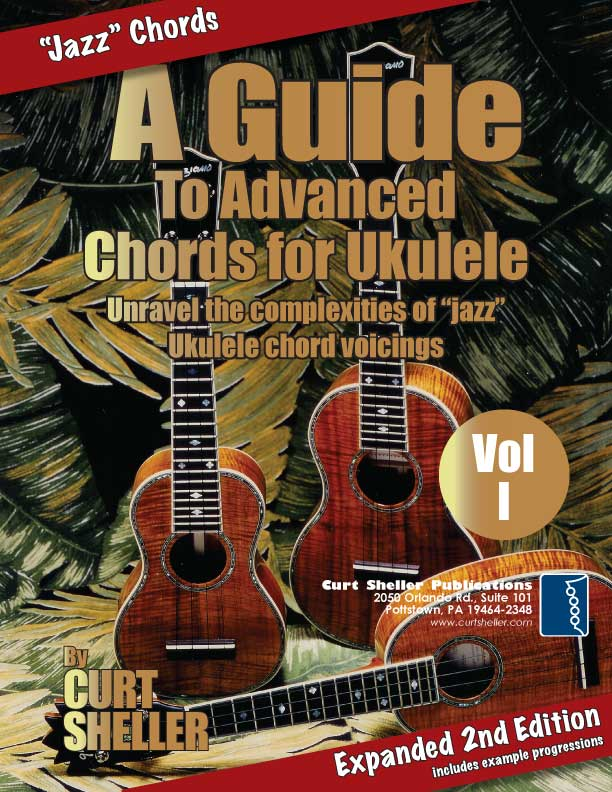
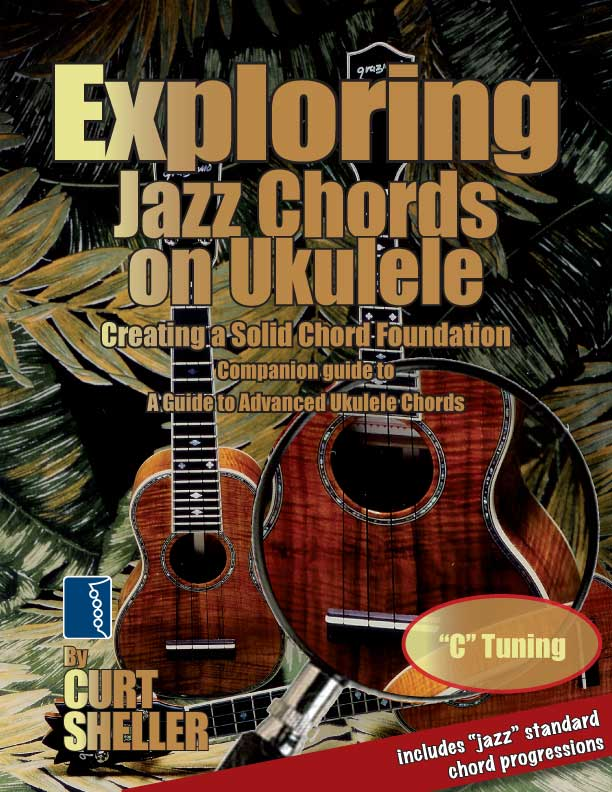
What is a Chord?
First — what is an actual chord?
A chord is three or more notes sounded together or almost together. It's that simple!. A chord can be as simple as a traditional three-note triad (major, minor, diminished, augmented), all the way up to a fancy 5-part and more jazz chords such as G13+9 . A chord has a letter name (capital letter)—it's root and type information indicating the type of chord and any alterations or extensions or upper partials.
Here are a few suggested LearningUkulele.com lessons on chord alterations, extensions, and upper partials.
Traditional
means chords built in intervals of major and minor thirds. These are the chords of our Western Harmony
and the the only chord with actual names.
What is a Chord?
First — what is an actual chord?
A chord is three or more notes sounded together or almost together. It's that simple!. A chord can be as simple as a traditional three-note triad (major, minor, diminished, augmented), all the way up to a fancy 5-part and more jazz chords such as G13+9 . A chord has a letter name (capital letter)—it's root and type information indicating the type of chord and any alterations or extensions or upper partials.
Here are a few suggested LearningUkulele.com lessons on chord alterations, extensions, and upper partials.
Traditional
means chords built in intervals of major and minor thirds. These are the chords of our Western Harmony
and the the only chord with actual names.
You need ONE chord, four voicings, that can serve a foundation for building ALL your 4-part, contemporary “jazz” chords. These 4-part chords, sometimes called “Jazz” chords are simply 4-part chords. The seventh chords, sometimes called The Dominant Seventh Chord is a great starting chord for that purpose.
Most professional guitarists' have a core set of chords that form the foundation for all their 4-part chords. Ukulele players need this same foundation.
A Seventh chord is a great starting chord to form your “core” chord foundation. The seventh chord forms the foundation for all our major 4-part chord types. From your core seventh chords, you can create the minor, diminished and augmented chord types.
Six 4-part chords that form the foundation for all your jazz chords: the seventh, major seventh, minor seventh, half-diminished seventh, diminished seventh and augmented seventh chords as your core foundations chords. Virtuoso jazz guitarist Chuck Anderson calls these the “Big Six”, a great name.
Most ukulele players already know the four open position versions that form the core seventh chords. You might already recognize a few of them below.


These Four Open Position Chords
form the foundation for ALL your Jazz
chords.
“Core” Chords
A pro player's approach to chord organization and creating ANY 4-part chord they will ever need.

Core Chords - Building a Solid Foundation of Contemporary Chords
"Core Chords" are a concept that I typically apply to 4-part chords and your more contemporary modern chords. This where a solid foundation of a core set of chords really help in learning the massive amount of chords that are required for play contemporary music or jazz on ukulele or guitar. Not such a task on ukulele with on one four string set of strings to build your 4-part chords vs. the theoretically possible 15 sets available for guitar.
Core Chords - The Big Six - Building a Solid Chord Foundation
The Big Six Core Chords is a series of lessons for building your core, essential 4-part chords. These chords commonly called jazz chords, are really just 4-part chords used in a wide range of musical styles. These chords include: Seventh , Major Seventh, Minor Seventh, Half Diminished Seventh or Minor Seven Flat Five, Diminished Seventh, and Augmented Seventh. These six chords form a core set of chords.