
Published:
2021-03-22
Updated:
2023-07-20
Learning Ukulele with Curt
Major Scale Fingering - Piano
Scale fingerings for the 15 Major Scales: C, G, D, A, E, B, F#, C#, F, Bb, Eb, Ab, Db, Gb, Cb.
Author(s): Curt Sheller Publisher: Curt Sheller Publications Code: PL01
Main Category: Scales Main Instrument: Piano
Subjects: Chords

2023-07-20

If you're a registered site member and have the correct permissions you can view ALL the pages of this PDF or Samples pages at a larger size using the LearningUkulele.com Online PDF Viewer.
This Download is NOT part of your LearningUkulele.com and Learning Ukulele with Curt membership level.
Sign-up for Premium Site Access or Upgrade Your Plan to download this PDF or your can purchase a copy for download
Register/Sign In for Access…After purchasing a PDF a download link or PDF link will be sent to you.
Contact LearningUkulele.com and Learning Ukulele with Curt if there are any issues.
Scale fingerings for the 15 Major Scales: C, G, D, A, E, B, F#, C#, F, Bb, Eb, Ab, Db, Gb, Cb.
Even just learning just a few of the common major scales is a good goal for any musician regardless of your main instrument.
You might ask Why only 15 major keys in western tonal music?
.
In Western tonal music, there are 15 major keys because of the way the musical system is structured. The major scale is the foundation of tonal music, and it consists of seven different notes, each with its own unique pitch. When you build a major scale, you follow a specific pattern of whole steps ( W ) and half steps ( H ):
W W H W W W H
The 1st major scale is C Major itself (C D E F G A B C`), which has no sharps or flats, making it the most straightforward and fundamental key in Western music. You might have caught that the C was used again, violating our no repeats criteria below, this is to satisfied the need for are ear to hear a finality, a resolution of the scale to it's tonic, in this case C .
More Major Scale Fingering - Piano
content below, continue exploring...
Here's a practical explanation of why there are 15 major keys:
- In the Western music system there are seven letters used–the first seven letters of the alphabet: ( A B C D E F G ). For the Full DIatonic Major scale all seven are used, in-order with no skips or repeats. Each of the seven letters can be natural A B C D E F G , sharped for A♯ B♯ C♯ D♯ E♯ F♯ G♯ or flatted for A♭ B♭ C♭ D♭ E♭ F♭ G♭
- There are 15 different notes in the Western music system (C, C#, D, D#, E, E# F, F#, G, G#, A, A#, B, B#) — The
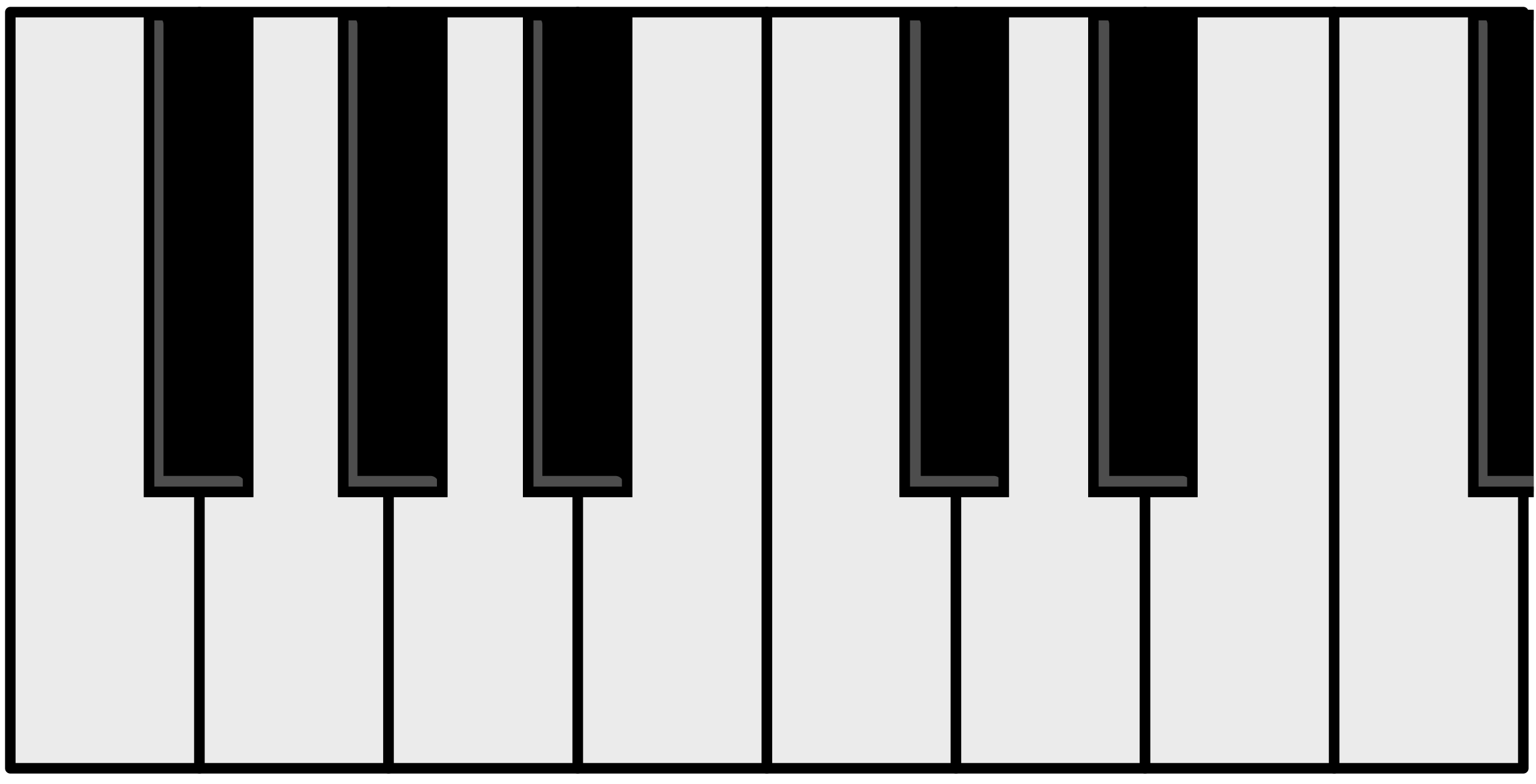
- However, to maintain consistent tonal relationships and ensure that each note in the scale has its own unique name (no double sharps or double flats), you can only use certain notes as the starting tonic. These notes are the white keys on a piano, which include the letters A through G without any sharps or flats.
- Therefore, starting on each of these 7 white keys (A, B, C, D, E, F, G) and following the pattern of whole and half steps, you will get 7 unique major scales.
W W H W W W H
In summary, there are 15 major keys in Western tonal music. These 15 keys form the basis of much of Western classical and popular music.