
Published:
2021-10-02
Updated:
2026-05-05
Learning Ukulele with Curt
Every Finger, Every String
The benefits of being able to play melodies, lick, riffs starting on any finger on any string.
Author(s): Curt Sheller Publisher: Curt Sheller Publications Code: UL1201
Main Category: Technique Main Instrument: Ukulele
Categories: Chords, Fingering, Jazz, Technique, Melody, Guitar, Gymnastics, Music Keys

2026-08-23
The benefits of being able to play melodies, licks, and riffs starting on any finger on any string. We've heard the benefit of “Every Key,” and if you are like me, that is super challenging. I've for years thought this is what we had to do on guitar and, hence, ukulele. Then I heard that the world-famous jazz guitarist and teacher Dennis Sandole, whose most famous student was John Coltrane, among many, many others, had all his non-guitar students play whatever they were assigned in their lessons to play in every key. Yes, ALL 15 keys.
So, Just what is this Every Key, Every Finger, Every Key?
Ask any jazz player, and you'll get the concept of being able to play in every key. And if you're anything like me, you'll find it extremely challenging. For years, I believed that playing in every key was a requirement for mastering the guitar and now the ukulele.
However, my perspective shifted when I learned about Dennis Sandole , the late and highly esteemed jazz guitarist and instructor. Among his countless notable students, including the legendary John Coltrane, Sandole encouraged all his non-guitarist students, the horns, bassists, piano players—and Dennis even had a jazz bagpipe student. They all had to practice their assigned pieces in every single key — YES — that's right, ALL 15 Keys . And, yes, Virginia there are 15 major and relative minor keys. There are Enharmonic Equivalents so functionally there are 12.
The guitar students of Dennis Sandole
had to play whatever melodic device was part of their lessons, starting on Every Finger, Every String
. His non-guitar students had to play in ALL 15 Major & Minor Keys
.
Every Finger, Every String
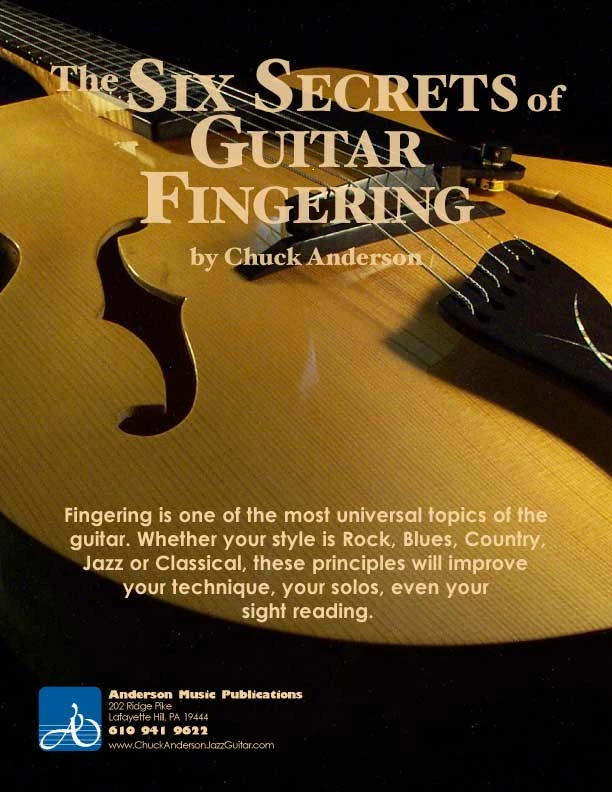
In my studies with Chuck Anderson , Chuck would have you play any musical phrase, scale, arpeggio, melody, etc., starting on every string and every finger. This was something that he learned from the great Dennis Sandole and his studies with Dennis. You can make octave displacements/adjustments where necessary when notes fall out of range in your current position. — Curt
As musicians, we have heard in our musical development that we should be able to play in all keys. For instruments with set fingerings and very few, if any, alternate fingerings for the same set of notes, this is a good goal. For string instruments, especially fretted string instruments such as the ukulele and guitar, where there ARE alternate locations for just about every note, this is a daunting task. Granted, the very top, I mean top, ukulele players and guitarists can possibly do this. It is most likely a direct result of exploring the Every Finger, Every String concept–just as the students of Dennis Sandole and the teachers he directly influenced had to do. Myself included, as I studied with Chuck Anderson for many, many years and was required to do this.
During my studies with Chuck Anderson, we explored scales, intervals, arpeggios, and sequences — starting on Every Finger, Every String. A lot of work, but well worth it.
Where to Start??
The number one place to start that is the secret to this is — Learning the Names of the Notes of the Ukulele Fingerboard
. Without this you will NOT be able to even attempt this. The lessons and books, right here on LearningUkulele.com—Learning Ukulele with Curt that show at least one solution for scales and arpeggios using Every Finger, Every String
.
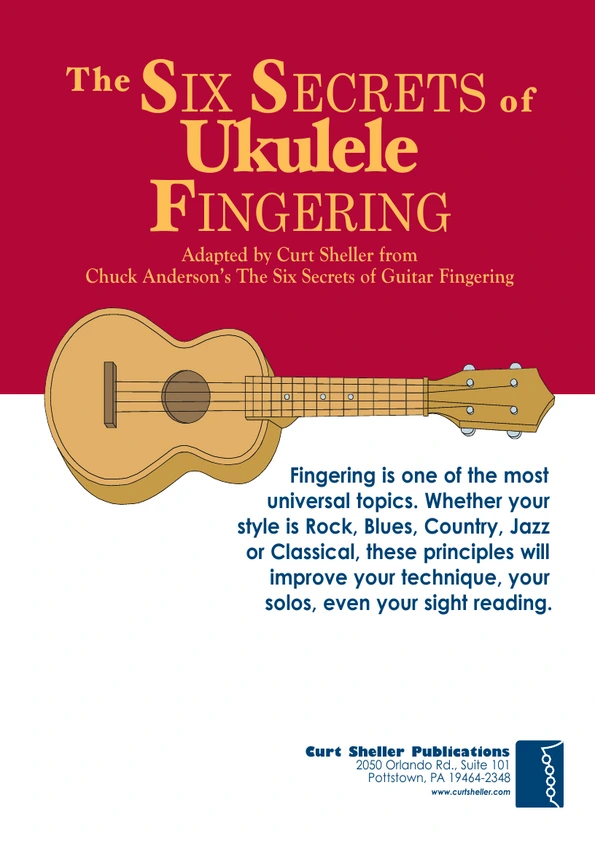
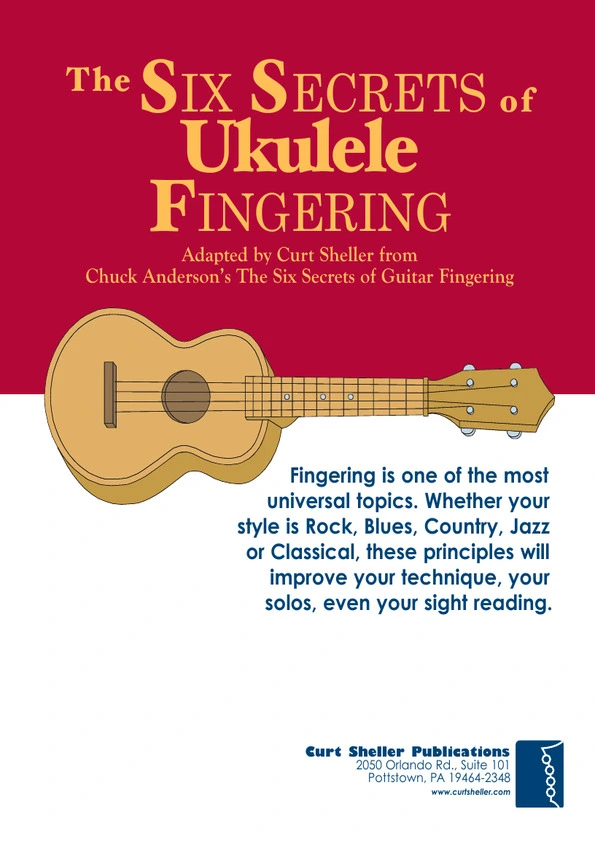
The Six Secrets of Ukulele Fingering
Everything that you need to accomplish the task of Every Finger, Every String
on ukulele is in The Six Secrets of Ukulele Fingering book.
BOOK: The Six Secrets of Ukulele Fingering • PDF & Hard-Copy Available
Basically, we are training our fingers to follow our ear to get the music out. Just as a singer does. The melodies are in there or on the page, and they need to come out, in the case of a singer, via their voice. For us ukulele players, it is our fingers that are responsible for getting it out. That is where the work is—training our fingers to follow our ear.
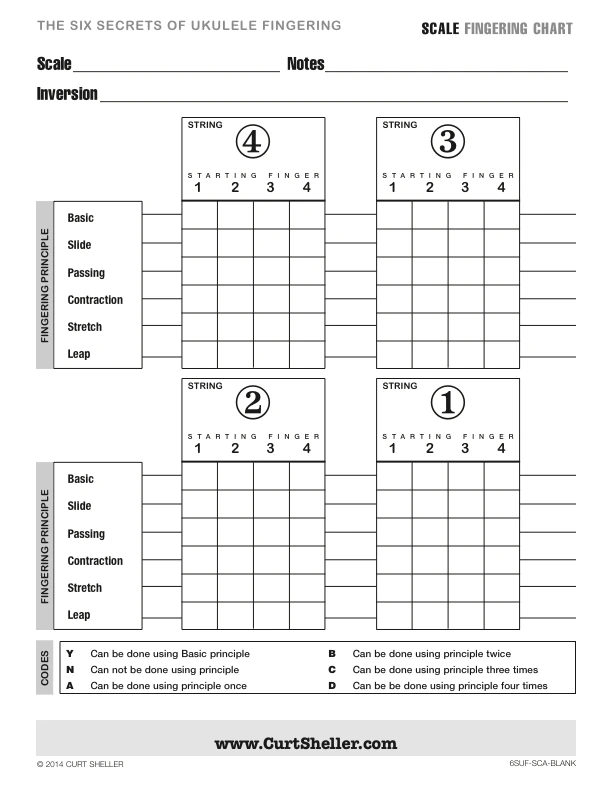
So, Lets Get to Work!!!Learn the six fingering principles to navigate the ukulele fingerboard. Fingering is one of the most universal topics. Whether your style is rock, blues, country, jazz, or classical, these principles will improve your technique, your solos and, even your sight-reading. Think of fingering as a series of pathways. When you learn to connect these pathways, there are benefits not only to technique but also to creativity. All fingering on the ukulele can be reduced to six principles of motion. Each principle has physical and musical characteristics that you can use to improve your playing.
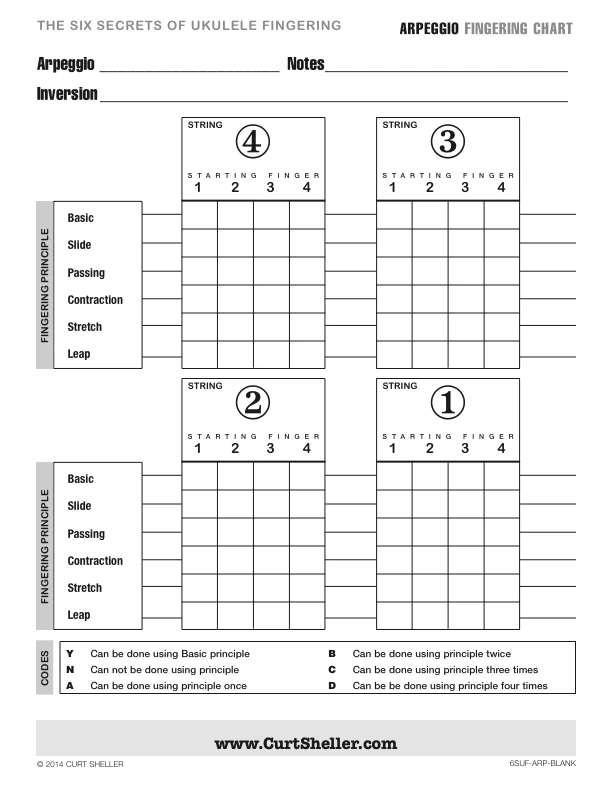
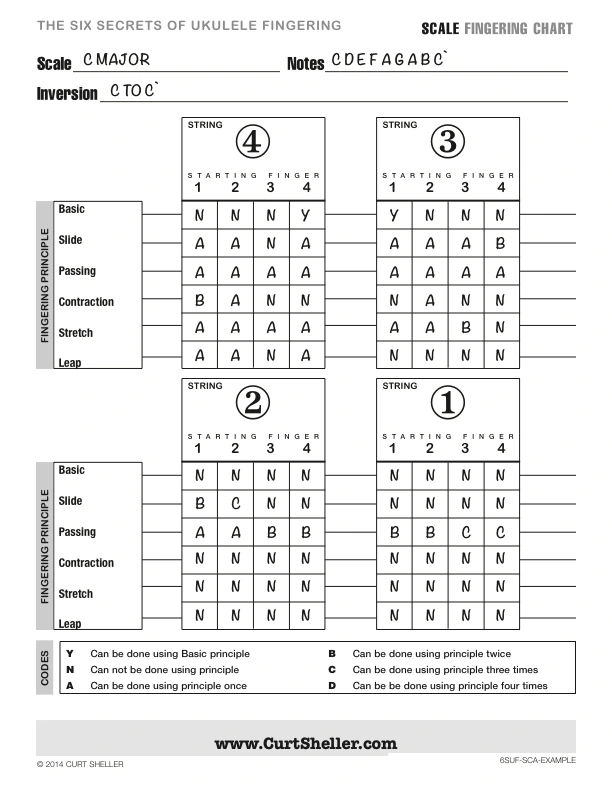
QuickStart Scale & Arpeggios Fingering Series Books
Examples of the Fingering Principles in Use
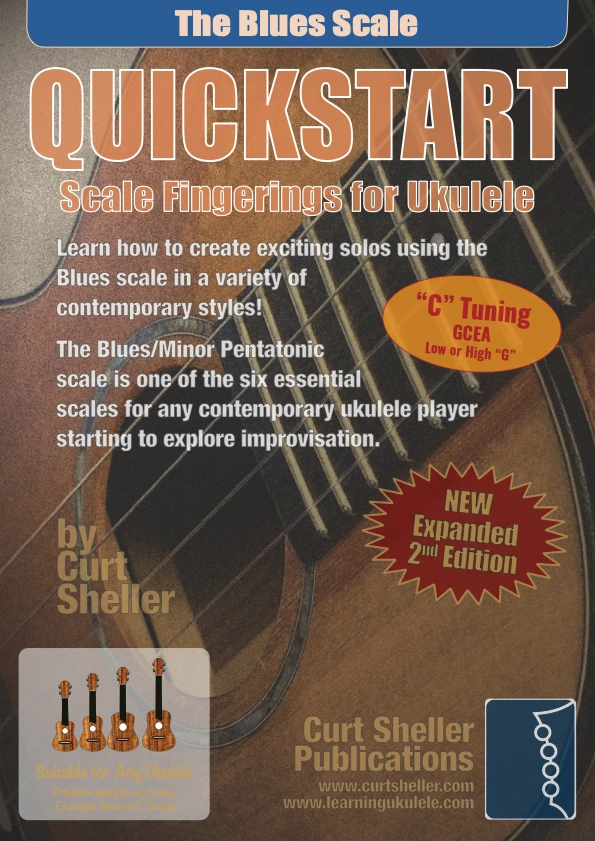
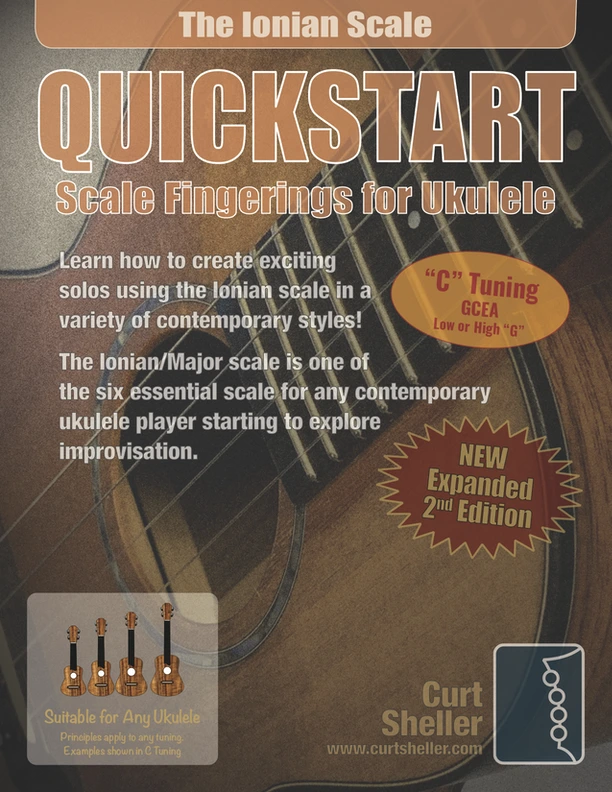
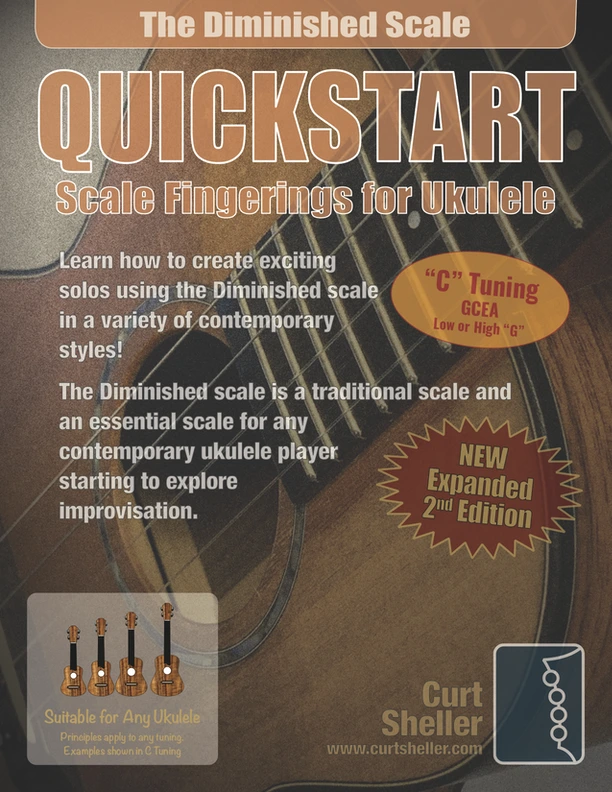
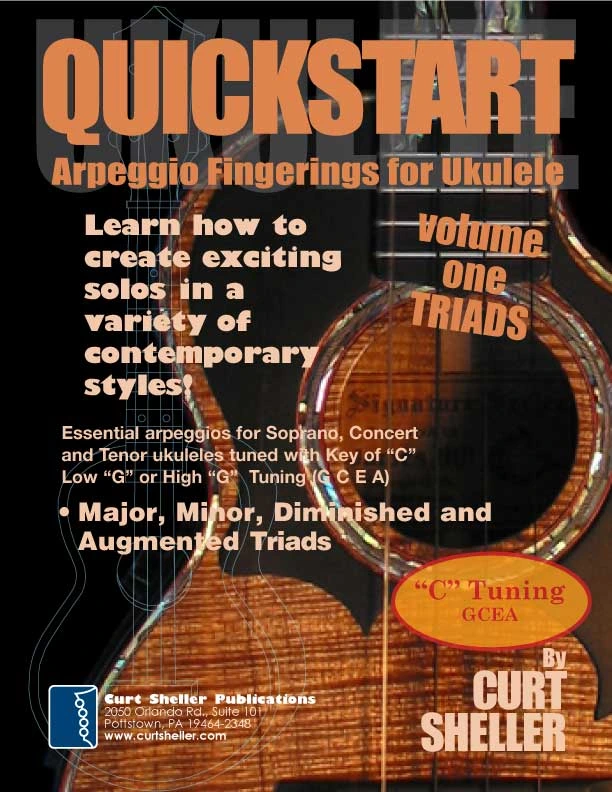
The entire QuickStart Scale & Arpeggios Fingering Series Books format is based on the fingering principles from The Six Secret Fingering of Guitar and Ukulele books.
There are numerous books to date in the QuickStart Scale & Arpeggios Fingering Series series. The majority of books are, naturally for Ukulele as this is a ukulele site. There several books for guitar and one for 4 string bass.
Start with these books to explore the benefits of Every Finger, Every String
. There is one solution for starting on each finger on every string. And, a lot more information on in the books including transposition to ALL keys.
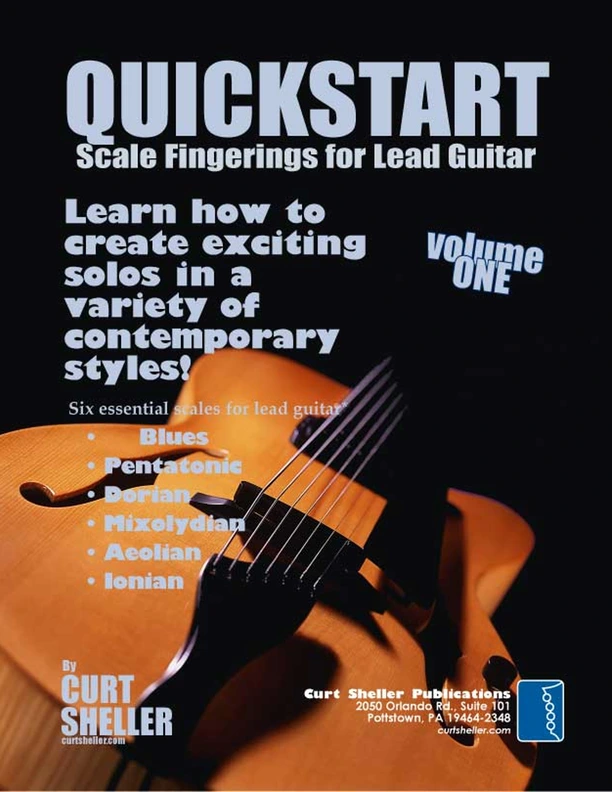
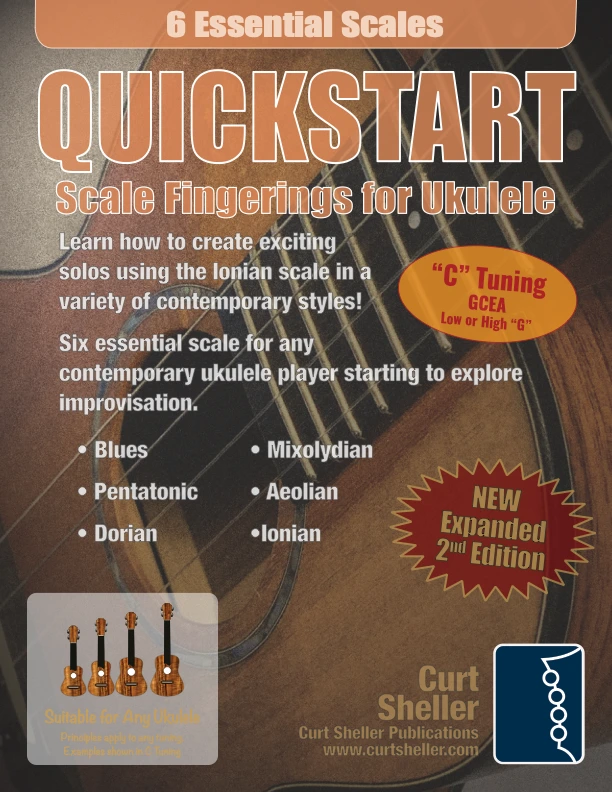
- QuickStart Scale Fingerings for Ukulele, Volume I, C Tuning • Six essential scales for Guitar. Blues, Pentatonic, Dorian, Mixolydian, Aeolian and Ionian scales
- QuickStart Scale Fingerings for Lead Guitar - Volume I • Six essential scales for Guitar. Blues, Pentatonic, Dorian, Mixolydian, Aeolian and Ionian scales
- QuickStart Scale Fingerings for Bass Guitar - Blues Scale
Lessons & Lesson Series
Finger Gymnastics/Drills for developing and exploring the Fingering Principles covered in the The Six Secret Fingering of Guitar and Ukulele
- Slide Gymnastics for Ukulele • Beyond the basic four fret fingering position, it's on to the remaining fingering principles for navigating the fingerboard. The first in the series is the Slide.
- Pass Gymnastics for Ukulele • Beyond the basic four fret fingering position, it's on to the remaining fingering principles for navigating the fingerboard. The first in the series is the Pass.
Navigating the Major Scale
More on Dennis Sandole
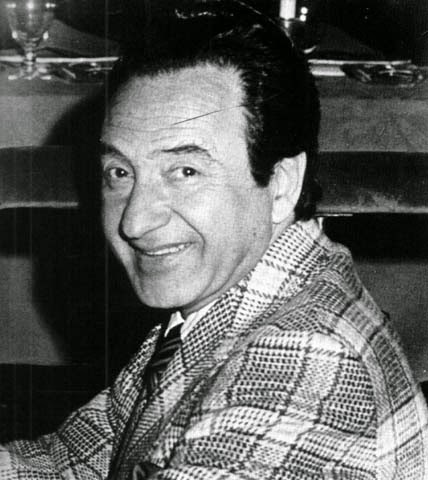 I (Curt) studied with Chuck Anderson
who studied with Dennis Sandole
for 8+ years. Chuck was directly involved in bringing Dennis's book, Guitar Lore to publication and the subsequent, non-published Scale Lore book. There is a long line of professional and famous musicians directly influenced by Dennis's teachings and expertise - the whos who of modern music.
I (Curt) studied with Chuck Anderson
who studied with Dennis Sandole
for 8+ years. Chuck was directly involved in bringing Dennis's book, Guitar Lore to publication and the subsequent, non-published Scale Lore book. There is a long line of professional and famous musicians directly influenced by Dennis's teachings and expertise - the whos who of modern music.
(from wikiwand) Dennis Sandole was John Coltrane's mentor from 1946 until the early 1950s, introducing him to music theory beyond chords and scales and exposing him to the music of other cultures. Sandole taught advanced harmonic techniques that were applicable to any instrument, using exotic scales and creating his own. He taught privately until the end of his life. His students included saxophonists James Moody, Benny Golson, Michael Brecker, Rob Brown, and Bobby Zankel; Trumpeter Art Farmer; pianists Matthew Shipp and Sumi Tonooka; guitarists Jim Hall, Joe Diorio, Pat Martino, Joe Federico, Tony DeCaprio, Jon Herington, Bob DeVos, Larry Hoffman, Chuck Anderson, and Harry Leahey as well as other musicians such as Rufus Harley (bagpipes) and Frank Gerrard.


End of Lesson - Thanks, Hope You Enjoyed It!
Related Lessons, Videos, Lesson Series, Songs, Books & Reference Charts, Resources & Assets, Workshops are below.