Published:
2013-02-06
Updated:
2016-01-04
Learning Ukulele with Curt
The Big Six Core Chords - Fmaj7, Four Voicings
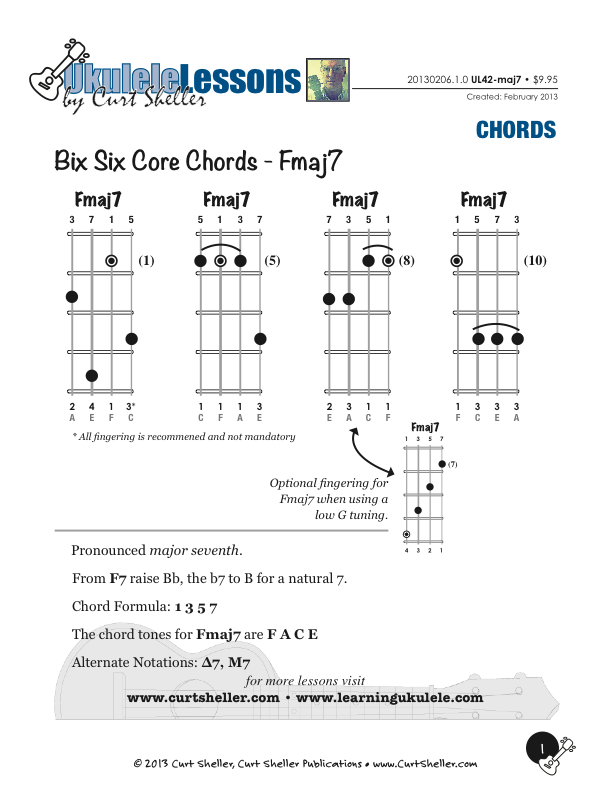
The Big Six Core Chords, Level I - Fmaj7, four voicings. Fmaj7 is a 1 3 5 7 of the major scale, based on the root of the chord. These are the four Fmaj7 chord voicings that will be used for deriving other major seventh derived chords. There are far too many chord shapes to memorize thousands of shapes.
Author(s): Curt Sheller Publisher: Curt Sheller Publications Code: UL42L1-maj7
Main Category: Chords Main Instrument: Ukulele
Categories: Chords, Jazz, Scales, Intermediate, Core, Major, Seventh

2026-08-23
RelatedLessonAssets
Number of Pages: 2
If you're a registered site member and have the correct permissions you can view ALL the pages of this PDF at a larger size using the LearningUkulele.com Online PDF Viewer (button below).
Download PDFThis Download is NOT part of your LearningUkulele.com & Learning Ukulele with Curt membership level.
Sign-up for Premium Site Access or Upgrade Your Plan to download this PDF or your can purchase a copy for download
Sign In for Access…Contact Us if there are any issues.
The Big Six Core Chords, Level I - Fmaj7, four voicings. Fmaj7 is a 1 3 5 7 of the major scale, based on the root of the chord.
These are the four Fmaj7 chord voicings that will be used for deriving other major seventh derived chords. There are far too many chord shapes to memorize thousands of shapes.
Why Do Some Chords Not Sound Right?
A very good question and very easy to answer and demonstrate. The next time your near a piano play any two adjacent white keys white keys without any black key between. Your either playing E and F or B and C. The interval between these adjacent pair of notes is a minor second or one half step apart and one of the more dissonant intervals in music. I call it the secret agent interval — very mysterious and can't be ignored. Not play one of the notes an octave higher of lower and you'll hear that it's not as bad.
Checkout the Song, The Pink Panther Theme for how effective the minor second is for conveying emotional quality of the minor second.
So anytime there is a note that is one half step or a minor second above or below any note in the chord there will be dissonance. Dissonance is good but not not in this case of the maj7 chord and the first voicing of the Fmaj7 in this lesson - the F on string three is one half step higher then the E on string two fret one.
By knowing the notes of a chord and where they are in relationship to each other can help avoid this problem before you play a chord that has the potential for this minor second dissonance.
More The Big Six Core Chords - Fmaj7, Four Voicings
content below, continue exploring...
More The Big Six Core Chords - Fmaj7, Four Voicings
The maj7 chord is one of your Big Six Core Chords and Fmaj7 is the notes: F A C E. Actually pretty easy one to memorize as it a real word that we all know and is the spaces of the five line music staff in the treble or G clef. When the notes of the chord are shown on standard music notation you can easily see where the dissonance happens. Here are the four chords shown in both high and log G, C tuning.
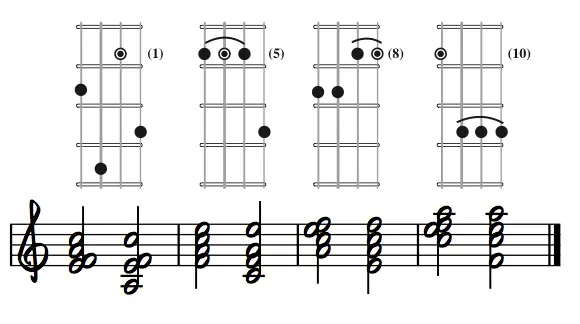
Notice that only one of the low G, C tuning voicings has the minor second interval problem. Where as three of the high G, C tuning voicings has the minor second interval problem.
Ukulele players using both a low or high G, C tuning will typically use this alternate voicing for first Fmaj7 voicing.

Voice Leading
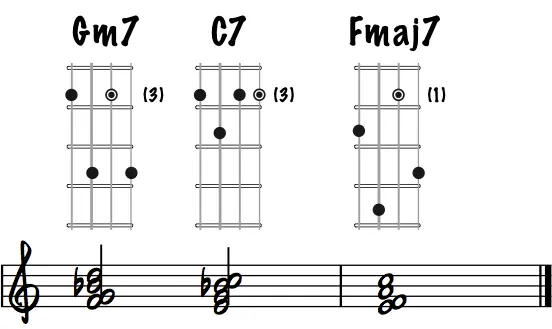
When the first maj7 voicing, in this case the Fmaj7 above is properly set up with voice leading — voice leading is that common tones between chords remain and non-common tones move to closet note of the next chord - is actually sounds pretty nice. Try this Gm7 C7 to Fmaj7 and hear just how sweet it sounds.


End of Lesson - Thanks, Hope You Enjoyed It!
Related Lessons, Videos, Lesson Series, Songs, Books & Reference Charts, Resources & Assets, Workshops are below.
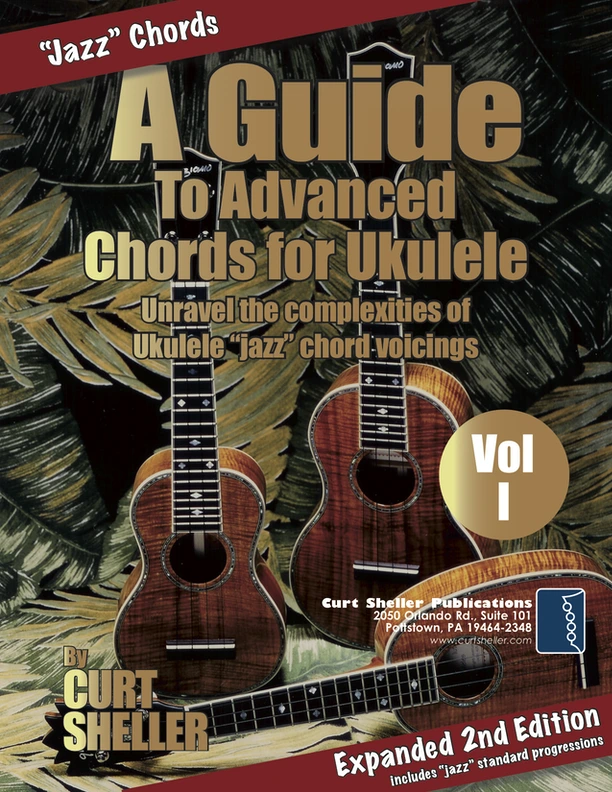
A Guide to Advanced Ukulele Chords - Volume I
Beyond learning basic Ukulele chords, most players struggle with advanced chords. Commonly called "jazz" chords, these more sophisticated voicings find a wide use in all forms of music. A Guide to Advanced Chords for Ukulele - presents a highly organized and efficient approach to the mysterious subject of advanced chords. Chord dictionaries are not the answer.
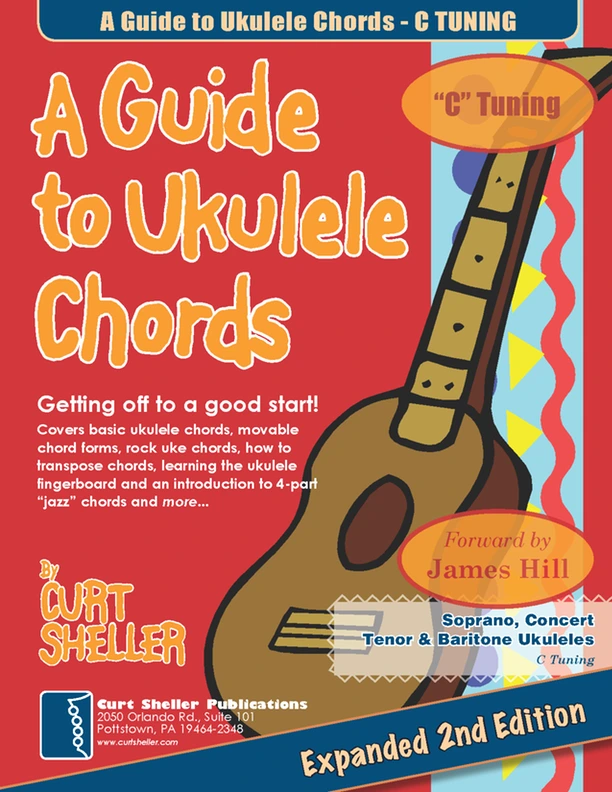
A Guide to Ukulele Chords, 2nd Edition
A Guide to Ukulele Chords, Second Edition is designed as a guide to ukulele chords. Covering the basic ukulele chords that ALL ukulele players SHOULD know. A Guide to Ukulele Chords covers movable chord forms, rock chords, how to transpose chords, learning the ukulele fingerboard and includes an introduction to 4-part, a.k.a jazz chords and more...
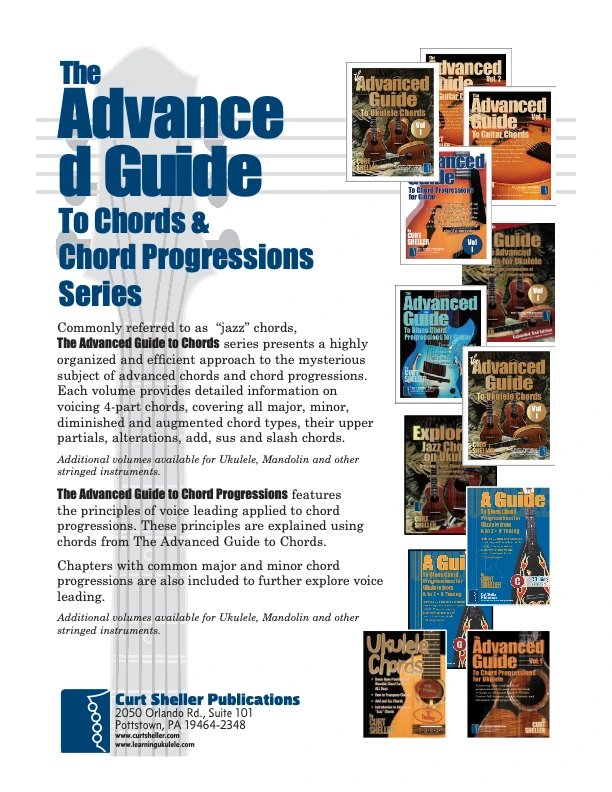
Advanced Guide to Chords and Progressions Series
The Advanced Guide to Chords series presents a highly organized and efficient approach to the mysterious subject of advanced chords and chord progressions. Each volume provides detailed information on voicing 4-part chords, covering all major, minor, diminished and augmented chord types, their upper partials, alterations, add, sus and slash chords.