Published:
2011-06-24
Updated:
2026-10-05
Learning Ukulele with Curt
The Learning Process - The Mind, Hands and Ears
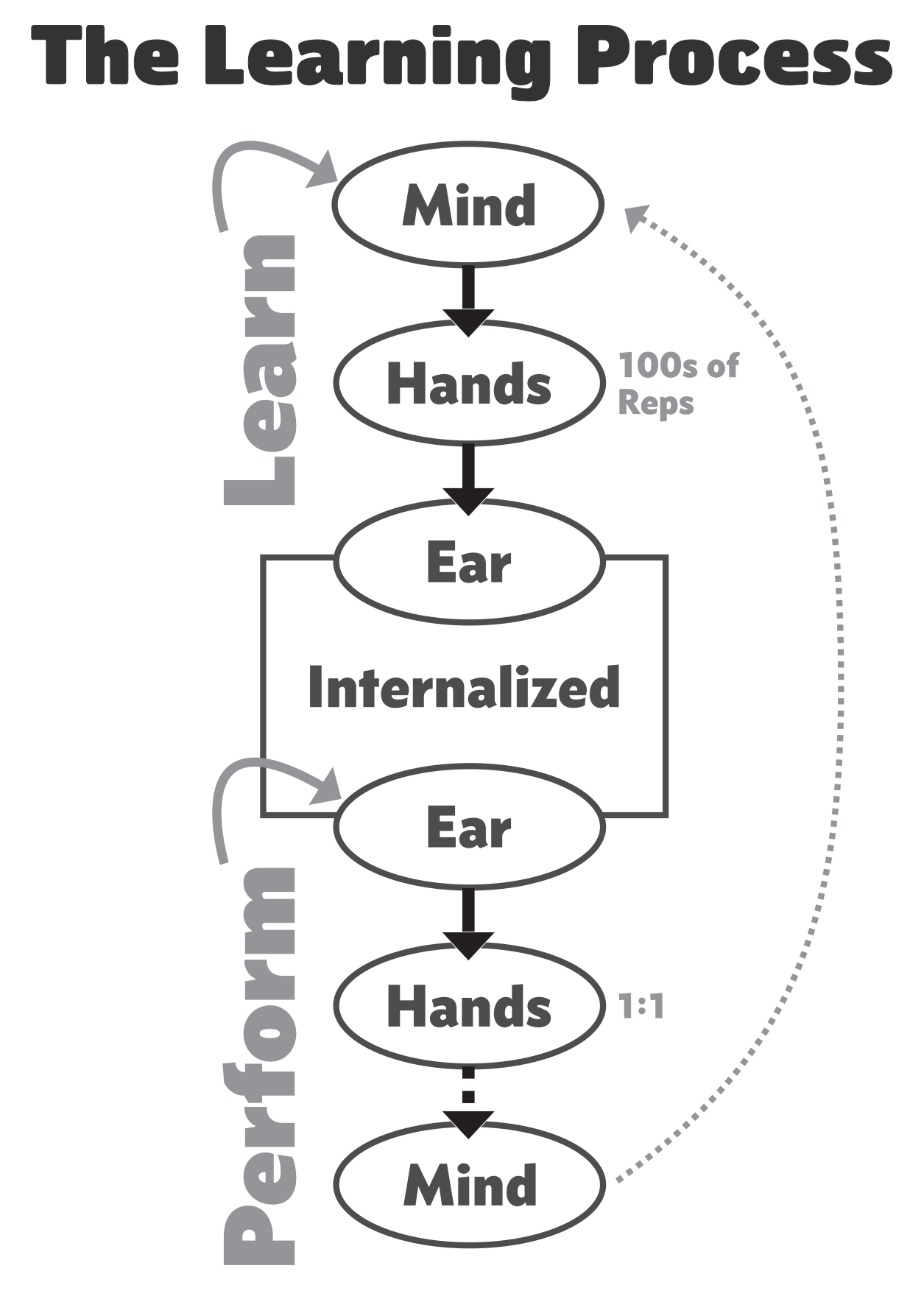
For music and learning an instrument like the ukulele or guitar, it's all about the making the connection between your Mind, your Hands, and your Ear. When listening to music, we enjoy it at the tempo the composer or artist intended, in real time. Only the ear is involved in listening. This is passive listening and you're simply enjoying the music. This is what we do every day and it's what draws us to want to learn a musical instrument.
Author(s): Curt Sheller Publisher: Curt Sheller Publications Code: UL450
Main Category: Basics Main Instrument: Any
Categories: Basics, Chords, Guitar, Learning, Beginner

2026-08-23
RelatedLessonAssets
For music and learning an instrument like the ukulele or guitar, it's all about the making the connection between your Mind, your Hands, and your Ear.
When listening to music, we enjoy it at the tempo the composer or artist intended, in real time. Listening and enjoying a song only requires the ear and mind. This is passive listening, and you're simply enjoying the music. This is what we do every day, and it's what draws us to want to learn a musical instrument. We can hear things change and understand the lyrics if in your native language.
Performing—When trying to reproduce music on any musical instrument, you're now an active participant in the making and reproducing music. The mind and ear are in control, telling the hands what to do. When performing, it's mainly the ear and the mind on a subconscious level that are driving the show and telling the hands what to do. And this is all in real time and at the intended performance tempo.
Learning—Learning an instrument is all about making and reinforcing the connection between the mind, hands, and ears. This typically can't be done in real time.
Of the three—the mind, hands, and the ear—the ear can grasp simple melodies, basic chords, and simple songs without much effort. Your mind and ear have been processing sounds and music from the day you were born. How easy is it to hear when Auntie Marie sings Happy Birthday out of tune. We don't even need to know what the right notes are or the key. We can just hear that it's wrong or right—we've heard it before.
The Hands!
 Of the three elements involved, it's the hands that need the most work and the most repetition. Just as the skills required in sports — it's the technique where all the work is. Take golf, looks pretty simple on the surface. Hit the little white ball in the hole – or, shooting a foul shot in basketball — put the basketball in the basket.
The concepts are pretty simple — it's the implementation that's all the work.
NOTE: The hands/fingers
can't see or hear a thing—NEVER will. They totally rely on your inner ear and mind when training and for performance.
The hands take up most of the training time. It's the hands that provide the technique to actively reproduce music. This training of the hands needs to be done accurately and efficiently. This training CAN NOT be accomplished, initially, at performance tempo. Training needs to be deliberate and SLOW. Building the tempo as facility is gained.
I tell all my students that: Fast is nothing more than slow, quicker
.
Technique cannot be taken for granted. You have to work on it.
Four Types of Learning
You might be a Visual learner, absorbing information best through images such as charts, graphs, maps, and diagrams to,
You might be a Auditory learner who succeeds by listening. These is really useful for music.
You might be a Reading/Writing learners prefer text-based content, lists, and reading or writing notes.
You might be a Kinesthetic learners who use physical movement and hands-on activities to engage with material.
You might be a Social (Interpersonal) learner who thrives in group settings. Working as a team. Or a Solitary (Intrapersonal) learner who prefers independent, self-driven study.
Bottom-line is to use ALL types of learning, especially with music and learning an instrument.
Music and the ukulele really needs and can uses all four when learning the ukulele and music.
has the first three and you provide the foutth. We can;t do it for you. And it turns the Doing
part is the time-consuming and hard part. Learning music and an instrument invokes the mind, ear, and hands. And we nee the eye an eye
on the hands as the are the weak link as the can't hear or see.
First Chords
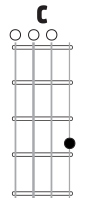
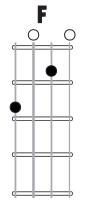
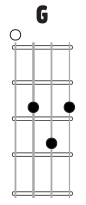
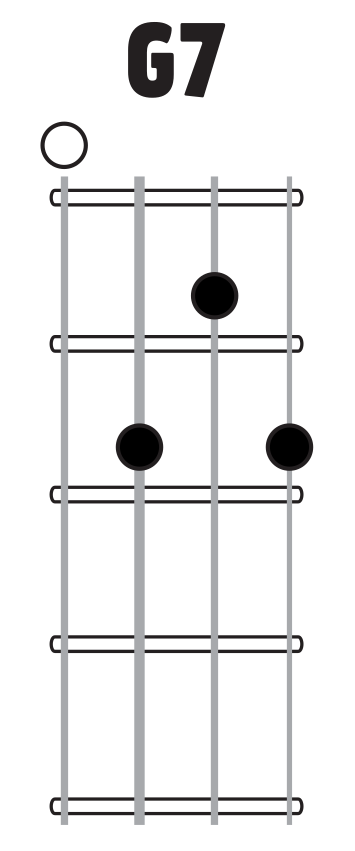
Click on chord image for more info…
For Ukulele Players, taking the first chord you typically learn is the C chord. It's a pretty simple chord, requiring only one finger and one string chord. And, strumming chords on ukulele is somewhat easy, in that you can just strum all four strings. Initially, it doesn't have the strumming accuracy that the guitar requires. By itself, it is pretty easy to memorize and play simple songs with few chords. There aren't many one chord songs, so additional chords beyond that first open position C major chords need to be learned, memorized, and mastered.
A new twist is you need to use more than one finger and learn additional chords. Three or four of the most common chords you initially learn on ukulele, all come from the Common Key of C Major and are the primary chords in the key. They are C , F , G , and G7 . None of these first chords use more than three fingers. So, the wimpy pinky, finger four doesn't need to get involved.
Switching Chords
 When you know two chords, you need to be able to switch efficiently between both chords at various tempos from slow ballads to fast up-tempo songs. This is where all the work happens. The mind, hands, and ear all work together, this is the learning process. The ear will learn the sounds of these common, basic chords with little effort. The mind can memorize them with a bit more effort — there's only two chords at a time to keep track of — the one you're currently on and how am I going to get to the next one.
Then add G and G7. Four chords and a little more work. There are hundreds of songs that use these primary chords in the key of C. Use the recommended fingerings for the chords shown above. Although alternate fingerings are possible and need to be explored, these initial fingerings will get you started.
Then all the work is in switching chords, efficiently and in tempo. Ultimately, any chord can switch to any other chord. So try C to F, C to G, C to G7. C to C is easy. Then F to C, F to G, F to G7. G to C, G to F, G to C, G to G7 and finally G7 to C, F and G. That's all the possibilities.
Links & Resources
- Learning Methods to Help You Learn Effectively and Easily • There are seven learning methods/styles to help you ensure that you continue to learn day in and day out. Visual, Aural, Verbal, Physical, Logical, Social, Solitary.


End of Lesson - Thanks, Hope You Enjoyed It!
Related Lessons, Videos, Lesson Series, Songs, Books & Reference Charts, Resources & Assets, Workshops are below.
Daily Practice Material for the Contemporary Ukulele
Daily Practice Material for the Contemporary Ukulele Player is an organized collection of daily practice and reference material for the contemporary ukulele player. This material can be used to develop the vocabulary and knowledge necessary for single note playing.