
Learning Ukulele with Curt
All 970 Lessons
With over 900+ lessons on LearningUkulele.com & Learning Ukulele with Curt, it can be a bit of an overwhelming task to navigate and find what you're looking for. The LessonSERIES section is a good place to start, as it presents a structured approach and curated list of lessons on a specific area of study.
29 August 2026
Showing 921–940 of 970 results
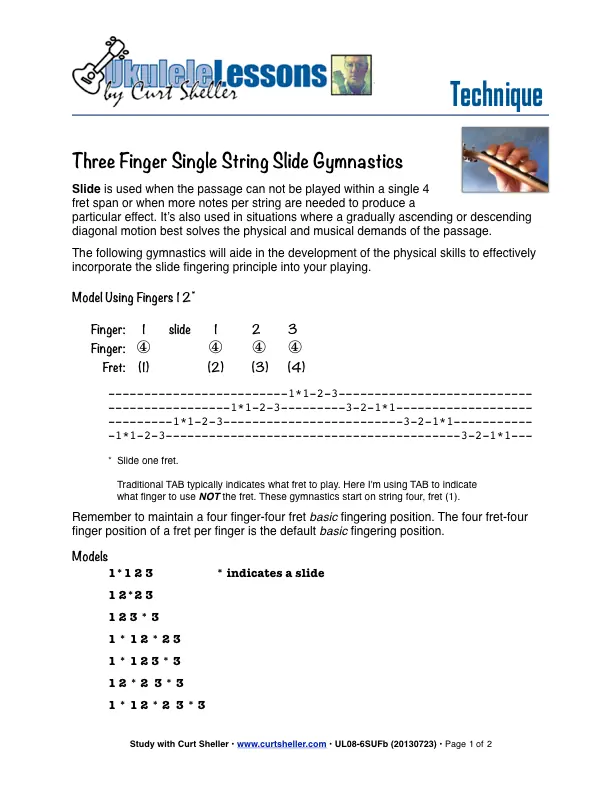
Three Finger Slide Fingering Drills for `Ukulele
Slide is used when the passage cannot be played within a single 4 fret span or when more notes per string required to produce a particular effect. I's also used in situations where a gradually ascending or descending diagonal motion best solves the physical and musical demands of the passage.
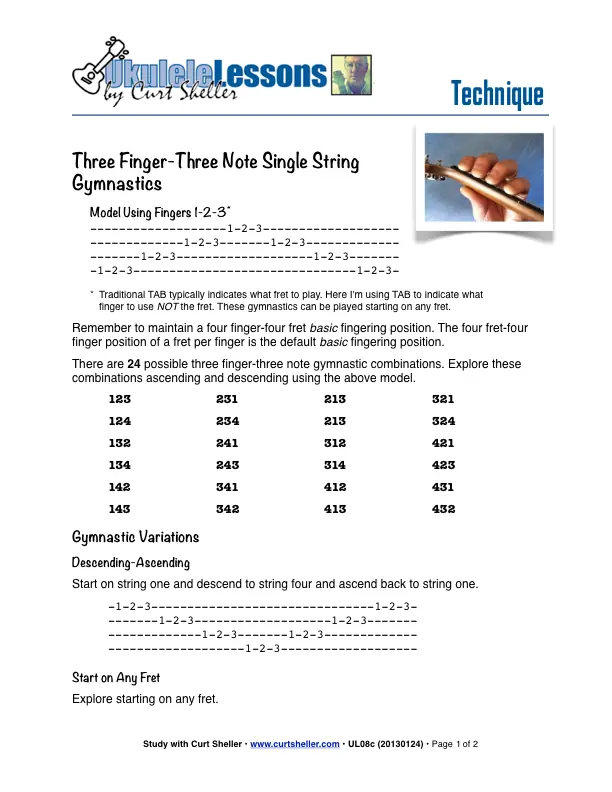


Traditional and Contemporary Triads
A "Triad" is a three note chord. In traditional chord theory there are four traditional triad chord types: major, minor, diminished and augmented. And four contemporary triad chord types: sus2, sus4, add2 and add9. Triads can be used harmonically, as chords and melodically, as single notes. Triads are a great way to get started with creating melodic solos and improvising.
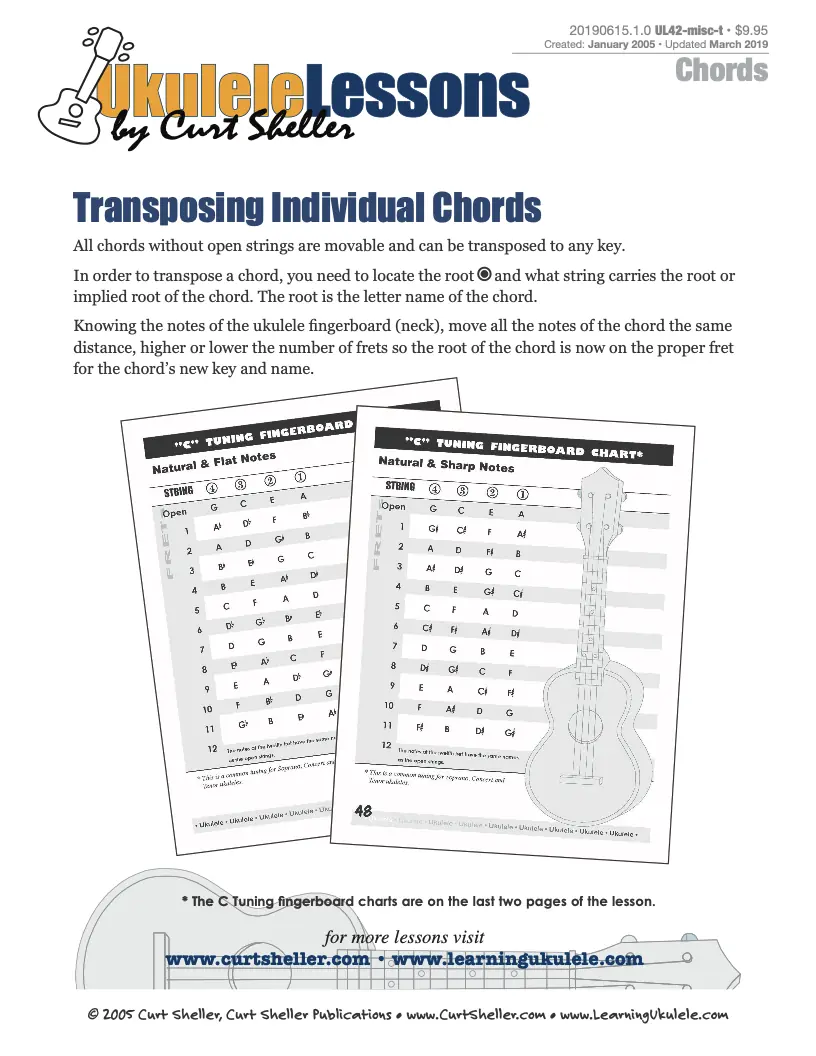
Transposing Individual `Ukulele Chords
"Transposition" is the process of moving a note, chord, scale or any musical passage from one key to another key. All music can be transposed, from a single note to a complex musical score. This lesson deals with transposing chords on ukulele and transposing chords.

Triplet Based Strums - 12/8
A triplet, as the “tri” in the name implies, means three. It’s the subdivision of the beat into three even parts. Notice that I had used the word three for the number 3 in my writing. So, if I’m counting any beat which can be sub divided by three, it’s 1 2 3. No need to use words such as trip-o-let or one triplet, two triplet, etc to count.
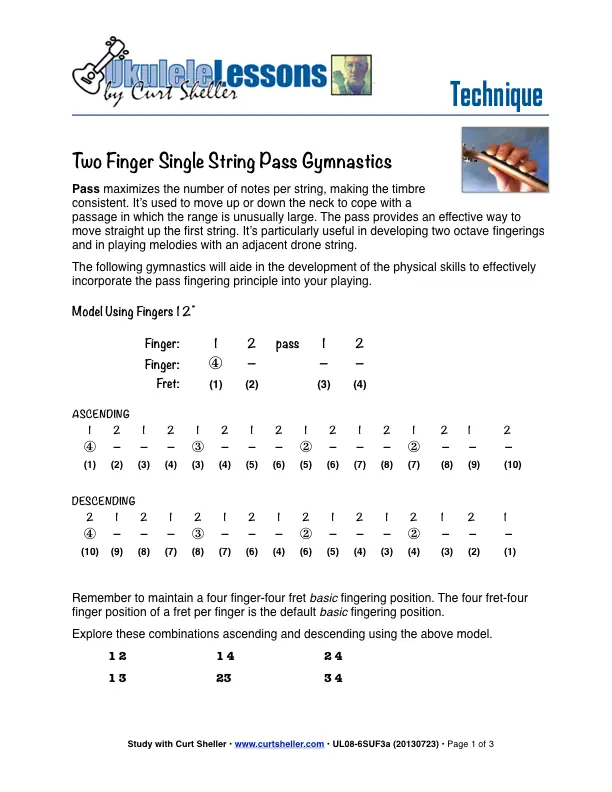
Two Finger Pass Fingering Drills for `Ukulele
Pass maximizes the number of notes per string, making the timbre consistent. It's used to move up or down the neck to cope with a passage in which the range is unusually large. The pass provides an effective way to move straight up the first string. It's particularly useful in developing 3 octave fingerings and in playing melodies with an adjacent drone string.
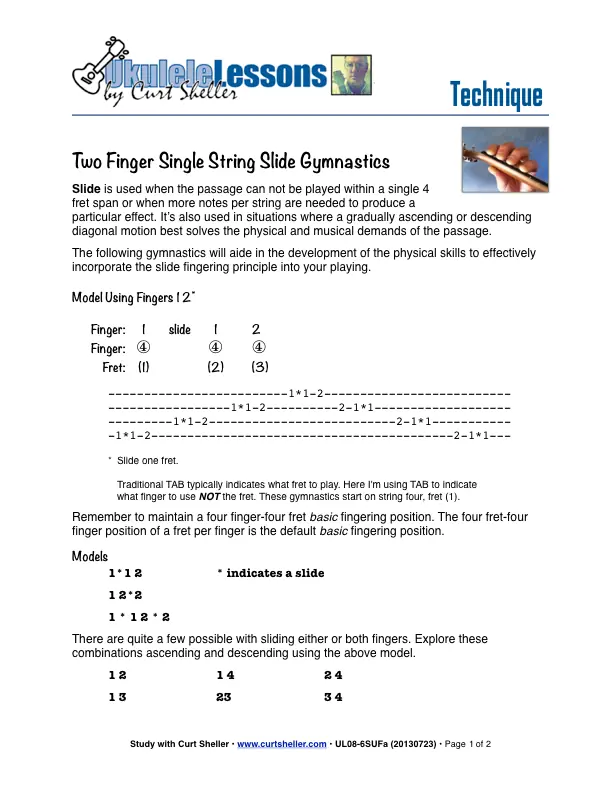
Two Finger Slide Fingering Drills for `Ukulele
Slide is used when the passage cannot be played within a single 4 fret span or when more notes per string required to produce a particular effect. I's also used in situations where a gradually ascending or descending diagonal motion best solves the physical and musical demands of the passage.
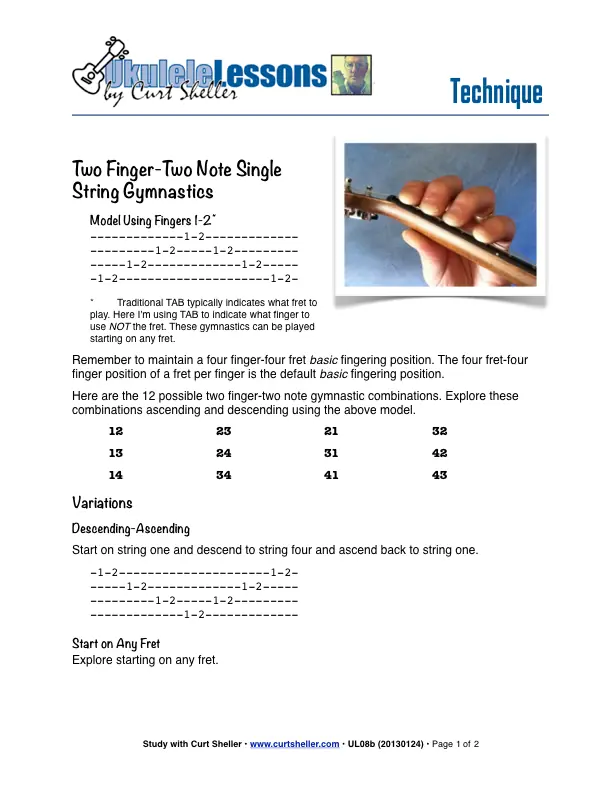
Two Finger-Two Note Basic Single String Fingering Drills for `Ukulele
To play the ukulele effectively, your fingers need physical strength, agility, flexibility and coordination. This two finger-two note drill is designed to get your hands in shape. These exercises work no matter what style of ukulele you play or want to play.
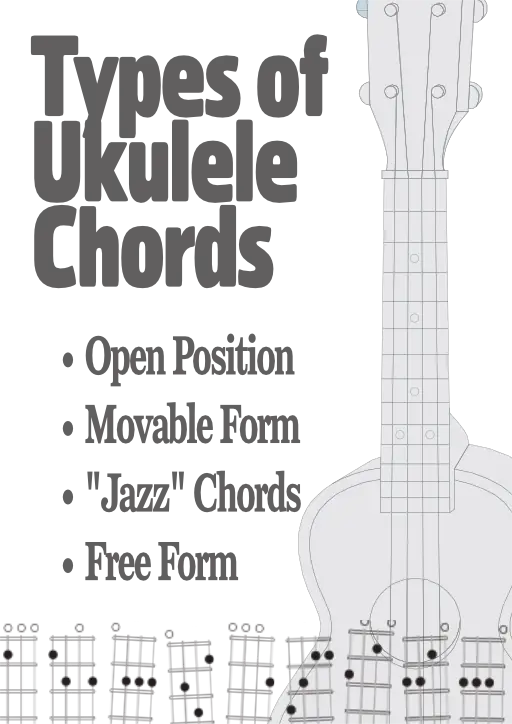
Types of `Ukulele Chords
Naturally, for Ukuleles, all chords need to be voiced using only the four strings available. You would think that this is limiting, when in actuality it's quite liberating when you learn the makeup of chords. Chords can be categorized into four categories: “Open Position Chords”, “Movable Form Chords”, “4-part - a.k.a. Jazz Chords”, and “Free Form Chords.”
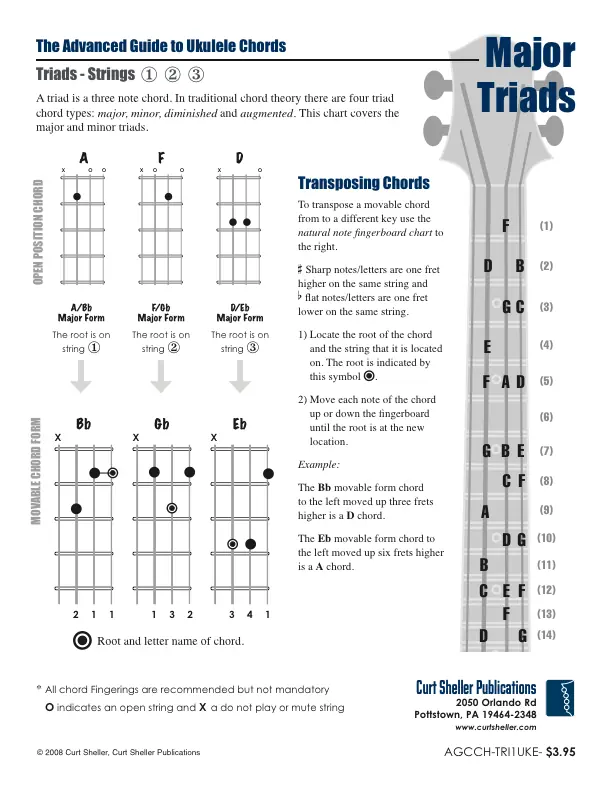


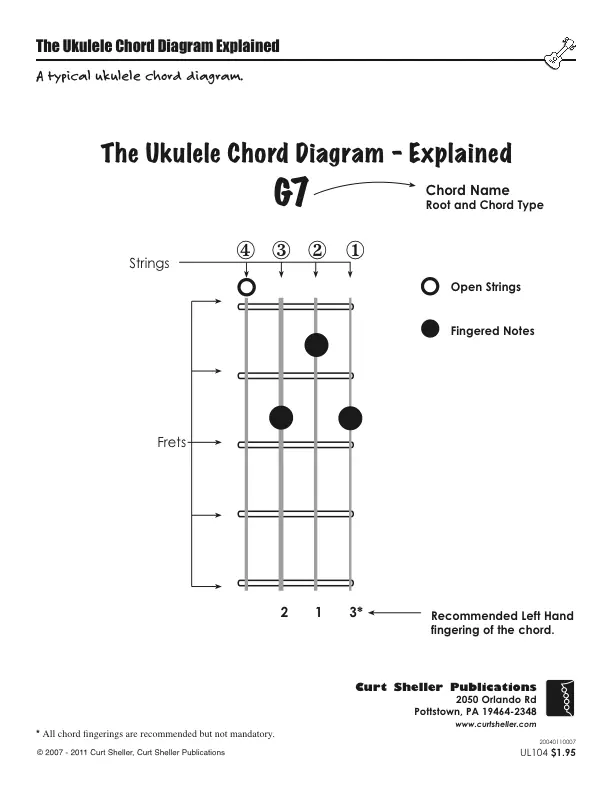

Understanding Diatonic Intervals
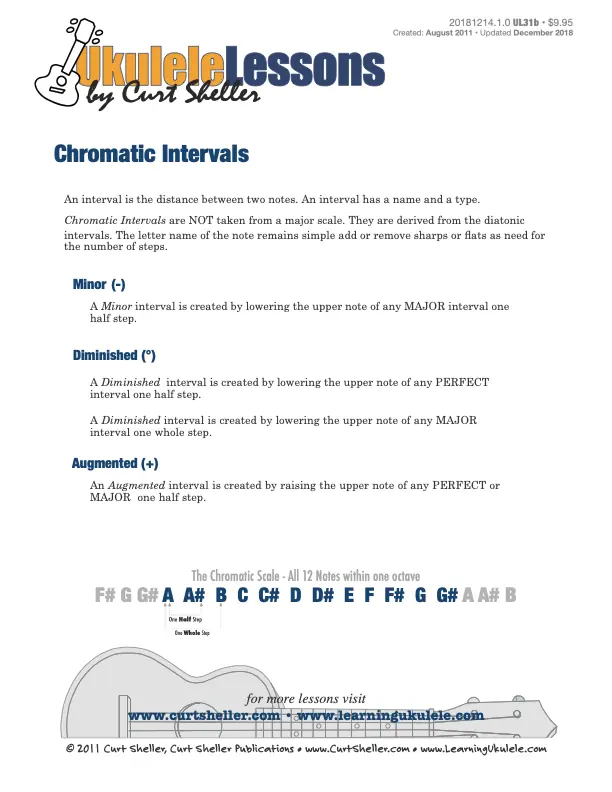
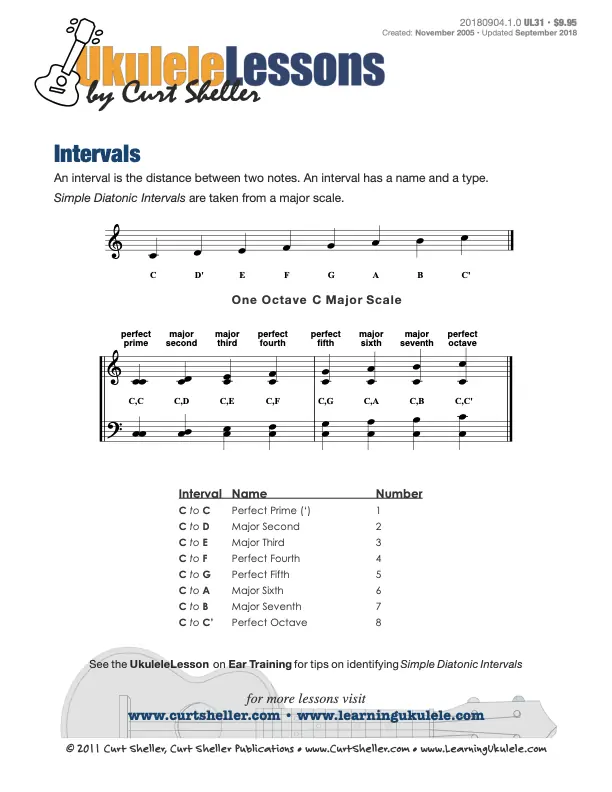
An interval is the distance between two notes. An interval has a name and a type. Intervals can be played one note (melodic) or two notes (harmonic) at a time, ascending or descending. Simple and Compound Intervals are taken from a major scale. Chromatic Intervals are NOT taken from a major scale. They are derived from the diatonic intervals.