Learning Ukulele with Curt
All 970 Lessons
With over 900+ lessons on LearningUkulele.com & Learning Ukulele with Curt, it can be a bit of an overwhelming task to navigate and find what you're looking for. The LessonSERIES section is a good place to start, as it presents a structured approach and curated list of lessons on a specific area of study.
29 August 2026
Showing 941–960 of 970 results
Upper Partial Chord Tones
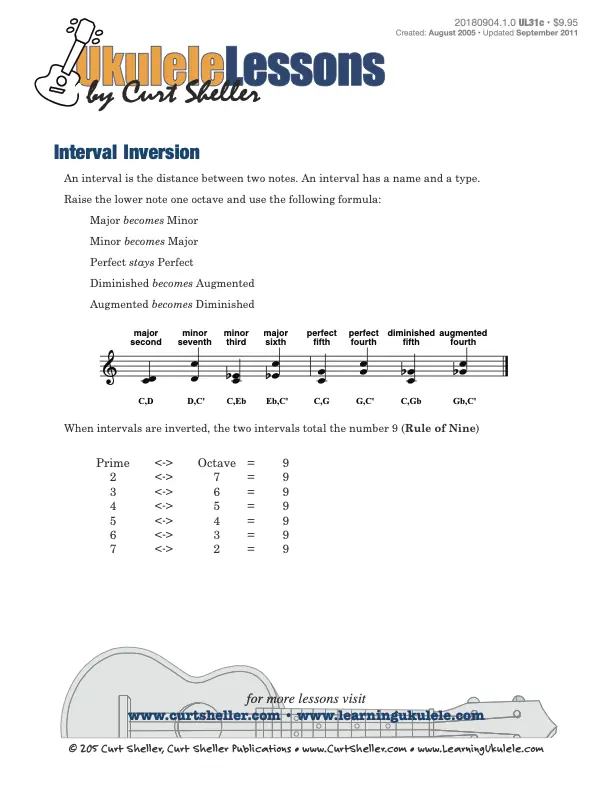
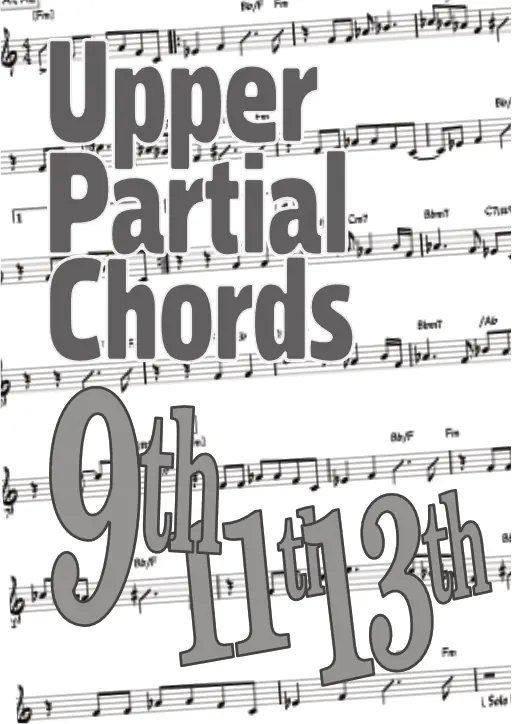
Upper Partials or extensions for chords are the 9th, 11th, and 13ths of a chord. The 9, 11 and 13 can be altered chord tones depending on the type: e.g: b9, #9, #11, b13. These numbers, the 9, 11 and 13 refer to the scale tone/chord tone relative to the major scale used for building all chords.
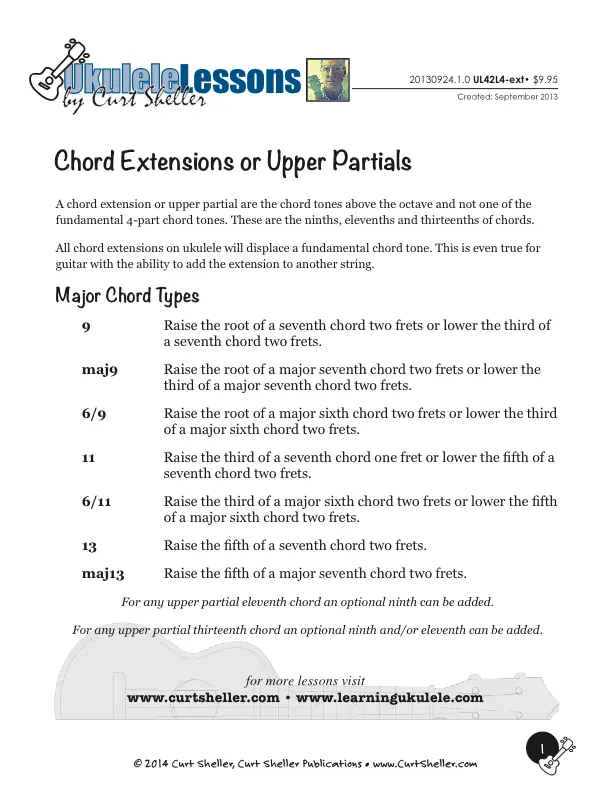
Upper Partials and Chord Extensions
A chord extension or upper partial are the chord tones above the octave and not one of the fundamental 4-part chord tones. These are the ninths, elevenths and thirteenths of chords. All chord extensions on ukulele will displace a fundamental chord tone. This is even true for guitar with the ability to add the extension to another string.

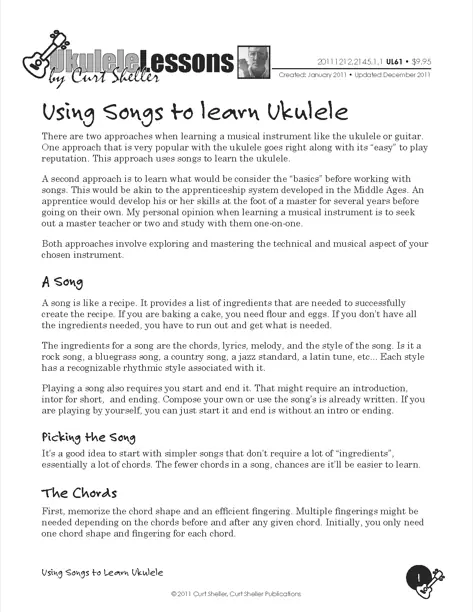
Using Songs to Learn `Ukulele
There are two approaches when learning a musical instrument like the ukulele or guitar. The first approach and one that is very popular with the ukulele goes right along with its easy to play reputation. This approach uses songs to learn the ukulele. A second approach is to learn what would be consider the the basics before working with songs.
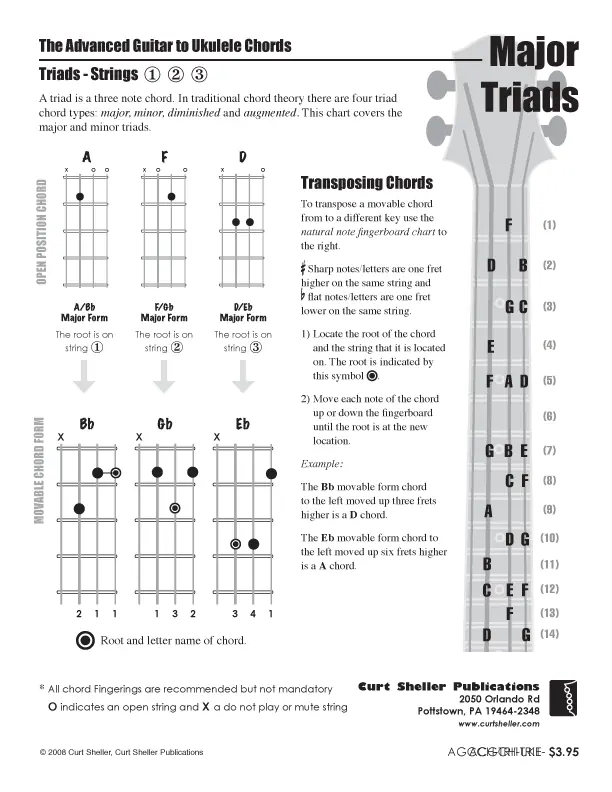
Using Triads on `Ukulele
In music or music theory, a triad is a three-note chord (or, more generally, any set of three notes, pitches, or tones). Triads can be used harmonically, as chords and melodically, as single notes. These lessons explore both. Using triads as chords like any other chord and using triads as a basis for creating melodies and improvising.




What Finger is What?
Just what are the fingers of the plucking and fretting hand called. There can be a bit of confusion as to what the names and numbers of your fretting hand and the plucking or strumming hand are. Here are some of the common fingering notations I’ve encounter over the course of my studying ukulele and guitar.

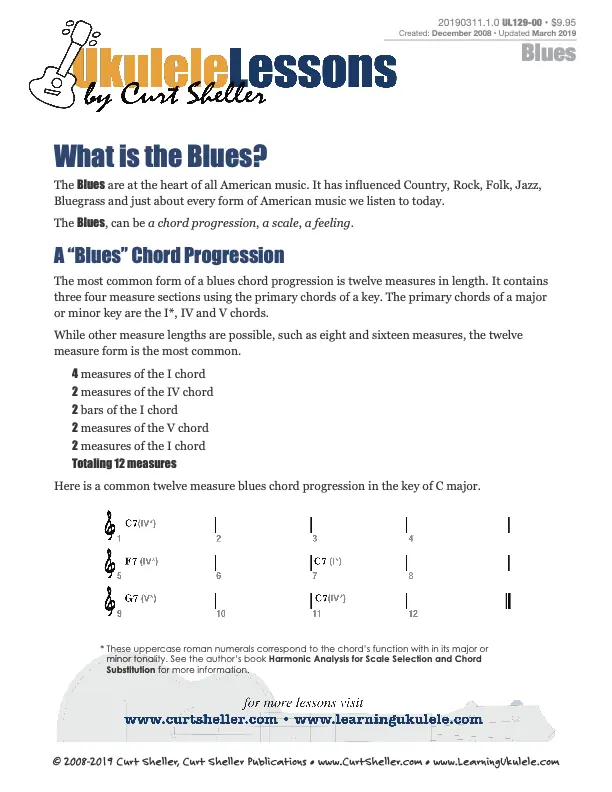
What is the Blues?
The Blues are at the heart of all American music. It has influenced Country, Rock, Folk, Jazz, Bluegrass and just about every form of American music we listen to today. The Blues - a chord progression, a scale, a feeling. This lesson presents an introduction to the blues progression and a couple of scale position of the pentatonic scale to get you started improvising.
What is the Difference Between a Scale and a Mode?
The terms "scale" and "mode" are often used interchangeably, but strictly speaking, there is a significant difference between them in music theory. Although they may share the same set of notes, a scale and a mode or modal scale are not the same thing. It's important to note that a scale and a mode can contain the same notes.
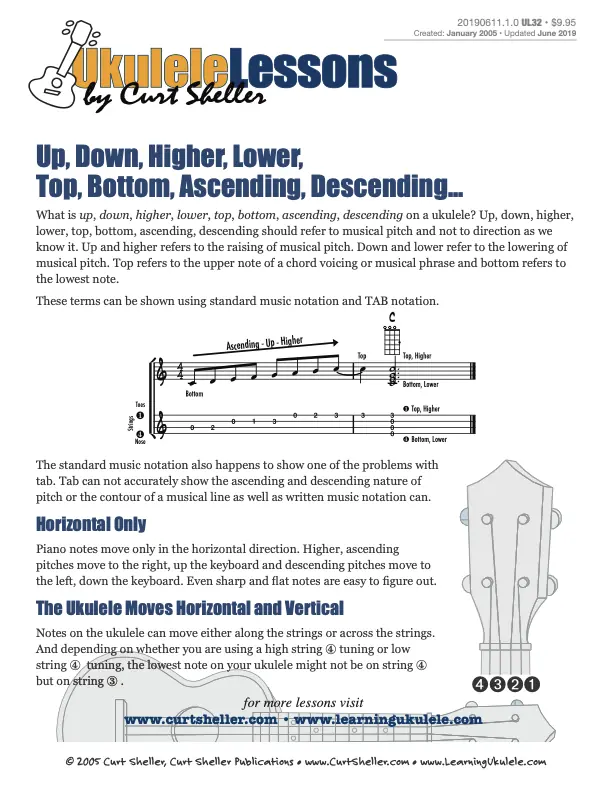
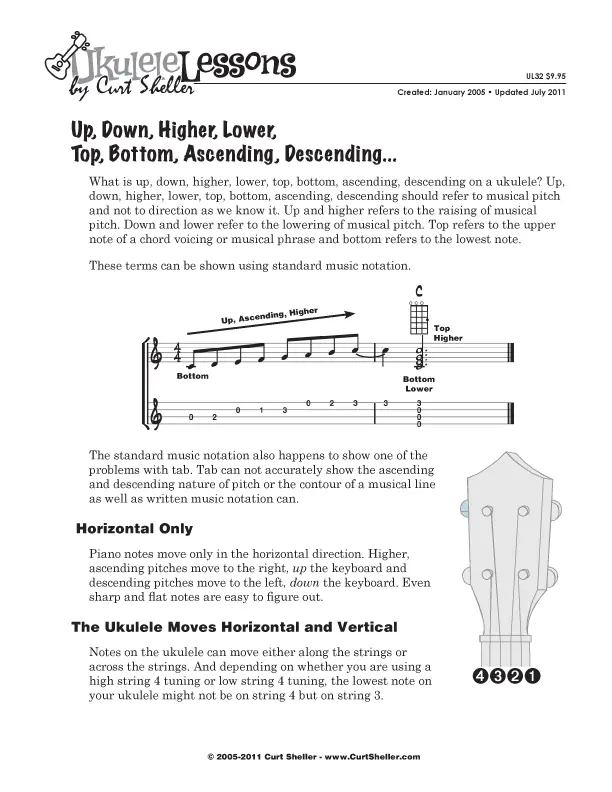
Which Way Is Up? - Up, Down, Ascending, Descending, etc...
What is up, down, higher, lower, top, bottom, ascending, descending on a guitar? Up, down, higher, lower, top, bottom, ascending, descending should refer to musical pitch and not to direction as we know it. Up and higher refers to the raising of musical pitch. Down and lower refer to the lowering of musical pitch. Top refers to the upper note of a chord voicing or musical phrase and bottom refers to the lowest note.