
Published:
2022-02-26
Updated:
2022-02-26
Learning Ukulele with Curt
QUICKSTART Scale and Arpeggio Series
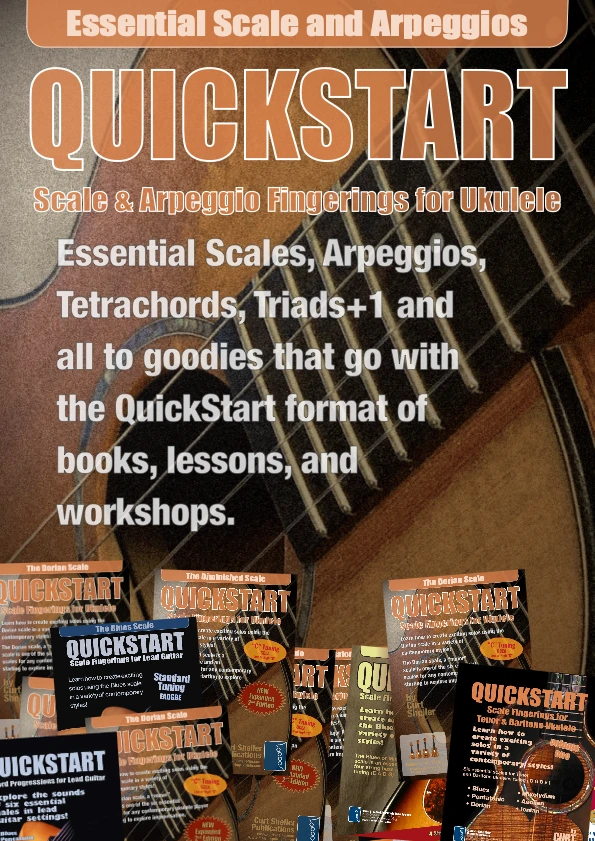
The QUICKSTART — Scale and Arpeggio Fingerings Series is a concise, well-organized series of books, lessons, and workshops ideal for any guitar, ukulele, or bass player beginning to explore “improvisation”. Unlike so many other instructional materials on the market, The QUICKSTART — Scale and Arpeggio Fingerings Series keeps a sharp focus on the essential scales and arpeggios, their fingerings and their related chords. All material is covered in every key.
Author(s): Curt Sheller Publisher: Code: QS-SERIES
Main Category: Scales Main Instrument: Ukulele

24 June 2026
RelatedBookAssets
If you're a registered site member and have the correct permissions you can view ALL the pages of this PDF or Samples pages at a larger size using the LearningUkulele.com Online PDF Viewer.
Download PDFThis Download IS part of your Gold Site Access and a FREE download. Thanks for supporting the site. – Curt
Each PDF file is a professionally prepared, formatted, high resolution file that prints out great. You'll need a PDF Reader or application capable of viewing PDF files to view the PDF.
NOTE: Download the current PDF file for the latest, complete, and most up-to-date version. As well as additional information not presented on-line.
However, if you'd like to support the site even more ❤️ you can buy the PDF.
After purchasing a PDF a download link or PDF link will be sent to you.
Product Info
- Product Code: QS-SERIES
- Author(s): Curt Sheller
- Publisher(s):
- Published: 26 February 2022
- Updated: 26 February 2022
- ISBN-13: NA
- Size*: Books ANSI A (8.5 x 11 in), PDFs A4 (210 x 297 mm)
- Pages: 2
- Hard Copy Price: NA
Regarding Book, Lesson and Charts Paper Sizes
• click to Hide more info
• click to Show more info
Starting 2020 LearningUkulele.com & Learning Ukulele with Curt moved to A4 paper sizes for all new books and new editions of books, lessons, and charts.
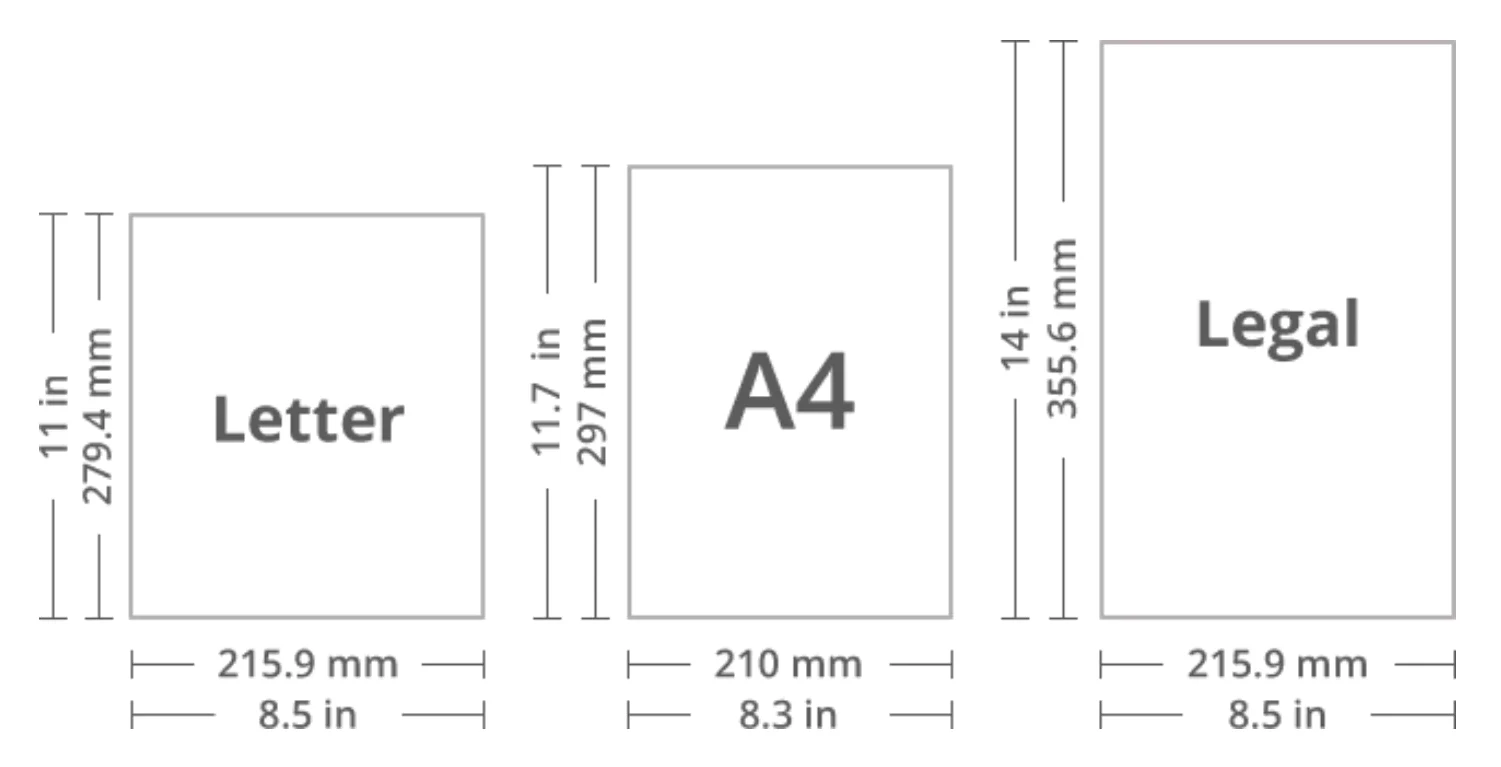
The A Series was adopted in Europe in the 19th century, and is currently used all around the world, apart from in the USA and Canada.
• Decoding Printer Paper Sizes: A4 vs Letter vs Legal. which is Standard?
NOTE: Printing A4 to US Letter Size: As the sizes are relatively close, simple select Scale to Fit
and the A4 size will print out fine.
The QUICKSTART — Scale and Arpeggio Fingerings Series is a concise, well-organized series of books, lessons, and workshops ideal for any guitar, ukulele, or bass player beginning to explore “improvisation”. Unlike so many other instructional materials on the market, The QUICKSTART — Scale and Arpeggio Fingerings Series keeps a sharp focus on the essential scales and arpeggios, their fingerings and their related chords. All material is covered in every key.
More QUICKSTART Scale and Arpeggio Series
content below, continue exploring...
More QUICKSTART Scale and Arpeggio Series
QuickStart Scale Fingerings Books
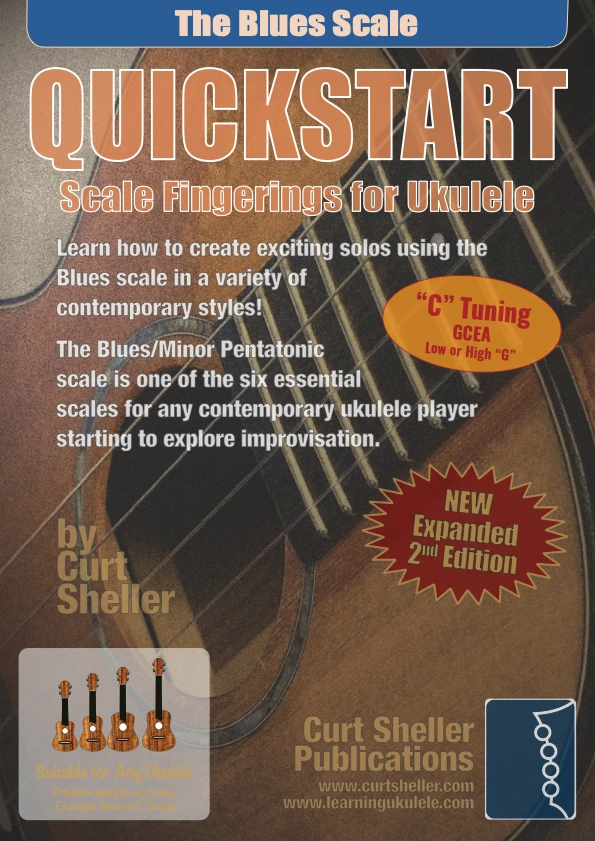
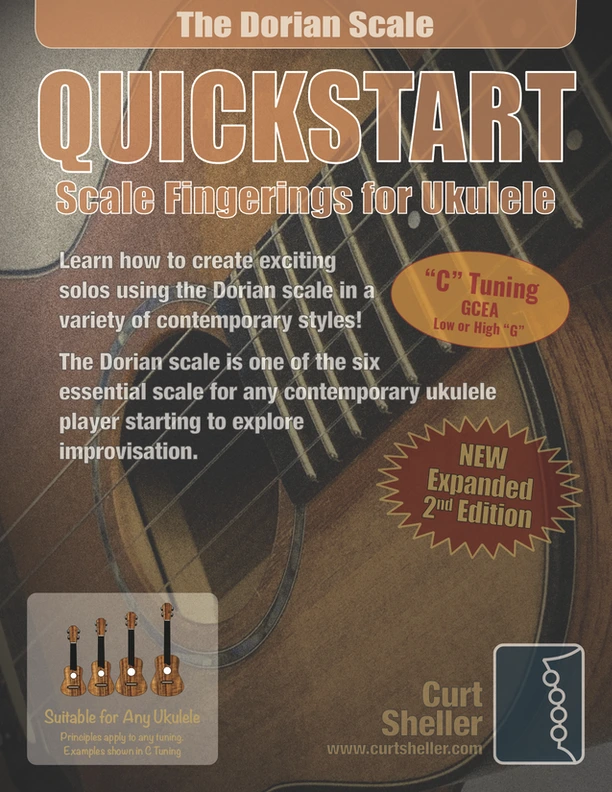
These are NEW and Expanded 2nd Editions for each scale from the original QuickStart Scale Series of books with additional and essential scales (A4 sized).

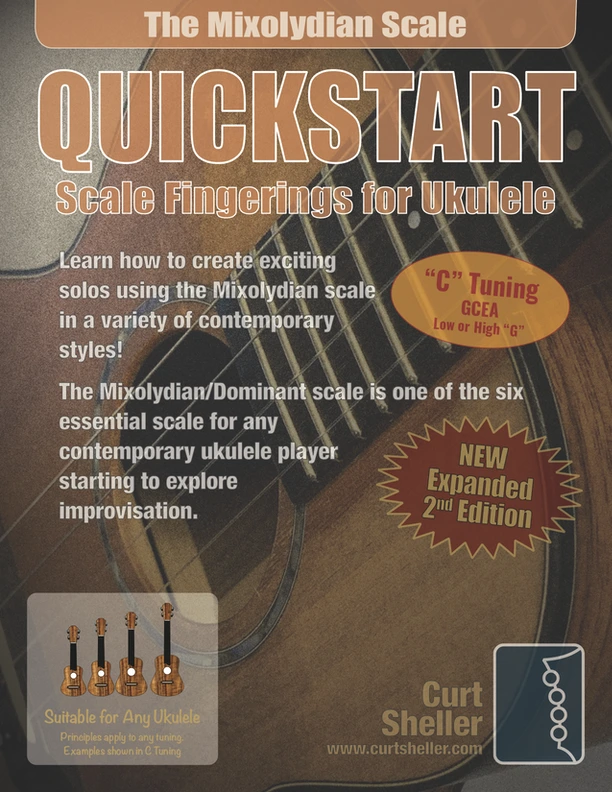
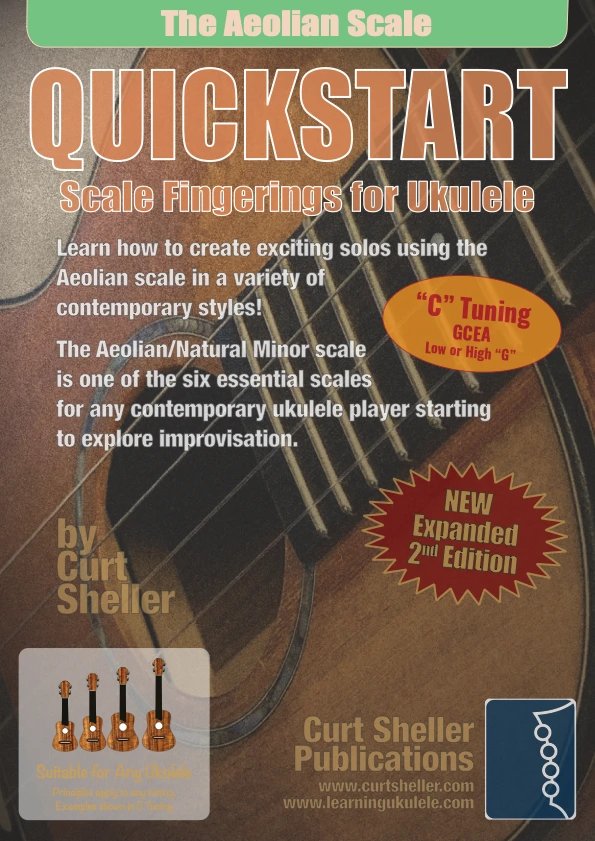
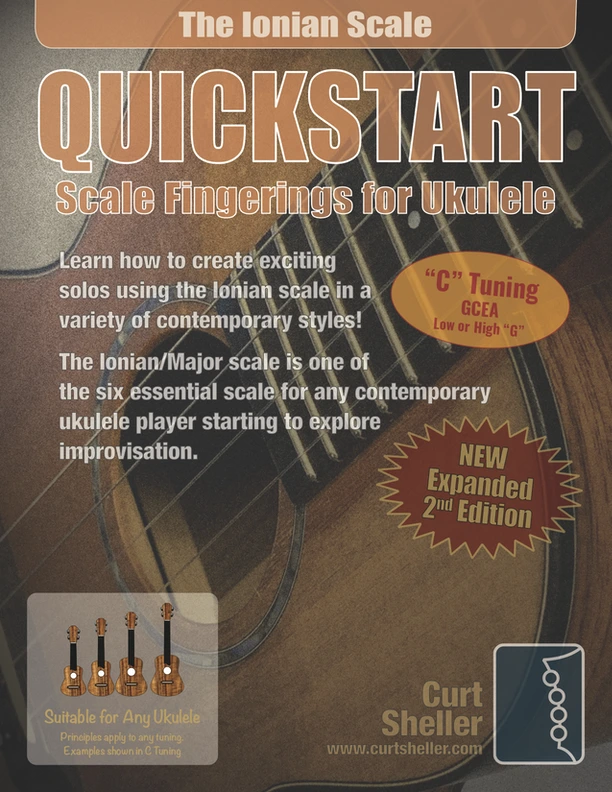
Ukulele — C Tuning (G C E A)
- QuickStart Scale Fingerings for Ukulele, Volume I, C Tuning • This is a collection of the 6 Essential Scales for Contemporary Ukulele Players: Blues, Pentatonic, Dorian, Mixolydian, Aeolian, Ionian.
The following are individual scale books in C Tuning.
Traditional Scales
- Major (Ionian)
- Natural Minor (Aeolian)
- Harmonic Minor
- Diminished
- Whole Tone
- Jazz Melodic Minor (Tonic Minor)
Contemporary Scales
Modal Scales
- Major (Ionian)
- Dorian
- Phrygian
- Lydian
- Mixolydian (Dominant)
- Aeolian (Natural Minor)
- Locrian
Notice: All the modal scales end in ian
.
Ukulele — G Tuning (D G B E)
- QuickStart Scale Fingerings for Tenor and Baritone Ukulele, Volume I, G Tuning • This is a collection of the 6 Essential Scales for Contemporary Ukulele Players: Blues, Pentatonic, Dorian, Mixolydian, Aeolian, Ionian.
Ukulele — D Tuning (A D F♯ B)
- QuickStart Scale Fingerings for Ukulele, Volume I, D Tuning • This is a collection of the 6 Essential Scales for Contemporary Ukulele Players: Blues, Pentatonic, Dorian, Mixolydian, Aeolian, Ionian.
These are NEW and Expanded 2nd Editions for each scale from the original QuickStart Scale Series of books with additional and essential scales.
Guitar — Standard Tuning (E A D G B E)

circa 1998
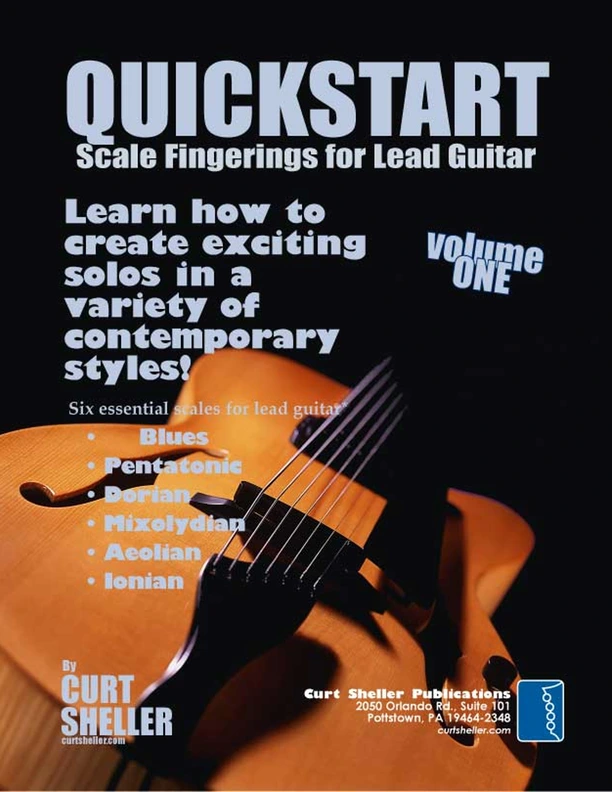
This was the first QuickStart Scale Series book published in 1998.
- QuickStart Scale Fingerings for Lead Guitar – Volume I (Blues, Pentatonic, Dorian, Mixolydian, Aeolian, Ionian)
- QuickStart Scale Fingerings for Lead Guitar – Blues (Blues)
circa 2024
Bass Guitar — 4 String Standard Tuning (E A D G)

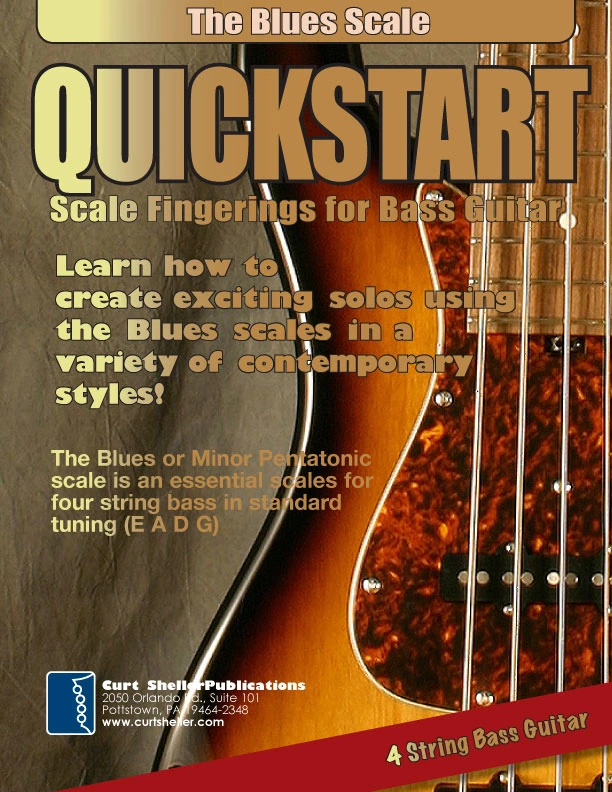
QuickStart Scale Fingerings for Bass Guitar – Blues Scale
QuickStart Arpeggio Fingerings Books
Ukulele
- Triads C Tuning (Major, Minor, Diminished, Augmented)
- Triads G Tuning (Major, Minor, Diminished, Augmented) triads
The following are individual arpeggio books in C Tuning for the Traditional Triads.
Traditional Triads — C Tuning
Essential Scales
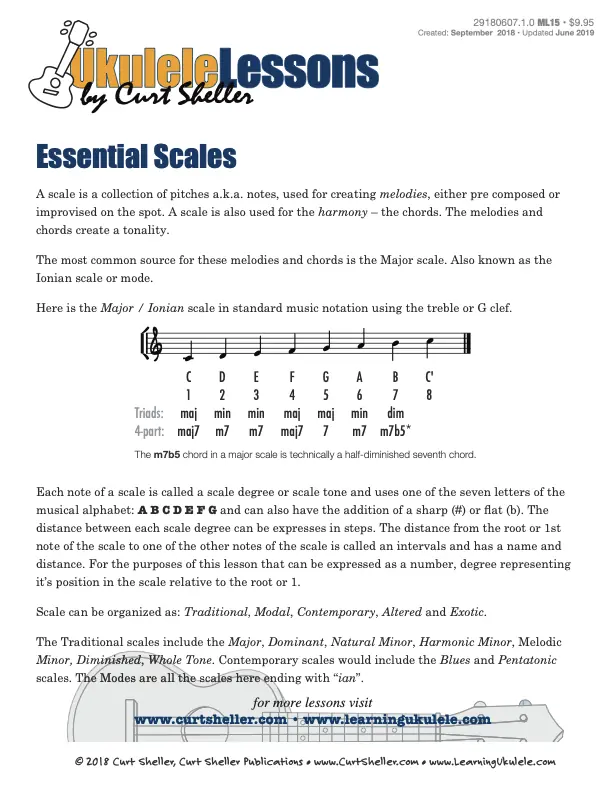
A scale is a collection of pitches a.k.a. notes, used for creating melodies, either pre composed or improvised on the spot. A scale is also used for the harmony – the chords. The melodies and chords create a tonality. The most common source for these melodies and chords is the Major scale. Also known as the Ionian scale or mode.
Exploring Jazz ``Ukulele
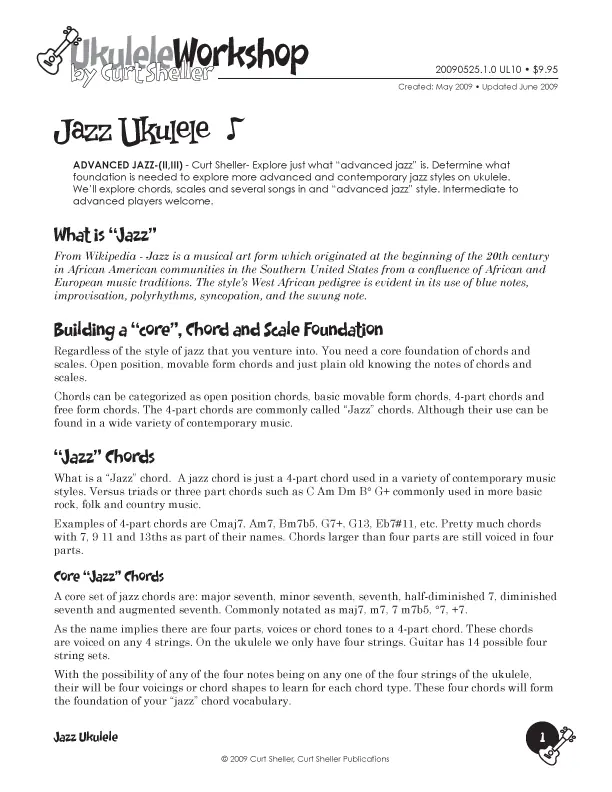
Wikipedia defines "Jazz" as a musical art form which originated at the beginning of the 20th century in African American communities in the Southern United States from a confluence of African and European music traditions. The style's West African pedigree is evident in its use of blue notes, improvisation, polyrhythms, syncopation, and the swung note.

Modes of the Melodic Minor Scale
A great deal of modern jazz harmony arises from the modes of the ascending form of the melodic minor scale, also known as the Jazz Melodic Minor Scale. This scale is essentially a diatonic major scale with a lowered third, for example C–D–E♭–F–G–A–B–C. As with any other scale, the modes are derived from playing the scale from different root notes, causing a series of jazz scales to emerge.
QuickStart Chord Progressions Play-along Tracks, Introduction and Tuning Notes
The QUICKSTART Rhythm Section CD contains 24 unique styles designed for contemporary lead guitar. Each track is devoted to a scale covered in the QUICKSTART Scale Fingerings series of books. There are four background tracks for each scale, featuring the chords of the scale. These tracks give you the opportunity to explore the sound of each scale in an improvisational setting.

What is the Difference Between a Scale and a Mode?
The terms "scale" and "mode" are often used interchangeably, but strictly speaking, there is a significant difference between them in music theory. Although they may share the same set of notes, a scale and a mode or modal scale are not the same thing. It's important to note that a scale and a mode can contain the same notes.