
Published:
2009-05-15
Updated:
2009-06-24
Learning Ukulele with Curt
Exploring Jazz ``Ukulele
Wikipedia defines "Jazz" as a musical art form which originated at the beginning of the 20th century in African American communities in the Southern United States from a confluence of African and European music traditions. The style's West African pedigree is evident in its use of blue notes, improvisation, polyrhythms, syncopation, and the swung note.
Author(s): Curt Sheller Publisher: Curt Sheller Publications Code: UL123
Main Category: Jazz Main Instrument: Ukulele
Categories: Chords, Jazz, Beginner

2026-08-23
Number of Pages: 12
If you're a registered site member and have the correct permissions you can view ALL the pages of this PDF at a larger size using the LearningUkulele.com Online PDF Viewer (button below).
Download PDFThis Download is NOT part of your LearningUkulele.com & Learning Ukulele with Curt membership level.
Sign-up for Premium Site Access or Upgrade Your Plan to download this PDF or your can purchase a copy for download
Sign In for Access…Contact Us if there are any issues.
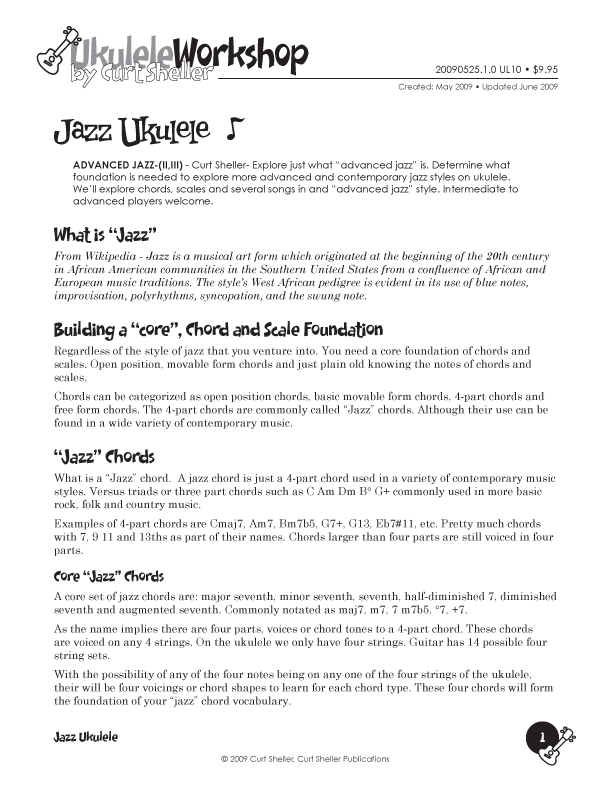
Wikipedia defines Jazz as a musical art form which originated at the beginning of the 20th century in African American communities in the Southern United States from a confluence of African and European music traditions. The style's West African pedigree is evident in its use of blue notes, improvisation, polyrhythms, syncopation, and the swung note.
At a minimum to explore jazz or contemporary music on a ukulele you need a core set of chords and scales. It's this foundation or core that you can build on.
This lesson contains links and resources for developing as a jazz ukulele player. And, a great overview of what is needed as far as chords, scales and the essential elements that are needed to explore jazz on a ukulele.
Necessary Jazz Skills
Technique
Technique is the physical control and coordination needed to play an instrument or sing. It is involves position, efficiency of motion and effort, as well as exercises to develop specific physical skills.
Theory
Theory is the body of principles behind music. It includes scales and chord building, intervals, progressions, resolution, harmony, motion, power, color, chord substitution, keys and time signatures, rhythm, melody, etc.
Ear Training
Ear Training is the development of the active and passive capacity to relate to music aurally. It includes the ability to regains melodic and harmonic intervals, chords, chord progression, rhythm, melody and harmony.
More Exploring Jazz ``Ukulele
content below, continue exploring...
More Exploring Jazz ``Ukulele
Reading
Reading is the ability to reproduce music from written notation. It includes five phases; note recognition / alternate note locations, rhythm recognition, fingering considerations, communication terminology and interpretation.
Repertoire
Repertoire includes the songs within the performance ability of the student. These songs maybe memorized or read. They may be literal reproductions or creative interpretations.
Improvisation
Improvisation is the ability to spontaneous to create melody over a predetermined chord progression. It involves scales, alternate fingerings, arpeggios, intervalic development, sequences, embellishments, superimposition, rhythm, motifs, development techniques and idiomatic considerations.
Musical Idioms
Musical Idioms is the study of music musical style it involves well developed categories as; Rock, Blues, Country, Jazz, Bluegrass, Classical, Folk, Urban and Fusion. It also includes subdivisions of specializations.
Songwriting
Songwriting is the creation of original music based on a single melodic line with a chord progression. Lyrics may or may not be included.
Arranging
Arranging involves the choice of instruments, tempo, rhythmic feel, form, intro, ending, interludes, solos, harmonies, and instrumental accompaniment of a song.
Composition
Composition is the creation of original music based on multiple simultaneous and compatible melodies. It historically involves the classical forms but frequently includes more sophisticated levels of contemporary music.
Orchestration
Orchestration involves the choice of instruments for a composition. This choice is based on the ranges and colors of the instruments which best represent the mood and creative intent of the composer.
Interpretation
Interpretation involves the ability to perform a song or composition in a unique and personal way. These skills involve a interrelated set of disciplines which include, theory, ear training, technique, dynamics, embellishments, phrasing, and rhythmic flexibility.
The Fingerboard
If there is one thing that really opens up the ukulele. It is really, and I mean really knowing the notes of the ukulele fingerboard. This needs to be second nature with no conscience thought.
This is separate from learning to read standard music notation. Which, is an essential skill to develop.
Jazz Chords
Regardless of the style of jazz that you venture into. You need a core foundation of chords and scales. Open position, movable form chords and just plain old knowing the notes of chords and scales.
Building a solid chord foundation is essential in your development as a musician and jazz musician - ANY instrument.
Jazz Scales
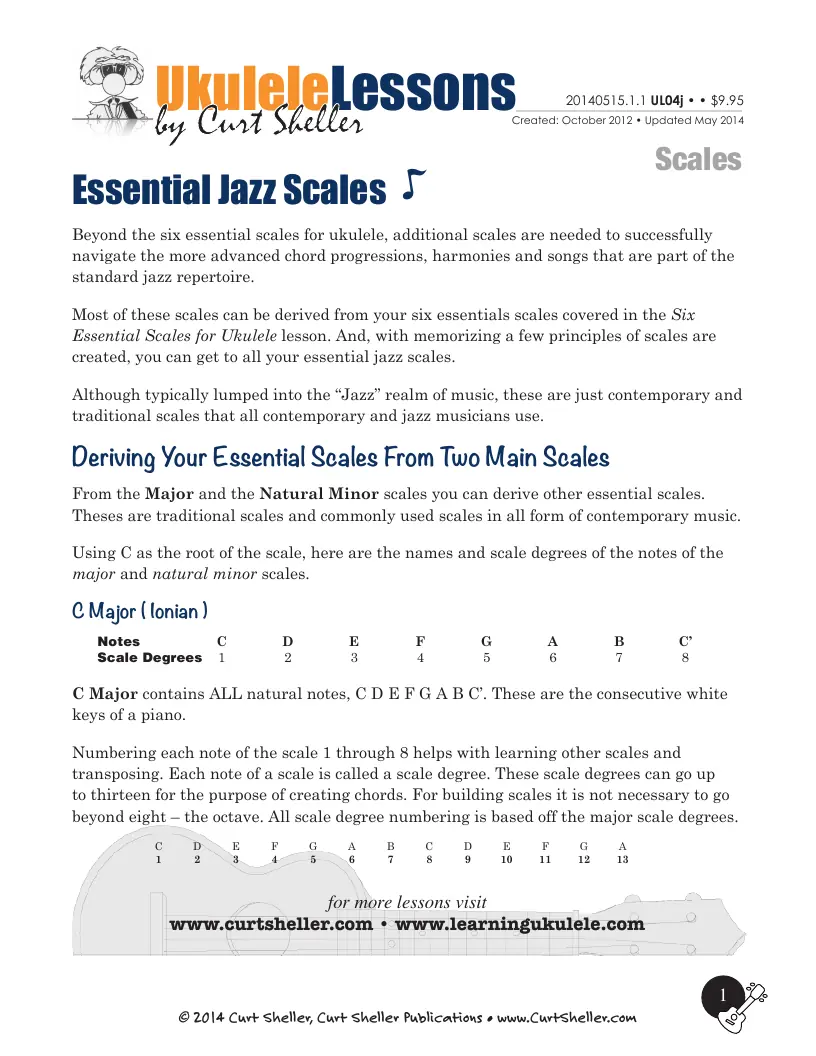
There are seventeen essential jazz scales.
From the major and natural minor scales you can build theses essential scales.


End of Lesson - Thanks, Hope You Enjoyed It!
Related Lessons, Videos, Lesson Series, Songs, Books & Reference Charts, Resources & Assets, Workshops are below.
Six Essential Scales for `Ukulele
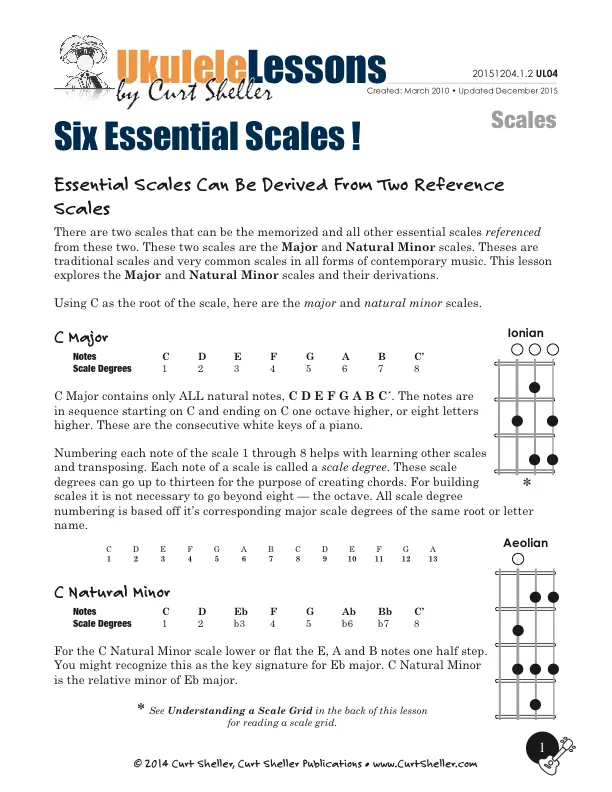
The six essential scales are: Blues Major Pentatonic Mixolydian Dorian Aeolian and Ionian From the six essential scales, you can get through a wide variety of traditional and contemporary music. A scale is simply a collection of pitches or notes, not really a "this is a Jazz scale", "this is a Blues" or "this is a Rock scale". It's how a scale is used that really matters not its name.
Essential Scales
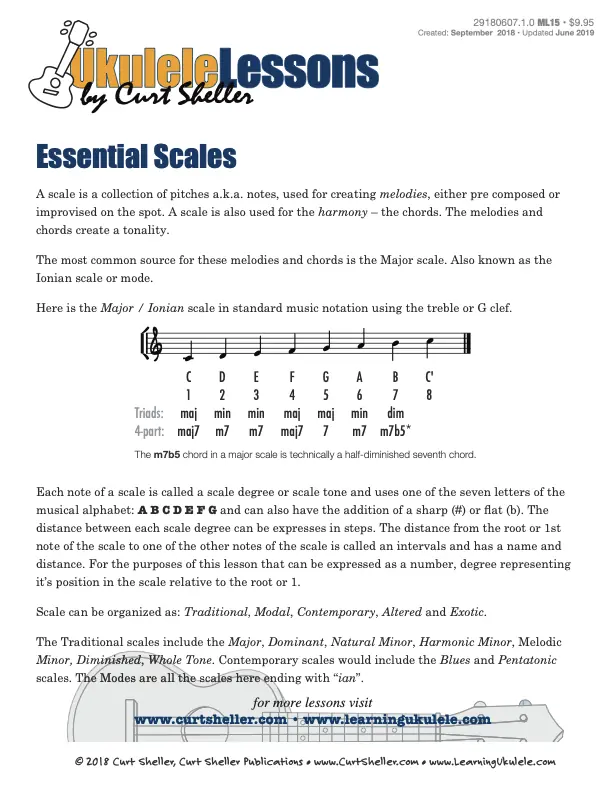
A scale is a collection of pitches a.k.a. notes, used for creating melodies, either pre composed or improvised on the spot. A scale is also used for the harmony – the chords. The melodies and chords create a tonality. The most common source for these melodies and chords is the Major scale. Also known as the Ionian scale or mode.
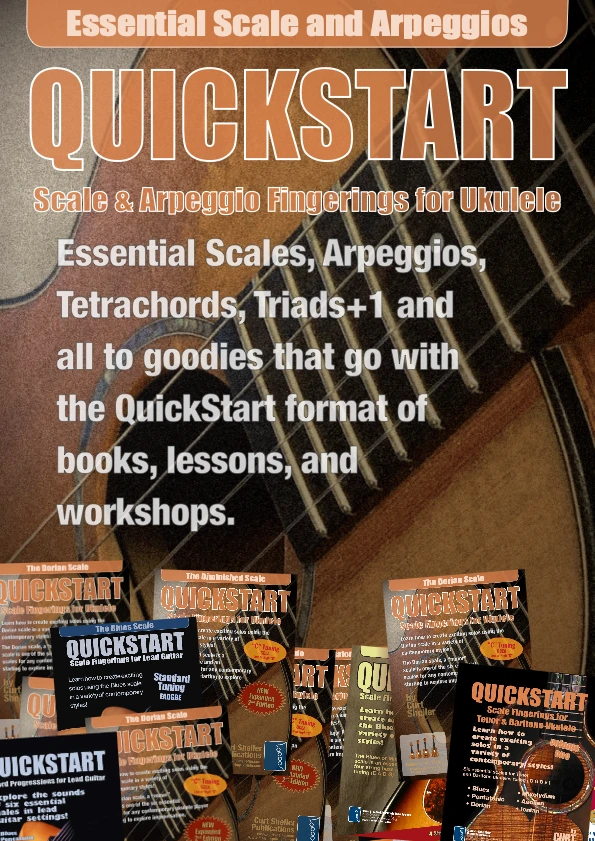
QUICKSTART Scale and Arpeggio Series
The QUICKSTART — Scale and Arpeggio Fingerings Series is a concise, well-organized series of books, lessons, and workshops ideal for any guitar, ukulele, or bass player beginning to explore “improvisation”. Unlike so many other instructional materials on the market, The QUICKSTART — Scale and Arpeggio Fingerings Series keeps a sharp focus on the essential scales and arpeggios, their fingerings and their related chords. All material is covered in every key.
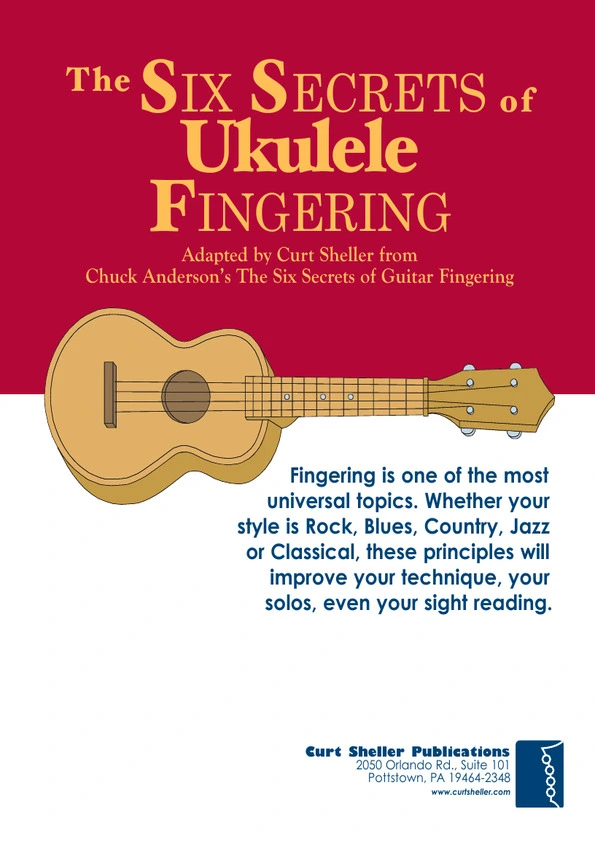
Six Secrets of Ukulele Fingering
Learn the six fingering principles to navigating the ukulele fingerboard. Fingering is one of the most universal topics. Whether your style is Rock, Blues, Country, Jazz or Classical, these principles will improve your technique, your solos, even your sight reading. Think of fingering as a series of pathways. When you learn to connect these pathways, there are benefits not only to technique but also to creativity.