Published:
2018-09-19
Updated:
2026-09-29
Learning Ukulele with Curt
Essential Scales
A scale is a collection of pitches a.k.a. notes, used for creating melodies, either pre composed or improvised on the spot. A scale is also used for the harmony – the chords. The melodies and chords create a tonality. The most common source for these melodies and chords is the Major scale. Also known as the Ionian scale or mode.
Author(s): Curt Sheller Publisher: Curt Sheller Publications Code: ML15
Main Category: Scales Main Instrument: Ukulele
Categories: Chords, Scales, Theory, Melody, Major, Modal, Altered, Harmony

2026-08-23
Number of Pages: 6
If you're a registered site member and have the correct permissions you can view ALL the pages of this PDF at a larger size using the LearningUkulele.com Online PDF Viewer (button below).
Download PDFThis Download is NOT part of your LearningUkulele.com & Learning Ukulele with Curt membership level.
Sign-up for Premium Site Access or Upgrade Your Plan to download this PDF or your can purchase a copy for download
Sign In for Access…Contact Us if there are any issues.
Each note of a scale is called a scale degree or scale tone and uses one of the seven letters of the musical alphabet: A B C D E F G and can also have the addition of a sharp (#) or flat (b). The distance between each scale degree can be expresses in steps. The distance from the root or 1st note of the scale to one of the other notes of the scale is called an intervals and has a name and distance. For the purposes of this lesson that can be expressed as a number, degree representing it’s position in the scale relative to the root or 1.
Scale can be organized as: Traditional, Modal, Contemporary, Altered and Exotic.
Ukulele Examples - C Tuning
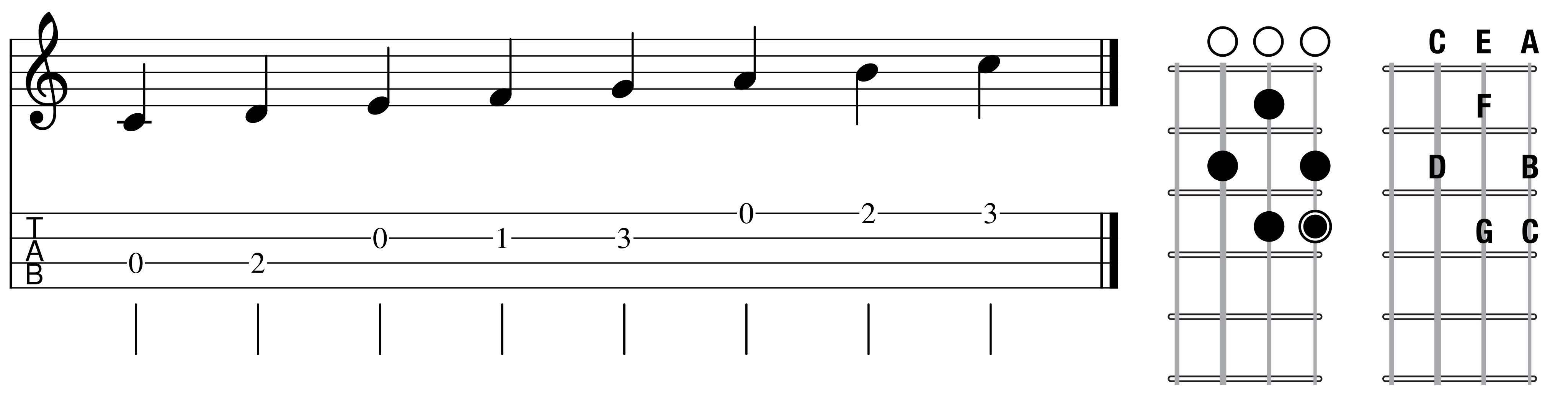
A few of the scales on Ukulele using C Major in C Tuning, Open Position.
Ionian (Major)
C Ionian (Major) C D E F G A B C`
Use the audio to compare the sounds of the individual scales.
More Essential Scales
content below, continue exploring...
More Essential Scales
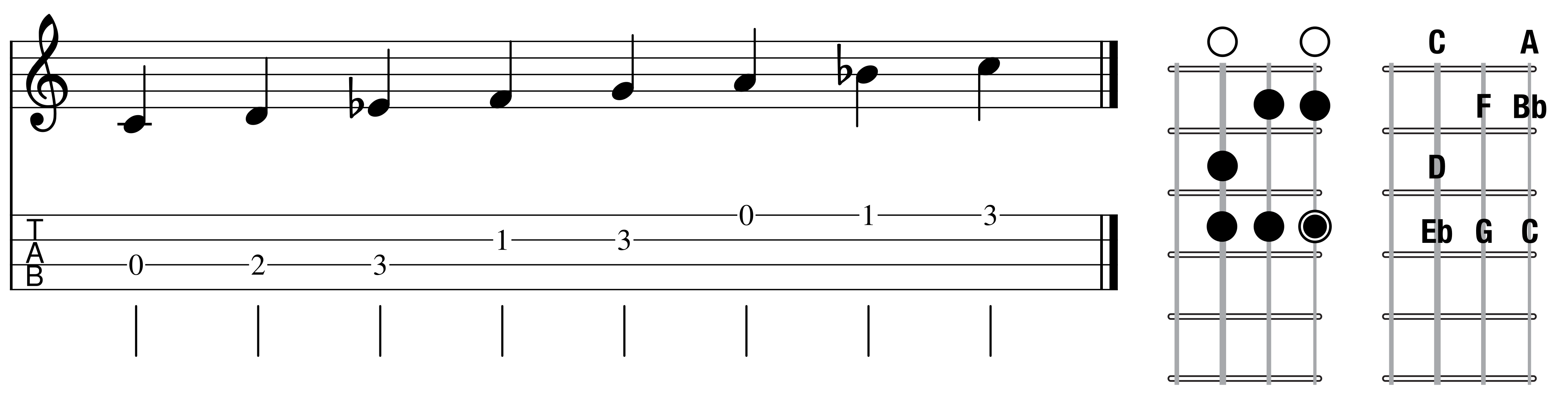
Dorian (Minor)
C Dorian (Minor) C D Eb F G A Bb C`
Use the audio to compare the sounds of the individual scales.
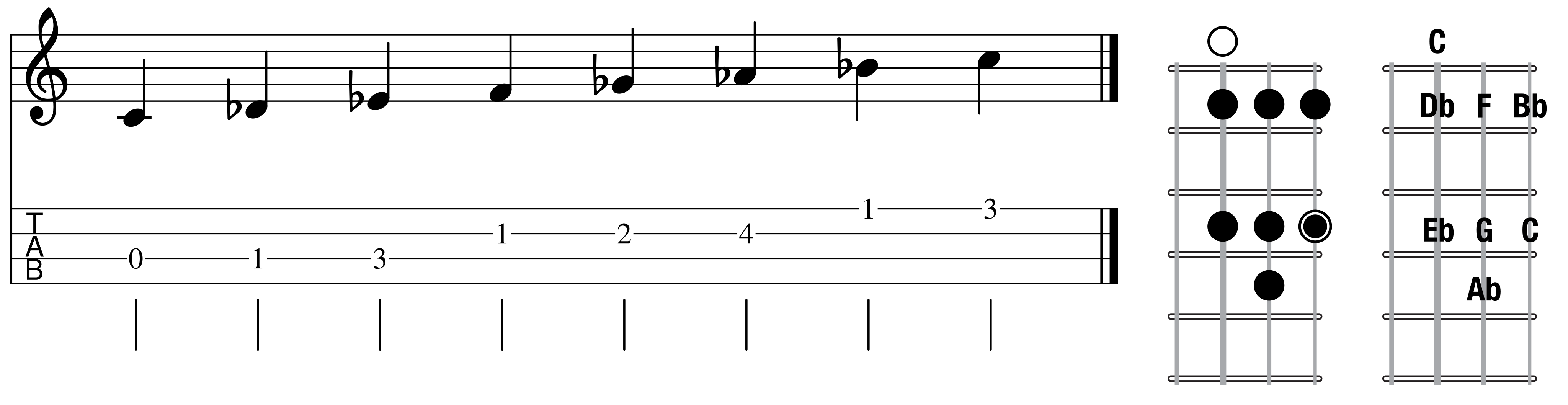
Phrygian
C Phrygian C Db Eb F Gb Ab Bb C`
Use the audio to compare the sounds of the individual scales.
Lydian
C Lydian C D E F# G A B C`
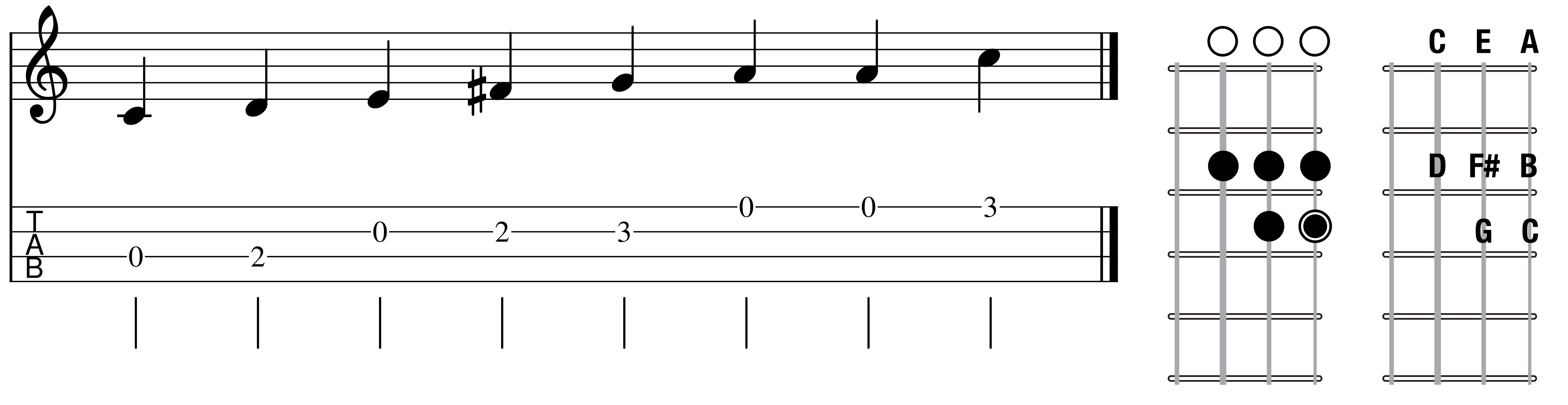
Use the audio to compare the sounds of the individual scales.
Mixolydian
C Mixolydian C D E F G A Bb C`
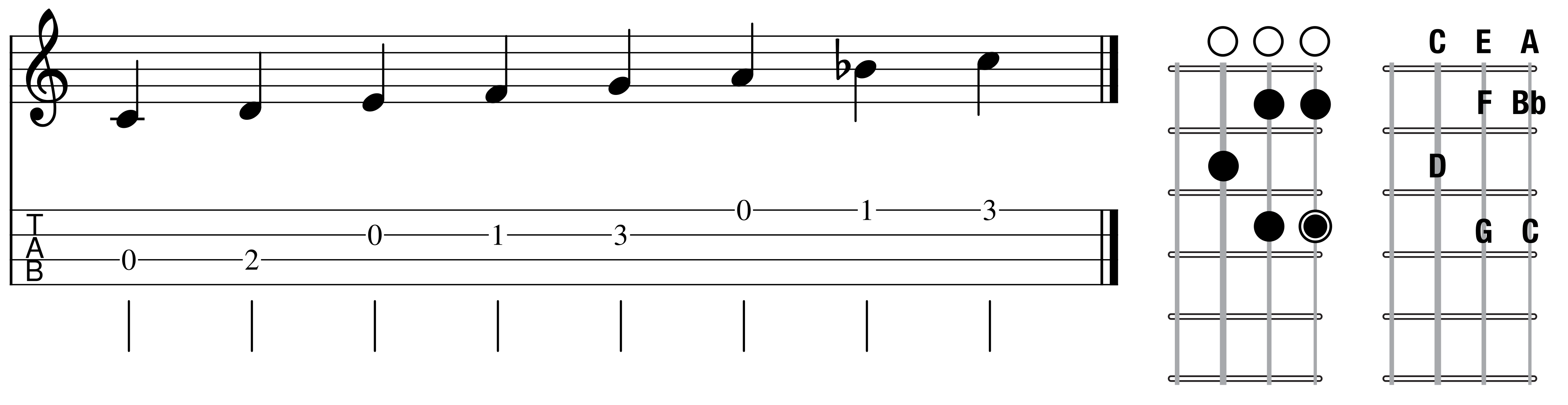
Use the audio to compare the sounds of the individual scales.
Aeolian (Natural Minor)
C Aeolian (Natural Minor) C D Eb F G Ab Bb C`
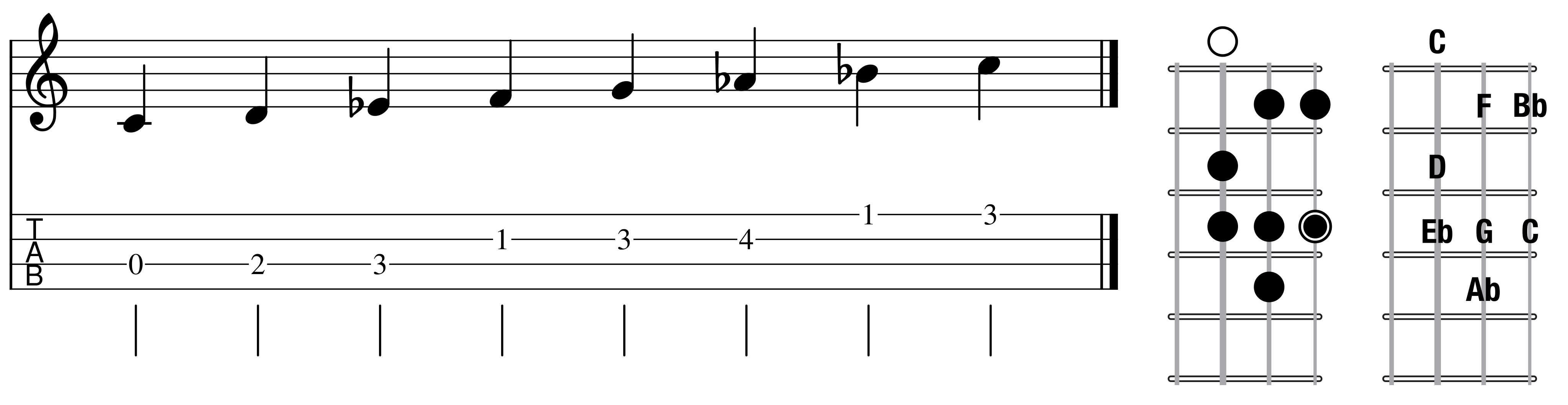
Use the audio to compare the sounds of the individual scales.
Locrian
C Locrian C Db Eb F Gb Ab Bb C`
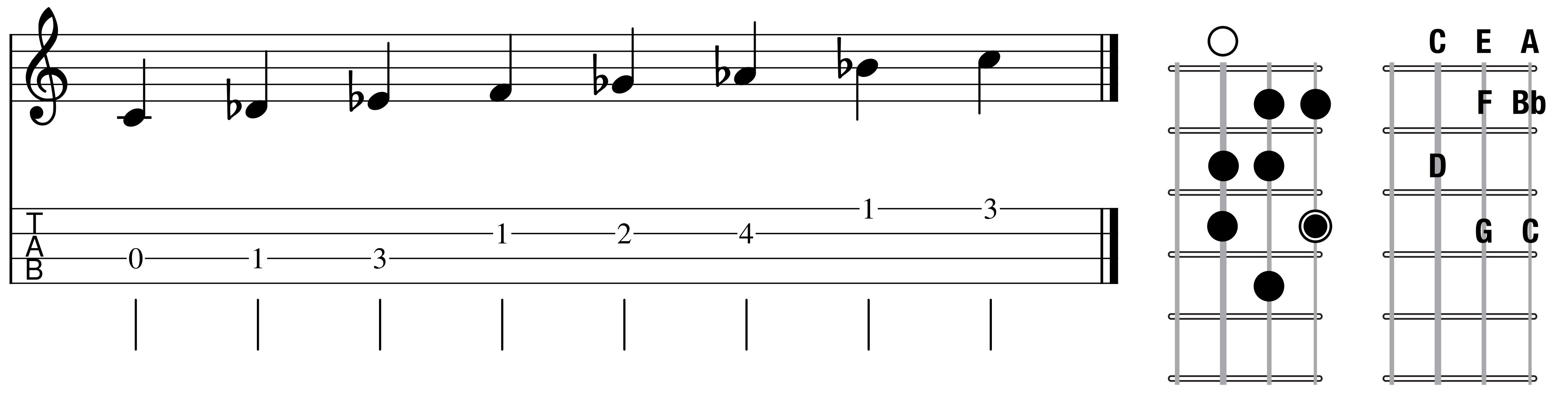
Use the audio to compare the sounds of the individual scales.
A mode is when the characteristic scale tone is stressed.
A scale is when all tones are equal.
Once you master the open position for any given scale the hard work is navigating the many possibilies along the fingerboard. Here is a lesson on Navigating the Major Scale using the Six Secrets of Ukulele Fingering of that can be applied to any scale or mode.


End of Lesson - Thanks, Hope You Enjoyed It!
Related Lessons, Videos, Lesson Series, Songs, Books & Reference Charts, Resources & Assets, Workshops are below.
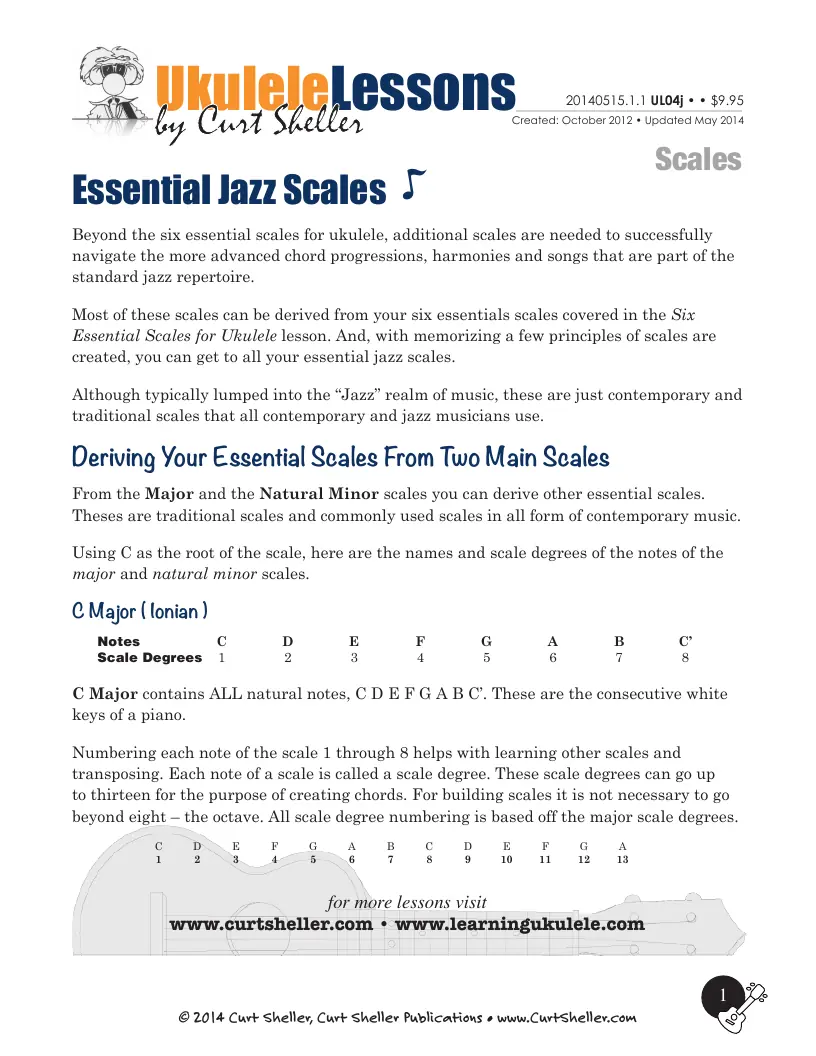
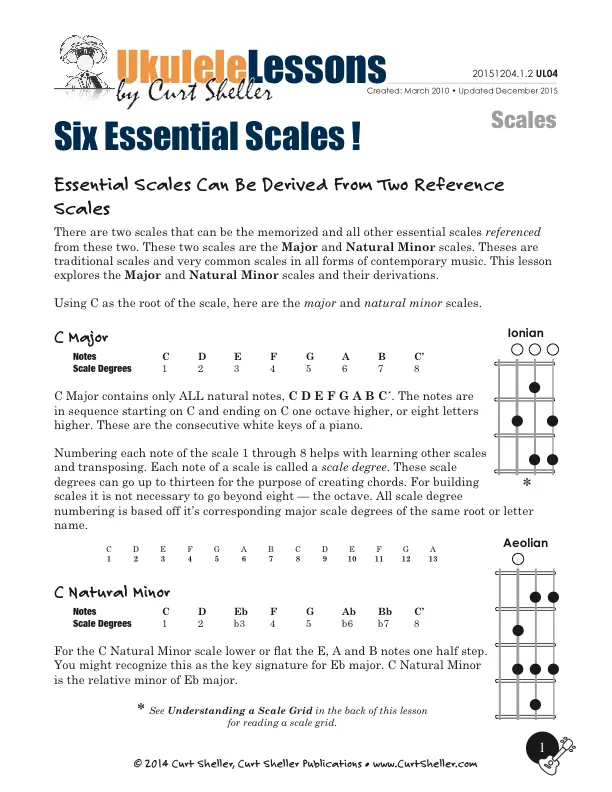
Six Essential Scales for `Ukulele
The six essential scales are: Blues Major Pentatonic Mixolydian Dorian Aeolian and Ionian From the six essential scales, you can get through a wide variety of traditional and contemporary music. A scale is simply a collection of pitches or notes, not really a "this is a Jazz scale", "this is a Blues" or "this is a Rock scale". It's how a scale is used that really matters not its name.
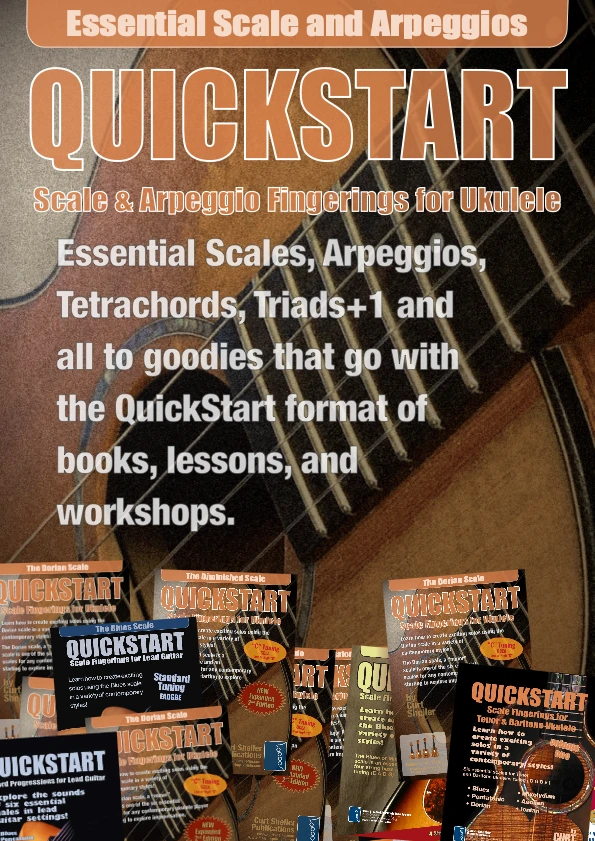
QUICKSTART Scale and Arpeggio Series
The QUICKSTART — Scale and Arpeggio Fingerings Series is a concise, well-organized series of books, lessons, and workshops ideal for any guitar, ukulele, or bass player beginning to explore “improvisation”. Unlike so many other instructional materials on the market, The QUICKSTART — Scale and Arpeggio Fingerings Series keeps a sharp focus on the essential scales and arpeggios, their fingerings and their related chords. All material is covered in every key.
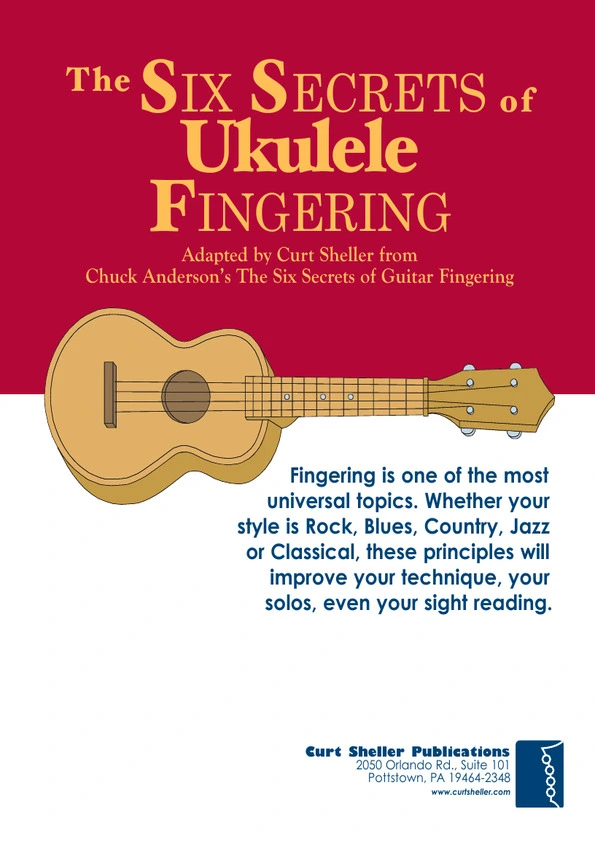
Six Secrets of Ukulele Fingering
Learn the six fingering principles to navigating the ukulele fingerboard. Fingering is one of the most universal topics. Whether your style is Rock, Blues, Country, Jazz or Classical, these principles will improve your technique, your solos, even your sight reading. Think of fingering as a series of pathways. When you learn to connect these pathways, there are benefits not only to technique but also to creativity.