
Published:
2010-12-28
Updated:
2023-03-01
Learning Ukulele with Curt
C - Open Position and Movable Forms
Open position C chord and its movable form and variations.
Author(s): Curt Sheller Publisher: Curt Sheller Publications Code: UL73
Main Category: Chords Main Instrument: Ukulele
Categories: Chords

2026-08-23
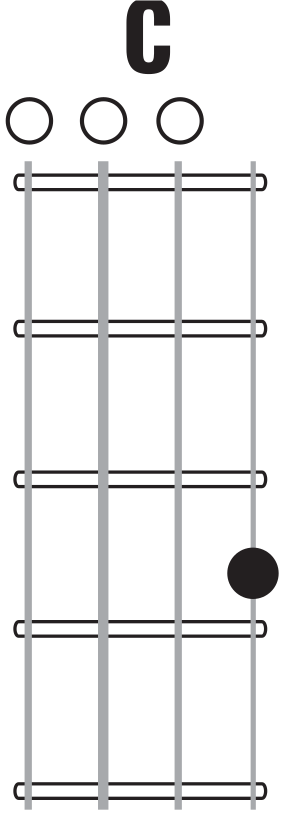
Open position C and its movable form and variations.
Open Position
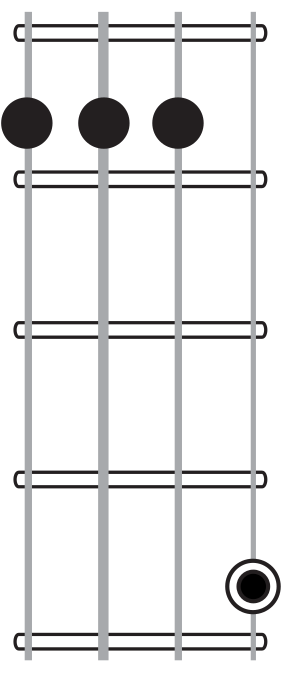
Movable Form
Open Position Photos
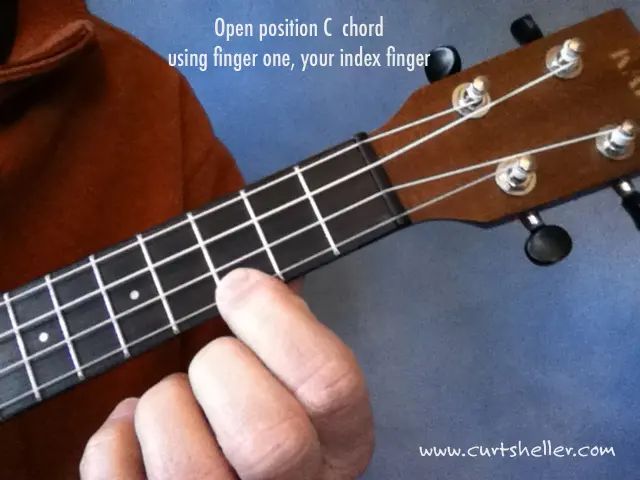
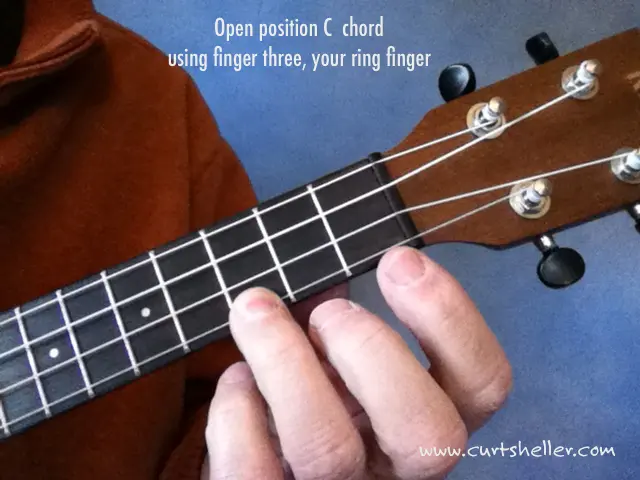
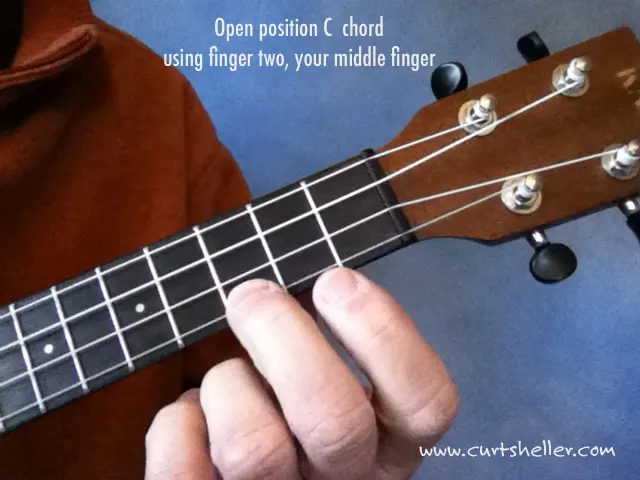
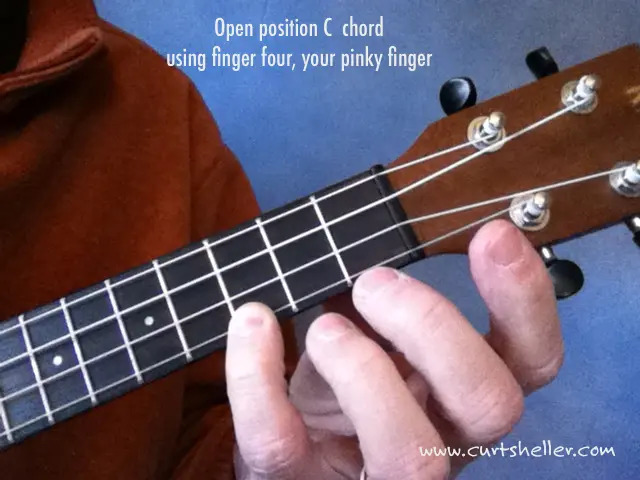
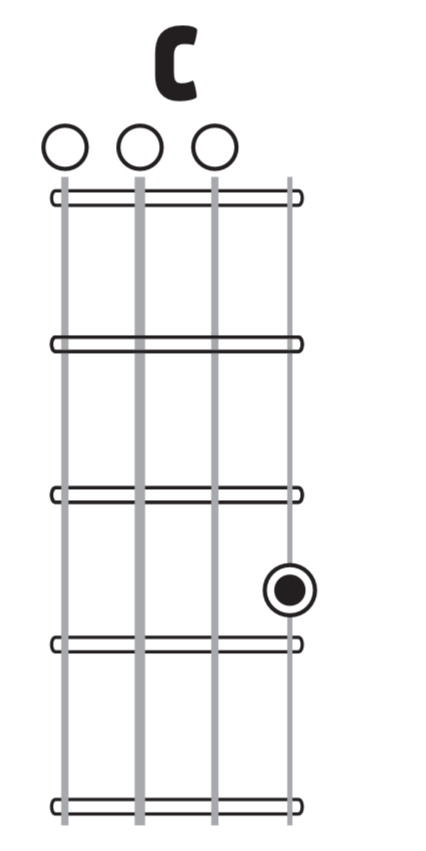
An open position C major chord can be played with any finger. All depends on the context of its use. Typically played with either fingers one and two or two and three.
Checkout the Learn a Chord a Day lessons for Open Position C for all the information you can get from a chord.
TEXTMovable Form Photo
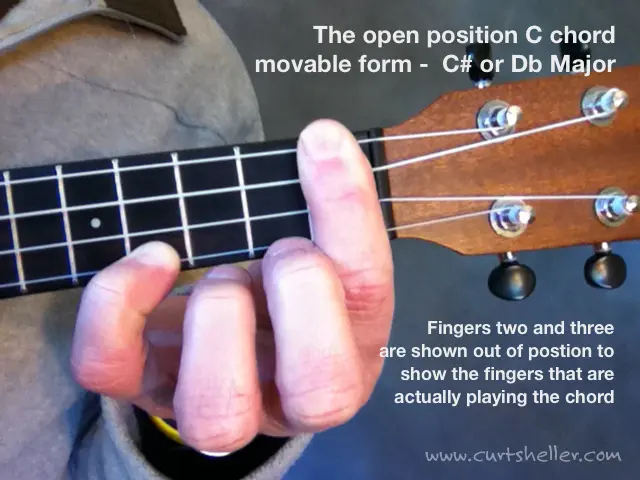
Note Regarding Chord Photos
Photos of chords cannot typically show efficient fingering as compromises typically need to be made in order to show only what fingers being used and what frets are involved.
Fingers should remain over the fingerboard even when not playing notes — ready to go, which typically does not make for a good photo.
Transposing Chords
These lessons use the root of a chord to transpose to different keys.

Root and Perceived Root
Determine what string the root is on or would be on if not present (perceived root) in the chord's voicing.
Chord Transposition Chart
This transposition chart can be used for any chord where the root, or letter name of the chord is on the {{ $string_name }} string .
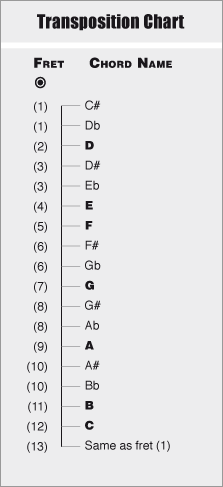
The root is on string 3, the C string.
Use the Root or perceived root of the chord to transpose to different keys.
 A larger sized transposition chart is available in the Ukulele Chords
book. This is the book these expanded chord lessons are based on.
A larger sized transposition chart is available in the Ukulele Chords
book. This is the book these expanded chord lessons are based on.
Chord Tones – C E G
The chord tones of a C major chord are the 1st, 3rd, and 5th scale degrees of the C Major Scale ( C D E F G A B C' ) .
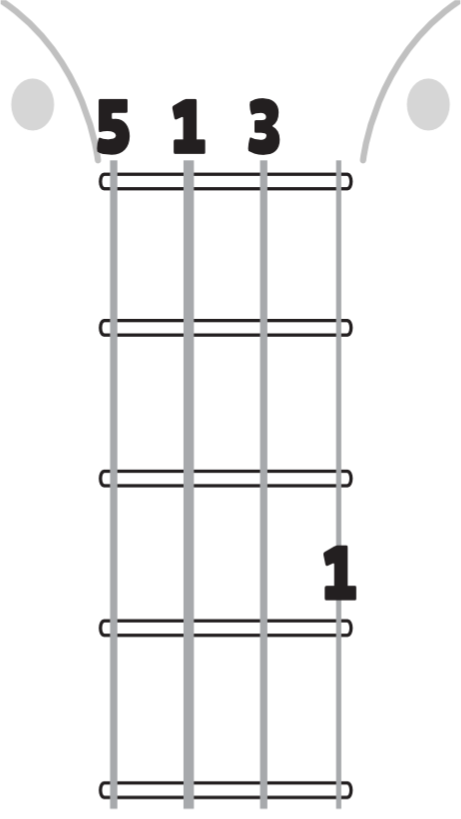
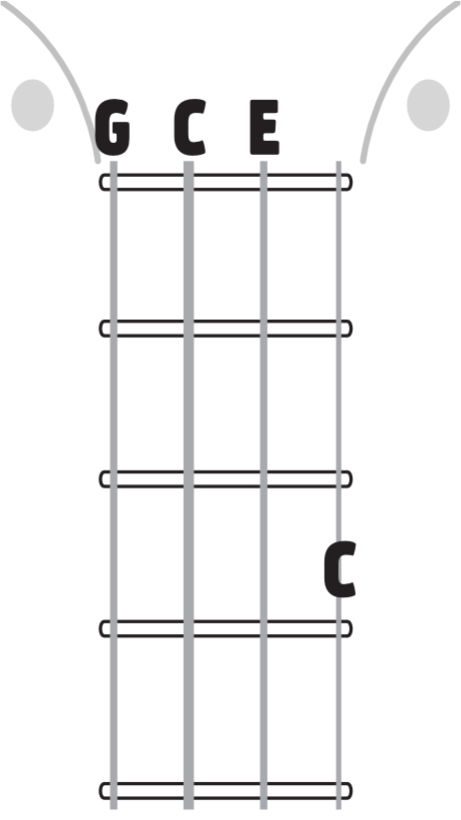
- 1 – the Root or letter name of C is C
- 3 – the third of C is E
- 5 – the fifth of C is G
There's More to C Than You Know
Tracking the Root(s) of the chord we can derive and create other chords simply by lower the Root of the chord.
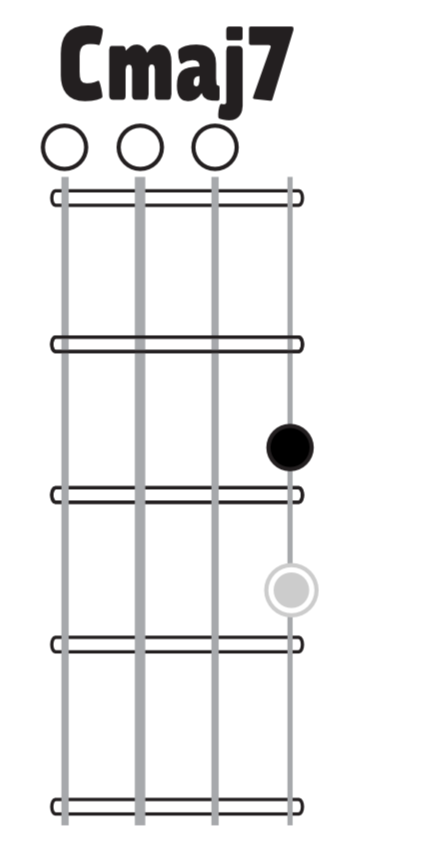
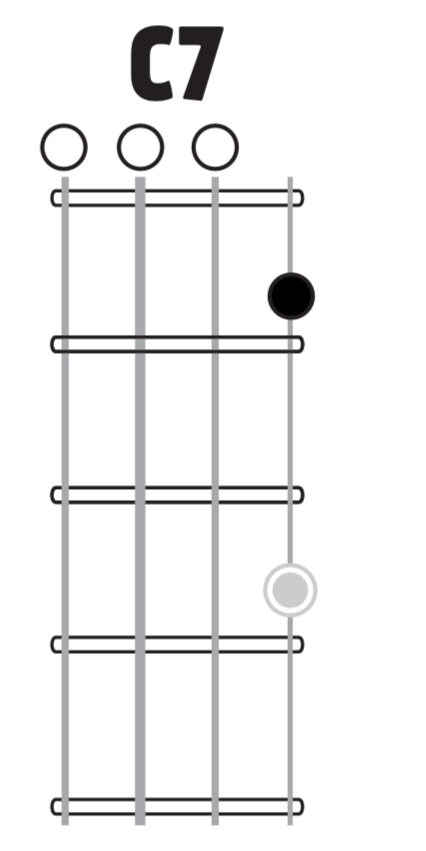
Today's C is C E G and order from string four to one (the floor): G C E C — two roots. We can lower the highest Root that is on string one.

Perceived Root
Notice the Root on string one (the letter name of the chord) is the only note we moved.
Movable Chord Forms
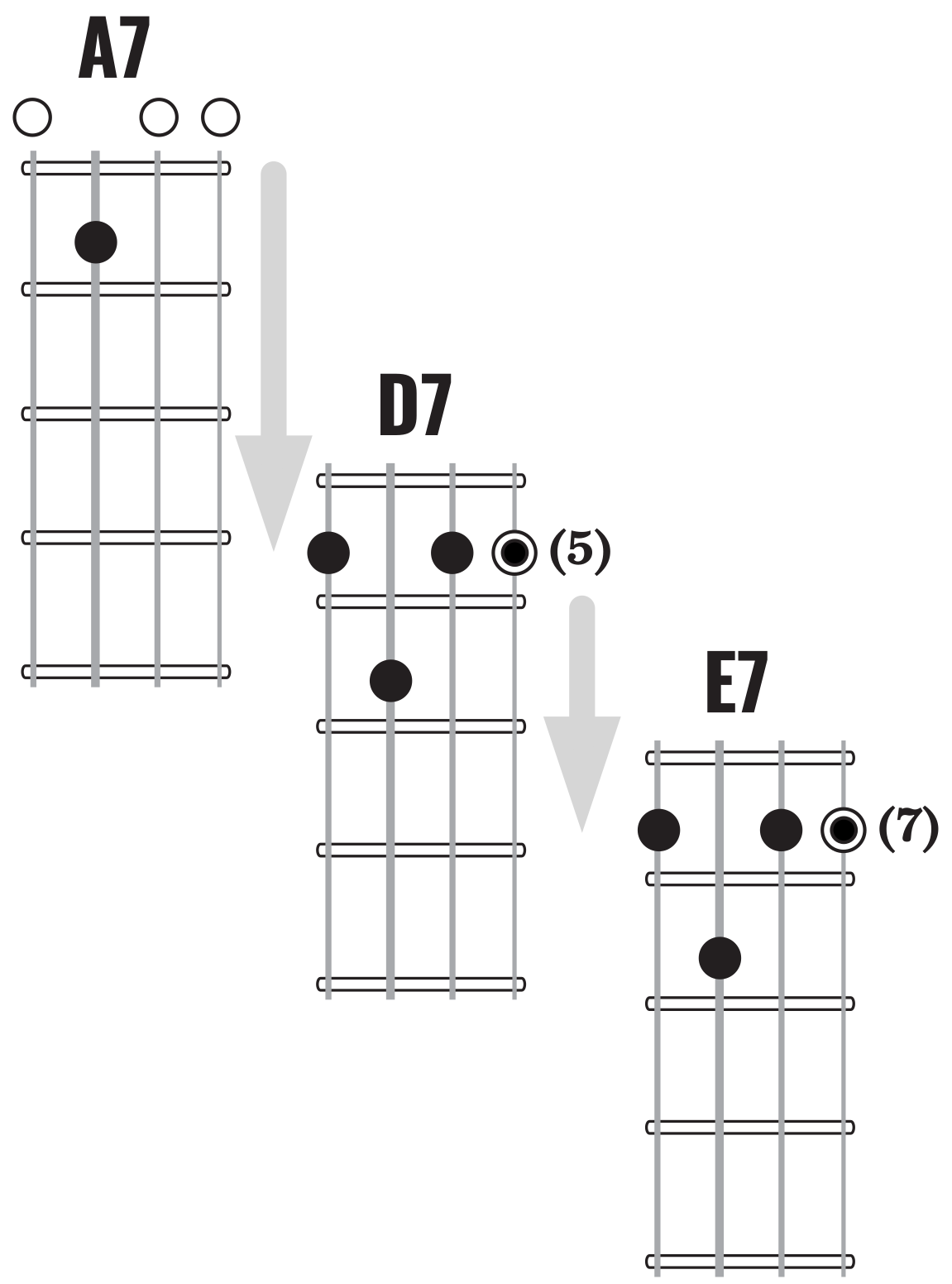
Movable chord forms are chords containing no open strings. These chords can be transposed to different keys by moving each note of the chord the same number of frets up and down the neck.
Movable form chords allow you to play in any key and transpose chords, progressions, and songs to any key. From basic movable form chords, more advanced chords can be created.
The functional range of a movable chord depends on the ukulele's size (soprano, concert, or tenor), the number of frets to the body (10, 12, 14, etc.) and whether you have a cut-away for access to higher frets. Not all chords can be transposed a complete octave (12 frets).
Movable form chords can be used along with open-position chords. As you learn more movable form chords, you'll have a variety of alternate voicings for any given chord.
Movable form chords can be transposed up and down the fingerboard using the root of the chord and a transposition chart, or through knowledge of the names of the notes on the fingerboard.
Chord Fingering
Chord fingering is dependent on several factors. The chord you're currently on, the previous chord, the next chord, your hand, and fingers. All chord fingerings shown are recommended fingerings and not mandatory. Most chords have alternate fingerings dependent on the context. The same chord might even be fingered one way in one part of a song or progression and an alternate fingering in another part.
Derived Chords
sus or suspended Chords
A sus chord implies the suspension of the third of a major, minor or seventh chord. The most common, historical, and traditional use of this suspension involves raising the third of a major or seventh chord to the fourth for a sus4, or 7sus4. In some contemporary music, the suspension can also be accomplished by lowering the third of a major or minor chord to a second for a sus2 chord.
A sus or suspension displaces the third of a chord. An Am sus4 or Am sus2 would be the same as the sus4 and sus2 chords in lesson one's A major chord.
Because a suspended
chord lacks a third, these chords feel unresolved and often “resolve” back to a standard major or minor chord.
The term is borrowed from the contrapuntal technique of suspension, where a note from a previous chord is carried over to the next chord—suspended into the next harmony, and then resolved down to the third or tonic, suspending a note from the previous chord. However, in modern usage, the term concerns only the notes played at a given time; in a suspended chord, the added tone does not necessarily resolve and is not necessarily prepared (i.e., held over) from the prior chord. A common suspension is a fourth above the root resolving to the third of the chord. Sevenths, ninths, and seconds are also common suspensions.
Technically a sus2 is not really a chord as in traditional harmony a sus or suspension only referred to the third of the chords. So, really a sus2 is most likely a power 5 without a third and with an added 2. And, another chord
that, at its foundation is not a chord but a DYAD.
As tonality expanded, classical composers began embracing less functional harmony structured in fourths and fifths. In popular music, it also became commonplace to leave suspensions in place without resolving them.
In Jazz
A common suspended chord in jazz combines the supertonic and dominant chords into one sonority: V9sus4 . Basically the II V of a II V I is combined. An example in C: the Dm7 G7 is combined as Dm7/G .
add2/add9 Chords
Technically the add 2 and add 9 are different chords.
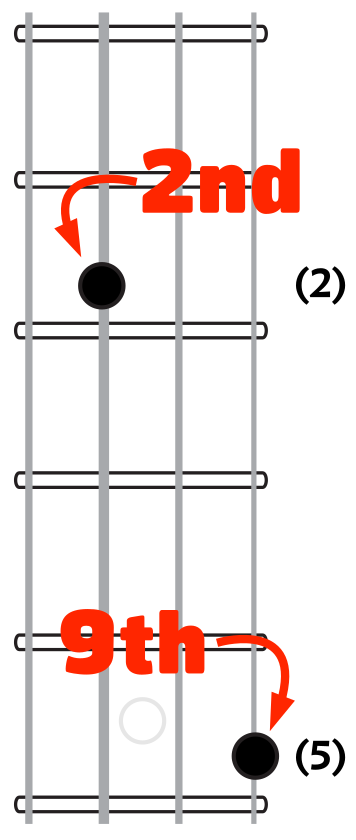
Both the 2 and the 9 are the same letters but in different octaves of the scale. On ukulele, for all practical purposes, you can treat both the add2 and add9 chords as the same. Depending on whether you are using a low “G” or high “G”, C tuning the added ninth might be a second. Whether you call it an add9 or add2 depends on whether the added note is in the same octave as the root of the chord.
Related to a C Major Scale a D is both a 2nd and a 9th (shown to the right). All depends on where the root is.
Power Five Chords
A Power 5 chord contains the root and fifth of a major scale with an optional octave of the root added for a three note power 5 chord. A power 5 chord is technically not a chord in the traditional sense but a dyad or interval. It's more of an implied chord sometimes major and sometimes minor.
7th (pronounced Seventh)
A partial seventh chord can be created by lowering the Root of a major triad two frets.
A seventh chord as a 4-part chord ( 1 3 5 b7 ) and one of the Big Six core chords used to derive other contemporary and jazz chords.
A Seventh chord along with your basic major and minor chords are the most common chord you will encounter.
NOTE: A Seventh chord is very often referred to as a Dominant Seventh . This is not always accurate as Dominant — is a chord function and not actually part of a traditional chord name, which is a capital letter and chord type information and based off the major, ninor, diiniahed, and augmented triads – not it's harmonic function. We don't call a seventh functioning as a I (one) chord in a Blues a Tonic Seventh or the IV (four) chord a Sub-Dominant Seventh chord, etc.
Major Seventh Chords, maj7
A major 7 chord is created by raising the flat seven of a seventh chord one fret. A major 7 can also be created from a major triad by lowering the root one fret.
Major Sixth Chord, (6 or maj6)
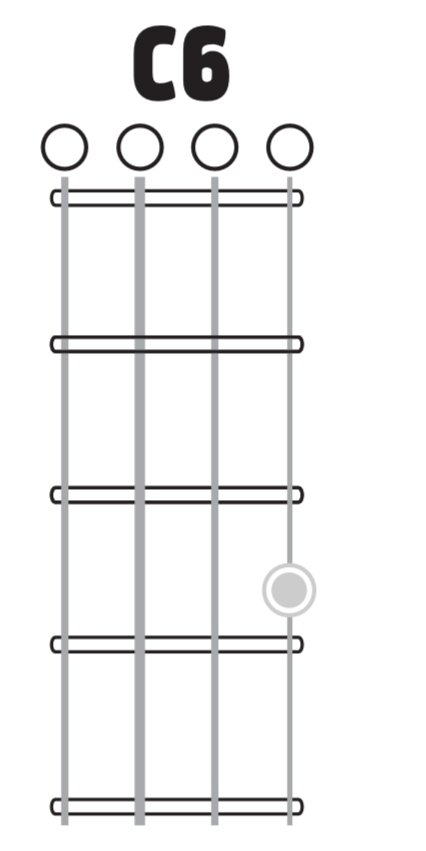
The major 6 or 6th chord is created by lowering the b7 of a seventh chord one fret. An example would be from C7 ( C E G Bb ) lower the Bb one fret to A for C6 ( C E G A ).
The major 6 can also be created from a major seventh chord by lower the seventh two frets. An example would be from Cmaj7 ( C E G B ) lower the B two frets to to A for C6 ( C E G A ).
9th Chords (9, m9, maj9)
A 9th chord is a 5-part chord.
For a 5-part 9th chord, the root is implied and displaced for the ninth. Optionally the 3rd of a 7th chord can be lowered two frets (a whole step) for 1 9 5 b7. This really works if you have already played the chord with the third present and establishing the color of the chord.
To create a ninth chord raise the root of a 4-part chord two frets. This applies to a 7th, maj7, m7, 6, m6, m7b5, etc… Most all 4-part chords can be turned into ninth chords. For a 7th chord this would be a 9 3 5 b7.
This same process can be applied to a triad by raising the root two frets. For these chords they are typically called add2 or add9 chords.
Chords are pretty flexible and can be implied by containing the notes of the chord that make it different then another chord types with the same root. Take C and Cm, C is C E G and Cm is C Eb G. The third of the chord the E or Eb is a color tone and is responsible for making a major chord different sounding then a minor chord with the same root.
.webp)


End of Lesson - Thanks, Hope You Enjoyed It!
Related Lessons, Videos, Lesson Series, Songs, Books & Reference Charts, Resources & Assets, Workshops are below.