
Published:
2013-02-01
Updated:
2024-04-06
Learning Ukulele with Curt
The Chromatic Scale
The only scale in music with ALL twelve notes of one octave. Not much use for improvisation or solos – but a great scale for learning the notes of the ukulele fingerboard, figuring out scales, chords and more...
Author(s): Curt Sheller Publisher: Curt Sheller Publications Code: ML09
Main Category: Scales Main Instrument: Any
Categories: Chords

2026-08-23
Show Series Lessons
Series Home
Number of Pages: 2
If you're a registered site member and have the correct permissions you can view ALL the pages of this PDF at a larger size using the LearningUkulele.com Online PDF Viewer (button below).
Download PDFThis Download is NOT part of your LearningUkulele.com & Learning Ukulele with Curt membership level.
Sign-up for Premium Site Access or Upgrade Your Plan to download this PDF or your can purchase a copy for download
Sign In for Access…Contact Us if there are any issues.
The only scale in music with ALL twelve notes of one octave. Not much use for improvisation or solos – but a great scale for learning the notes of the ukulele fingerboard, figuring out scales, chords and more...
A A♯ B C C♯ D D♯ E F F♯ G G♯
— or —
A B♭ B C D♭ D E♭ E F G♭ G A♭
Music uses the first seven letters of the alphabet to name the notes and chords used in music. The letters are: A B C D E F G. The Chromatic scale is all 12 pitches or notes of music within one octave. An octave is the distance from one letter to next same letter in a scale or chord. A to A’ within the below scale is one octave.
The adjacent notes, B C and E F are the Natural Half Steps in the Chromatic Scale. All other adjacent pairs have a sharp ♯ or flat ♭ between them. This to be one of the keys to remembering the sequence along with the ABCDEFG alphabetic order.
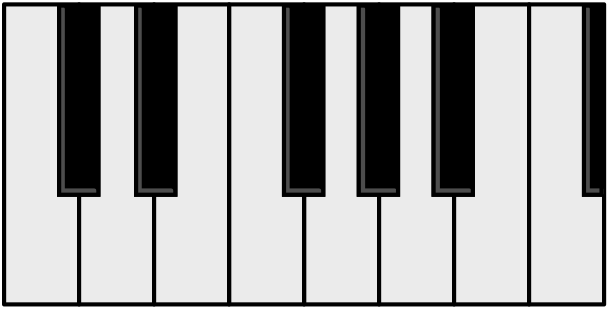
One of the easiest instruments to visualize these seven letters and the notes they correspond to is the piano. The natural notes A B C D E F G A` are the white keys of the piano.
More The Chromatic Scale
content below, continue exploring...
More The Chromatic Scale
For Sharp ♯, and Flat ♭ note names. The next key, white or black to the right is higher and sharp ♯. The previous key, white or black to the left is lower and flat ♭.
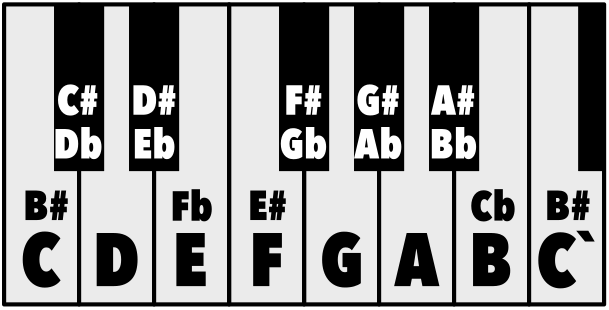
The notes/keys with multiple notes names are called Enharmonic Equivalents . Every letter, A B C D E F G can actually have five designations.

Double Flat, Lowers a note two semitones or one whole step.

Flat, Lowers a note one semitone or one step.

Natural, Cancels a previous double flat, flat, sharp or double sharp. Return a note to it's nature note or letter (A B C E F or G).

Sharp, Raises a note one semitones or one step.

Double Sharp Raises a note two semitones or one whole step.

An, theoretically it can continue to triples sharps, triple flats and onward. I've only seen the need for it once and you can also see it right here with the song The Girl from Ipenema .
Scale Fingering Piano
Recommended fingering for the Chromatic Scale on piano. Uses the thumb (1), index (2), and middle (2) fingers.
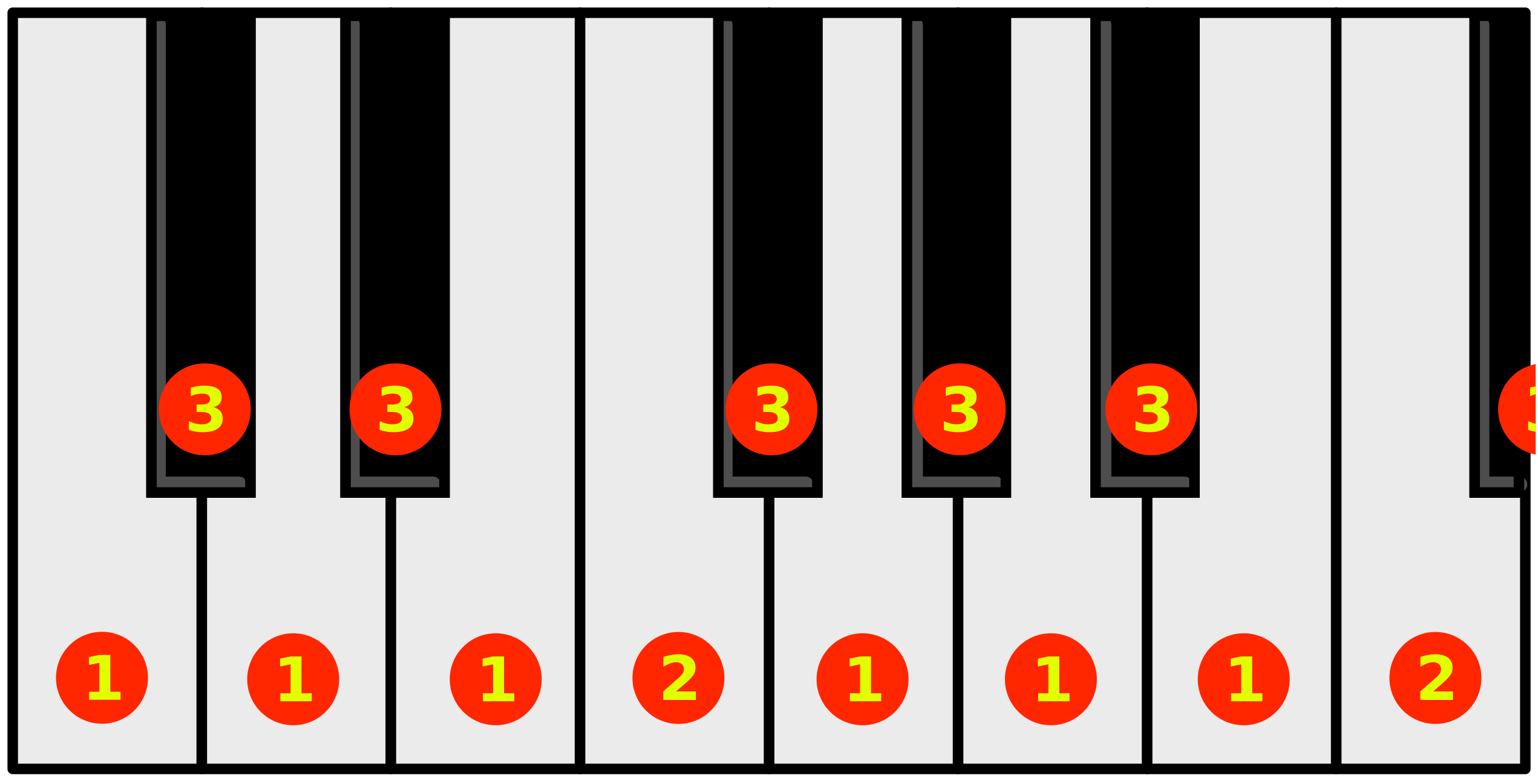
Starting on the thumb, finger one piano.
1 3 1 3 1 2 3 1 3 1 3 1 2 3 1 3 ....
Why just the thumb, the index, and middle fingers?
Longer fingers are more efficient for playing the black keys, and a repetitive pattern using the same fingers helps in creating speed and efficiency. Notice how finger three, your longest finger, is the only finger playing the black keys. Think if you had to, when running, you had break the pattern of right left right left with a right left right left left right, etc. — that would be hard and break the continuity.


End of Lesson - Thanks, Hope You Enjoyed It!
Related Lessons, Videos, Lesson Series, Songs, Books & Reference Charts, Resources & Assets, Workshops are below.