Published:
2005-01-02
Updated:
2020-03-20
Learning Ukulele with Curt
Creating Introductions and Turnarounds for `Ukulele
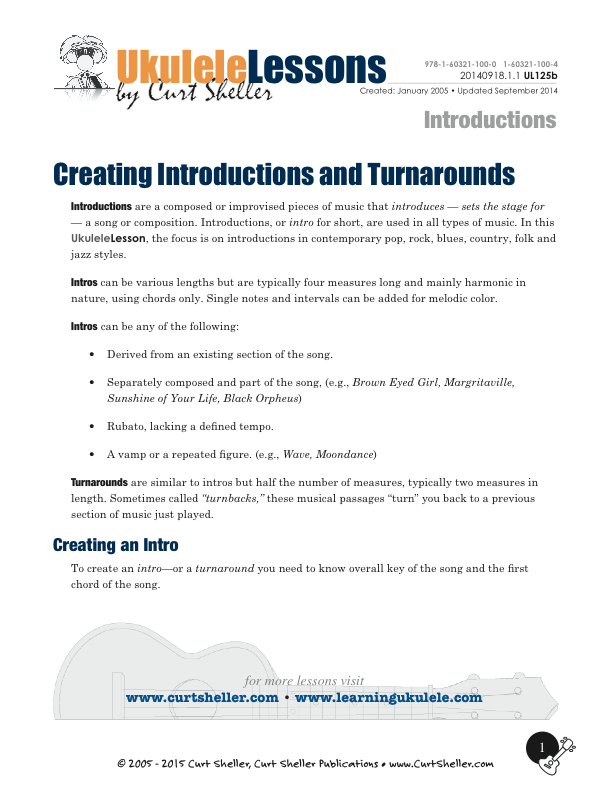
Introductions are a composed or improvised pieces of music that introduce - sets the stage for - a song or composition. Introductions, or intro for short, are used in all types of music. In this lesson, the focus is on introductions in contemporary pop, rock, blues, country, folk and jazz styles.
Author(s): Curt Sheller Publisher: Curt Sheller Publications Code: UL125b
Main Category: Arranging Main Instrument: Ukulele
Categories: Chords
2026-08-23
RelatedLessonAssets
Show Series Lessons
Series Home
Number of Pages: 12
If you're a registered site member and have the correct permissions you can view ALL the pages of this PDF at a larger size using the LearningUkulele.com Online PDF Viewer (button below).
Download PDFThis Download IS part of your Gold Site Access and a FREE download. Thanks for supporting the site. — Curt
Each PDF file is a professionally prepared, formatted, high resolution file that prints out great. You'll need a PDF Reader or application capable of viewing PDF files to view the PDF.
NOTE: Download the current PDF file for the latest, complete, and most up-to-date version. As well as additional information not presented on-line.
Introductions are a composed or improvised pieces of music that introduce - sets the stage for - a song or composition. Introductions, or intro for short, are used in all types of music. In this lesson, the focus is on introductions in contemporary pop, rock, blues, country, folk and jazz styles.
Intros can be various lengths but are typically four measures long and mainly harmonic in nature, using chords only. Single notes and intervals can be added for melodic color.
- Derived from an existing section of the song.
- Separately composed and part of the song, (e.g., Brown Eyed Girl, *Margritaville, Sunshine of Your Life, Black Orpheus)
- Rubato, lacking a defined tempo.
- A vamp or a repeated figure. (e.g., *Wave*, Moondance)
Turnarounds are similar to *intros* but half the number of measures, typically two measures in length. Sometimes called _turnbacks_, these musical passages _turn_ you back to a previous section of music just played.
Creating an Intro
To create an intro or a turnaround you need to know overall key of the song and the first chord of the song.
Determining a Song's Starting Key
All chords and chord progressions come from scales and are built from the notes of a scale. The most common scales used for creating chord progressions are the Major and Natural Minor scales.
A song will give some clues to help determine its starting or overall Key of a progression or song .


End of Lesson - Thanks, Hope You Enjoyed It!
Related Lessons, Videos, Lesson Series, Songs, Books & Reference Charts, Resources & Assets, Workshops are below.

Playing in Time
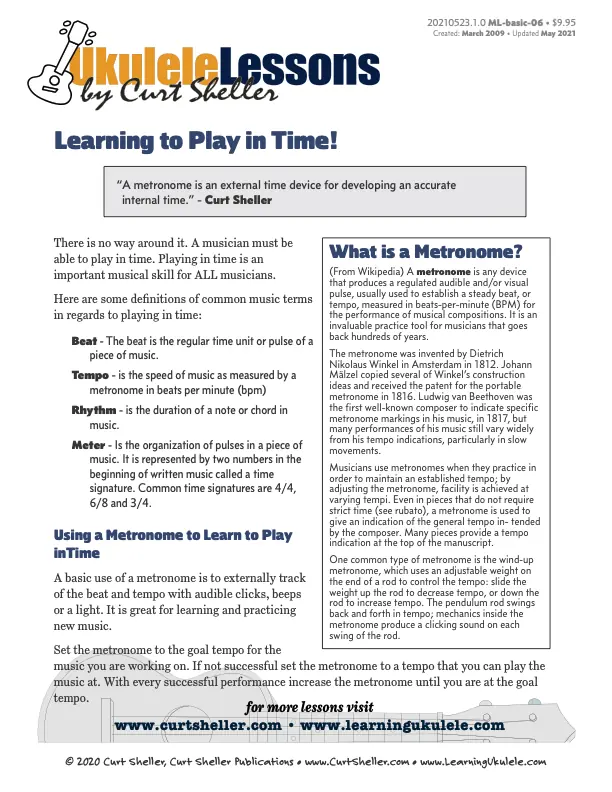
Playing in time is an essential skill that every musician must possess. There are no shortcuts or alternatives when it comes to this aspect of music. Keeping your place while playing is a crucial lesson that focuses on honing your ability to maintain a consistent tempo and rhythm throughout your performance.
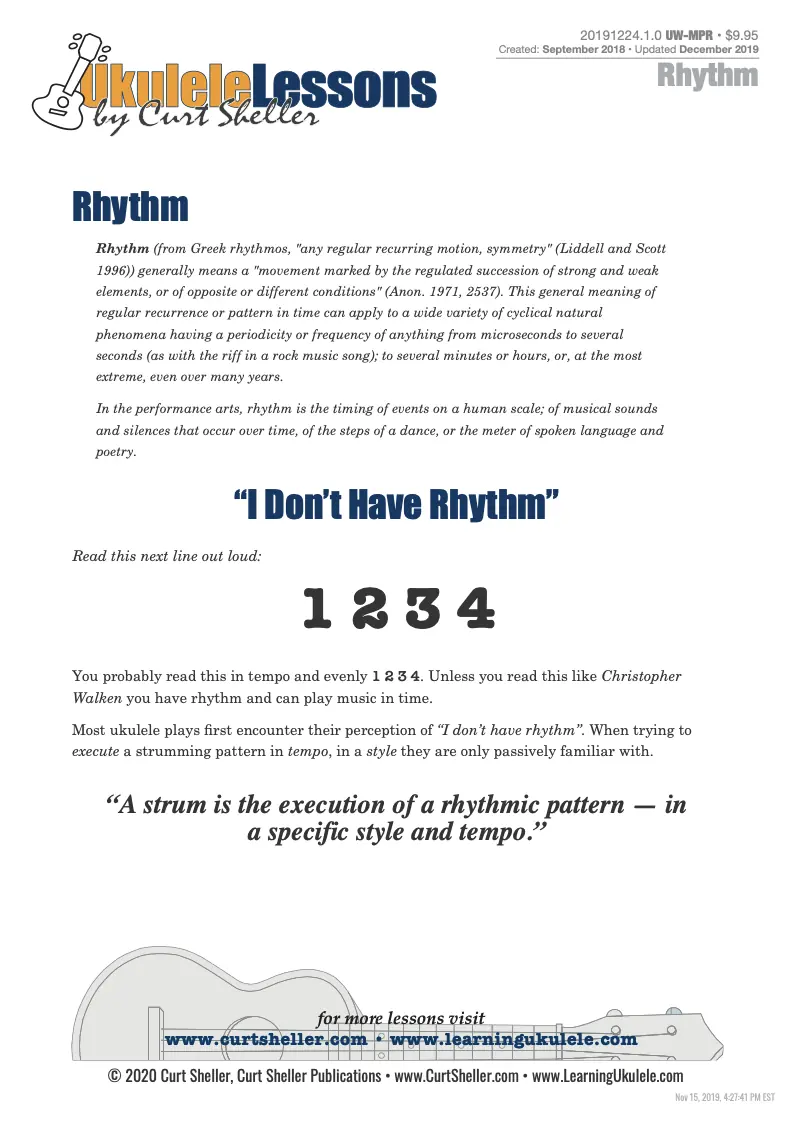
Rhythm - Avoid at Your Own Peril
The often neglected and taken for granted subject of Rhythm. Music is Melody, Harmony and Rhythm. We are drawn, initially to music by melody at a very early age, with the instrument of our voice. With ukulele you typically learn chords - the harmony and never really dive into learning rhythm. Unless you're a drummer we take rhythm for granted.


Modular Phonetic Rhythm, The Foundation and Workbook 1
Modular Phonetic Rhythm represents a significant advance in the teaching and application of rhythm. Eliminating many inefficient aspects of rhythm education, Modular Phonetic Rhythm streamlines the traditional educational approach, resulting in a reflexive reaction to rhythm.
Related Related Series
Related Related Series for Creating Introductions and Turnarounds for `Ukulele
Modular Phonetic Rhythm by Chuck Anderson
Modular Phonetic Rhythm represents a significant advance in the teaching and application of rhythm. Eliminating many inefficient aspects of rhythm education, Modular Phonetic Rhythm streamlines the traditional educational approach, resulting in a reflexive reaction to rhythm.