
Published:
2020-12-31
Updated:
2026-09-04
Learning Ukulele with Curt
Key Signatures - Circle of Fourths and Fifths - ANSI A
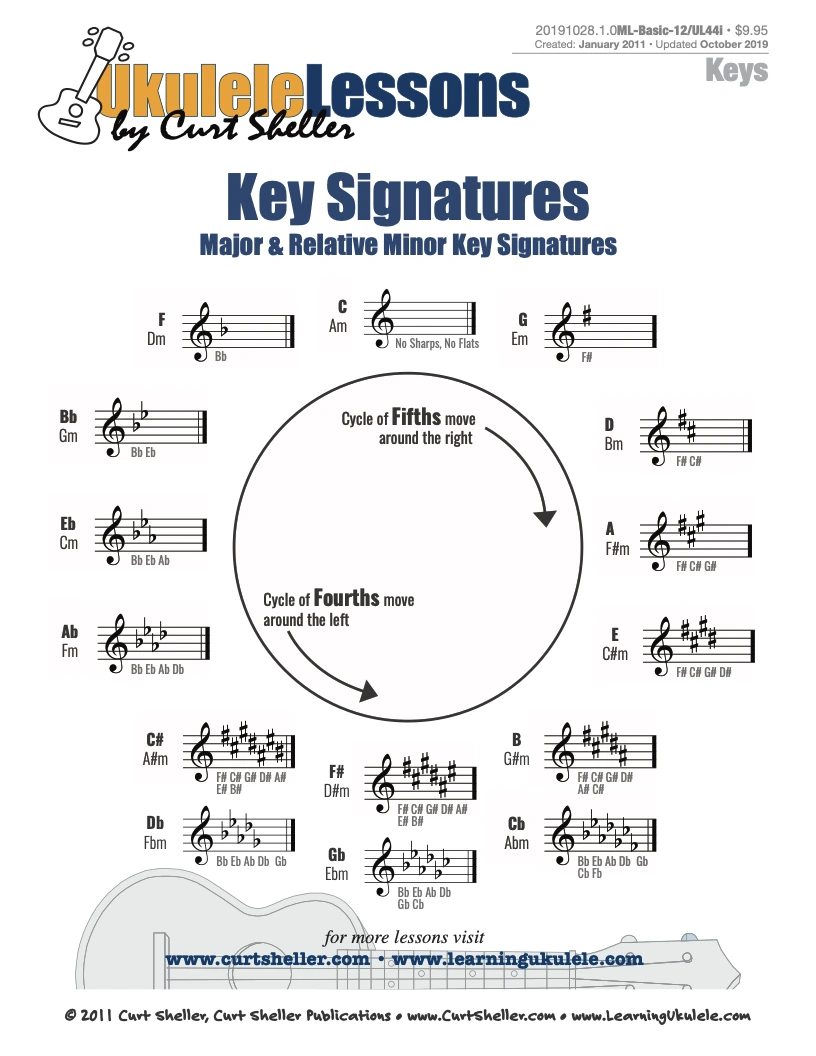
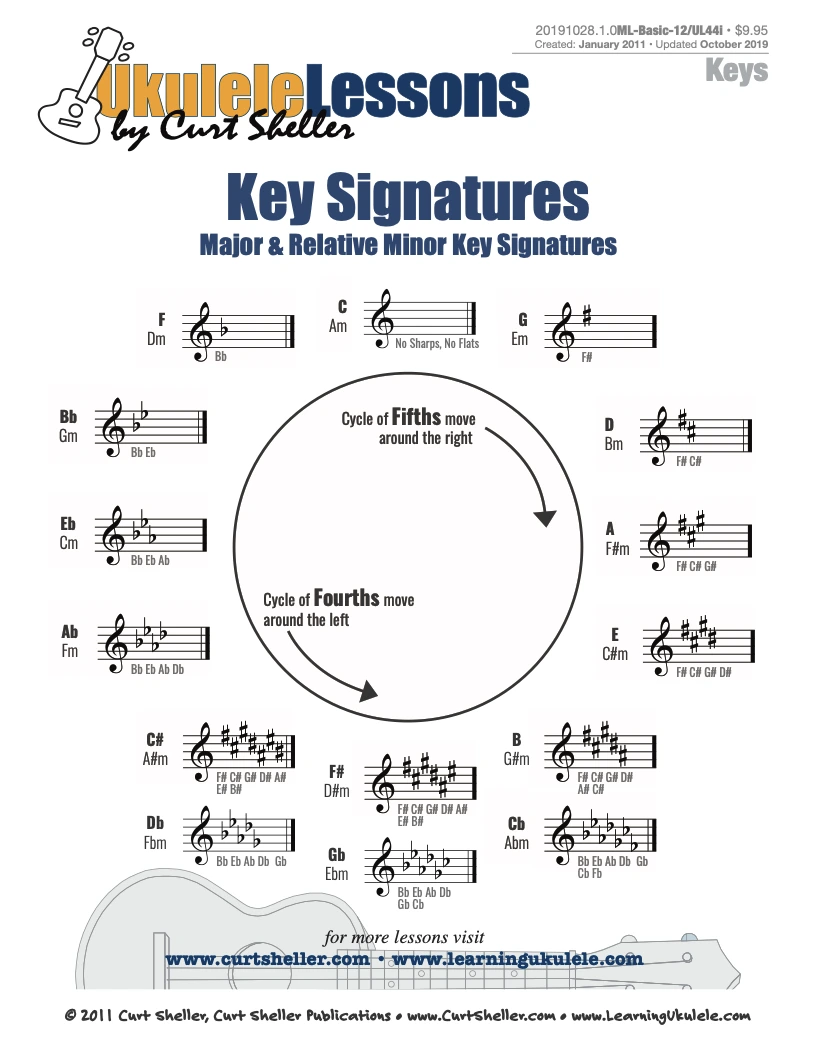
A handy dandy ANSI A (US Letter 8.5 x 11) sized reference chart of all 15 Major and Relative Minor Key Signatures.
Author(s): Curt Sheller Publisher: Curt Sheller Publications Code: RMACH1-KEY-CYCLE
Main Category: Arpeggios Main Instrument: Music

24 June 2026
If you're a registered site member and have the correct permissions you can view ALL the pages of this PDF or Samples pages at a larger size using the LearningUkulele.com Online PDF Viewer.
Download PDFThis Download IS part of your Gold Site Access and a FREE download. Thanks for supporting the site. – Curt
Each PDF file is a professionally prepared, formatted, high resolution file that prints out great. You'll need a PDF Reader or application capable of viewing PDF files to view the PDF.
NOTE: Download the current PDF file for the latest, complete, and most up-to-date version. As well as additional information not presented on-line.
However, if you'd like to support the site even more ❤️ you can buy the PDF.
After purchasing a PDF a download link or PDF link will be sent to you.
Product Info
- Product Code: RMACH1-KEY-CYCLE
- Author(s): Curt Sheller
- Publisher(s): Curt Sheller Publications
- Published: 31 December 2020
- Updated: 4 September 2026
- ISBN-13: NA
- Size*: ANSI A
- Pages: 2
- Hard Copy Price: NA
- PDF Price: $3.00
Regarding Book, Lesson and Charts Paper Sizes
• click to Hide more info
• click to Show more info
Starting 2020 LearningUkulele.com & Learning Ukulele with Curt moved to A4 paper sizes for all new books and new editions of books, lessons, and charts.
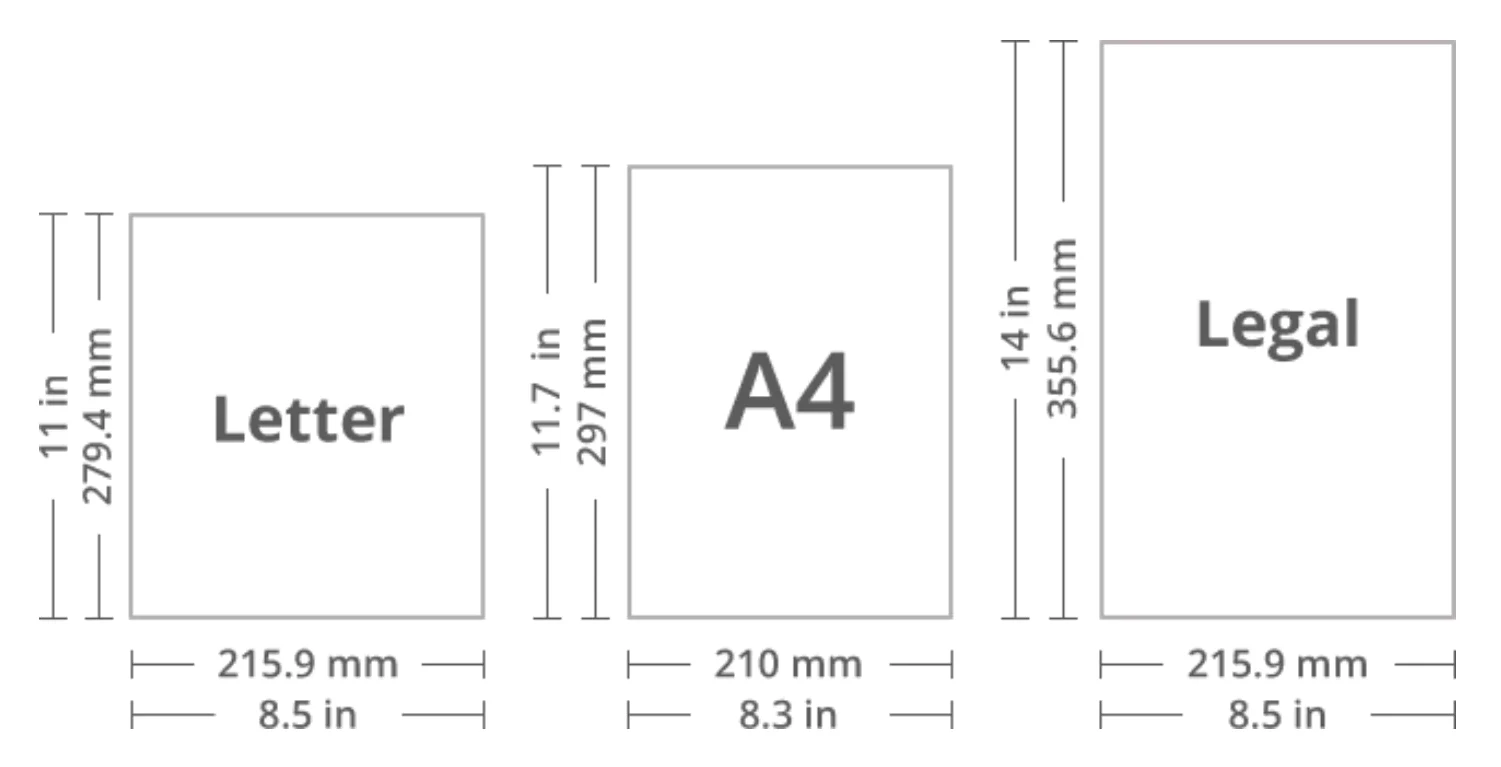
The A Series was adopted in Europe in the 19th century, and is currently used all around the world, apart from in the USA and Canada.
• Decoding Printer Paper Sizes: A4 vs Letter vs Legal. which is Standard?
NOTE: Printing A4 to US Letter Size: As the sizes are relatively close, simple select Scale to Fit
and the A4 size will print out fine.
A handy dandy ANSI A (US Letter 8.5 x 11) sized reference chart of all 15 Major and Relative Minor Key Signatures.
There is a lot of information in traditional Key Signatures. Unlocking the principles in this circle leads to a better understanding of music work.
A key signature is a series of sharp or flat symbols placed on the staff, designating the notes that are to be consistently played higher or lower than the equivalent natural notes. Key signatures, generally written immediately after the clef at the beginning of a line of musical notation. Each major and minor key has an associated key signature that sharpens or flattens the notes which are used in its scale.
More Key Signatures - Circle of Fourths and Fifths - ANSI A
content below, continue exploring...
More Key Signatures - Circle of Fourths and Fifths - ANSI A
What the Heck Can I Do With This?
The Circle of Fourths/Fifths, is the order of the sharps (♯) and flats (♭) that are the 15 major and their relative minor keys that comprise the majority of songs and chord progressions that we encounter. Giving us a way to memorize the order of the 18 major scales and their derived modes .
If there is a secret decoder ring for remembering some of the principles of music — this is one of them.
Here are a few ways to tackle memorizing this order of keys.
First: It's Just an Alphabet
And this is something you already know. Music uses the first seven letters of the alphabet: A B C D E F G . It then just starts over at A and keeps going over this A B C D E F G cycle. You've already know this for quite a long time.
Order of Sharp (♯) Keys
- C G D A E B F♯ C♯
Order of sharps (♯) in the major/relative minor keys: F♯ C♯ G♯ D♯ A♯ E♯ B♯ C♯ . It goes from no sharps for the key of C Major to all seven notes sharped for the key of Major . Two of the three easiest keys/major scale notes to memorize.
Order of Flat (♭) Keys
- B E A D G C F
Order of flats (♭) in the major/relative minor keys: B♭ E♭ A♭ D♭ G♭ C♭ F♭ . It goes from no flats for the key of Major to all seven notes flatted for the key of Major . Two of the three easiest keys/major scale notes to memorize. The third of the three easiest keys/major scale notes to memorize.
A Few Things to Notice
- The word
BEAD
There are not many words available if you where to create a word search with just A B C D E F and G . - Three keys are relatively simple to memorize: C, C♯, and C♭.
- Counter-clockwise (to the left) around the circle moves in the interval of a
- Counter-clockwise (to the left) around the circle moves in the interval of a
- Clockwise (to the right) around the circle moves in the interval of a
- Memorizing the cycle first as fourths (to the left), I found to be easier the other direction. The word bead helps.
- There are three
Beyond this it's off to Harmonic Analysis for Scale Selection and Chord Substitution – where this information is a valuable tool. A lot of chord progression, i.e., songs move around this cycle.
Harmonic Analysis - Cycles
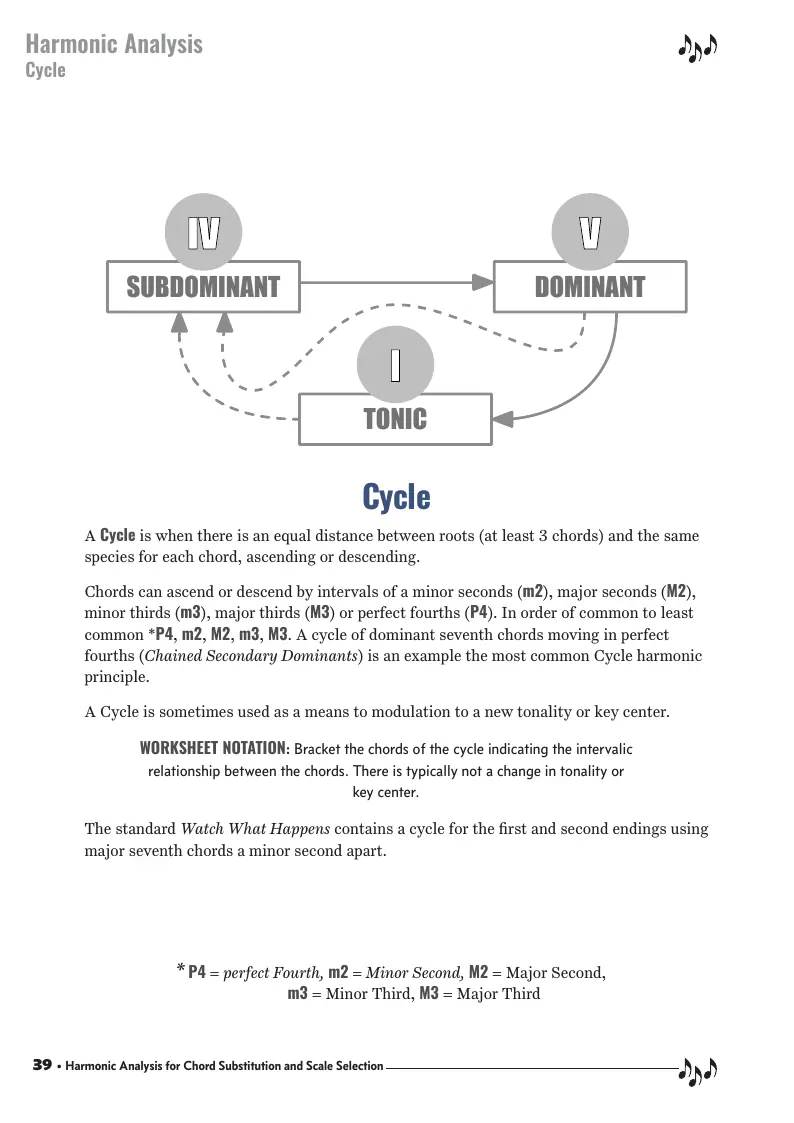
Harmonic Analysis is the understanding of the functional sequence of chords. It is the process used to analyze the harmonic structure of a progression, song, or composition. This analysis is then used to make scale selections for improvisation and chord substitution. This lesson covers the Cycles harmonic principle.
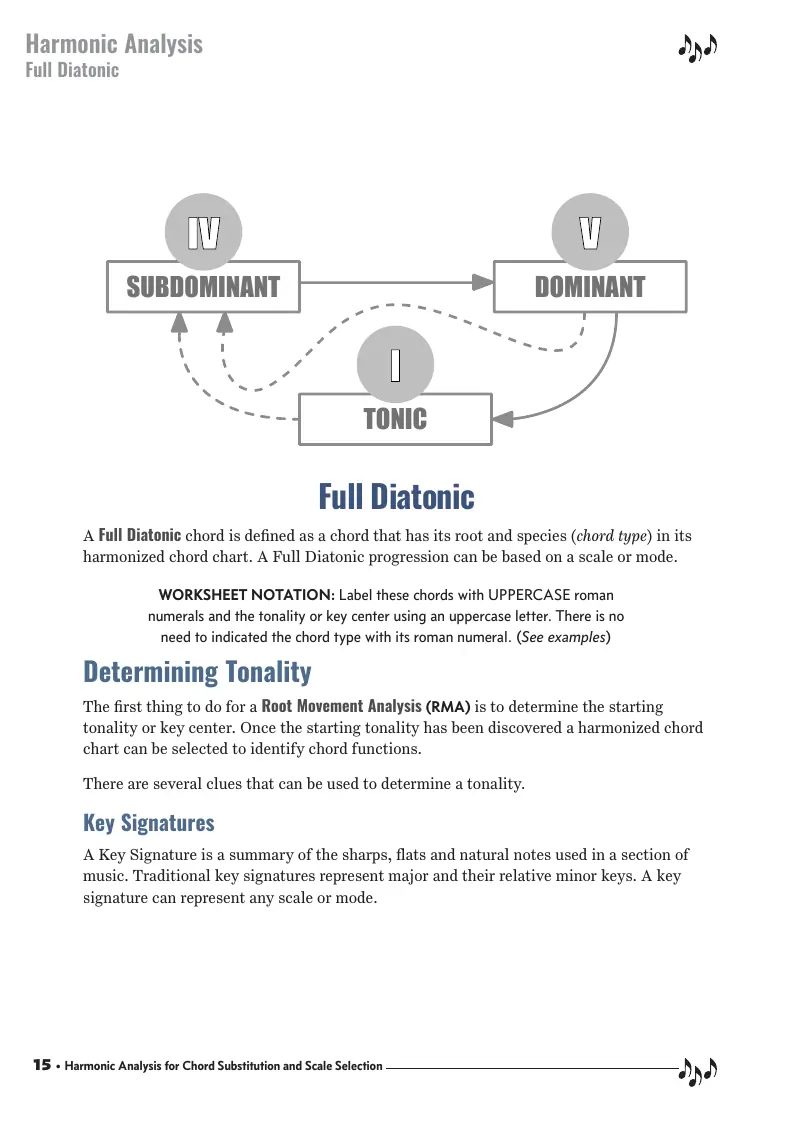
Harmonic Analysis - Full Diatonic
Harmonic Analysis is the understanding of the functional sequence of chords. It is the process used to analyze the harmonic structure of a progression, song, or composition. This analysis is then used to make scale selections for improvisation and chord substitution. This lesson covers the Full Diatonic harmonic principle.
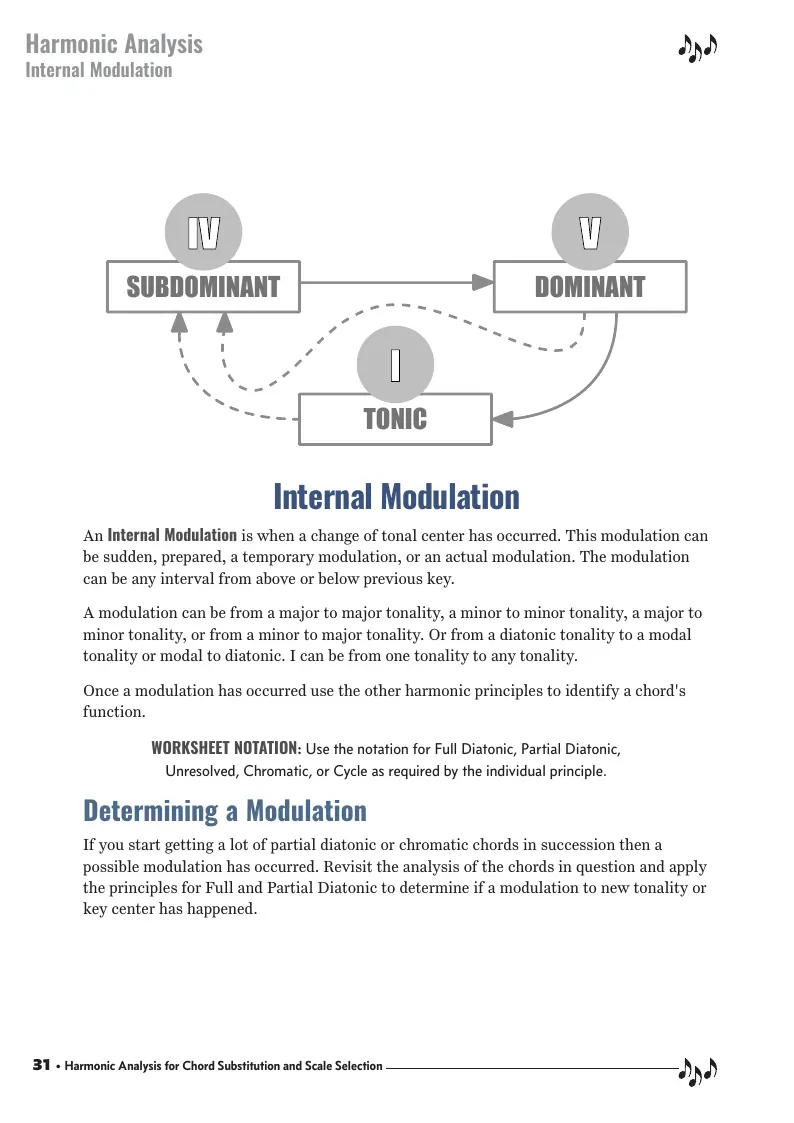
Harmonic Analysis - Internal Modulation
Harmonic Analysis is the understanding of the functional sequence of chords. It is the process used to analyze the harmonic structure of a progression, song, or composition. This analysis is then used to make scale selections for improvisation and chord substitution. This lesson covers the Internal Modulation harmonic principle.
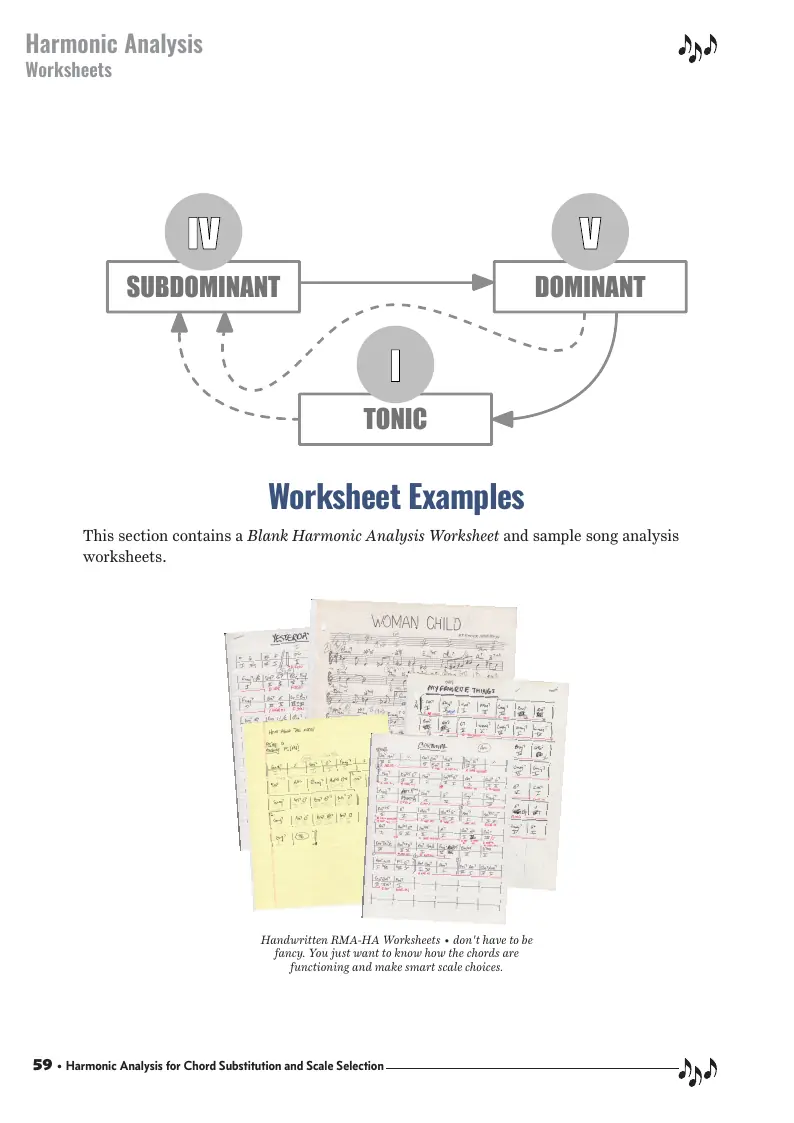
Harmonic Analysis - Worksheet and Examples
Harmonic Analysis is the understanding of the functional sequence of chords. It is the process used to analyze the harmonic structure of a progression, song or composition. This analysis is then used to make scale selections for improvisation and chord substitution. This lesson contains a blank worksheet and several completed examples using standards from the jazz repertoire.