Published:
2012-04-06
Updated:
2024-06-08
Learning Ukulele with Curt
Harmonic Analysis - Internal Modulation
Harmonic Analysis is the understanding of the functional sequence of chords. It is the process used to analyze the harmonic structure of a progression, song, or composition. This analysis is then used to make scale selections for improvisation and chord substitution. This lesson covers the Internal Modulation harmonic principle.
Author(s): Curt Sheller Publisher: Curt Sheller Publications Code: MLRMAe-6
Main Category: Theory Main Instrument: Any
Categories: Chords, Harmonic-Analysis, RMA, Unresolved

2026-08-23
Show Series Lessons
Series Home
Number of Pages: 2
If you're a registered site member and have the correct permissions you can view ALL the pages of this PDF at a larger size using the LearningUkulele.com Online PDF Viewer (button below).
Download PDFThis Download is NOT part of your LearningUkulele.com & Learning Ukulele with Curt membership level.
Sign-up for Premium Site Access or Upgrade Your Plan to download this PDF or your can purchase a copy for download
Sign In for Access…Contact Us if there are any issues.
Harmonic Analysis is the understanding of the functional sequence of chords. It is the process used to analyze the harmonic structure of a progression, song or composition. This analysis is then used to make scale selections for improvisation and chord substitution.
This lesson covers the Internal Modulation harmonic principle.
This series, is the book Harmonic Analysis for Chord Substitution and Scale Selection by Curt Sheller broken out into individual lessons with additional examples and content. Always, the latest version of the book.
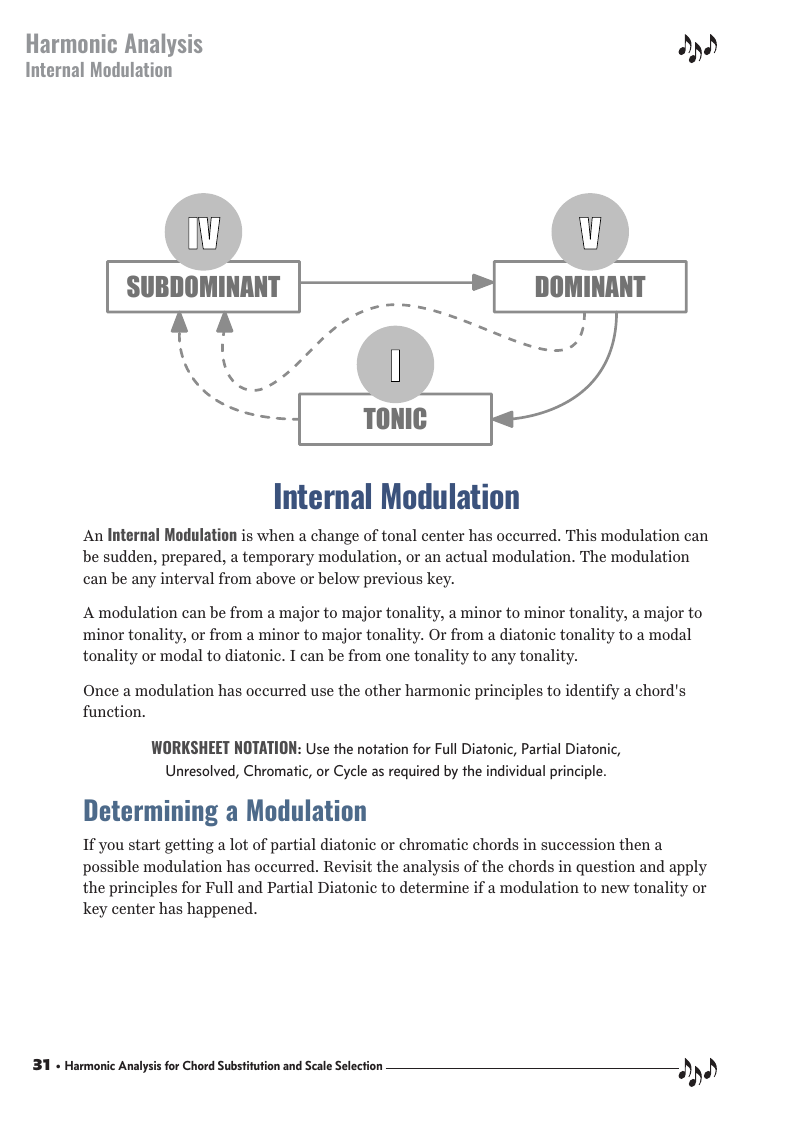
An Internal Modulation is when a change of tonal center has occurred. This modulation can be sudden, prepared, a temporary modulation, or an actual modulation. The modulation can be any interval from above or below previous key.
A modulation can be from a major to major tonality, a minor to minor tonality, a major to minor tonality, or from a minor to major tonality. Or from a diatonic tonality to a modal tonality or modal to diatonic. I can be from one tonality to any tonality.
Once a modulation has occurred use the other harmonic principles to identify a chord's function.
WORKSHEET NOTATION: Use the notation for Full Diatonic, Partial Diatonic, Unresolved, Chromatic, or Cycle as required by the individual principle.
Determining a Modulation
If you start getting a lot of partial diatonic or chromatic chords in succession then a possible modulation has occurred. Revisit the analysis of the chords in question and apply the principles for Full and Partial Diatonic to determine if a modulation to new tonality or key center has happened.Determining a Modulation If you start getting a lot of partial diatonic or chromatic chords in succession then a possible modulation has occurred. Revisit the analysis of the chords in question and apply the principles for Full and Partial Diatonic to determine if a modulation to new tonality or key center has happened.
More Harmonic Analysis - Internal Modulation
content below, continue exploring...
More Harmonic Analysis - Internal Modulation
Pivot or Double Function Chords
A pivot or double function chord is defined as a chord that functions in both the current tonality and the new tonality. This chord smoothly prepares a modulation to the new key center. This is a common modulation technique.
Common Modulations
It would seem from the description of modulation that anything is possible. However there are common modulations to be aware of.
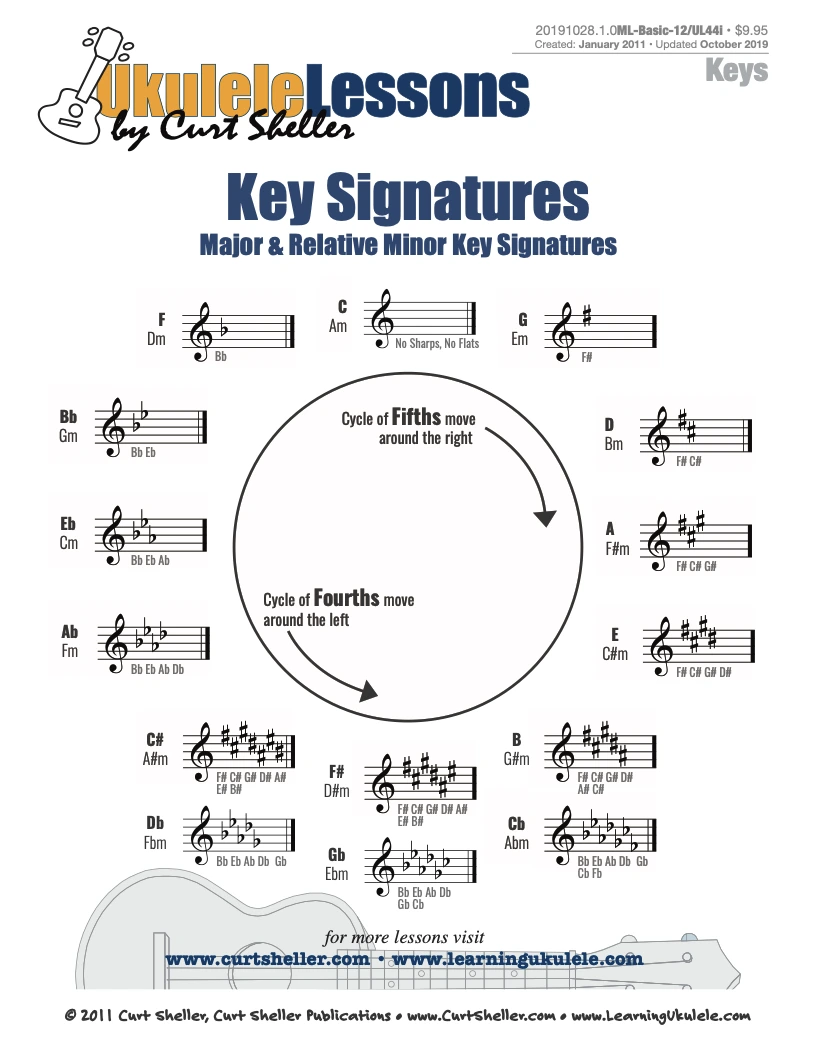
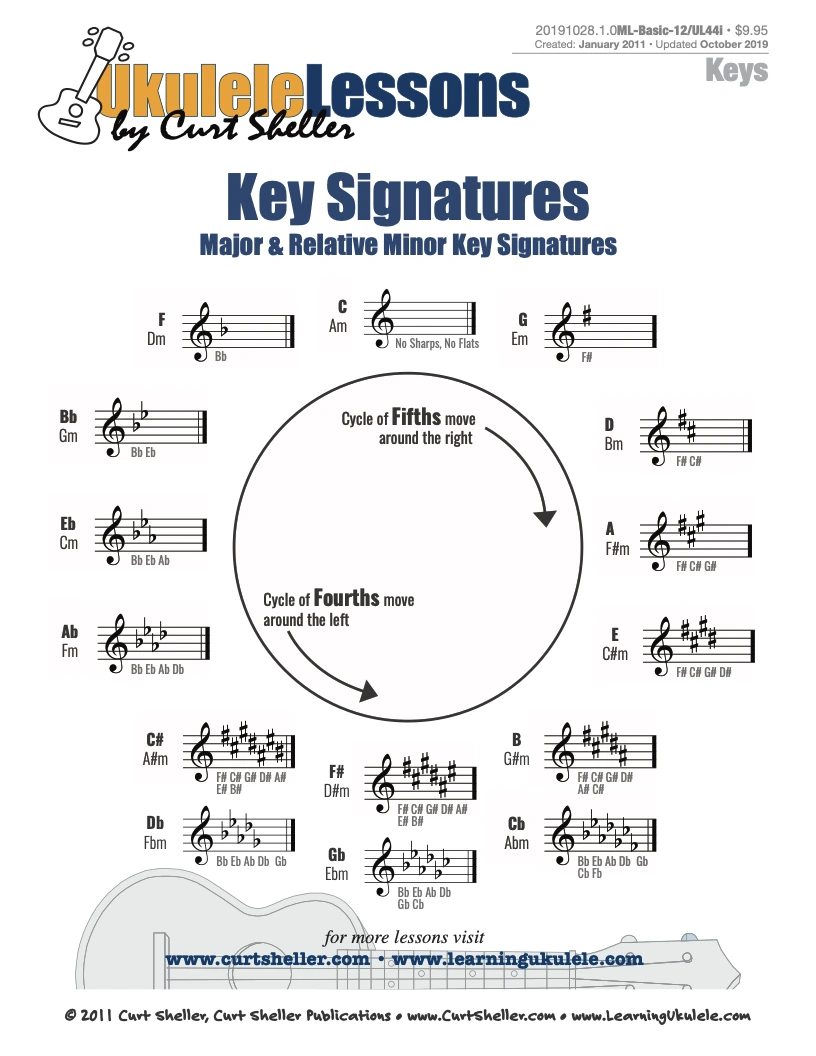
A) Closely related keys (Key Signature)
FULL DIATONIC
Example*
* Examples relative to C.
Partial Diatonic
Related Keys (Keep Root, Reuse Species)
Chromatic
Related Keys (Root out of key)
Example*
* Examples relative to C.
B) Distant Related Key (Key Signature. No more than a three accidental difference).
Tierce de Picardy
Tierce de Picardy (Picardy Third) is a common practice of establishing a minor key but resolving it major. Example II V I in the key of C minor would be Dm7b5, G7 to Cm7. With the Picardy Third resolution it would be Dm7b5 G7 Cmaj7. Songs such as How High the Moon and Bluesette use this harmonic move.
Song Examples
Most folk, rock and blues songs remain in one key. Most Jazz and Pop standards will modulate to new key centers.
Jazz Classics
Modulation Interval
All The Things You Are
bar 6 & 14
Descending Whole Steps
How High The Moon
bar 3
Up a Major Third
Tune Up
bar 3
Descending Whole Steps
Solar
bar 3
Descending Whole Steps
Airegin
bar 3
Descending Whole Steps
Bluesette
bridge
Descending Whole Steps
Checkout the Songs section of LearningUkulele.com , as many of the songs examples above are available.


End of Lesson - Thanks, Hope You Enjoyed It!
Related Lessons, Videos, Lesson Series, Songs, Books & Reference Charts, Resources & Assets, Workshops are below.
Harmonic Analysis for Scale Selection and Chord Substitution
Harmonic Analysis is the understanding of the functional sequence of chords. It is the process used to analyze the harmonic structure of a progression, song or composition. This analysis is then used to make scale selections for improvisation and chord substitution.