
Published:
2012-03-23
Updated:
2024-06-08
Learning Ukulele with Curt
Harmonic Analysis - Chord Substitution Principles
A "Substitution" is when a chord replaces or is used in addition to an existing chord. Chords can have an active or passive quality to them. Active chords tend to be restless and want to move on to other chords. Passive chords tend to offer a feeling of rest and resolution. This cycle of active and passive chords are what gives chord progressions their feeling of movement.
Author(s): Curt Sheller Publisher: Curt Sheller Publications Code: MLRMAe-11
Main Category: Theory Main Instrument: Any
Categories: Chords, Harmonic-Analysis, Theory, RMA, Harmony, Substutition

2026-08-23
RelatedLessonAssets
Show Series Lessons
Series Home
Number of Pages: 6
If you're a registered site member and have the correct permissions you can view ALL the pages of this PDF at a larger size using the LearningUkulele.com Online PDF Viewer (button below).
Download PDFThis Download is NOT part of your LearningUkulele.com & Learning Ukulele with Curt membership level.
Sign-up for Premium Site Access or Upgrade Your Plan to download this PDF or your can purchase a copy for download
Sign In for Access…Contact Us if there are any issues.
A Substitution is when a chord replaces or is used in addition to an existing chord.
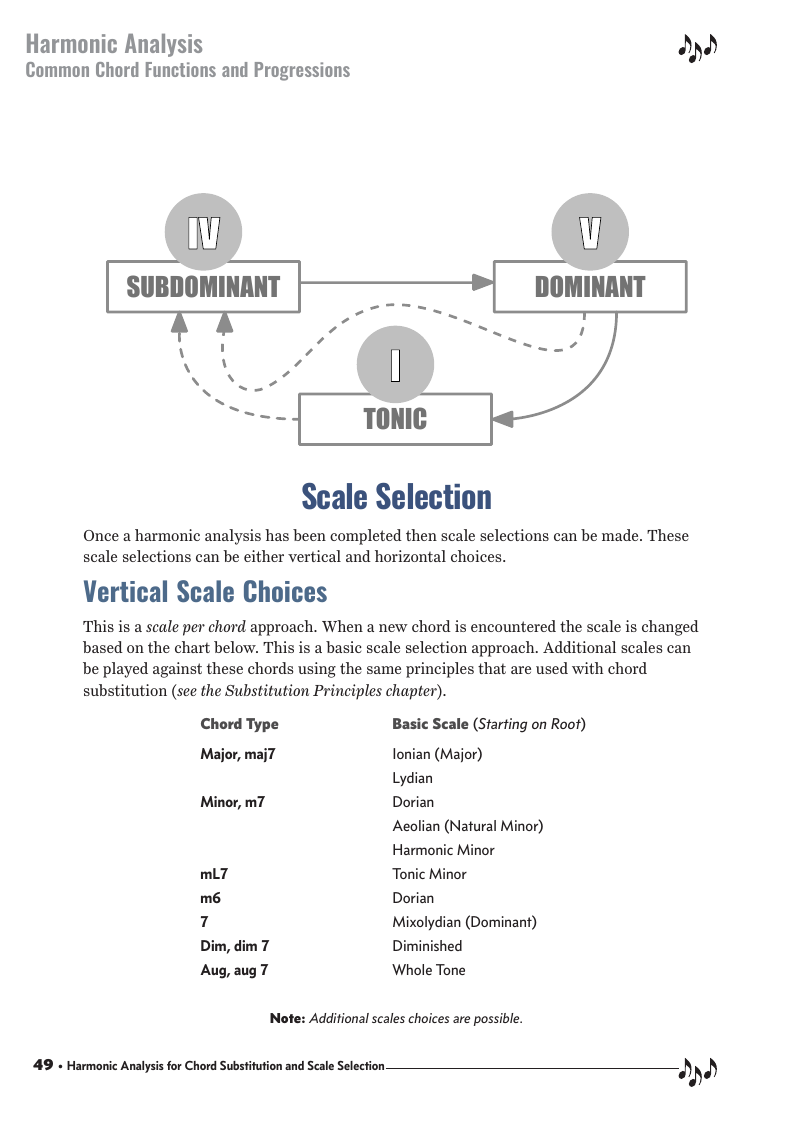
Chords can have a active or passive quality to them. Active chords tend to be restless and want to move on to other chords. Passive chords tend to offer a feeling of rest and resolution. This cycle of active and passive chords are what gives chord progressions their feeling of movement.
This series, is the book Harmonic Analysis for Chord Substitution and Scale Selection by Curt Sheller broken out into individual lessons with additional examples and content. Always, the latest version of the book.
Diatonic Chord Substitutions
Passive
Passive chords can be substituted for Passive chords.
Triads with the third of the scale present are passive.
Passive chords can be substituted for Passive chords. ( See the harmonized charts for active/passive chord designations )
Example: VI and III chords can substitute for a I chord.
Active
Active chords can be substituted for Active chords.
Triads with the fourth of the scale present are active.
Active chords can be substituted for Active chords. ( See the harmonized charts for active/passive chord designations )
More Harmonic Analysis - Chord Substitution Principles
content below, continue exploring...
More Harmonic Analysis - Chord Substitution Principles
Example (Major & Minor)
Passive
I
III
VI
Active
V
II
IV
VII
Direct Substitutions
A direct substitute is when the root of the substitute chord matches the root of the original chord.
There are two types of direct substitutions, replacement and expansion with the substitution characteristics of being superimposable or non-superimposable.
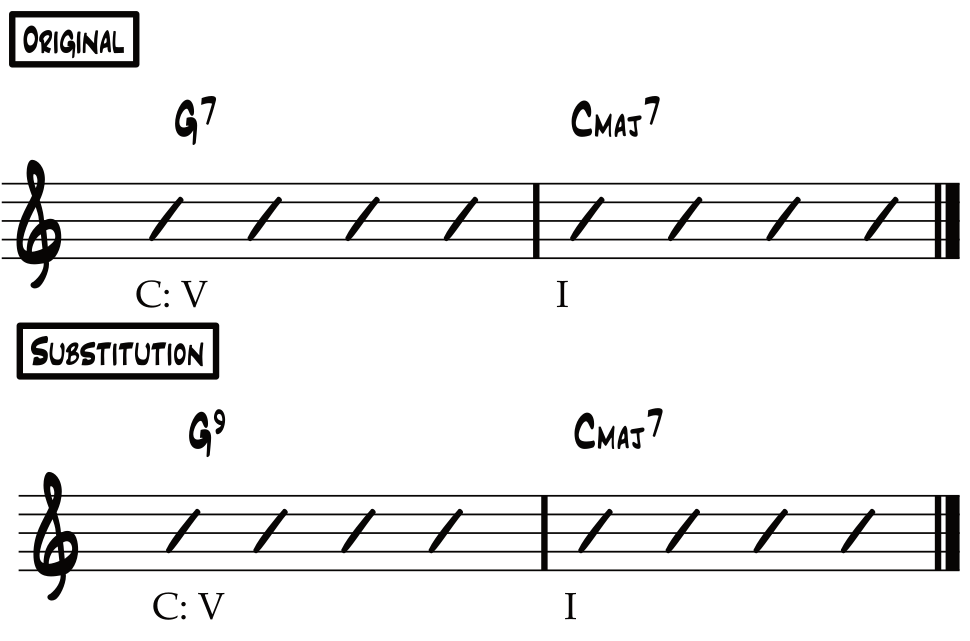
Replacement Substitutions
Original chord is removed for the substitute.
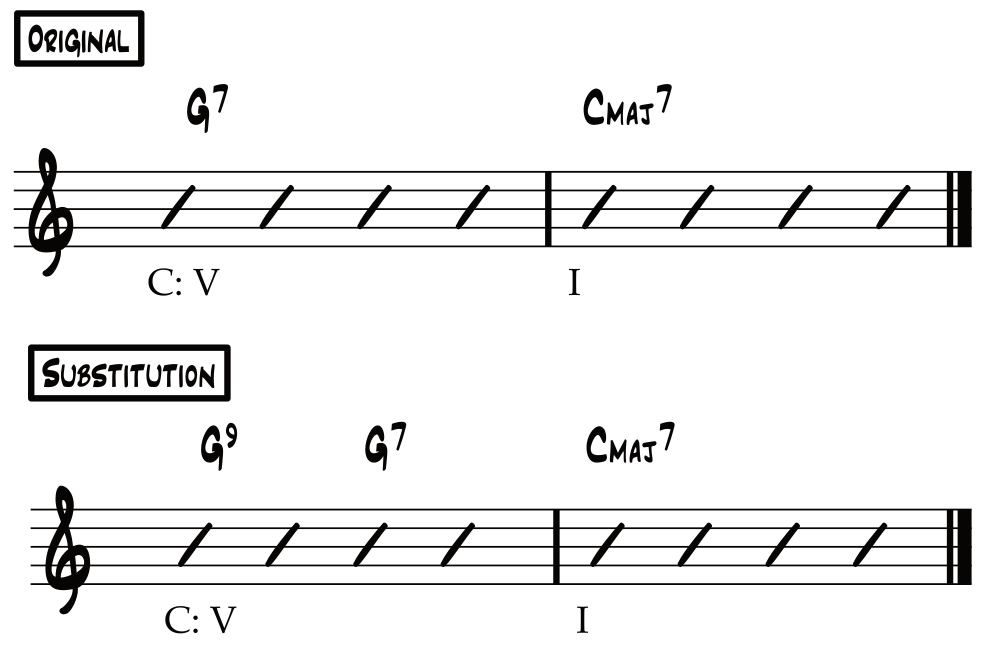
Expansion
Original chord remains plus the substitute in the same time frame.
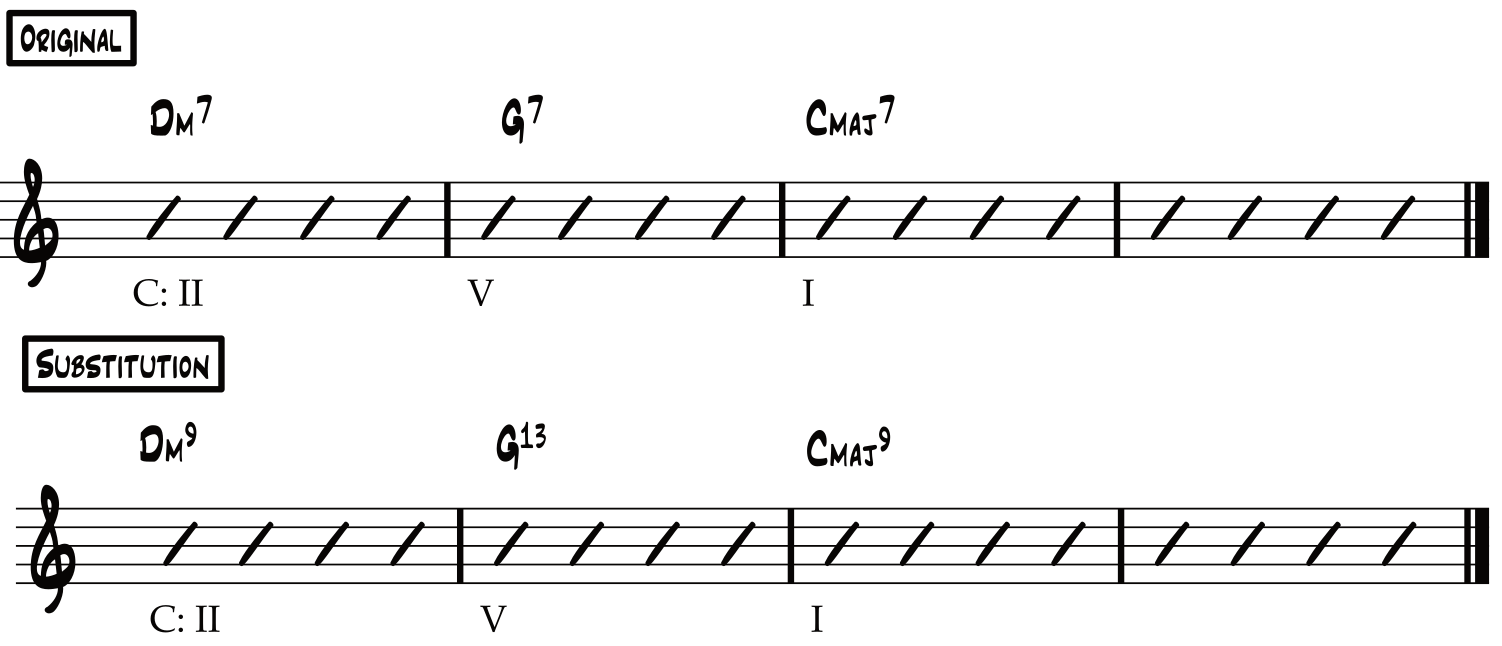
Superimposed
Various upper partials (9, 11, 13). No new harmonic analysis is needed, same scale choices apply.
Superimposed substitutions are direct substitutions, either replacing or expanding the existing chord.
Non-superimposable
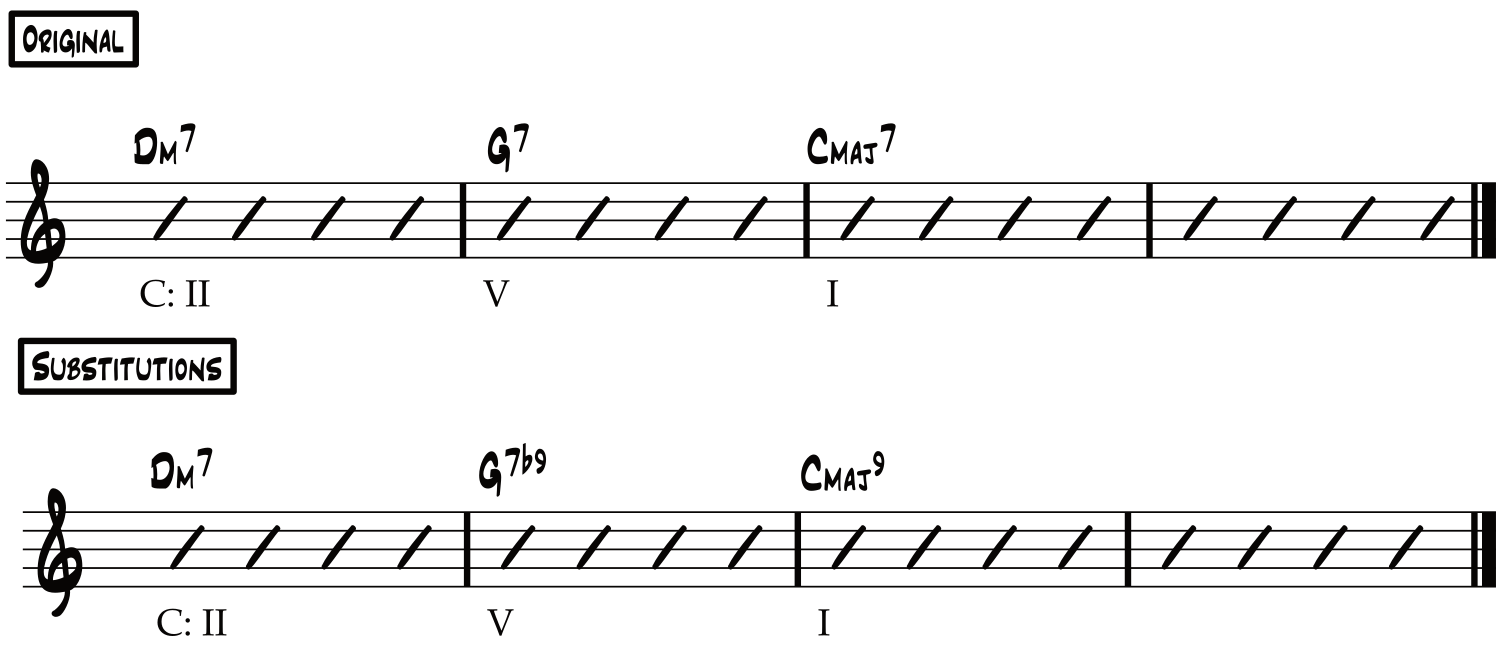
Alterations (♯4, ♭5, ♯5, ♭9, ♯9, ♯11, ♭13). No new harmonic analysis is needed, possible new scale choices apply.
Non-superimposed substitutions are direct substitutions, either replacing or expanding the existing chord.
Note Substitution
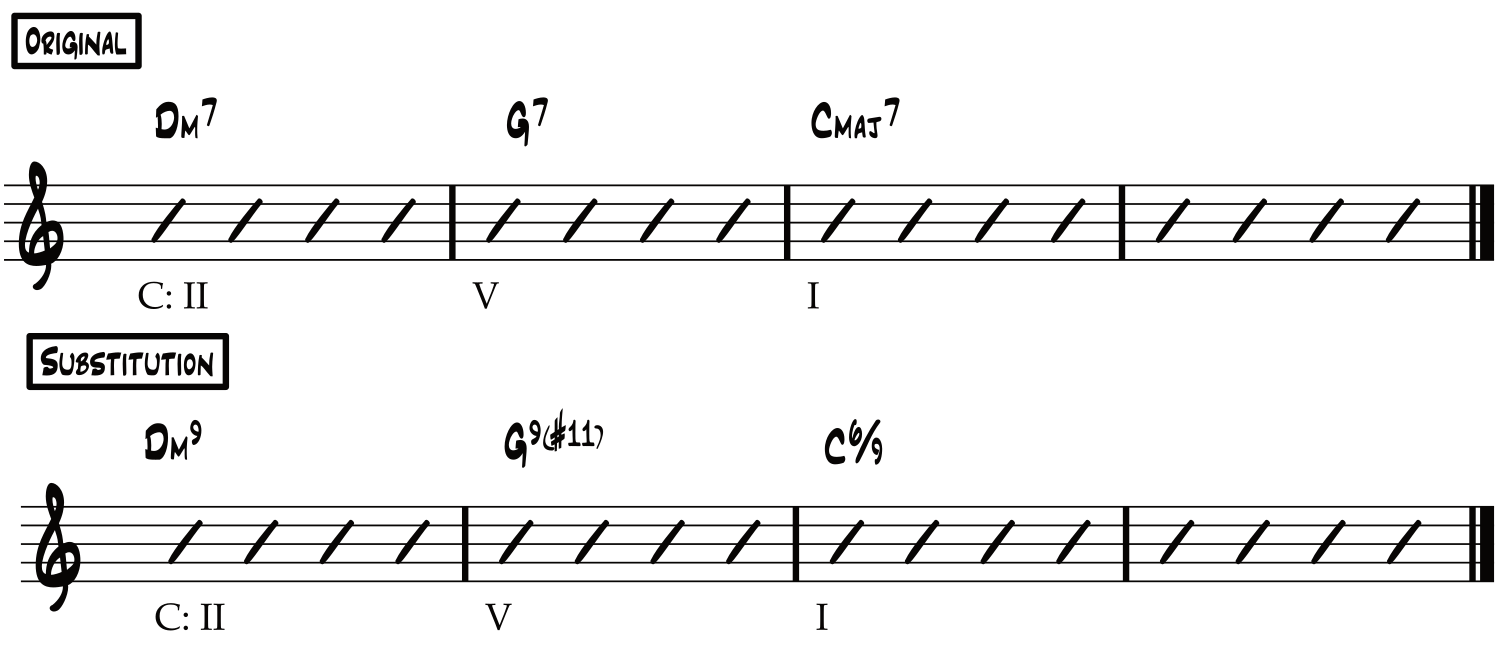
6 for maj7, m6 for m7, mL7* for m7. No new analysis is needed, same scales choices apply.
Note substitutions are direct substitutions, either replacing or expanding the existing chord.
* minMaj7 — The L
is a notational shortcut for a Large or Major Seventh.
Chord Inversions
No new harmonic analysis is needed, same scale choices apply.
Linking Chords
Connective chords, A NEW harmonic analysis IS needed, resulting in new scale choices.
Re-Harmonization
New Chords —A NEW harmonic analysis IS needed, resulting in new scale choices.


End of Lesson - Thanks, Hope You Enjoyed It!
Related Lessons, Videos, Lesson Series, Songs, Books & Reference Charts, Resources & Assets, Workshops are below.
Harmonic Analysis for Scale Selection and Chord Substitution
Harmonic Analysis is the understanding of the functional sequence of chords. It is the process used to analyze the harmonic structure of a progression, song or composition. This analysis is then used to make scale selections for improvisation and chord substitution.