Published:
2012-04-06
Updated:
2026-09-21
Learning Ukulele with Curt
Harmonic Analysis - Full Diatonic
Harmonic Analysis is the understanding of the functional sequence of chords. It is the process used to analyze the harmonic structure of a progression, song, or composition. This analysis is then used to make scale selections for improvisation and chord substitution. This lesson covers the Full Diatonic harmonic principle.
Author(s): Curt Sheller Publisher: Curt Sheller Publications Code: MLRMAe-4
Main Category: Theory Main Instrument: Any
Categories: Chords, Harmonic-Analysis, RMA

2026-08-23
RelatedLessonAssets
Show Series Lessons
Series Home
Number of Pages: 6
If you're a registered site member and have the correct permissions you can view ALL the pages of this PDF at a larger size using the LearningUkulele.com Online PDF Viewer (button below).
Download PDFThis Download is NOT part of your LearningUkulele.com & Learning Ukulele with Curt membership level.
Sign-up for Premium Site Access or Upgrade Your Plan to download this PDF or your can purchase a copy for download
Sign In for Access…Contact Us if there are any issues.
Harmonic Analysis is the understanding of the functional sequence of chords. It is the process used to analyze the harmonic structure of a progression, song or composition. This analysis is then used to make scale selections for improvisation and chord substitution. This lesson covers the Full Diatonic harmonic principle.
This series, is the book Harmonic Analysis for Chord Substitution and Scale Selection by Curt Sheller broken out into individual lessons with additional examples and content. Always, the latest version of the book.
Full Diatonic
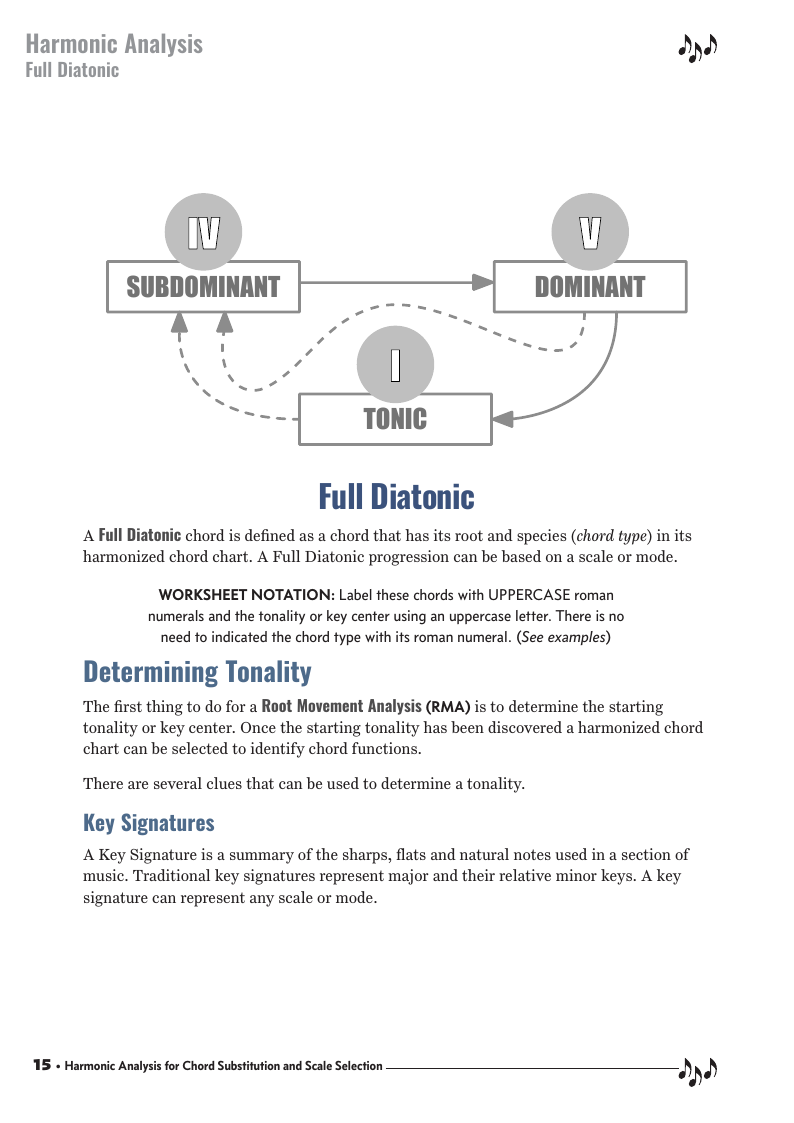
A Full Diatonic (FD) chord is defined as a chord that has its root and species (chord type) in its Harmonized Chord Chart(s) . A Full Diatonic progression can be based on a scale or mode.
WORKSHEET NOTATION: Label these chords with UPPERCASE roman numerals and the tonality or key center using an uppercase letter. There is no need to indicated the chord type with its roman numeral. (See examples)
Determining Tonality
The first thing to do for a Root Movement Analysis (RMA) is to determine the starting tonality, tonal center, or key center. Once the starting tonality has been discovered a Harmonized Chord Chart(s) can be selected to identify chord functions.
There are several clues that can be used to determine a tonality.
These are some of the things that we'll look for to narrow down the choices.
- Key Signature
- Final or last chord.
- Finding the chord that is functioning as the main Dominant.
More Harmonic Analysis - Full Diatonic
content below, continue exploring...
More Harmonic Analysis - Full Diatonic
Key Signatures
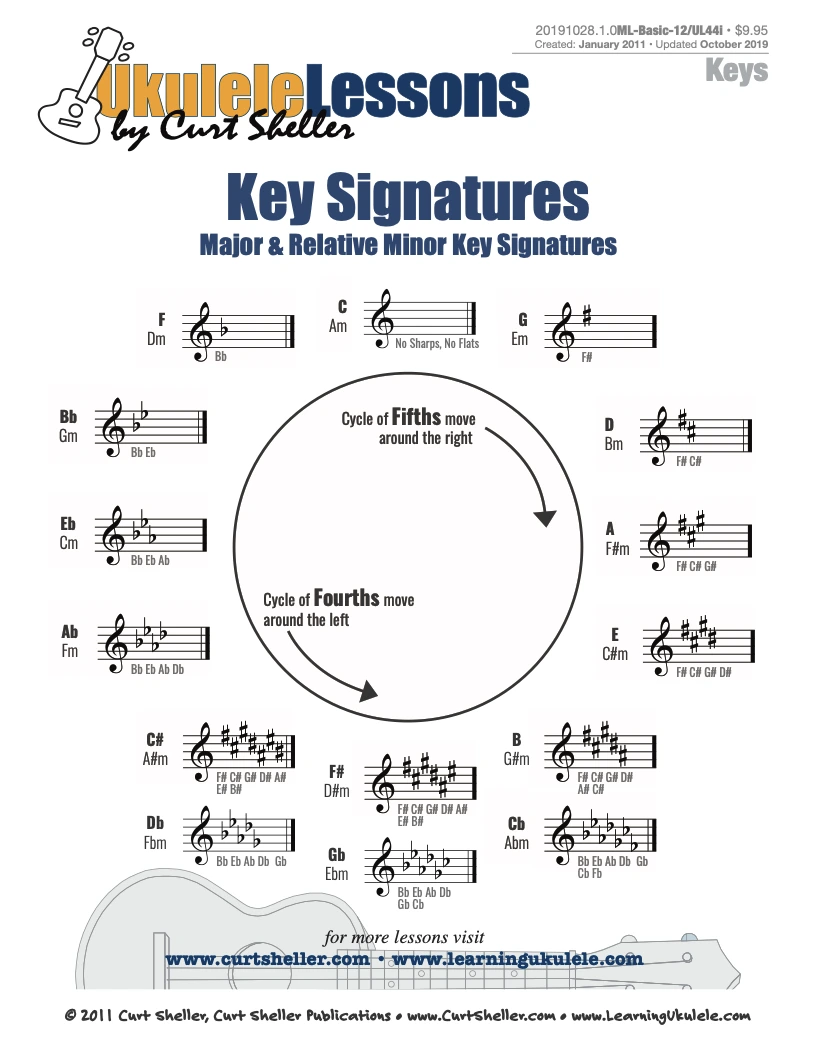
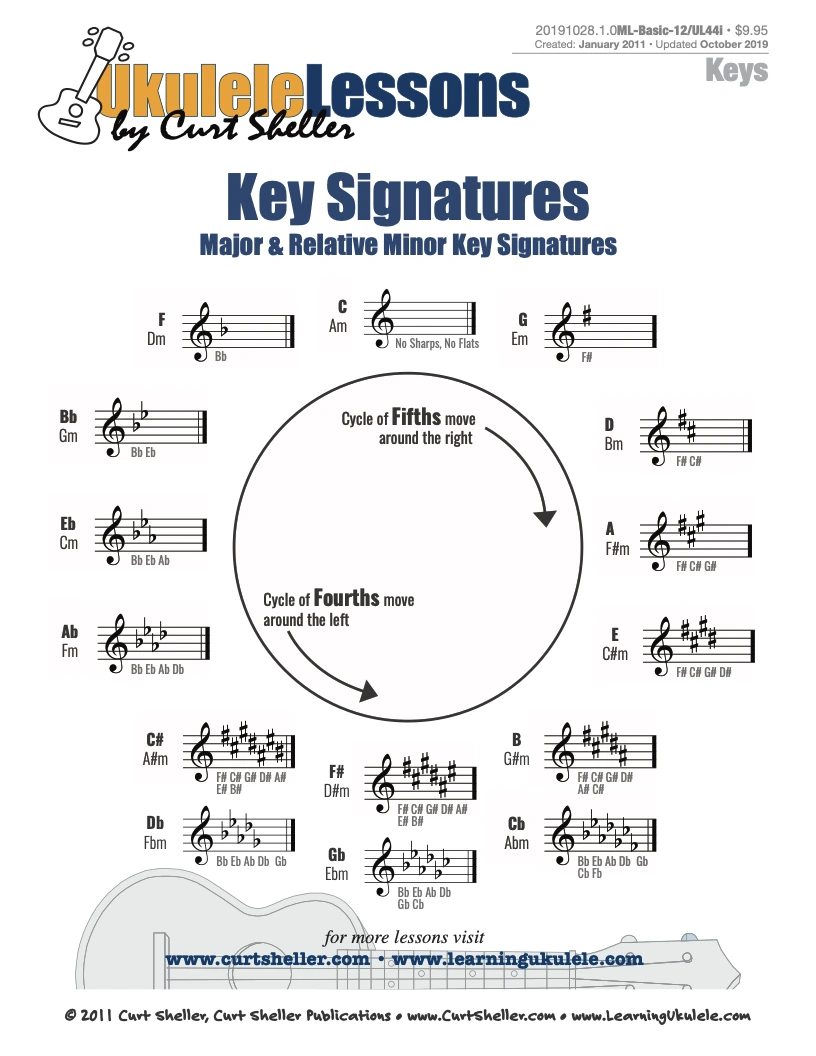
A Key Signature is a summary of the sharps, flats and natural notes used in a section of music. Traditional key signatures represent major and their relative minor keys. A key signature can represent any scale or mode.
The Key Signature can sometimes be used to determine the starting tonality. More often the last chord of a progression will most likely be the tonic or I chord and the main or central tonality. Even if the tonality can not be determined a harmonic analysis can be started.
Start by determining the first tonal center using the clues (key signature and or last chord or note). Now find its harmonized chord chart. The most common tonality is major comprising of a large majority of contemporary music.
Start assigning roman numerals to the basic chords of the progression. Ignore single beat chords, the upper partials of chords such as ninths, elevenths, and thirteenths. Ignore alterations such as flat and sharp nines and sharp elevenths.
Familiarize yourself with both the basic triads and 4-part chords types on the Harmonized Chord Chart(s) for the Major Keys. (Review the Harmonic Analysis – Basic Concepts lessons of this series for the C Major scale chords.)

4-Part Chords

Triads
Note: For Harmonic Analysis purposes a triad and 4-part chord serve the same harmonic function.
EXAMPLE 1
Starting with this simple, very common chord progression and the Harmonized Chord Chart(s) we'll take each chord one at time.
The first chord, a Dm7 is in both the major and minor charts. In a major tonality it’s a II chord in the key of C, a III chord in the key of Bb and a VI chord in the key of F . In a minor tonality it’s a I chord in the key of D minor and a IV chord in the key of A minor – 5 choices.
The second chord, G7 is found in both the major and minor charts but only as a V chord in the key of C Major or C Minor. Store this information away for future reference – 2 choices.
The Cmaj7 chord is a I chord in the key of C major and the IV chord in the key of G major. In a minor tonality it's as a III chord in key of A minor and a VI chord in the key of E minor – 4 choices.
Here are the possibilities we now have using the Major and Minor Harmonized Chord charts:
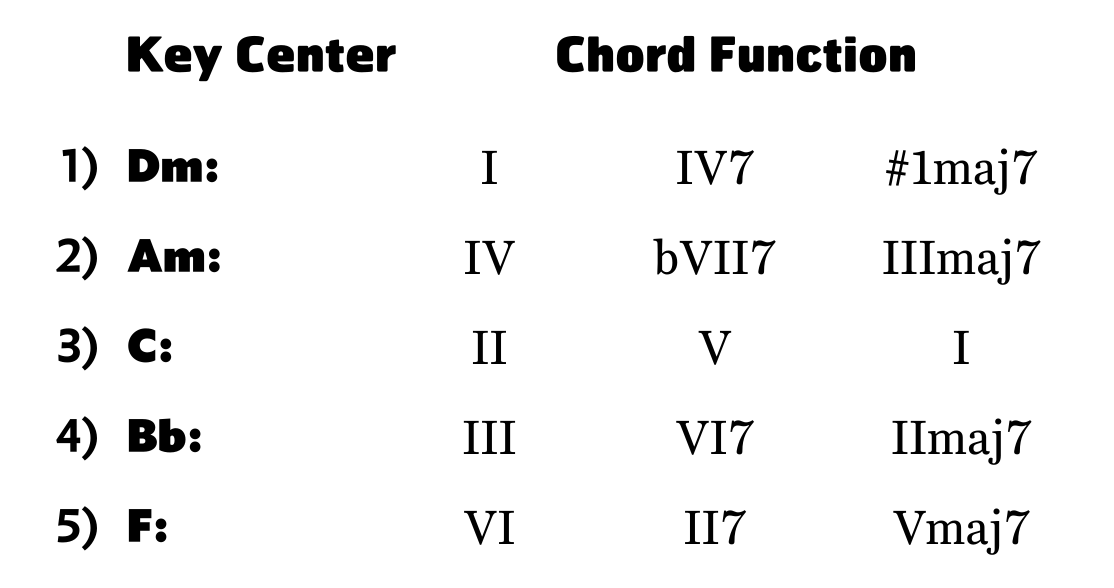
We can rule out numbers 1 and 2 as at least one of the chords does not show up in the major or minor harmonized scale chart.
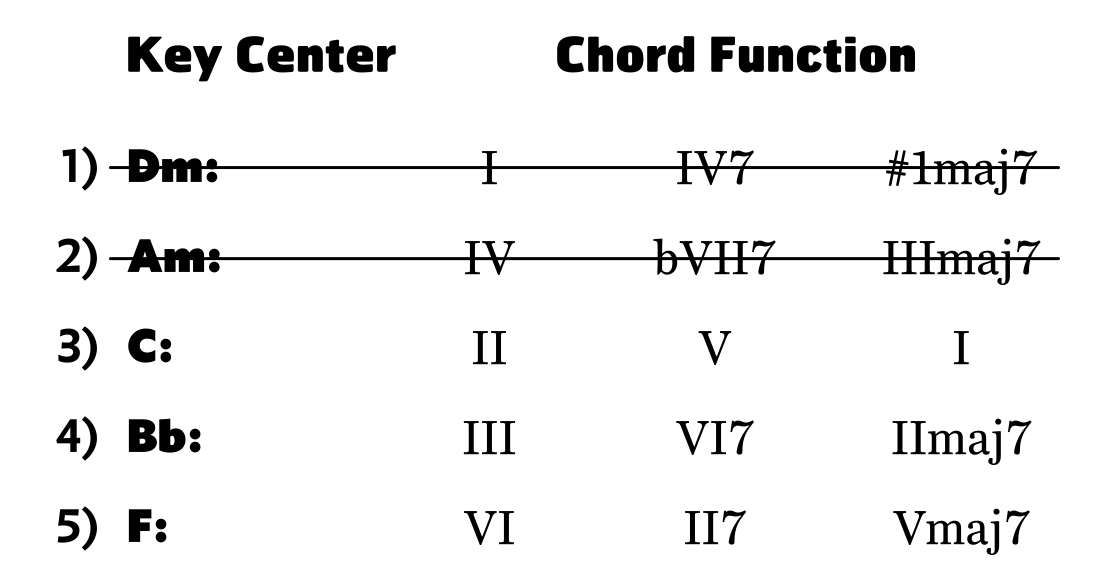
We can then rule out numbers 4 and 5 as they do not have I or tonic chords. This leaves number three as the best choice. This is one of the most common progressions used in contemporary music. You will see this progression more than any other progression, especially in jazz standards.
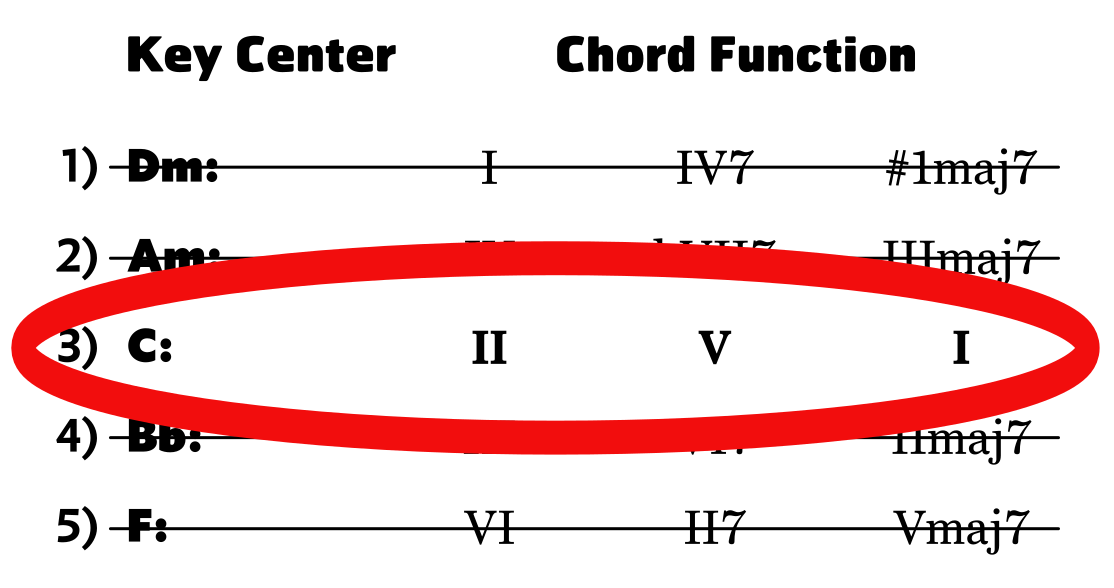
Using uppercase roman numerals place a II under the Dm7 , a V under the G7 and a I under the Cmaj7 . To indicate the key place an uppercase letter before the II with a colon following the letter to indicate the tonal center.
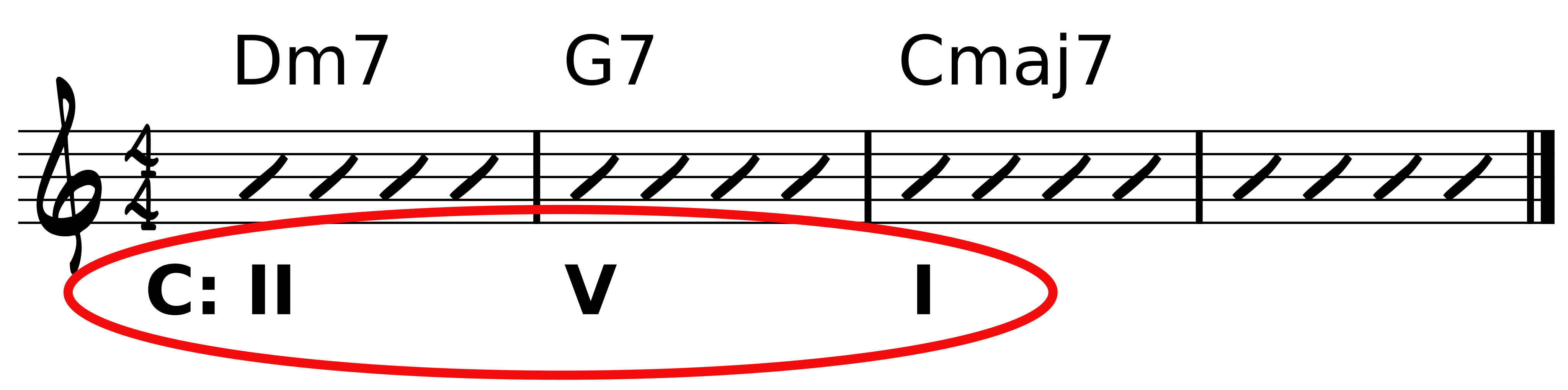
The same analysis would result if the chords where basic triads: Dm, G, or C
Song and Chord Progression Examples
Lots of folk and children's songs as well as many rock and popular songs contain full diatonic progressions or sections and are a good place to practice your RMA.
Here are a few examples of jazz songs with full diatonic progressions. Many songs contain full diatonic sections. Full diatonic is the most common harmonic principle.
A few Full Diatonic Three & Four chord progressions. All examples in C.
I – IV – V – V
| C | F | G | G |
I – VI – IV – V
| C | Am | F | G |
The Fifties (1950s) Chord Progression • Another common way of extending the I – IV – V sequence is by adding the chord of the sixth scale degree, giving the sequence I – VI – IV – V or I – VI – II – V, sometimes called the 50s progression..
I – V – VI – IV
| C | G/B | Am | F |
The The Four Chord Pop Progression • This is the most popular chord progression in use today. It has replaced the most common chord progression that was used in the 50s, the 1 6 2 5 chord progression.
Jazz Standards
A few standards Jazz
songs that use the Full Diatonic harmonic principle.
All The Things Your Are
Starts off with VI II V I IV major of the key of the song. Look for the same after and II V
Tune Up
Various II V I progressions modulating through descending major key centers a whole step apart.
Blue Bossa
Starts Full Diatonic minor and modulates to Full Diatonic major 1/2 step higher than starting key center.
Fly Me To The Moon
Sway
All of the A, first section of the song is Full Diatonic
Moondance
First section is Full Diatonic Dorian.
So What
Full Diatonic Dorian with half step modulation to Dorian.
Autumn Leaves
Measures 1-4, II V I IV major. Measures 5-8, II V I minor.
Checkout the Songs section of LearningUkulele.com , as many of the songs examples above are available.


End of Lesson - Thanks, Hope You Enjoyed It!
Related Lessons, Videos, Lesson Series, Songs, Books & Reference Charts, Resources & Assets, Workshops are below.
Harmonic Analysis for Scale Selection and Chord Substitution
Harmonic Analysis is the understanding of the functional sequence of chords. It is the process used to analyze the harmonic structure of a progression, song or composition. This analysis is then used to make scale selections for improvisation and chord substitution.