
Published:
2015-07-05
Updated:
2021-11-19
Learning Ukulele with Curt
Getting Started with Ukulele - Lesson Eight
For Lesson Eight we'll add and build on the lesson and material from lesson four.
Author(s): Curt Sheller Publisher: Curt Sheller Publications Code: ULB01-wk-8
Main Category: Basics Main Instrument: Ukulele
Categories: Basics, Chords, Beginner

2026-08-23
Show Series Lessons
Series Home
For Lesson Eight we'll add and build on the lesson and material from lesson four.
In lesson eight you will learn to following:
- The Fingerboard - Derived Frets
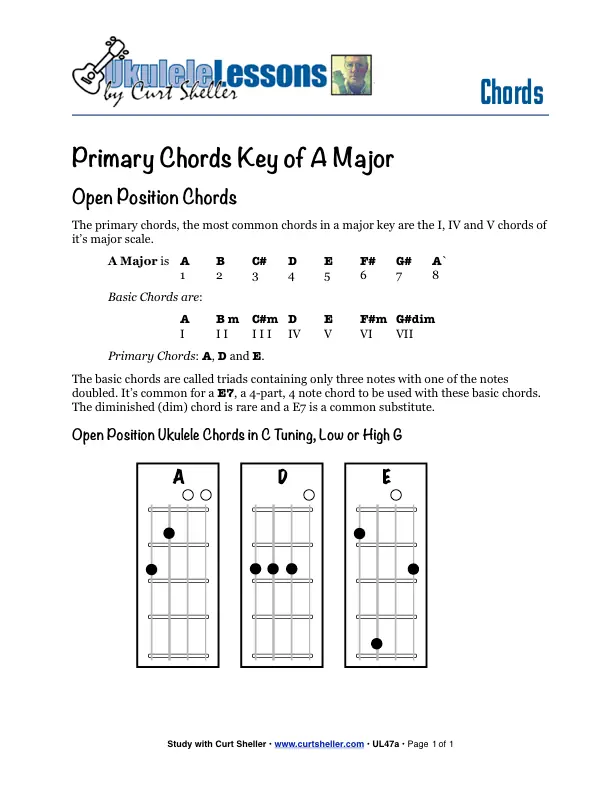
- Secondary Chords - E Major
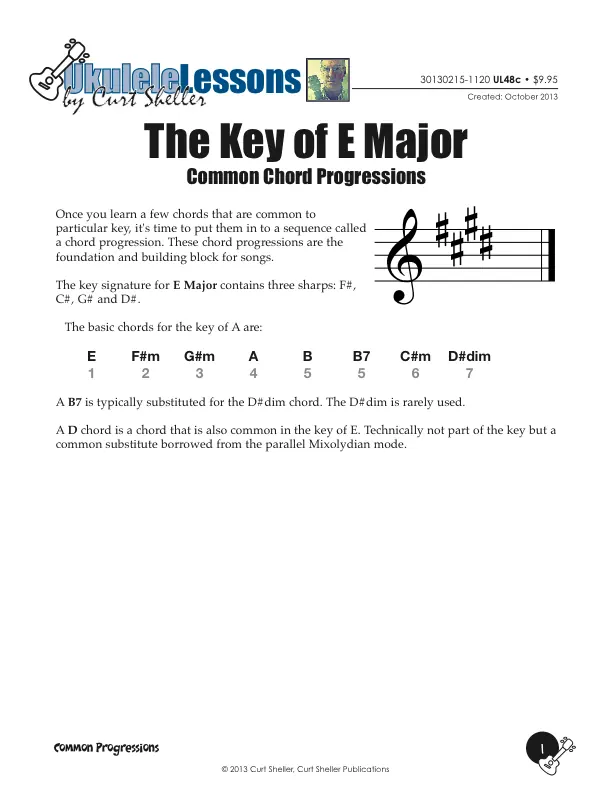
- Common Progressions - Key of E
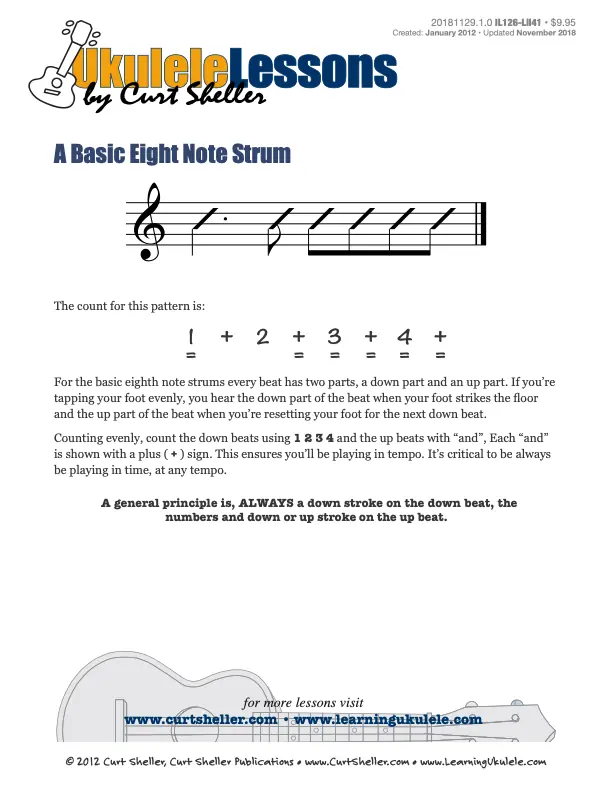
- Additional Strumming Patterns
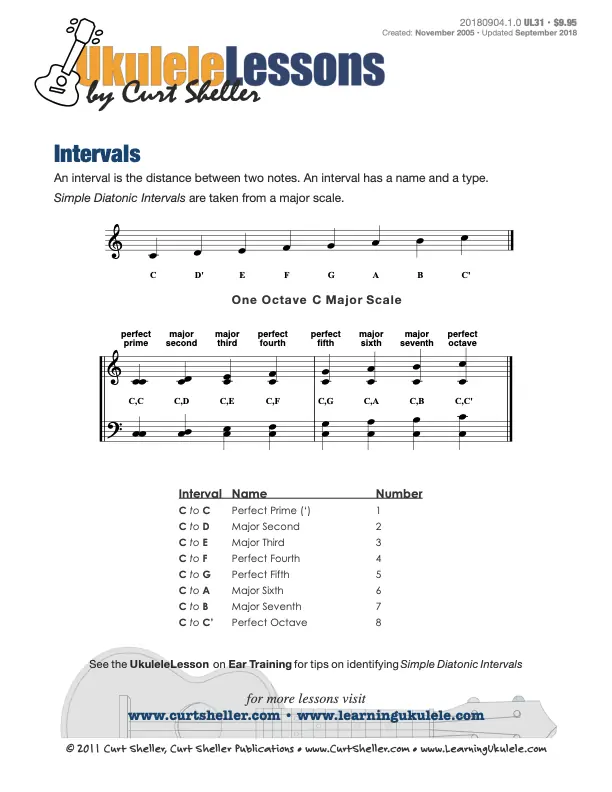
- Understanding Interval Inversion
NOTE: Although these lessons are presented as a weekly series, you can and should take as long as you like to master each week's lesson as there is a lot of material in each lesson in the series. Tuns out the understanding part is the easy part. All the hard work is in getting your hands to co-operate.
The individual lessons in this series are viewable from the Lessons button bar above.
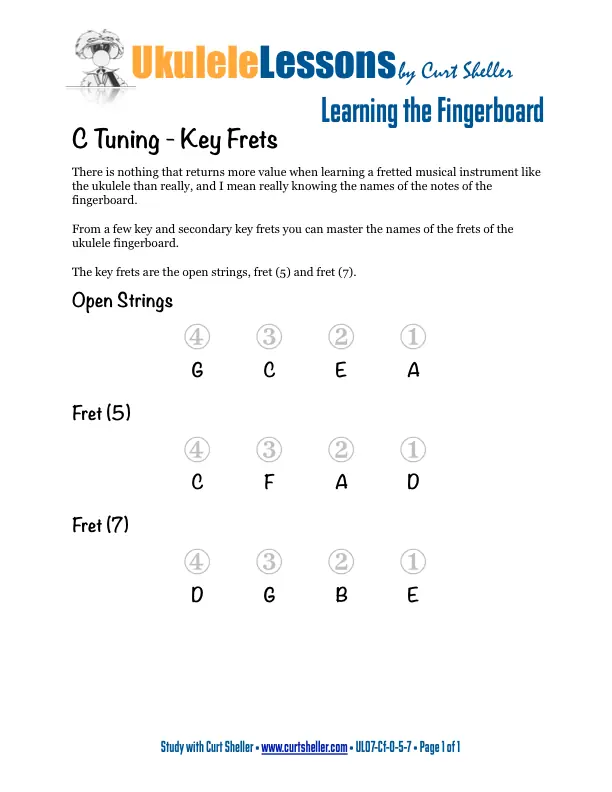
The Fingerboard - Derived Frets
Do all the same exercises that you did with the key and secondary key frets – except name the derived frets, the next higher frets and the previous lower frets. These are derived from the key and secondary frets and no new frets to memorize.
Secondary Chords - E Major
Continuing with the common of key of E major and adding to the primary chords E, A, B and B7 from last week’s lessons. We can add the secondary chords F#m, G#m, and C#m.
Side Note: The Key of E is really more common with guitar players than ukulele players - however until we achieve complete domination as ukulele players we should, at least humor our fellow guitar players and be able to play in one of their common keys, the Key of E.
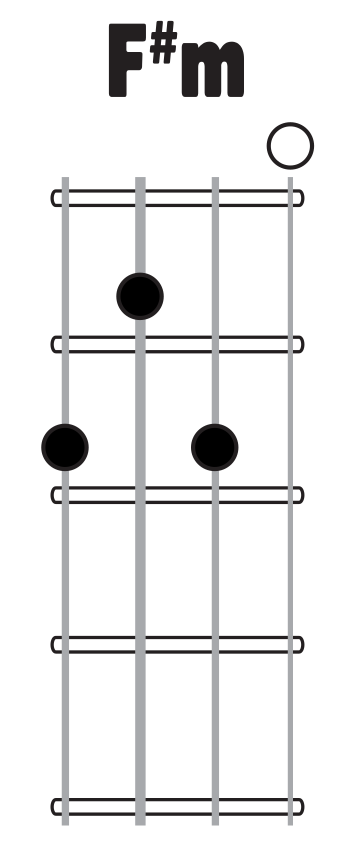
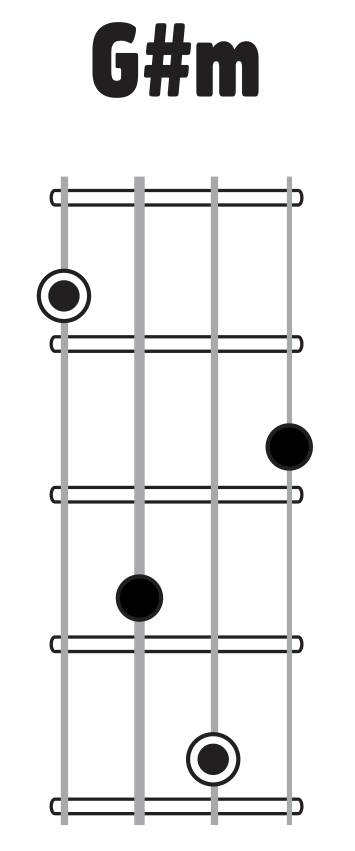
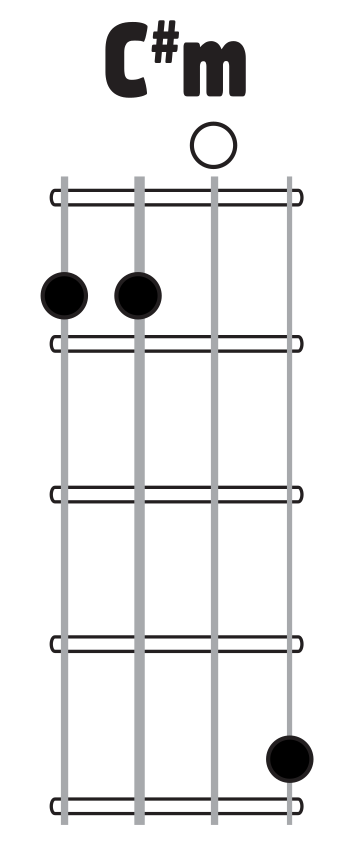
Using the Quarter Notes strum and focus on switching between F#m, G#m and C#m.
- F#m to G#m
- F#m to C#m
- G#m to F#m
- G#m to C#m
- C#m to F#m
- C#m to G#m
This will cover all possible connections. Practice switching at a SLOW tempo and slowly increase the tempo as you get comfortable with the chords.
Visualize the next chord while you are on the current chord.
With these four chords you can play a lot of songs.
Common Progressions - Key of E
With the primary and secondary chords in the key of E.
Additional Strumming Patterns
Understanding Diatonic Intervals
An interval is the distance between two notes. An interval has a name and a type. Intervals can be played one note (melodic) or two notes (harmonic) at a time, ascending or descending.


End of Lesson - Thanks, Hope You Enjoyed It!
Related Lessons, Videos, Lesson Series, Songs, Books & Reference Charts, Resources & Assets, Workshops are below.