Published:
2014-01-09
Updated:
2026-09-07
Learning Ukulele with Curt
Getting Started with Ukulele - Lesson Seven
For Lesson Seven we’ll add and build on the lesson and material from lesson six.
Author(s): Curt Sheller Publisher: Curt Sheller Publications Code: ULB01-wk-7
Main Category: Basics Main Instrument: Ukulele
Categories: Basics, Chords, Rhythm, Strums, Technique, Intervals, Progressions, Beginner

2026-08-23
RelatedLessonAssets
Show Series Lessons
Series Home
For Lesson Seven we’ll add and build on the lesson and material from lesson six.
In lesson seven you’ll learn to following:
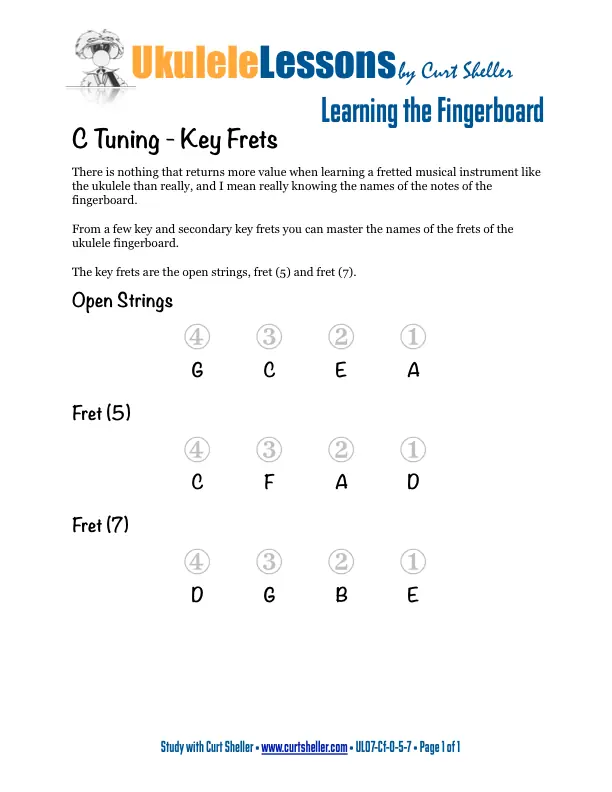
- The Key and Secondary Key Frets from the floor to the ceiling, strings one to four
- Two more core strums and an introduction to the Modular Phonetic Rhythm system
- Primary Chords - Key of E
- Additional Strumming Patterns
- Modular Phonetic Rhythm
- Enharmonic Equivalents
NOTE: Although these lessons are presented as a weekly series, you can and should take as long as you like to master each week's lesson as there is a lot of material in each lesson in the series. Tuns out the understanding part is the easy part. All the hard work is in getting your hands to co-operate.
The individual lessons in this series are viewable from the Lessons button bar above.
The Fingerboard - Key and Secondary Frets
If you're like most players learning the ukulele fingerboard, you might know them pretty well in one order - from string four to one - nose to toes, the ceiling to the floor or what ever direction you first learned them. Go back and memorize from the floor to the ceiling, the opposite direction.
Know the notes of the neck needs to be second nature and instant recall. This is one are of learning the ukulele that you don't even need to have the ukulele with you and can be done any time.
Recommended Lessons, Series & Resources
Primary Chords - E Major
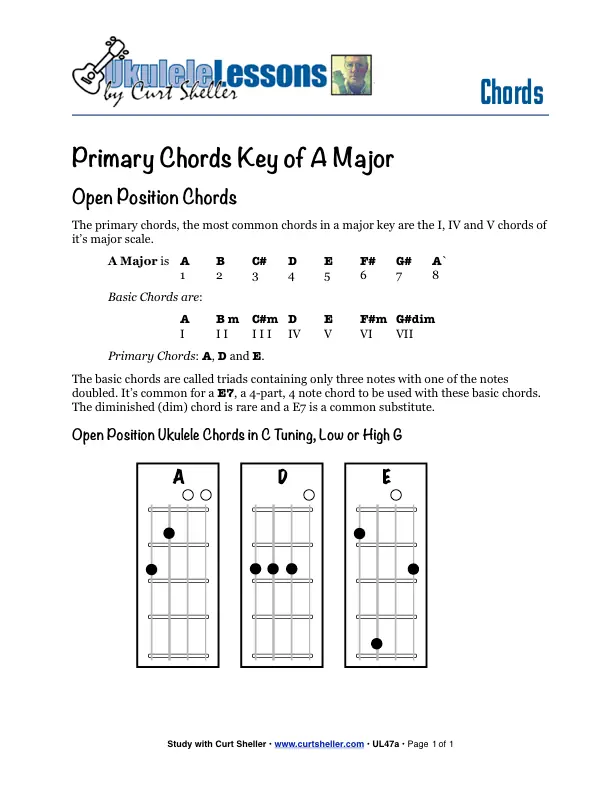
The key of E major is one of the common keys that include C, G, D, A and E.
As we learned in week one’s lessons - the primary chords are the three major chords that are the main chords of the key. The primary chords create the tension and resolution in music that gives a chord progression emotion – a feeling of rest and resolution or consonance and dissonance.
Learn the E, A, B, and B7 open position chords. With these four chords you can play countless songs in the key of A major.
Recommended Lessons, Series & Resources
- Lesson: Key Signatures -E Major and C♯ Minor
- Lesson: Secondary Chords of E Major
- Lesson: Common Chord Progressions for the Key of E
Using the Quarter Notes strum and focus on switching between E, A, B, and B7.
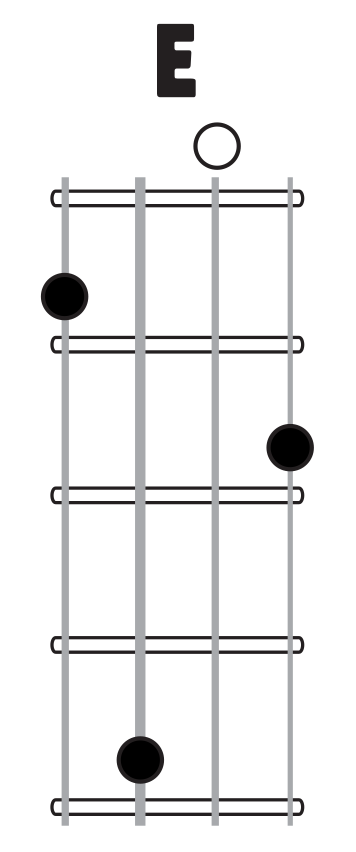
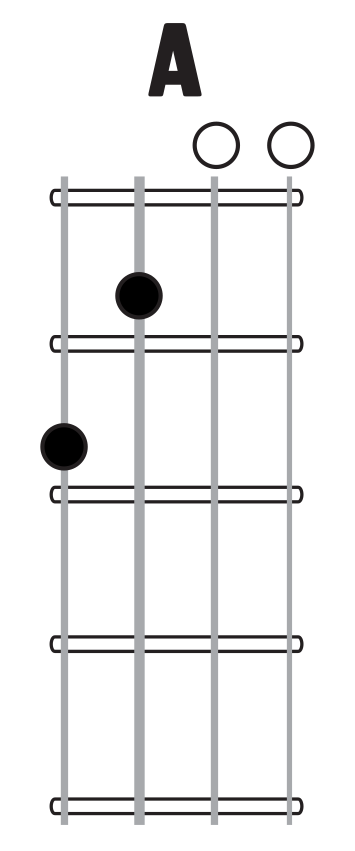
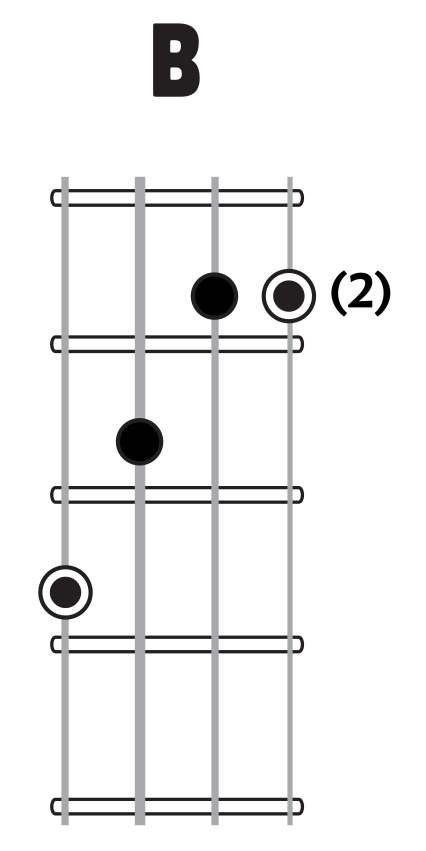
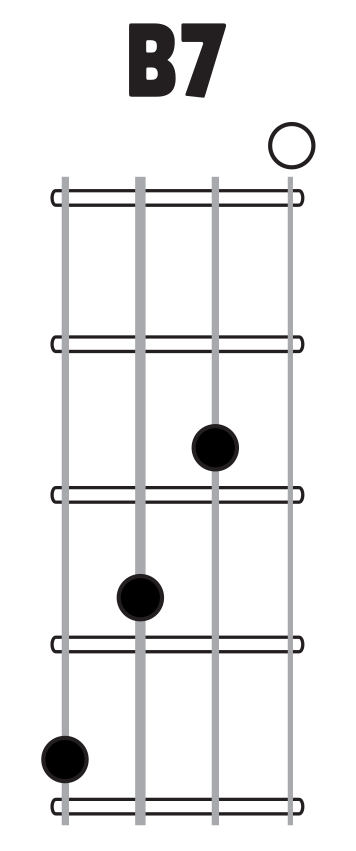
NOTE: Technically the B chord do not fit my description of an open position chord as it does no contain any open strings. However with the key of E being a common key, especially on guitar the B is needed as they it is a primary chord.
Ultimately any chord can go to any chord so practice all the following combinations:
- E to A
- E to B
- E to B7
- A to E
- A to B
- A to B7
- B to E
- B to A
- B to B7
- B7 to E
- B7 to A
- B7 to B
This will cover all possible connections. Practice switching at a SLOW tempo and slowly increase the tempo as you get comfortable with the chords.
Visualize the next chord while you are on the current chord.
Recommended Lessons, Series & Resources
- Lesson: Key Signatures - E Major and C♯ Minor
- Lesson: Three Chord Progressions
With these Three Chords you can play a lot of songs.
Common Progressions - Key of E
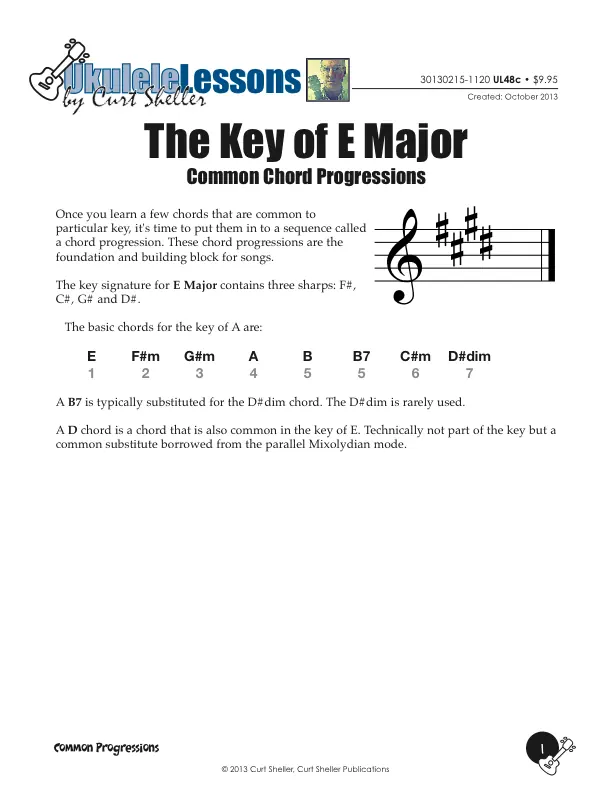
With the primary and secondary chords in the key of E.
Recommended Lessons, Series & Resources
Additional Strumming Patterns
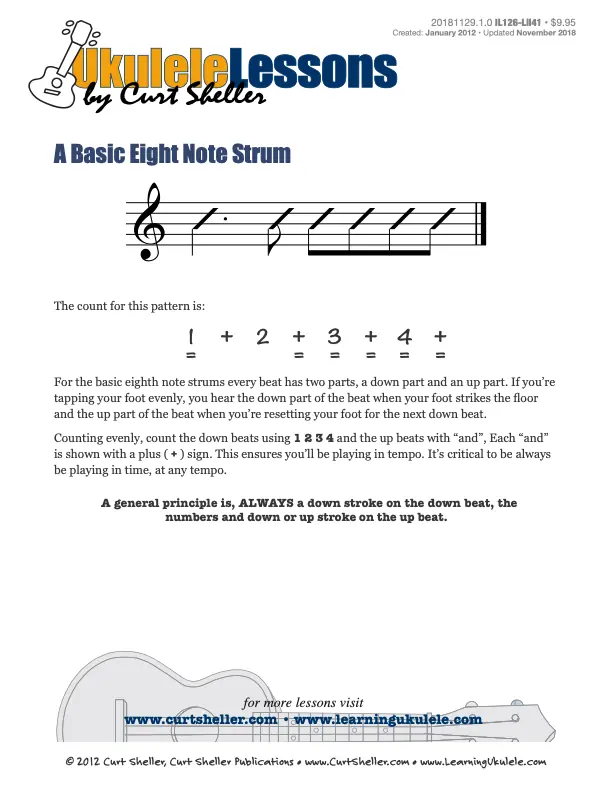
Sticking with the basic eighth core strum, here are another two, closely related and popular strumming patterns that can be added to your strumming vocabulary.
Unless a rhythmic pattern is strongly associated with a famous song or particular style it's hard to give it a descriptive name. So, the best way of naming it is by it's two Modular Phonetic Rhythm syllables ( see below lesson ).
Recommended Lessons, Series & Resources
Modular Phonetic Rhythm
The Modular Phonetic Rhythm system represents a significant advance in the teaching and application of rhythm. Eliminating many inefficient aspects of rhythm education, Modular Phonetic Rhythm streamlines the traditional educational approach, resulting in a reflexive reaction to rhythm.
This system was developed by Chuck Anderson and forms the foundation for ALL things RHYTHM in the lessons available here.
Through the study of the Modular Phonetic Rhythm system you will can develop a larger vocabulary of stums. Review the introductory lesson on the system and then we'll dive right in it with he next weekly lesson.
Recommended Lessons, Series & Resources
- Lesson: Modular Phonetic Rhythm
Enharmonic Equivalents
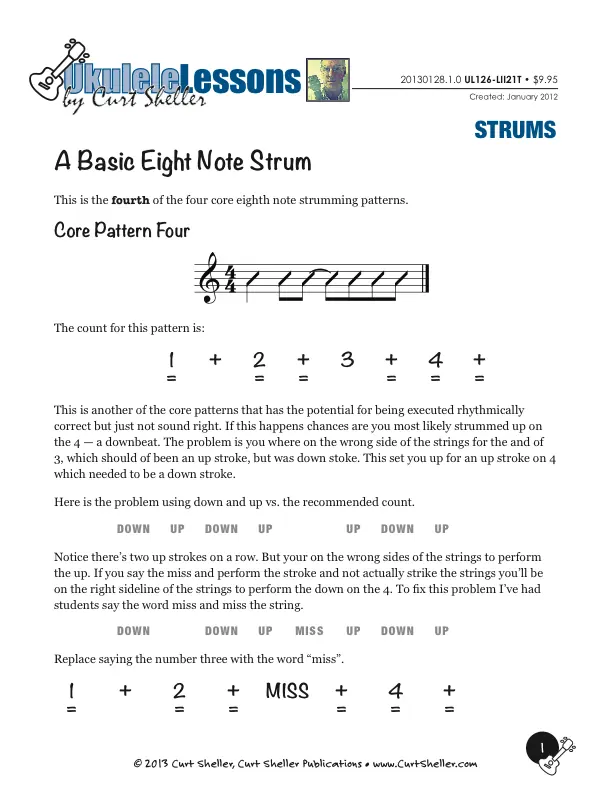
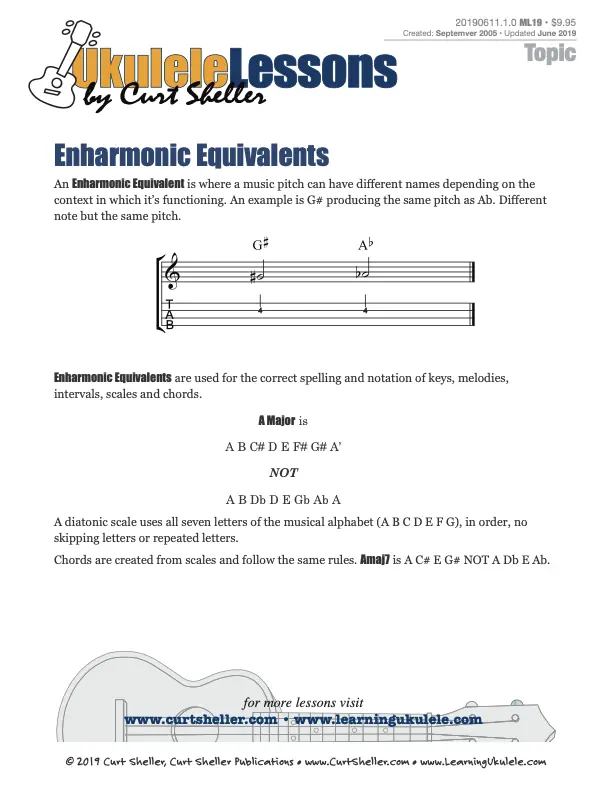
An Enharmonic Equivalent is where a musical pitch can have different names depending on the context in which it is functioning. An example is G# produces the same pitch as Ab.
Enharmonic equivalents will sound the same but are notated differently using standard music notation.
Recommended Lessons, Series & Resources
- Lesson: Enharmonic Equivalents


End of Lesson - Thanks, Hope You Enjoyed It!
Related Lessons, Videos, Lesson Series, Songs, Books & Reference Charts, Resources & Assets, Workshops are below.
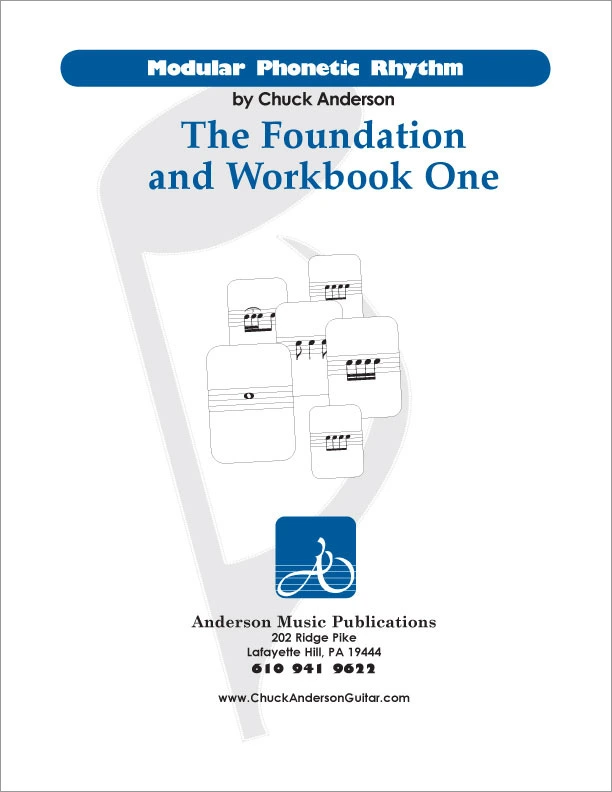
Modular Phonetic Rhythm, The Foundation and Workbook 1
Modular Phonetic Rhythm represents a significant advance in the teaching and application of rhythm. Eliminating many inefficient aspects of rhythm education, Modular Phonetic Rhythm streamlines the traditional educational approach, resulting in a reflexive reaction to rhythm.