Published:
2011-11-24
Updated:
2020-01-10
Learning Ukulele with Curt
A Guide to Ukulele Chords, 2nd Edition
A Guide to Ukulele Chords, Second Edition is designed as a guide to ukulele chords. Covering the basic ukulele chords that ALL ukulele players SHOULD know. A Guide to Ukulele Chords covers movable chord forms, rock chords, how to transpose chords, learning the ukulele fingerboard and includes an introduction to 4-part, a.k.a jazz chords and more...
Author(s): Curt Sheller Publisher: Code: BC1UKE2
Main Category: Chords Main Instrument: Ukulele
Categories: Chords, TAB, Beginner, Intermediate

24 June 2026
If you're a registered site member and have the correct permissions you can view ALL the pages of this PDF or Samples pages at a larger size using the LearningUkulele.com Online PDF Viewer.
After purchasing a PDF a download link or PDF link will be sent to you.
This Download is NOT part of your LearningUkulele.com & Learning Ukulele with Curt membership level.
Sign-up for Premium Site Access or Upgrade Your Plan to download this PDF or your can purchase a copy for download
Sign In for Access…Contact Us if there are any issues.
However, if you'd like to support the site even more ❤️ you can buy the PDF.
After purchasing a PDF a download link or PDF link will be sent to you.
Product Info
- Product Code: BC1UKE2
- Author(s): Curt Sheller
- Publisher(s):
- Published: 24 November 2011
- Updated: 10 January 2020
- ISBN-13: 978-1-60321-047-8
- Size*: ANSI A
- Pages: 50
- Hard Copy Price: $14.95
- PDF Price: $9.00
Regarding Book, Lesson and Charts Paper Sizes
• click to Hide more info
• click to Show more info
Starting 2020 LearningUkulele.com & Learning Ukulele with Curt moved to A4 paper sizes for all new books and new editions of books, lessons, and charts.
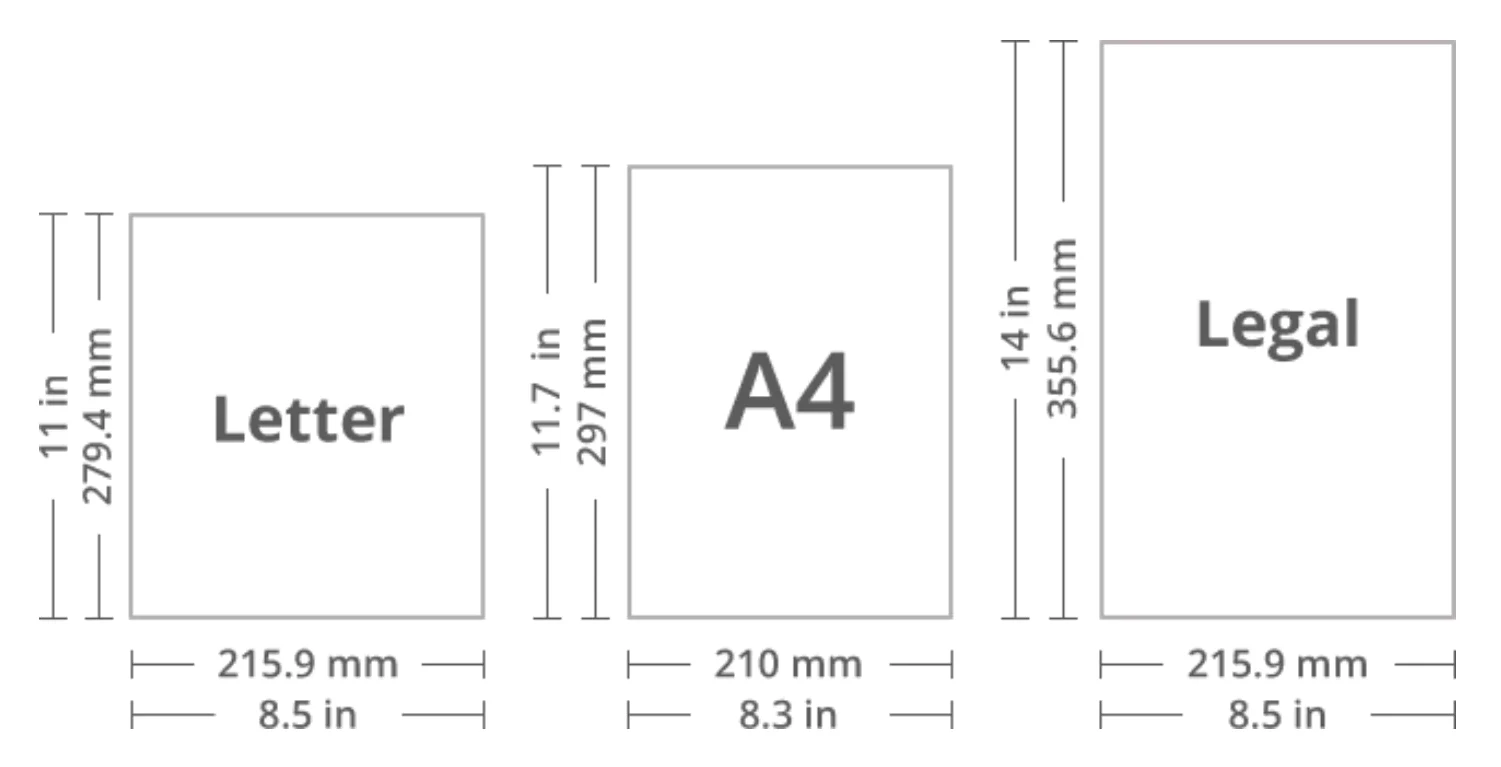
The A Series was adopted in Europe in the 19th century, and is currently used all around the world, apart from in the USA and Canada.
• Decoding Printer Paper Sizes: A4 vs Letter vs Legal. which is Standard?
NOTE: Printing A4 to US Letter Size: As the sizes are relatively close, simple select Scale to Fit
and the A4 size will print out fine.
A Guide to Ukulele Chords, Second Edition is designed as a guide to ukulele chords. Covering the basic ukulele chords that ALL ukulele players SHOULD know. A Guide to Ukulele Chords covers movable chord forms, rock chords, how to transpose chords, learning the ukulele fingerboard and includes an introduction to 4-part, a.k.a jazz chords and more...
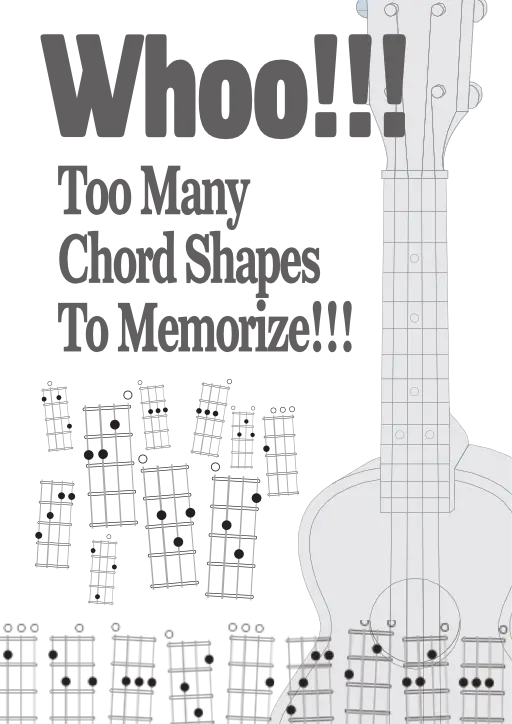
From a few core, basic chord shapes and a understanding of how chords are constructed. Your chord vocabulary can be dramatically increased without memorizing countless chord shapes. There are too many chord shapes to memorize.
This book will take the mystery out playing and understanding chords on the ukulele, whether it is a standard, concert, tenor or baritone ukulele in C tuning, low or high string four.
More A Guide to Ukulele Chords, 2nd Edition
content below, continue exploring...
More A Guide to Ukulele Chords, 2nd Edition
Foreword
“There are too many chord shapes to memorize,” writes Curt Sheller in his new volume A Guide to Ukulele Chords. No doubt, memorization can be limiting if it isn’t grounded in understanding. So, how are chords made and how are they named? Over the course of the chapters ahead, Mr. Sheller draws on his wealth of musical experience, offering answers to these questions and more. Beginning with the most accessible chords and progressing to the more challenging ones, the lessons that follow are of value to both rookie and veteran players.
A Guide to Ukulele Chords is well organized, informal yet informative and promotes understanding over memorization. “A chord dictionary,” as Mr. Sheller writes, “is not the answer.” A concise guide to understanding chord structure, however, just might be.
James Hill Canada’s Ukulele Virtuoso www.UkuleleJames.com
Introduction
After playing jazz guitar for 20 years, I rediscovered the ukulele. Then I learned that ukulele players struggle (like guitar players) with movable chord forms and the more advanced chords, commonly called “jazz” chords. There was no clear, concise, organized book for guiding an aspiring ukulele player through this maze of chords, so I decided to write one.
This book is a guide to the basic chords all ukulele players should know. It introduces the ukulele fingerboard, movable chord forms and 4-part jazz chords, all in three common ukulele tunings. You can build your new skills on the simplest chords. You can also learn, rock chords and chordal transposition. In addition to doing extensive research, I have tested and improved these materials during several years of studio teaching.
From a few basic chord shapes and an understanding of how chords are constructed, your chord vocabulary can be dramatically increased without endless memorizing. In fact, this book will take the mystery out of playing and understanding ukulele chords on a standard, concert, tenor, or baritone ukulele, using “C” tuning, low or high string four.
Tunings: C Tunings. Low or high string four variations.
Lefties of the world! Don’t feel left out. There’s a version for you: A Guide to Ukulele Chords for Lefties
- Foreword
- Introduction
- Open Position Chords
- The Ukulele Chord Diagram
- “C” Tuning Open Position Chords
- “C” Tuning Chords by Common Keys
- Open Position Chord Summary
- Movable Chord Forms
- “A/Bb” Movable Form Chords
- “C/Db” Movable Form Chords
- “G/Ab” Movable Form Chords
- 4-Part Movable 7th Chord Forms
- “C” Tuning - Soprano, Concert & Tenor • (G C E A)
- Generic Forms
- Alternate Movable 7th Chord Forms
- Tips for Remembering Chords
- More Tips for Remembering Chords
- Diminished & Augmented Chords
- Power 5 Chords
- sus Chords
- Add 9 Chords
- 4-Part “Jazz” Chord Forms
- What is a Chord?
- A Few Chord Building Rules
- Creating the Four Basic Triads
- Building More Advanced 4-Part Chords
- Chord Formula Chart
- Suggested Learning Order
- Transposing Individual Chords
- How to Transpose Chords
- Practice Chord Progressions
- Blues in C
- WC Swing
- Bebop A Oo-koo-lele
- Learning the Ukulele Fingerboard
- Common Tunings
- Learning the Frets
- "C" Tuning Natural & Sharp Notes
- "C" Tuning Natural & Flat Notes
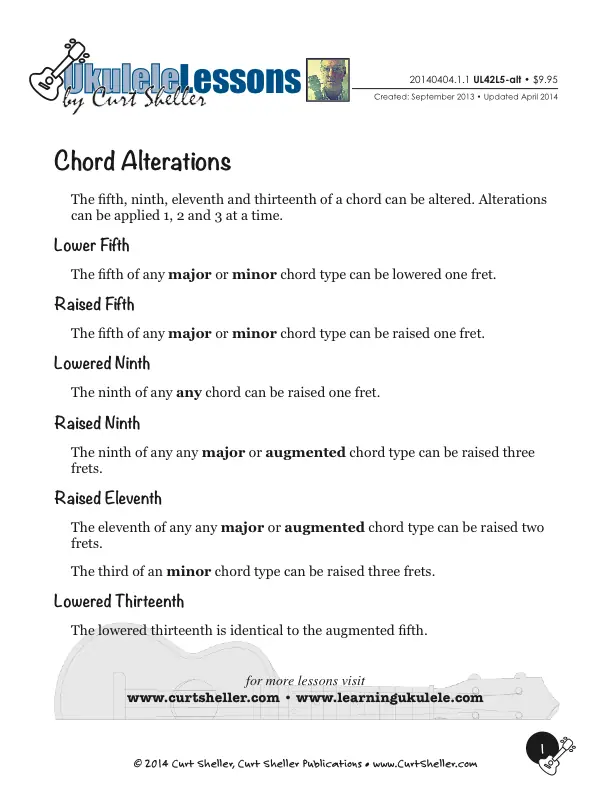
Altered Seventh Chords on `Ukulele
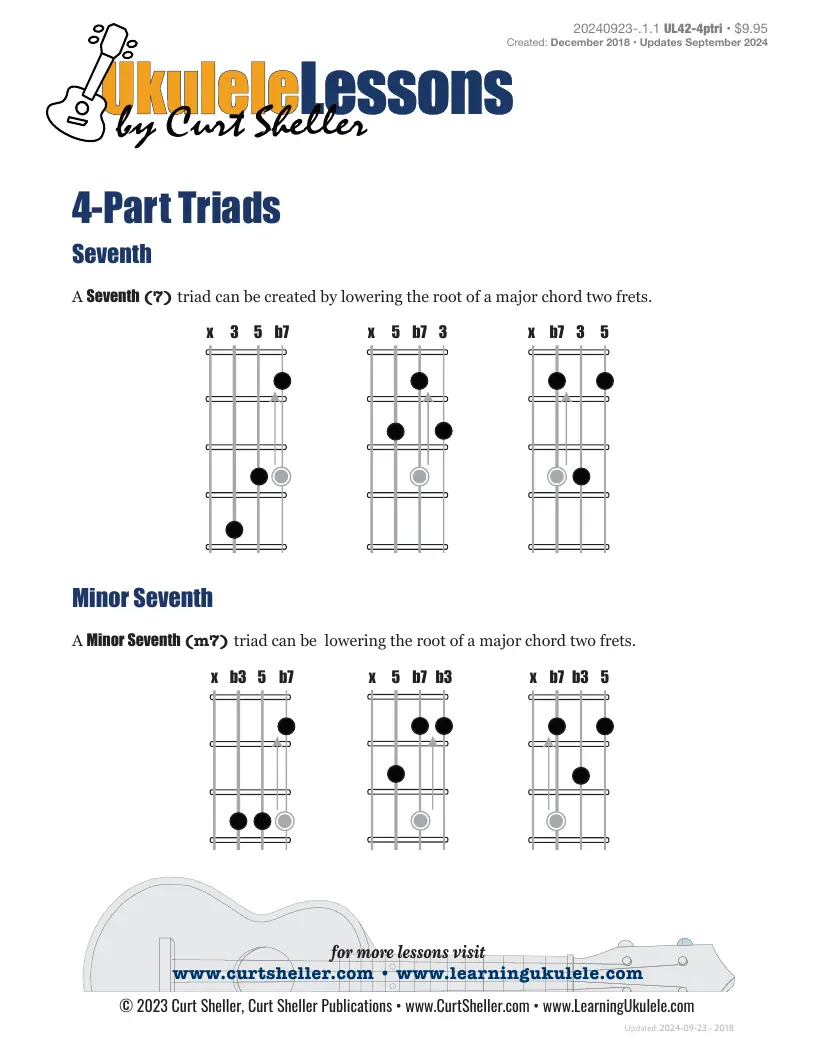
Beyond basic open position chords, basic movable form chords, and a core set of 4-part chords. There are just too many chords shapes too memorize. Learning the principles of how chords are constructed and the ukulele fingerboard are the way to go. You can then create more advanced chords like 9#11, 7#5-9, 13b5, 7+9 on the fly as needed from your core set of chords.
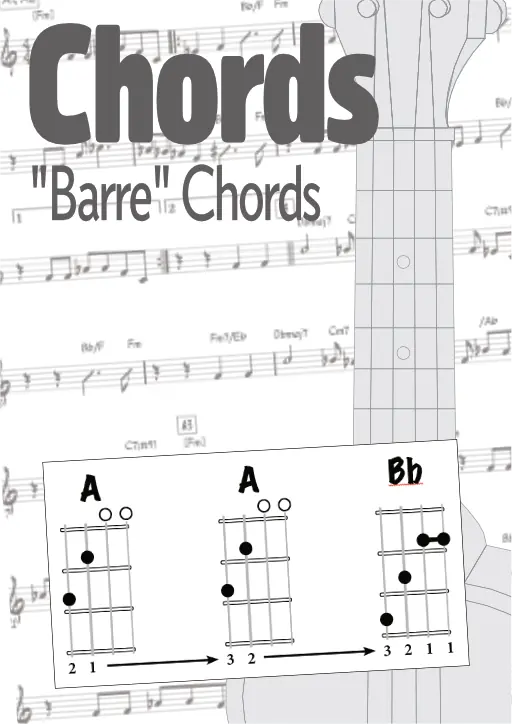
Barre Chords
"barre", the old English spelling vs. bar which refers to a measure of music, is used to indicate a placing of a finger across two or more strings. If covering all the strings it's called a full barre and if fewer than all the strings it’s a partial barre. It’s a classical guitar technic used for guitar, ukulele, mandolin and other fretted string instruments regardless of style.
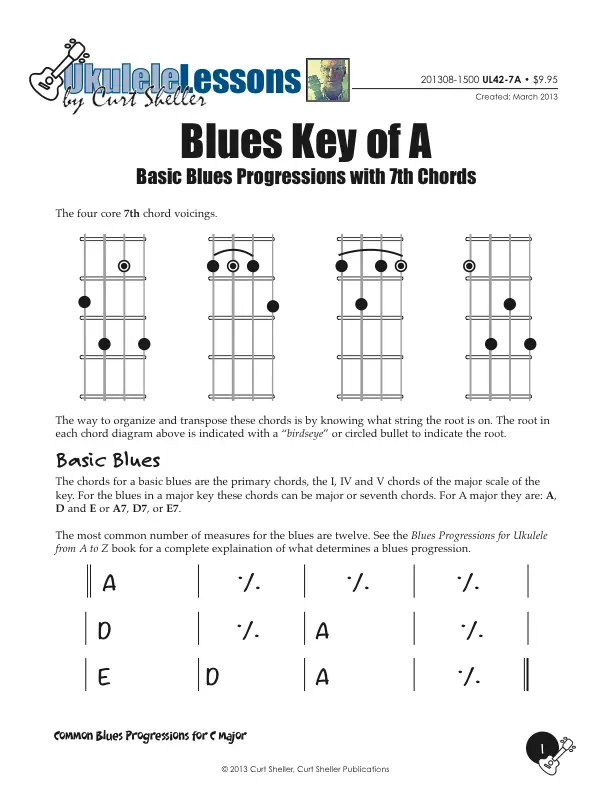
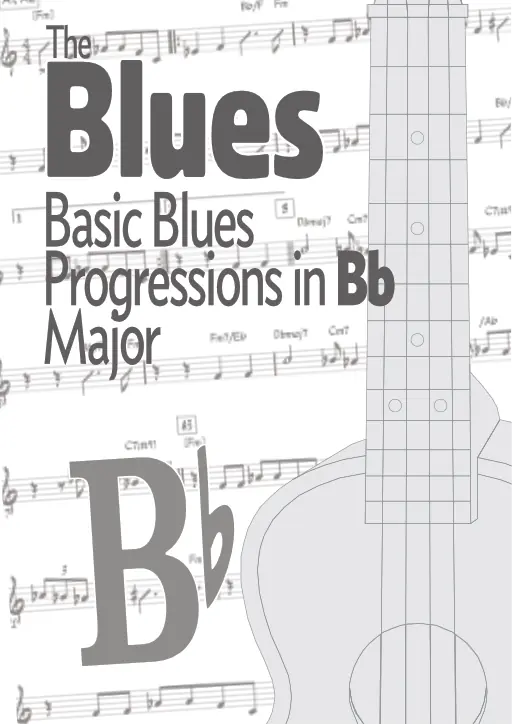
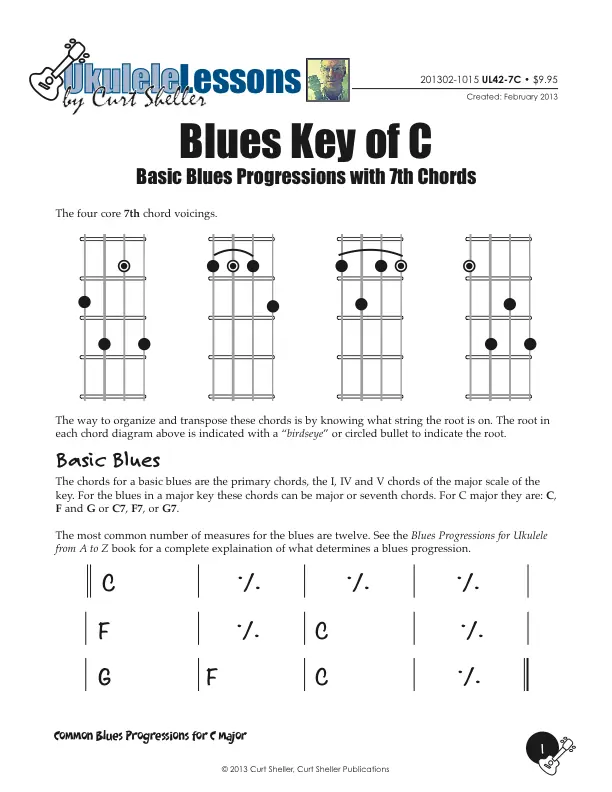
Basic Blues Progressions in C Major
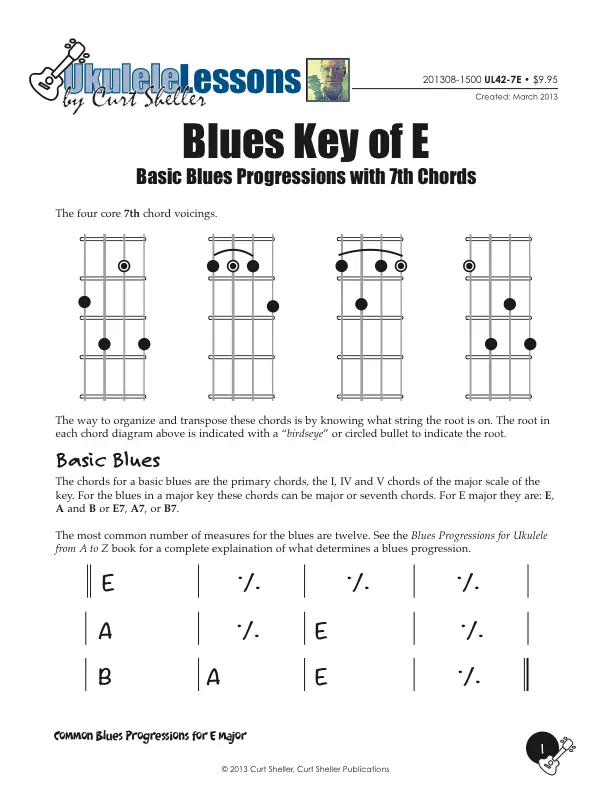
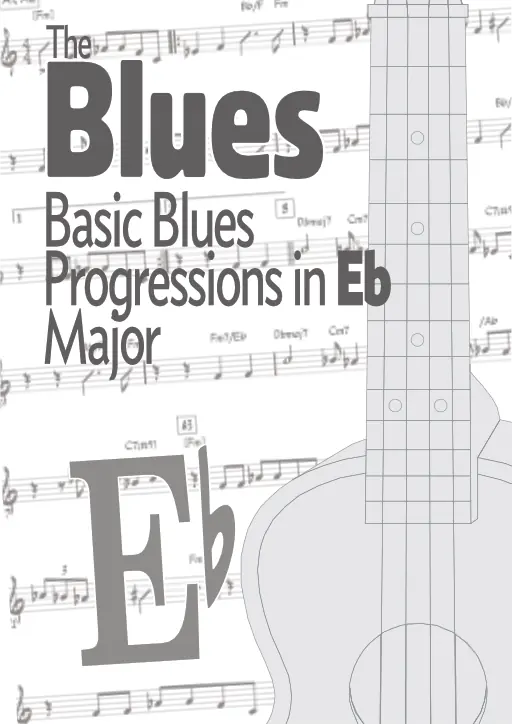
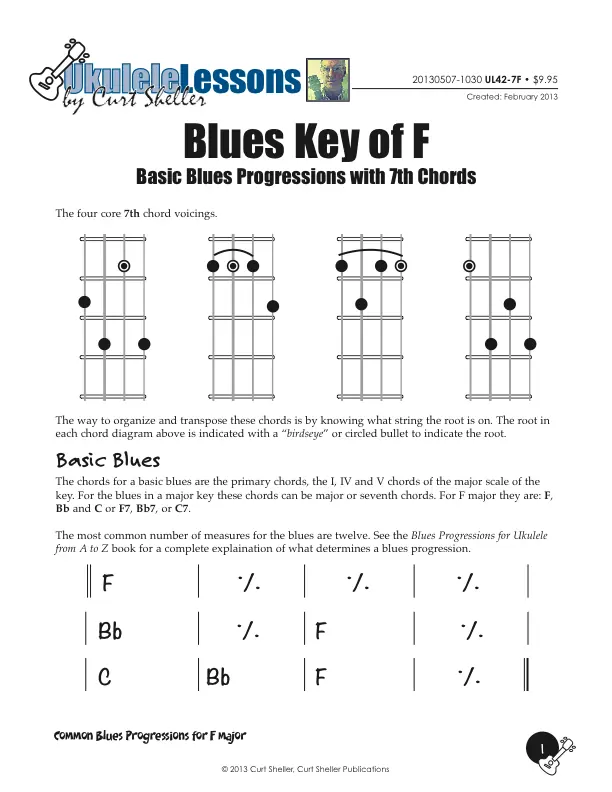
Basic and Quick Change blues chord progressions in the key of C major using the core 7th chords from the Big Six series of lessons. This is a great way to explore this core chord in various keys. These are the two most common blues progressions used in traditional and contemporary music.
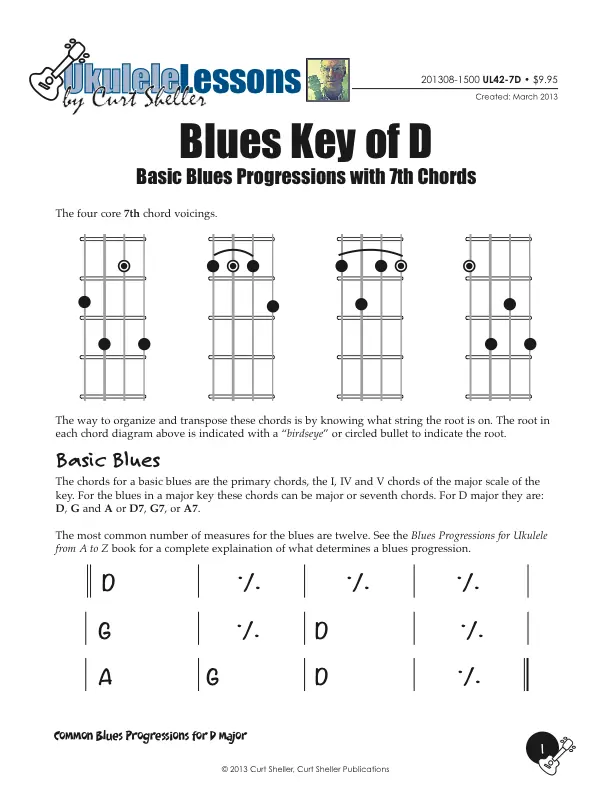
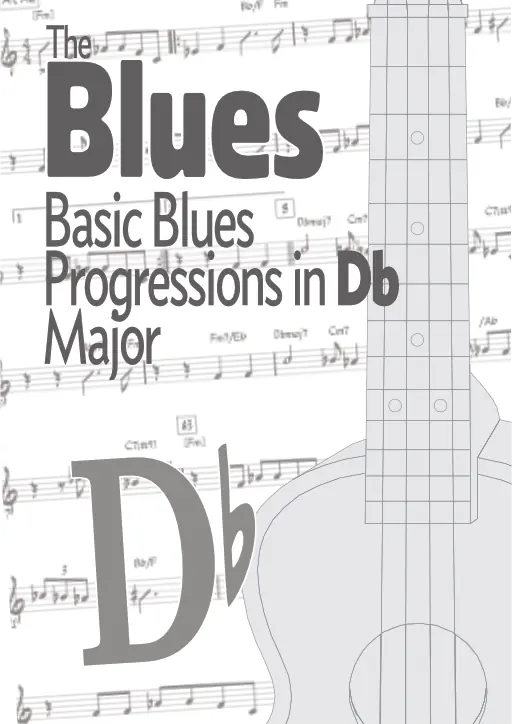
Basic Blues Progressions in G Major
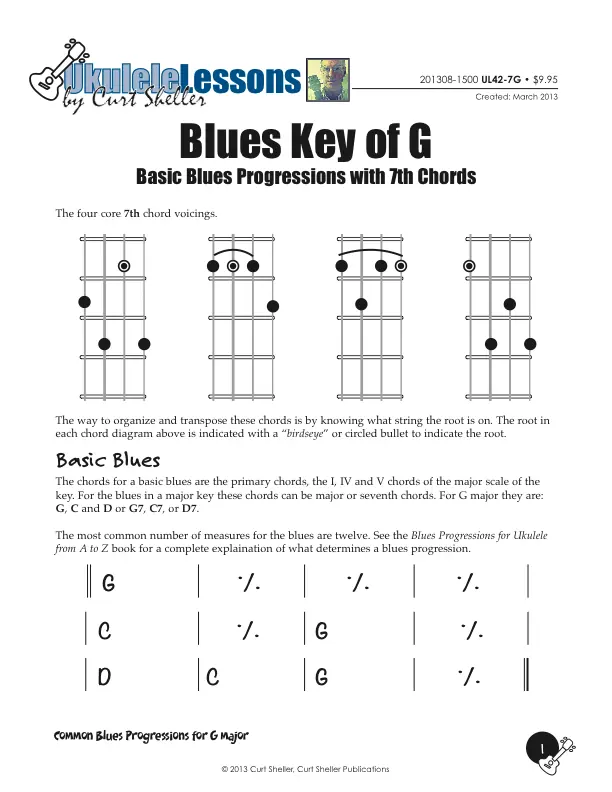
Basic and Quick Change blues chord progressions in the key of G major using the core 7th chords from the Big Six series of lessons. This is great way to explore this core chord in various keys. These are the two most common blues progressions used in traditional and contemporary music.



































Chord a Day, January 11th - D7
Learn a new Ukulele chord every day of the year. The chord for January 11th is D7. This partial D7 is ofter referred to as the Hawaiian D7 chord after its use in the Chord sequence C D7 G7, a common turnaround in Hawaiian music. So much so that it's called the Hawaiian Turnaround.






















































Chord a Day, March 3rd - F7
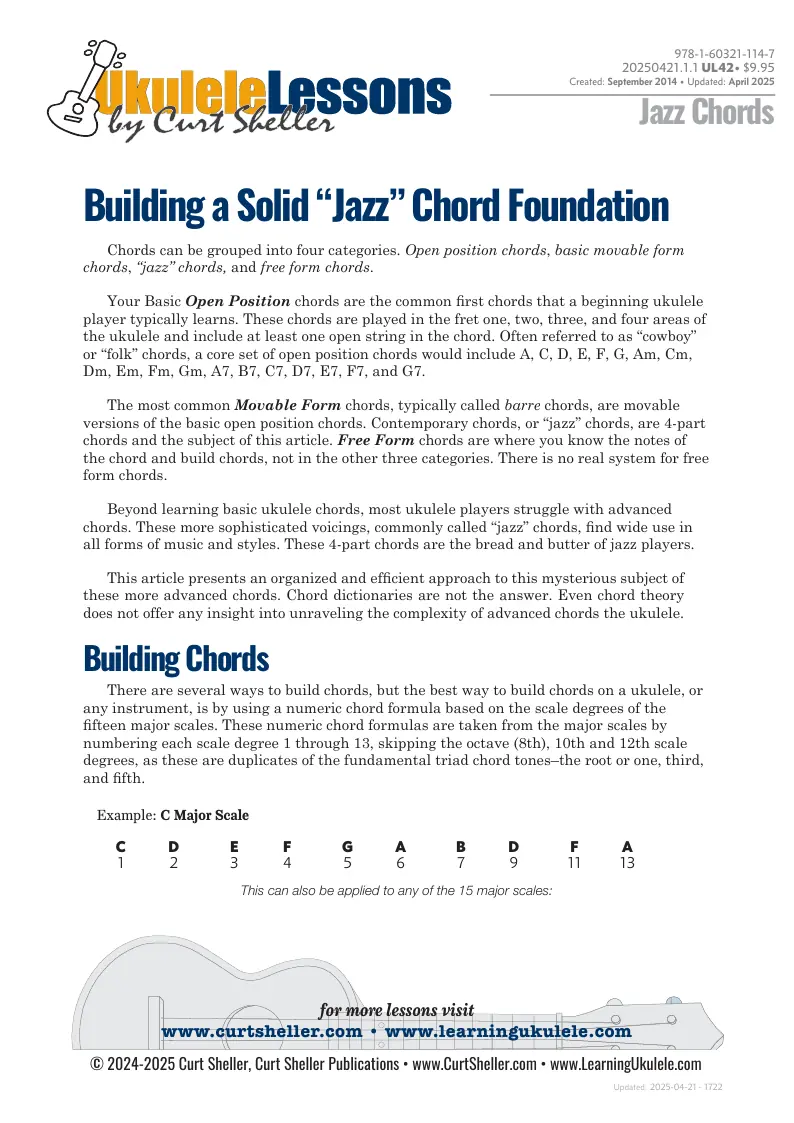
Learn a new Ukulele chord every day of the year. The chord for March 3rd is F7. We are now entering into the so-called “Jazz” chord, world of chords. Technically “Jazz” chords are simply 4-part contemporary chords that find the use in a wide variety of traditional and contemporary music.






Color Tones and Chords
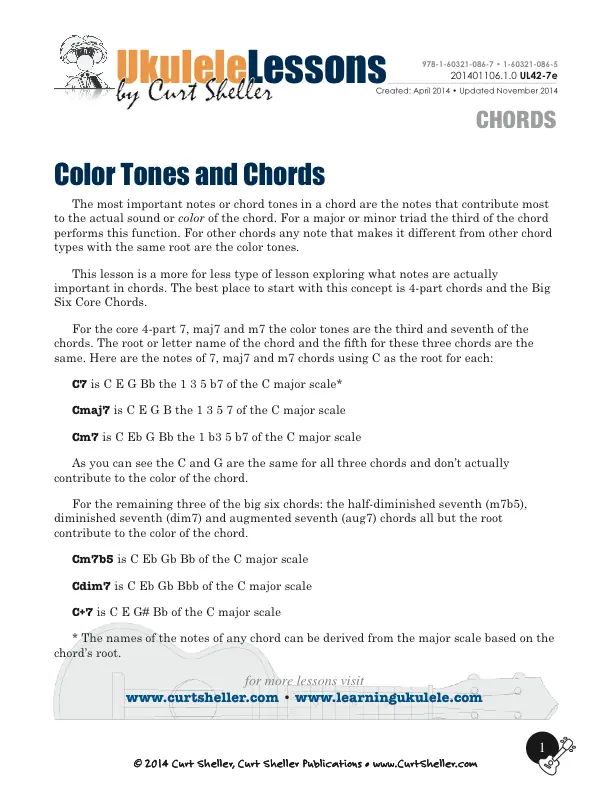
The most important notes or chord tones in a chord are the notes that contribute most to the actual sound or “color” of the chord. For a major or minor triad, the third of the chord performs this function. For other chords, any note that makes it different from other chord types with the same root are the color tones.
This lesson is a more for less type of lesson exploring what notes are actually important in chords. The best place to start with this concept is 4-part chords and the Big Six Core Chords.

Core Chords - Building a Solid Foundation of Contemporary Chords
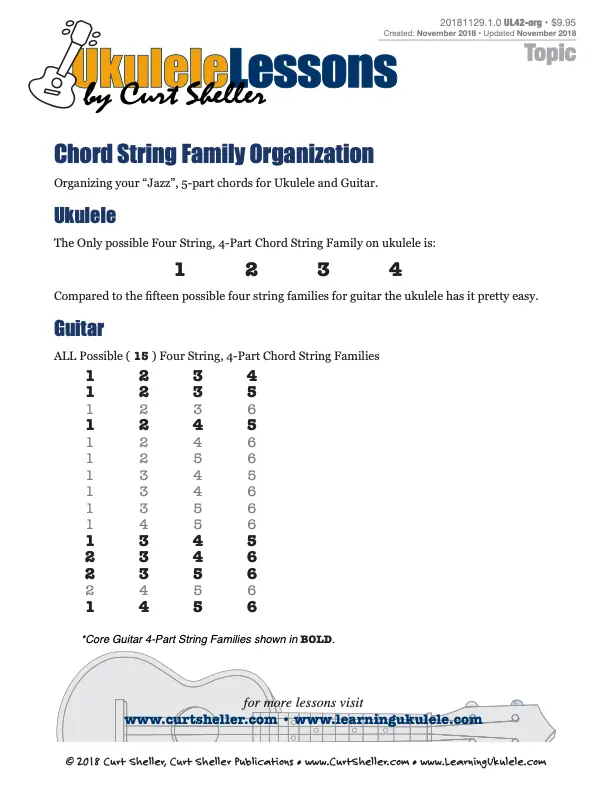
"Core Chords" are a concept that I typically apply to 4-part chords and your more contemporary modern chords. This where a solid foundation of a core set of chords really help in learning the massive amount of chords that are required for play contemporary music or jazz on ukulele or guitar. Not such a task on ukulele with on one four string set of strings to build your 4-part chords vs. the theoretically possible 15 sets available for guitar.
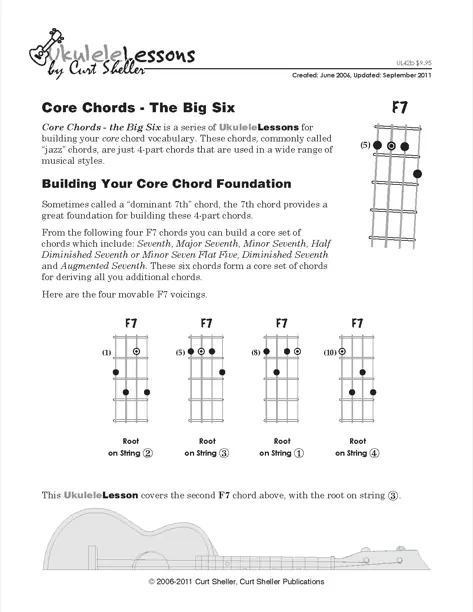
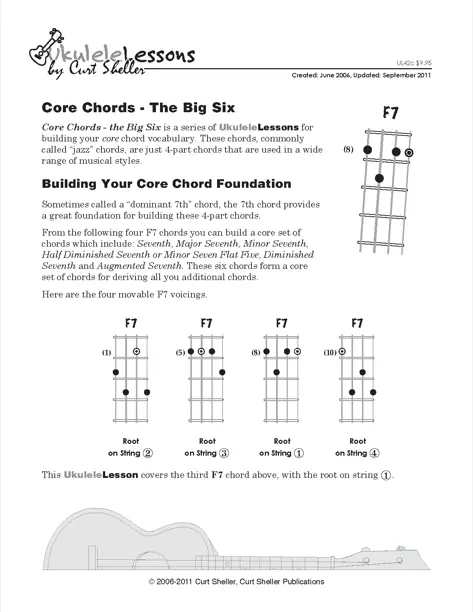
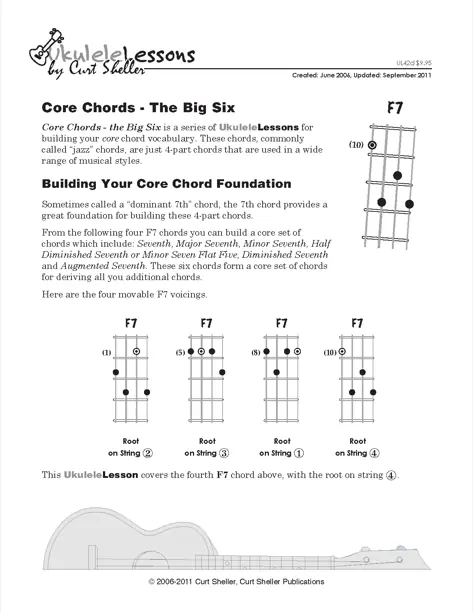
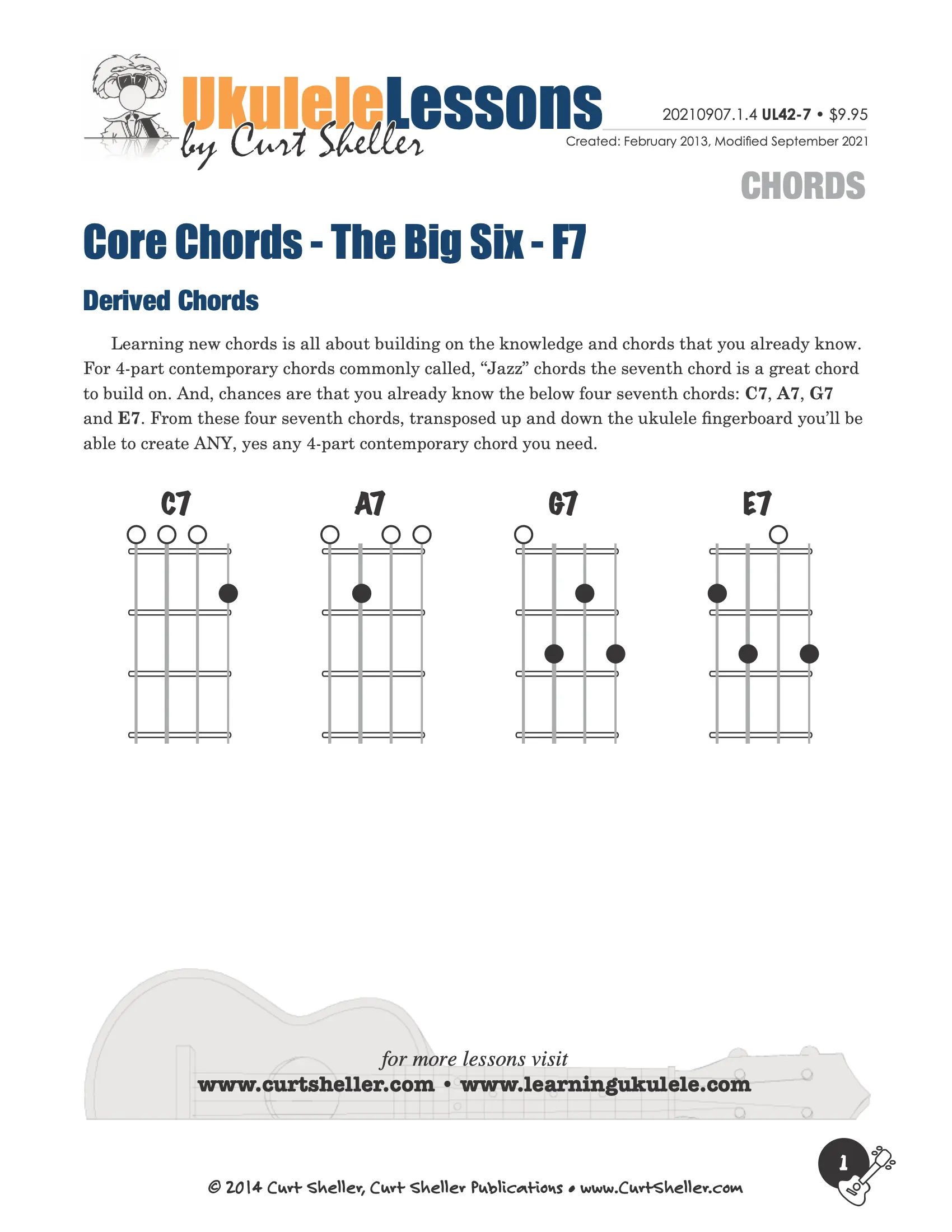
Core Chords - The Big Six - Building a Solid Chord Foundation
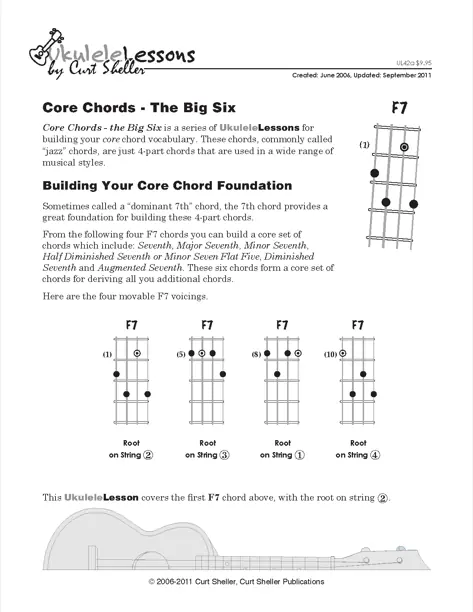
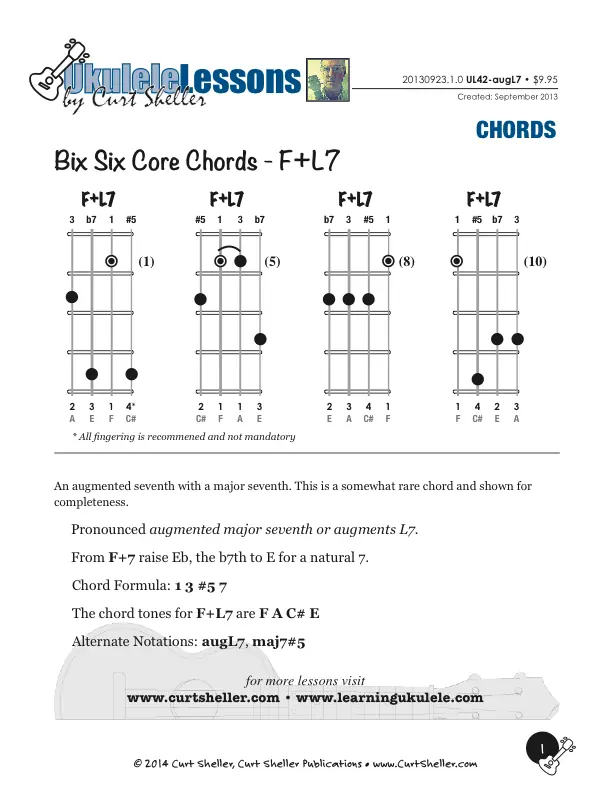
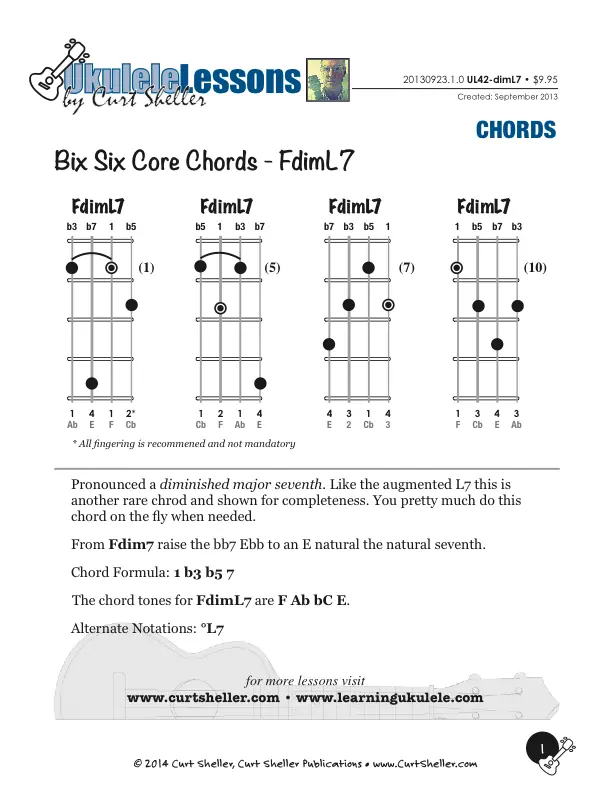
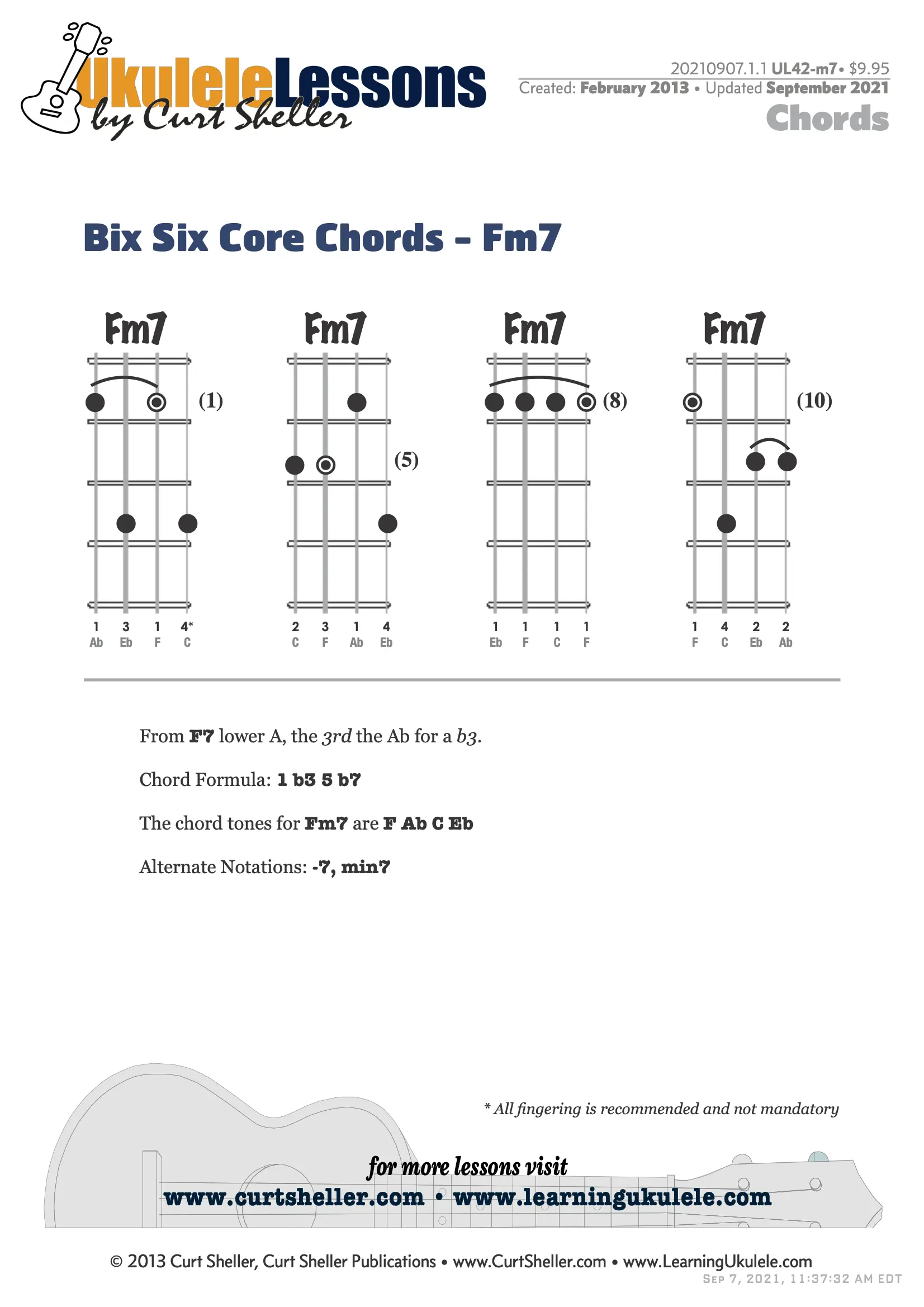
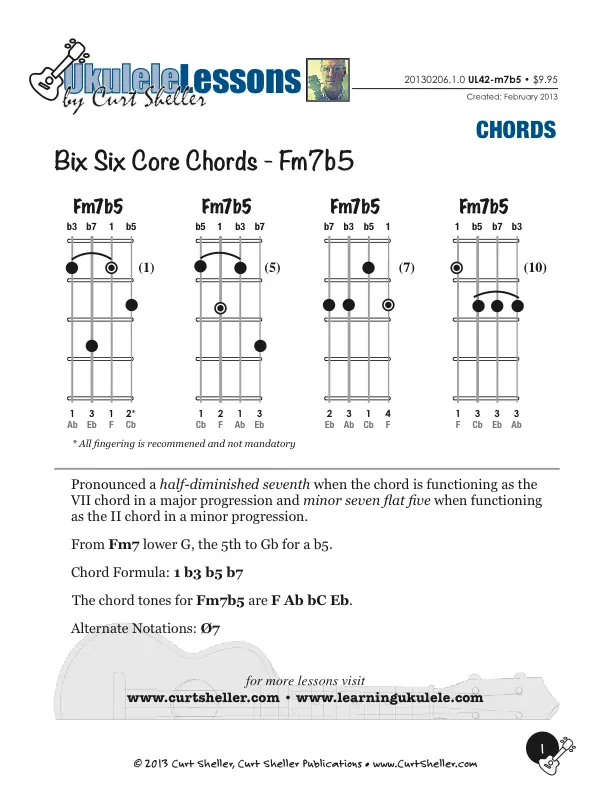
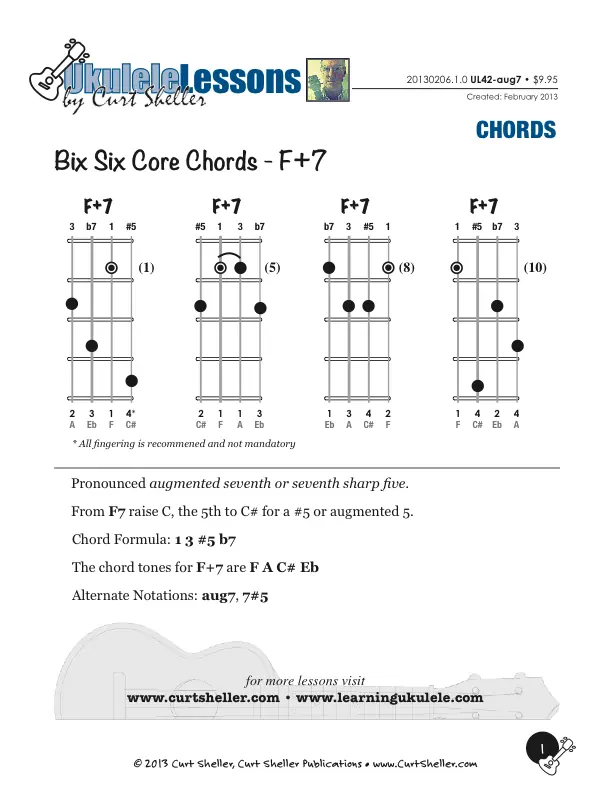
The Big Six Core Chords is a series of lessons for building your core, essential 4-part chords. These chords commonly called jazz chords, are really just 4-part chords used in a wide range of musical styles. These chords include: Seventh , Major Seventh, Minor Seventh, Half Diminished Seventh or Minor Seven Flat Five, Diminished Seventh, and Augmented Seventh. These six chords form a core set of chords.

Core Ukulele Chords - Level One
The remaining chords for The Big Six, Level I Core Chords. The Big Six chords include: Seventh 7, Major Seventh maj7, Minor Seventh m7, Half Diminished Seventh or Minor Seven Flat Five diminished 7 m7b5, Diminished Seventh o7 and Augmented Seventh +7. These six chords form a core set of chords.
Core Ukulele Chords - Triads, Add Chords
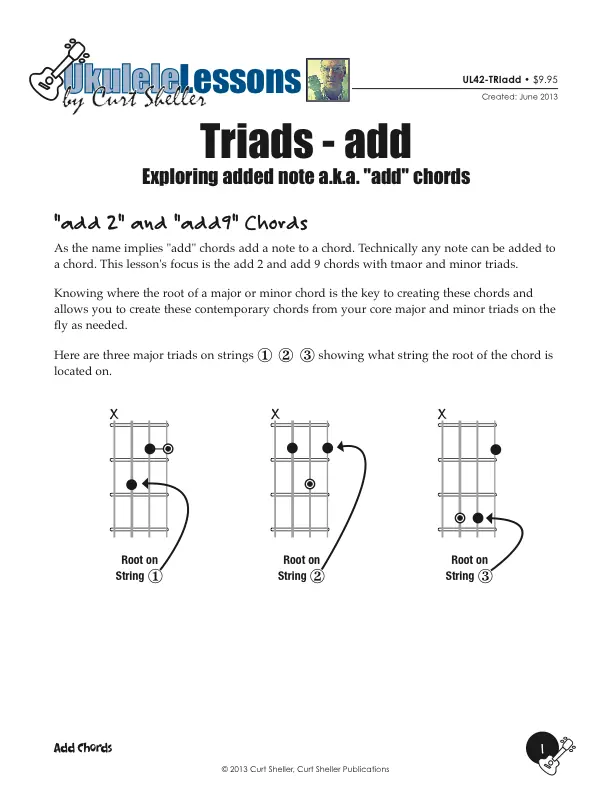
A triad is a three note chord. In traditional chord theory there are four traditional triad chord types: major, minor, diminished and augmented. And four contemporary triad chord types: sus2, sus4, add2 and add9. This series of lessons explores contemporary add chords using triads covered in earlier lessons of this series.
Core Ukulele Chords - Triads, Suspended Chords
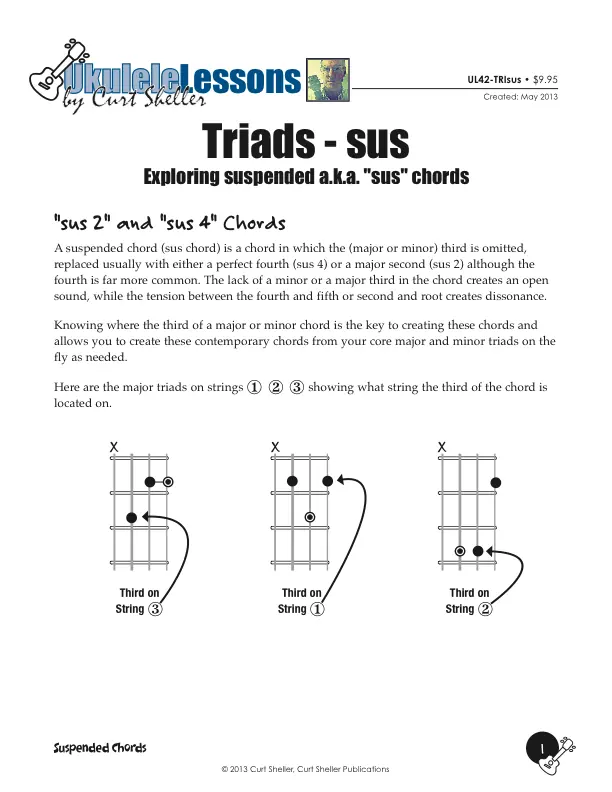
A triad is a three note chord. In traditional chord theory there are four traditional triad chord types: major, minor, diminished and augmented. And four contemporary triad chord types: sus2, sus4, add2 and add9.
This series of lessons explores contemporary suspended or sus chords using triads cover is earlier lessons of this series.
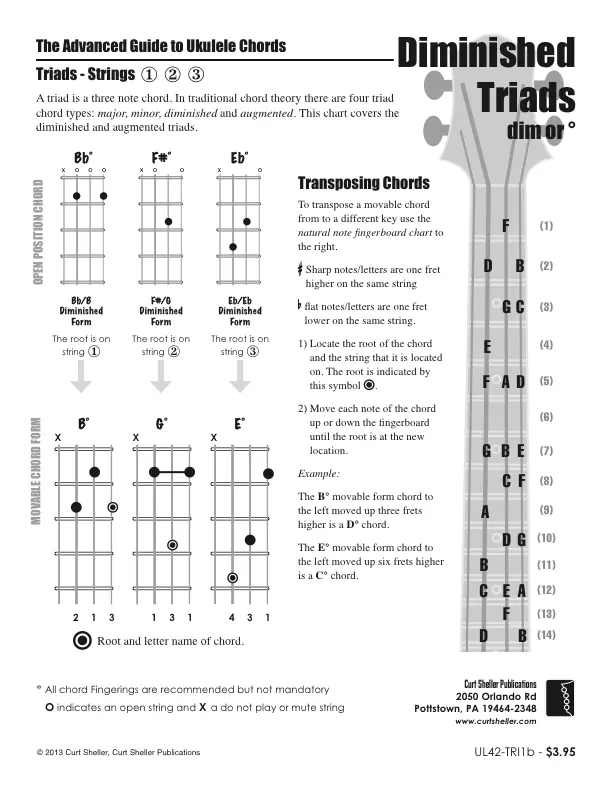
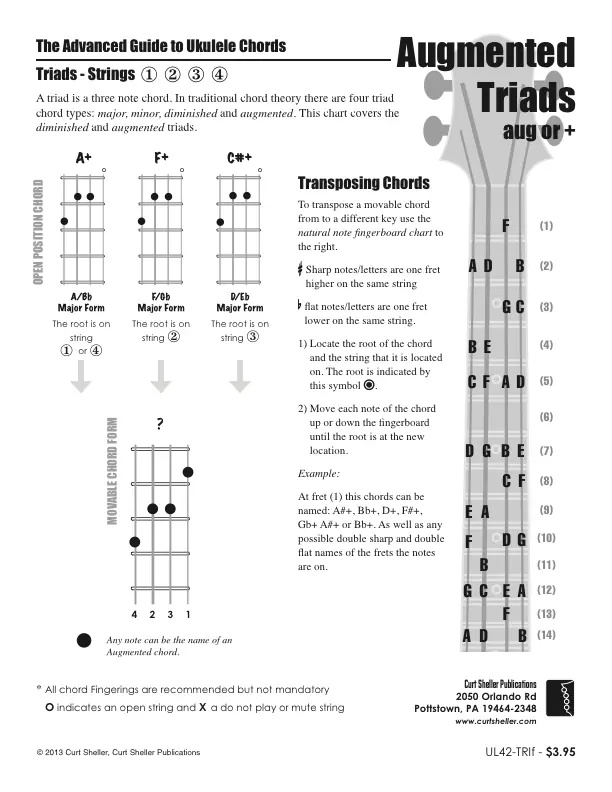
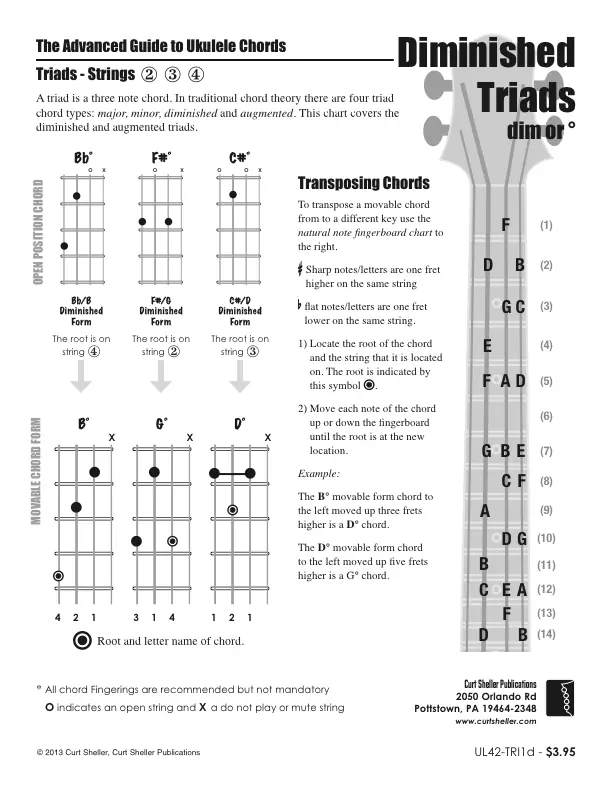
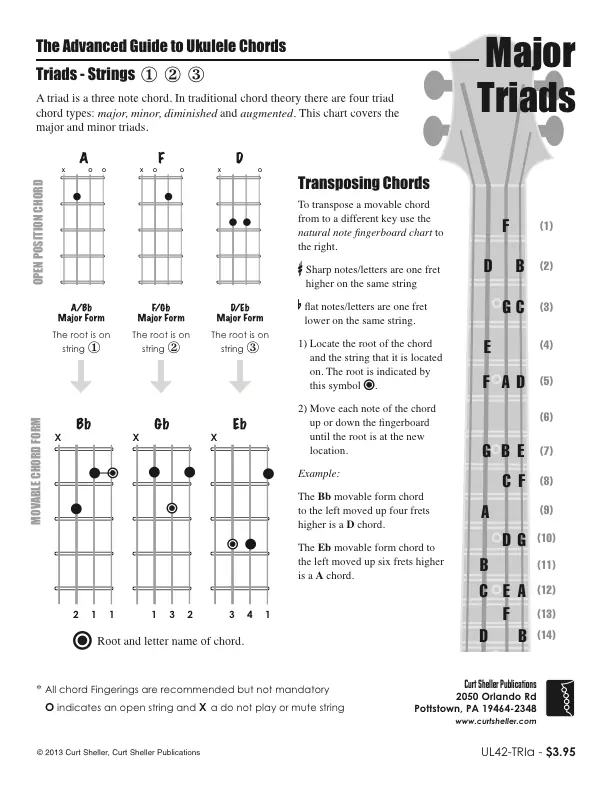
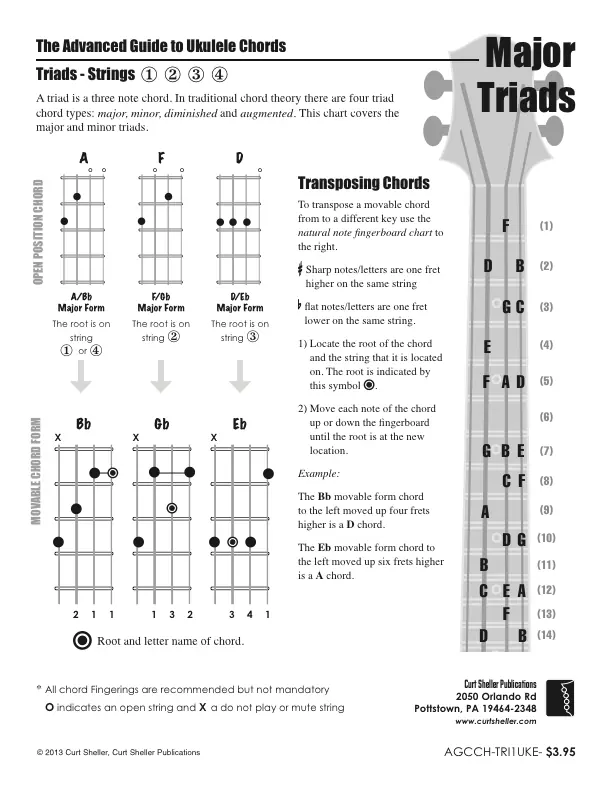
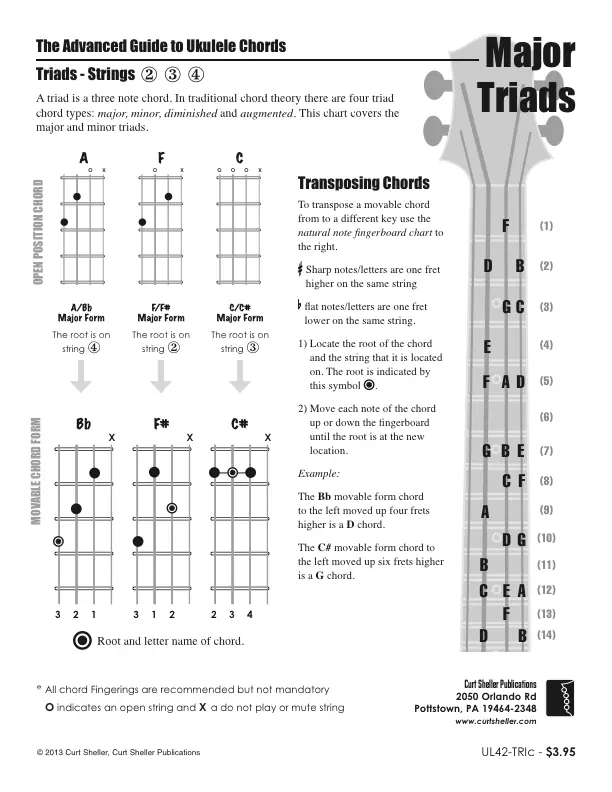
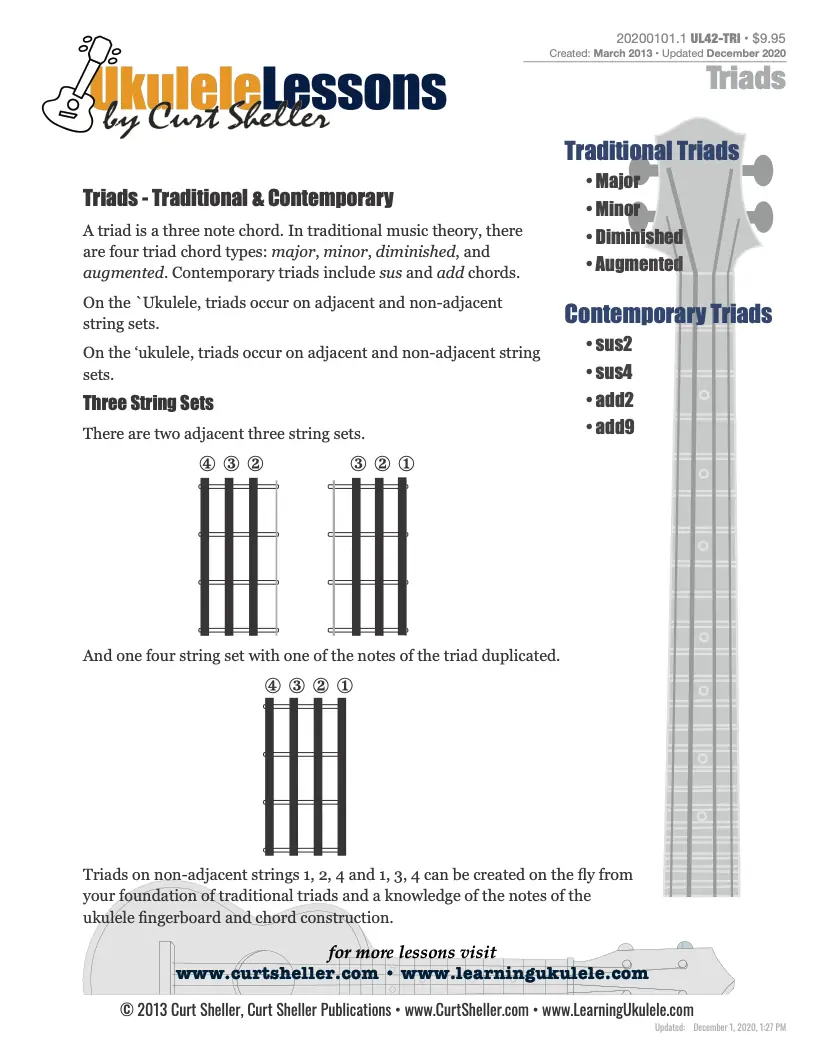
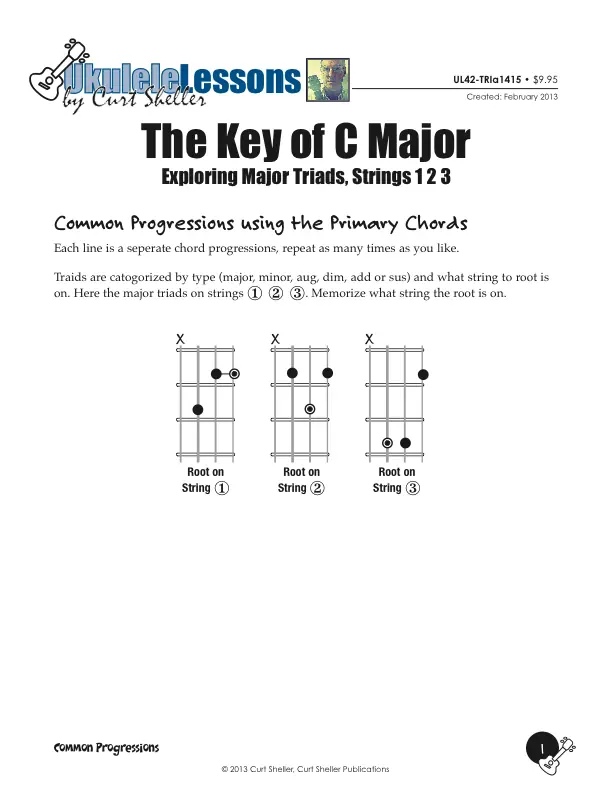
Exploring Major Triads on Ukulele Using a I IV I V Progression - C Major
Building major triads using the primary chords of C major. Triads are one of the first chords that really bring to light the need to know the notes of the neck. This lesson shows the three voicings and the solutions for playing a common "1 4 1 5" progression using C, F and G triads on the string 1 2 3 set.

Exploring Major Triads on `Ukulele Using a I IV I V Progression - Key of D
Exploring major triads using the primary chords of D major. Triads are one of the first chords that really bring to light the need to know the notes of the neck. This lessons shows the three voicings and the solutions for playing a common 1 4 1 5 progression using D, G and A triads on the string 1 2 3 set.
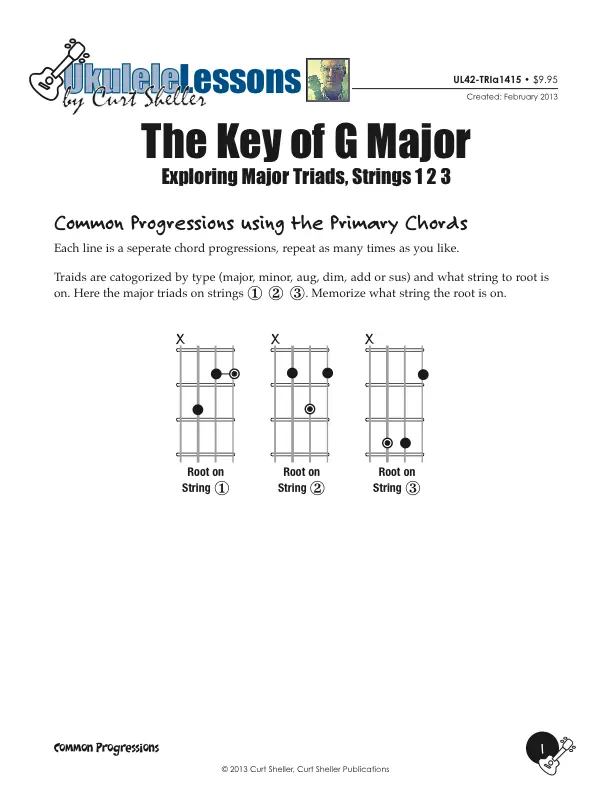
Exploring Major Triads on `Ukulele Using a I IV I V Progression - Key of G
Exploring major triads using the primary chords of G major. Triads are one of the first chords that really bring to light the need to know the notes of the neck. This lesson shows the three voicings and the solutions for playing a common 1 4 1 5 progression using G, C and D triads on the string 1 2 3 set.

Learning Core Seventh Chords on `Ukulele
Beyond basic open position chords, basic movable form chords and a core set of 4-part chords. There are just too many chords shapes too memorize. Learning the principles of how chords are constructed and the ukulele fingerboard are the way to go. Then you can create more advanced chords like 9#11, 7#5-9, 13b5, 7+9 on the fly as needed.
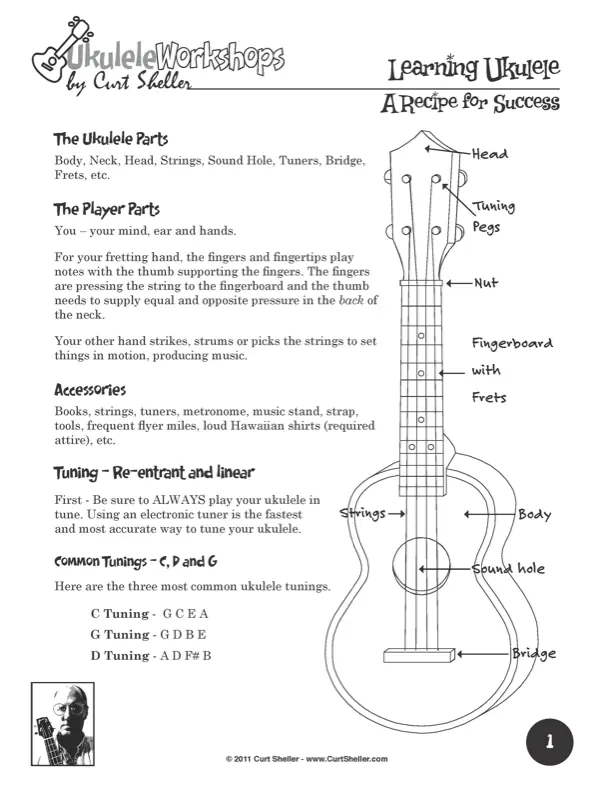
Learning `Ukulele - Recipe for Success
"Where Do I Start?" This is a common question. This workshop-lesson covers ukulele tunings, learning the ukulele fingerboard, basic chords and strums. This workshop gets you rolling on having some fun playing the ukulele. This is the workshop-lesson handout that I give ukulele players attending my Learning Ukulele - A Recipe for Success beginner workshop.
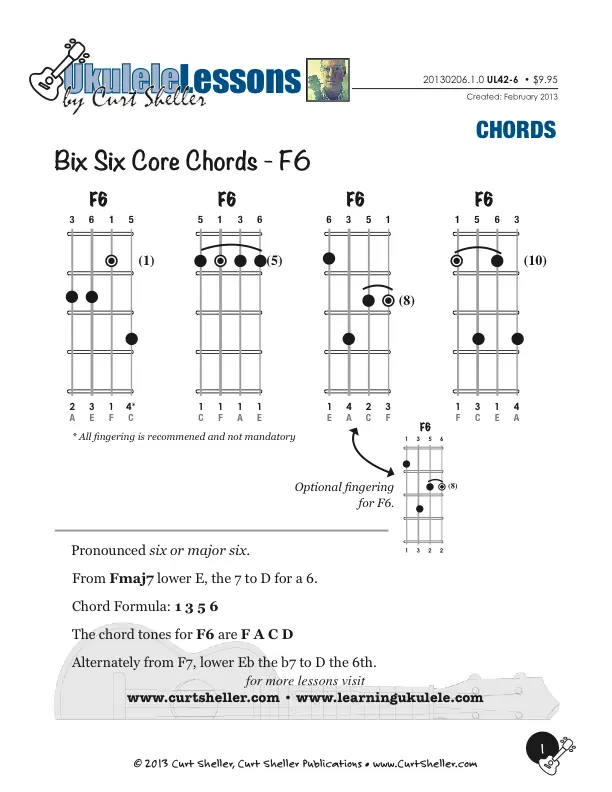
The Big Six Core Chords - F6, Four Voicings
The Big Six Core Chords: "F6". This is the Level II of your core 4-part "Jazz" chords. The F6 is a 1 3 5 6 of the major scale, based on the root of the chord. A major 6th chord can be derived either from a seventh or major seventh chord. From a seventh chord lower the flat seventh one fret. From a major seventh chord lower the natural seventh two frets.
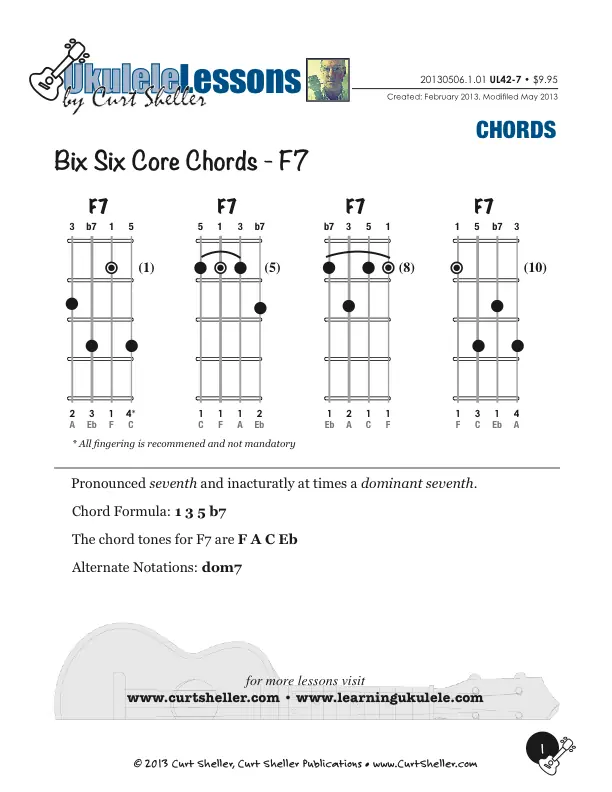
The Big Six Core Chords - F7, Four Voicings
The Big Six Core Chords, Level I - F7, four voicings. The F7 is a 1 3 5 b7 of the major scale, based on the root of the chord. For F7 the chord tones are: F A C Eb. These ARE the four F7 chord voicings that are used for deriving other chords. If all else fails when trying to remember a particular chord you can go back to your base seventh chords and go through the chord formula for deriving the chord you need.
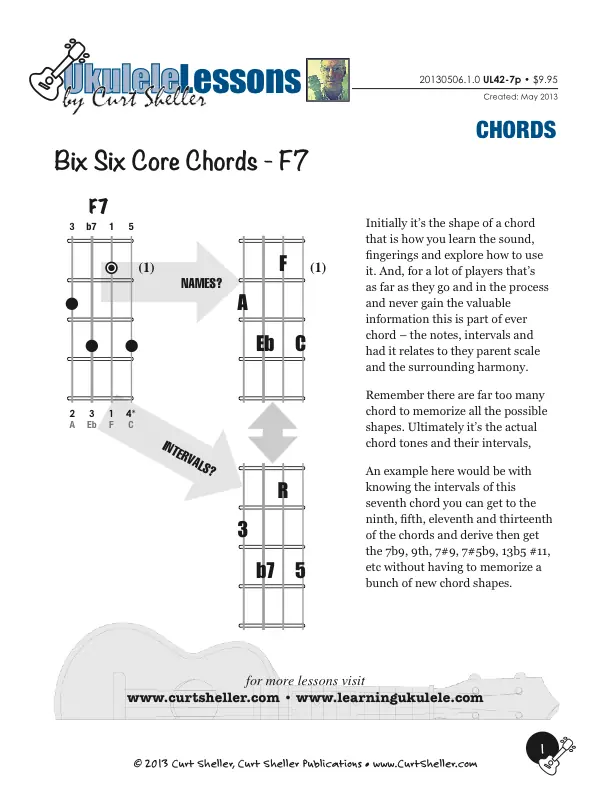
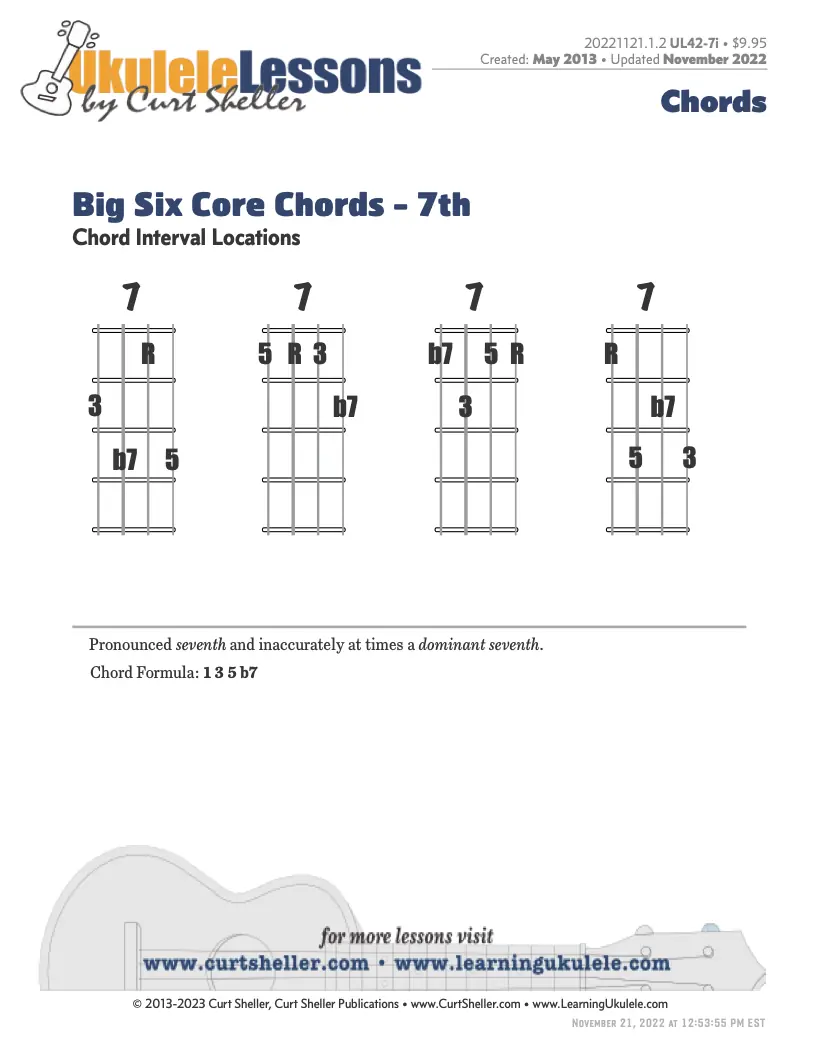
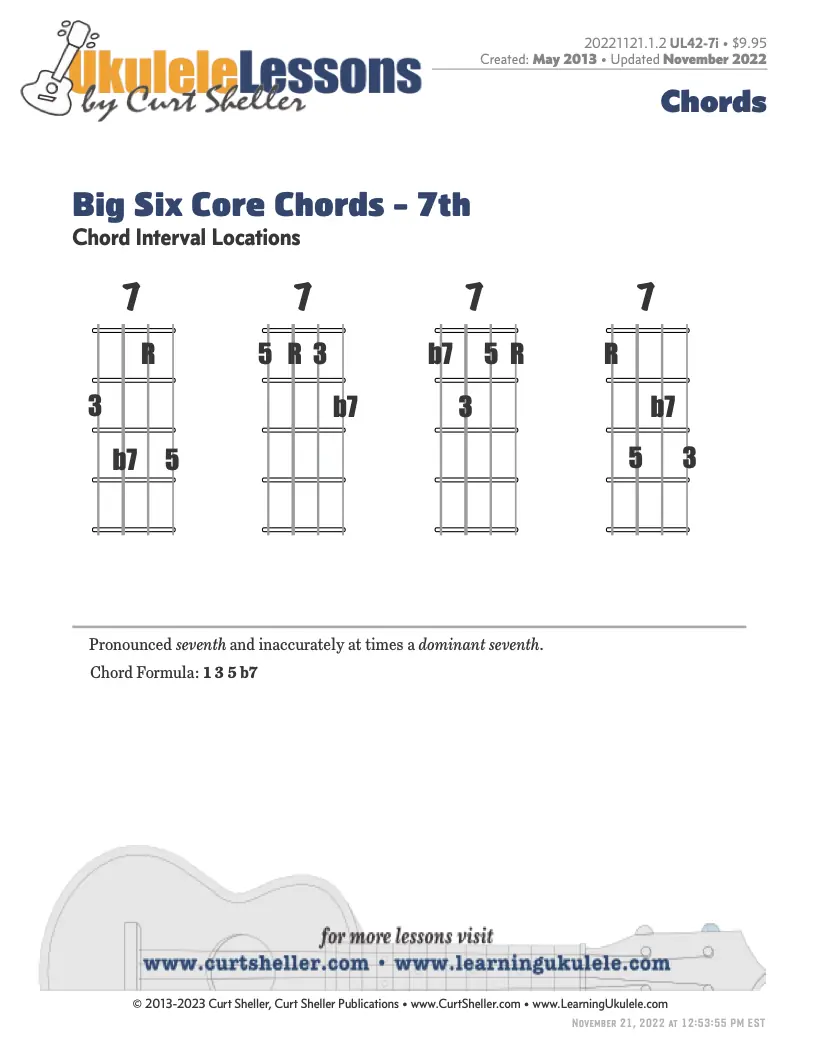
The Big Six Core Chords - F7, four voicings, Chord Intervals
The Big Six Core Chords - Level I: "F7" is created from the "1 3 5 b7" of the major scale, based on the root of the chord. For "F7" the chord tones are: F A C Eb. This lesson introduces the four "F7" voicings on the string set, strings 1, 2. 3, and 4. The Chords are shown for C Tuning, Low and High G.
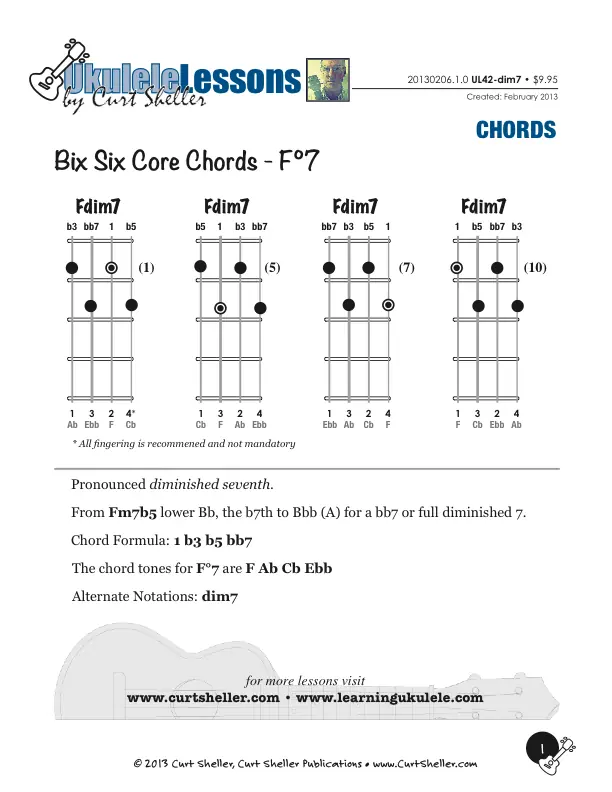
The Big Six Core Chords - Fdim7, Four Voicings
The Big Six Core Chords, Level I - Fdim7, four voicings. Fdim7 is a 1 b3 b5 bb7 of the major scale, based on the root of the chord. These are the four Fdim7 chord voicings that will be used for deriving other chords. There are far too many chord shapes to memorize thousands of shapes.
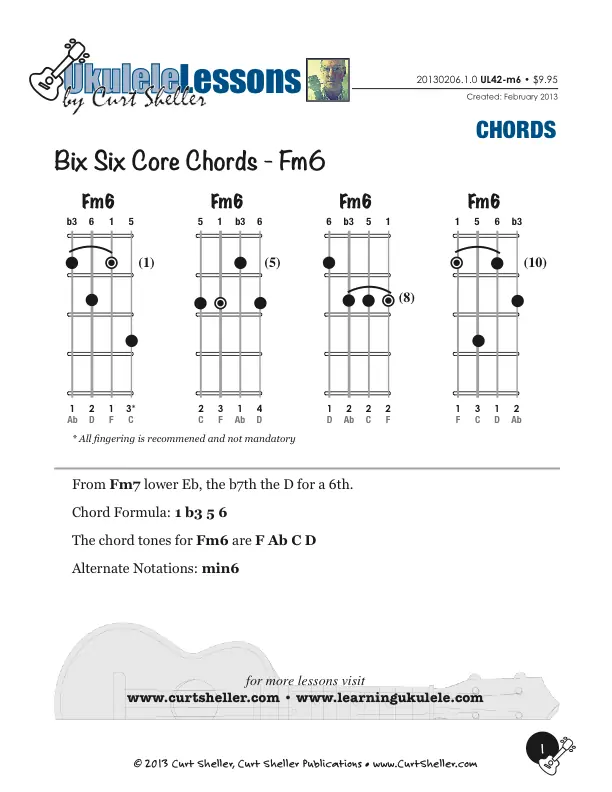
The Big Six Core Chords - Fm6, Four Vocings
The Big Six Core Chords: "Fm6". This is the Level II of your core 4-part "Jazz" chords. The Fm6 is a 1 b3 5 6 of the major scale, based on the root of the chord. A minor 6th chord can be derived either from a minor seventh or major sixth chord. From a minor seventh chord lower the flat seventh one fret. From a major sixth chord lower the natural third one fret.
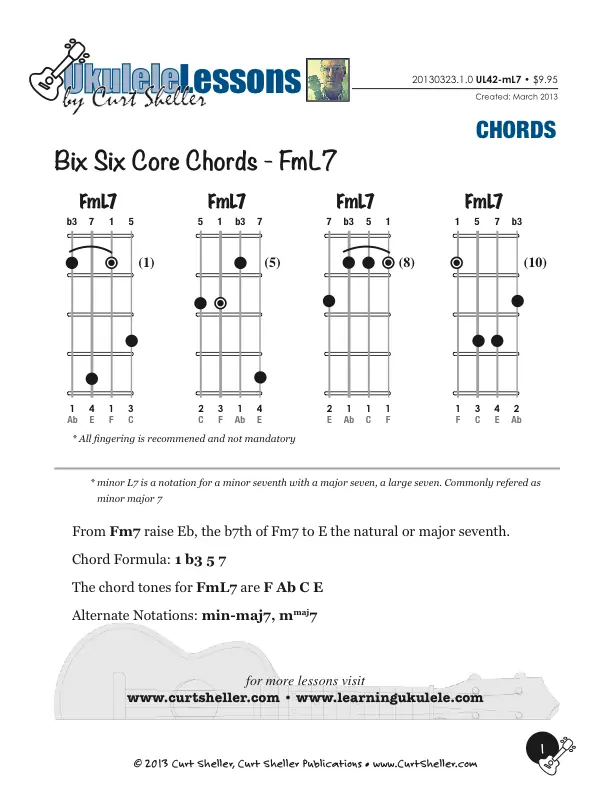
The Big Six Core Chords - FmL7, Four Voicings
The Big Six Core Chords - Level II: "FmL7" is created from the "1 b3 5 7" of the major scale, based on the root of the chord. For "FmL7" the chord tones are: F Ab C E. The L is a contemporary chord designation and refers to a large seventh, a major seventh.
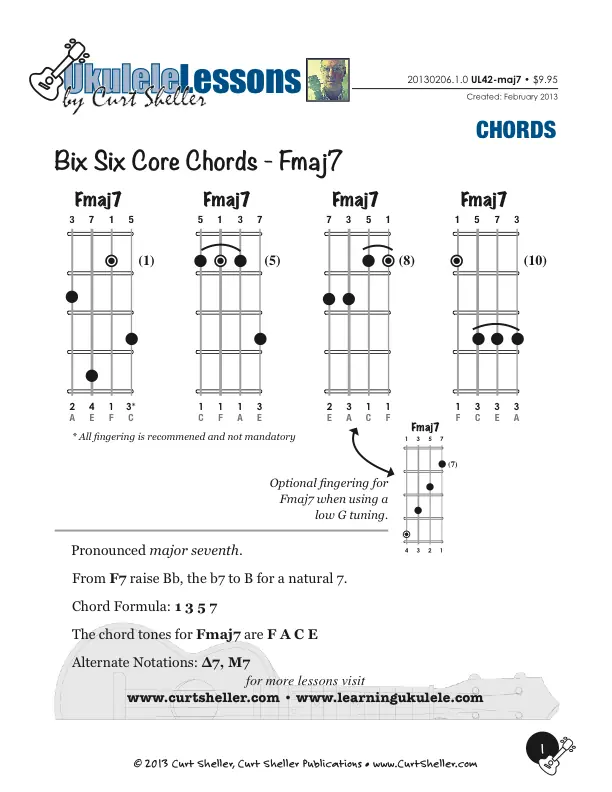
The Big Six Core Chords - Fmaj7, Four Voicings
The Big Six Core Chords, Level I - Fmaj7, four voicings. Fmaj7 is a 1 3 5 7 of the major scale, based on the root of the chord. These are the four Fmaj7 chord voicings that will be used for deriving other major seventh derived chords. There are far too many chord shapes to memorize thousands of shapes.
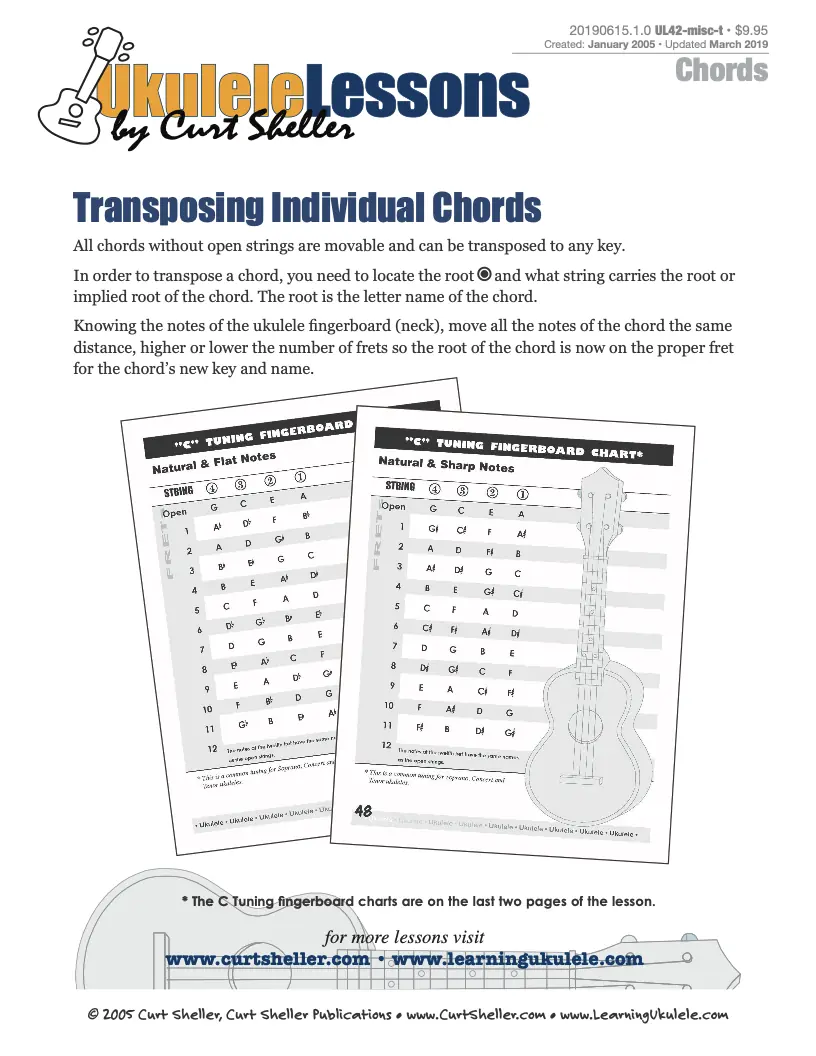
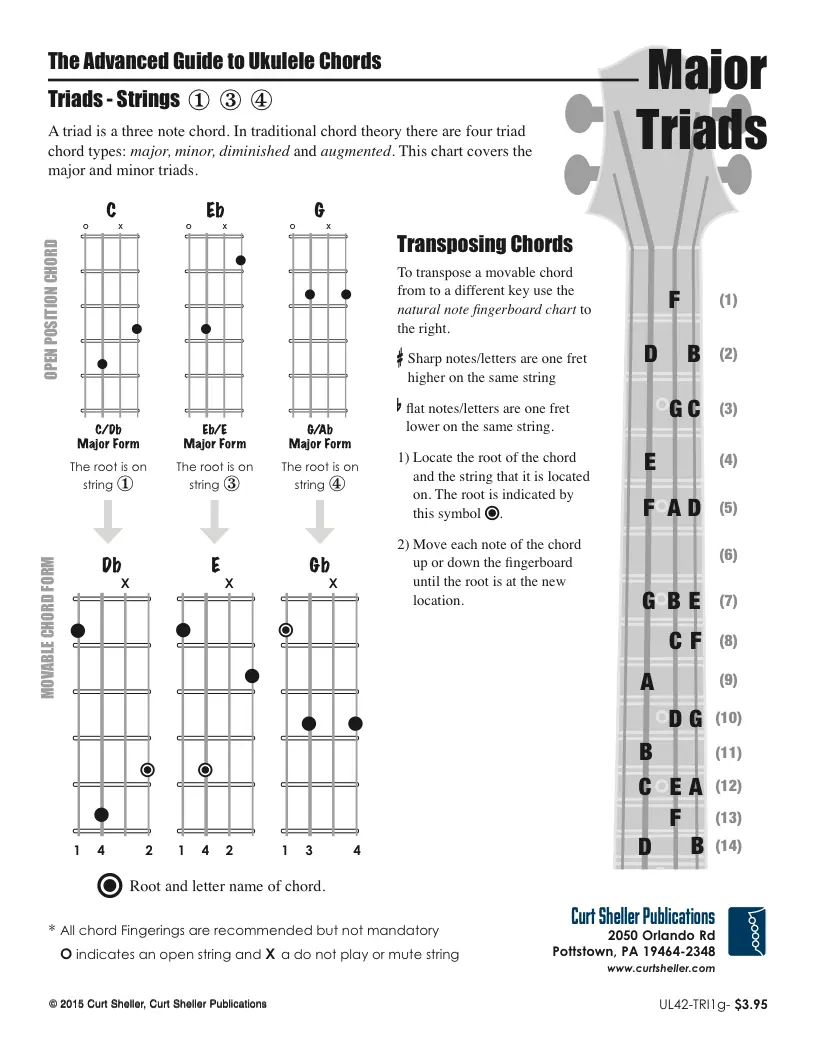
Transposing Individual `Ukulele Chords
"Transposition" is the process of moving a note, chord, scale or any musical passage from one key to another key. All music can be transposed, from a single note to a complex musical score. This lesson deals with transposing chords on ukulele and transposing chords.

Upper Partial Chord Tones
Upper Partials or extensions for chords are the 9th, 11th, and 13ths of a chord. The 9, 11 and 13 can be altered chord tones depending on the type: e.g: b9, #9, #11, b13. These numbers, the 9, 11 and 13 refer to the scale tone/chord tone relative to the major scale used for building all chords.
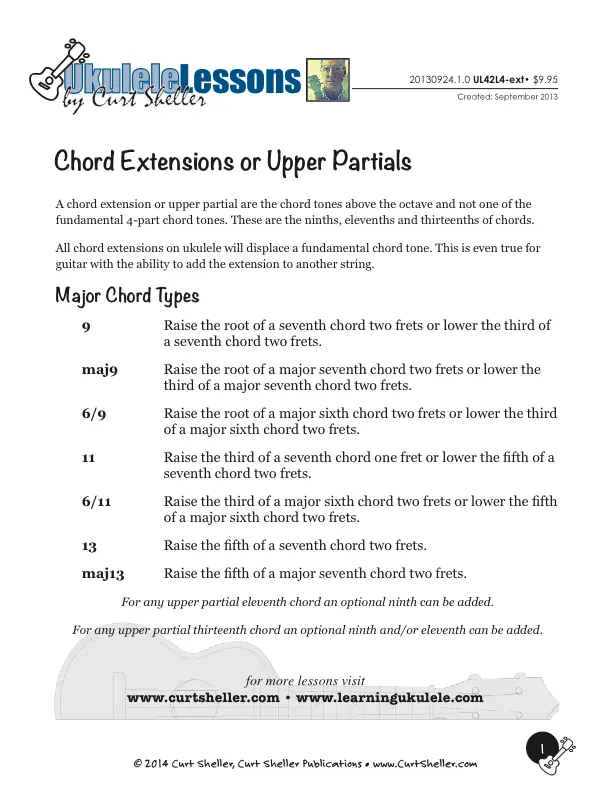
Upper Partials and Chord Extensions
A chord extension or upper partial are the chord tones above the octave and not one of the fundamental 4-part chord tones. These are the ninths, elevenths and thirteenths of chords. All chord extensions on ukulele will displace a fundamental chord tone. This is even true for guitar with the ability to add the extension to another string.