
Published:
2013-10-31
Updated:
2021-11-19
Learning Ukulele with Curt
Getting Started with Ukulele - Introduction
Here are the first suggested lessons that ALL my private students and site members get. This series of lessons lay the foundation and establishes common musical terminology for communication and future lesson material. The whole goal of this series of lessons under the "Getting Started with Ukulele" lessons series is to get you playing basic chords in common keys using the common strums.
Author(s): Curt Sheller Publisher: Curt Sheller Publications Code: ULB01-wk-i
Main Category: Basics Main Instrument: Ukulele
Categories: Basics, Chords, Beginner

2026-08-23
Show Series Lessons
Series Home
Here are the first suggested lessons that ALL my private students and site members get. This series of lessons lay the foundation and establishes common musical terminology for communication and future lesson material.
The whole goal of this series of lessons under the Getting Started with Ukulele
series is to get you playing basic chords in common keys using the common strums.
First Things First – Selecting a `Ukulele
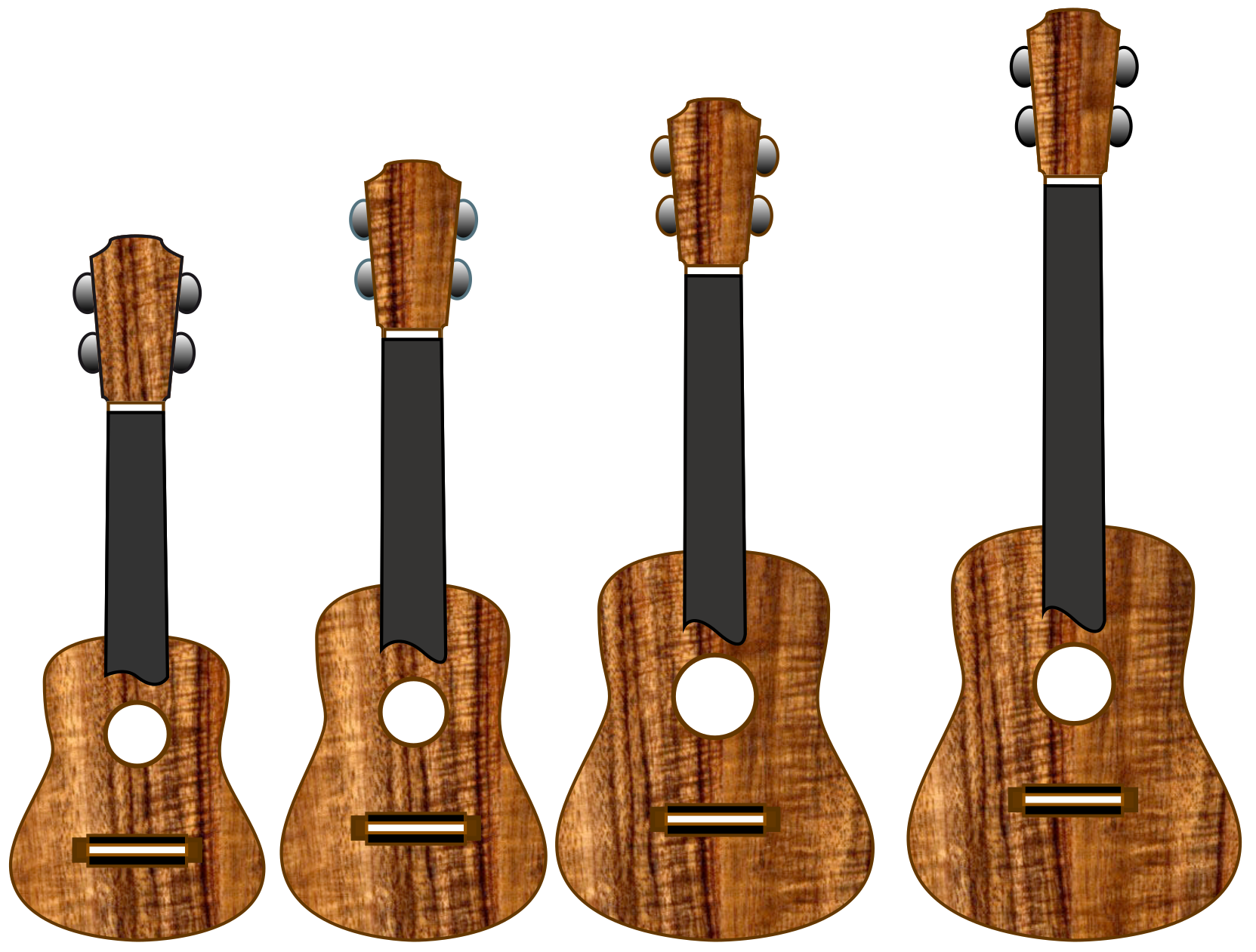
The first thing is to get a ukulele. The ukulele (pronounced yoo-kə-lay-lee, from the Hawaiian: `ukulele) comes in four common sizes: Soprano ( often called Standard ), Concert, Tenor and Baritone. And, various variations of these with the body of one size of ukulele and the neck, scale length of another size ukulele. i.e., Long-neck Soprano, Super Tenor, etc…
Recommended Lessons, Series & Resources
- Lesson: Selecting a Ukulele
- Resources: Ukulele Manufactures, Builders and Luthiers Around the World
Common `Ukulele Tunings

Any tuning is possible on a `ukulele, as long as the construction supports it and a string is available. There are three common `Ukulele Tunings in use today, C, D and G tuning – with C Tuning (G C E A) the most popular. C Tuning, both Low G and High G are the tuning I use for lessons.
Recommended Lessons, Series & Resources
- Lesson: Common Ukulele Tunings

Tuning Your Ukulele?
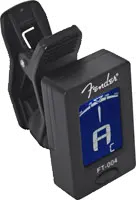
The best way to tune when you are first starting out is to get an electronic, clip-on tuner. Clip-on tuners are available at all music stores. There's no excuse in today's day and age to be out of tune.
Recommended Lessons, Series & Resources
- More Info: Tune Up! Getting Your Ukulele In Tune
What Finger is What?
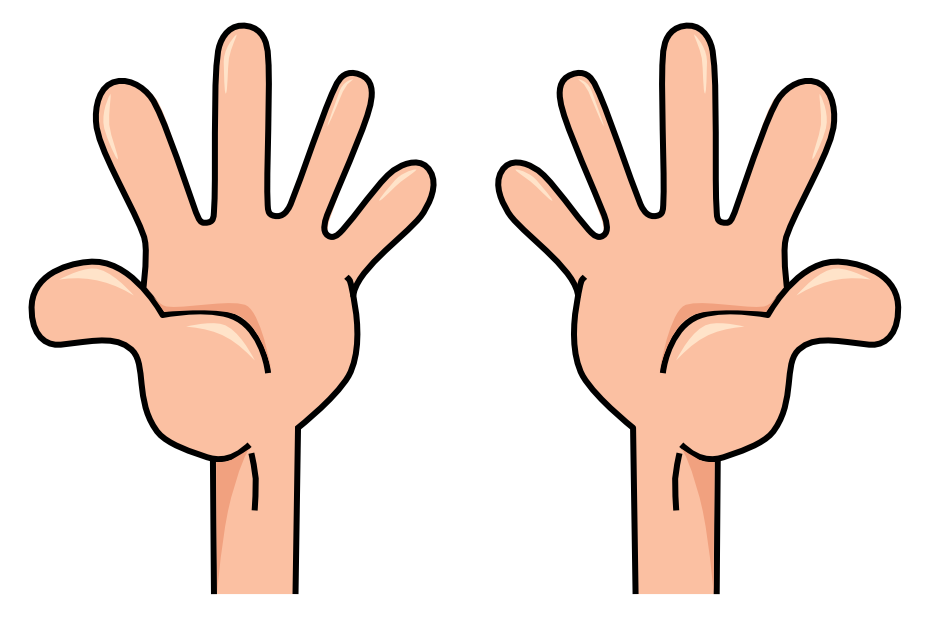
Just what are the fingers of the plucking and fretting hand called?
There can be a bit of confusion as to what the names and numbers of your fretting hand and the plucking or strumming hand are. Here are some of the fingering notations I've encountered over the course of my studying ukulele and guitar.
Recommended Lessons, Series & Resources
- Lesson: What Finger is What?
Which Way Is Up? — Up, Down, Ascending, Descending, etc.
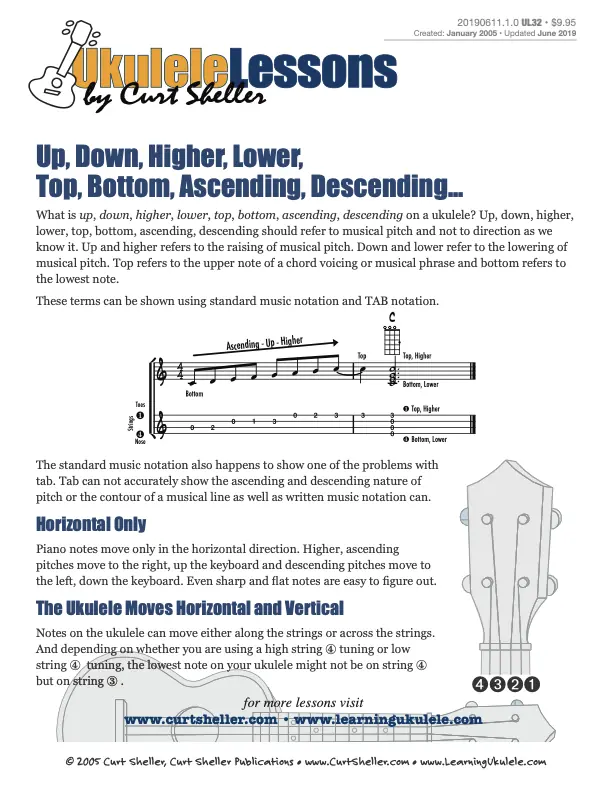
What is up, down, higher, lower, top, bottom, ascending, descending on a ukulele? Up, down, higher, lower, top, bottom, ascending, descending should refer to musical pitch and not to direction as we know it.
Recommended Lessons, Series & Resources
- Lesson: What Way Is Up?
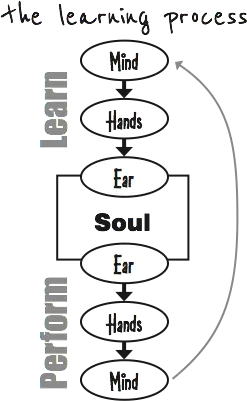
The Learning Process — The Mind, Hands and Ears
For music and learning an instrument like the ukulele or guitar, it's all about the making the connection between the Mind, Hands, and Ear.
When listening to music, we enjoy it at the tempo the composer or artist intended - in real time. Only the ear is involved in passively listening and enjoying the music. Music is around us every day. It's what draws us to want to learn a musical instrument.
Recommended Lessons, Series & Resources
Efficient Fretting Hand Placement
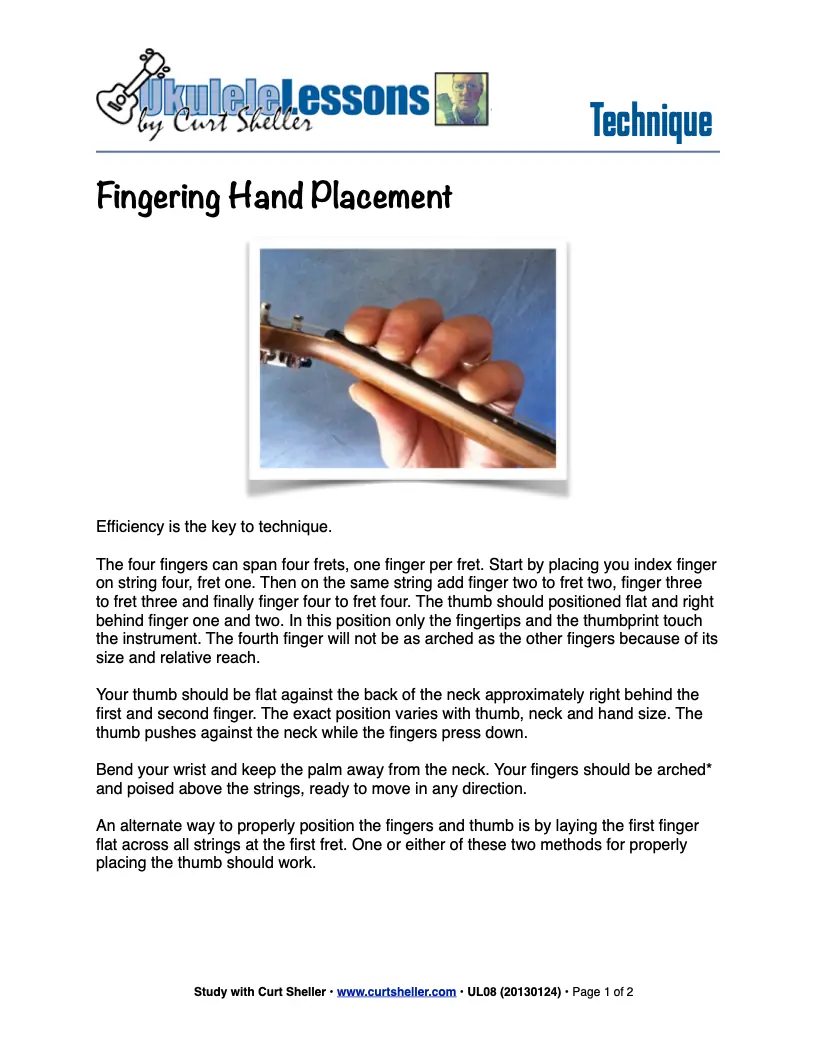
Efficiency is the Key to Proper Technique and one of the many things that is hard to learn on your own. I have seen with the typical teacher or on-line video presentation that technique is the one common area where you don't get quality instruction or any instruction at all. And technique is one thing that can't be based on "do whats feels natural." An inaccurate statement that I hear all the time. What initially feels good is not what will lead to an efficient easy to maintain technique.
Default Fingering & Thumb Position
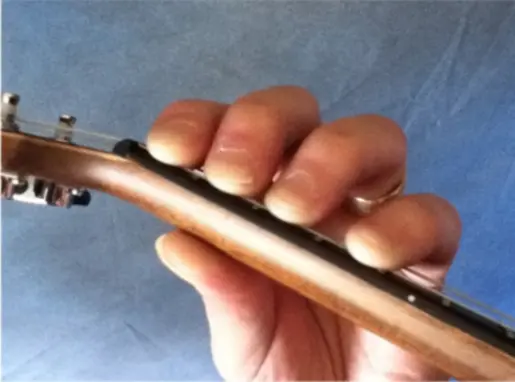
The four fingers of your fretting hand can span four frets, one finger per fret - this is the default fingering position. Start by placing your index finger on string four, fret one. Then add finger two to fret two, finger three to fret three and finally finger four to fret four. The thumb should be positioned flat and right behind finger one and two - the position of strength and offering the most support. Only the fingertips and the thumb print touch the instrument. The fourth finger will not be as arched much as the other fingers because of its size and relative reach. Unless there is an overwhelming musical reason for the thumb to get into the action its only role is to support the fingers, supplying opposite and an equal pressing motion as the fingers.
Recommended Lessons, Series & Resources
- Lesson: Proper Fretting Hand Placement


End of Lesson - Thanks, Hope You Enjoyed It!
Related Lessons, Videos, Lesson Series, Songs, Books & Reference Charts, Resources & Assets, Workshops are below.