Published:
2024-01-08
Updated:
2024-01-08
Learning Ukulele with Curt
Good Day Sunshine
Harmonic Analysis (RMA) Worksheet for the song: "Go Down, Good Day Sunshine".
Author(s): Curt Sheller Publisher: Curt Sheller Publications Code: ULHA-YB-92
Main Category: Harmonic-Analysis Main Instrument: Any
Categories: Theory, Intervals, Progressions, RMA, Harmony

2026-08-23
RelatedLessonAssets
Harmonic Analysis (RMA) Worksheet for the song: Good Day Sunshine.

Good Day Sunshine
Released: 5 August 1966
Good Day Sunshine is a song by the English rock band the Beatles from their 1966 album Revolver. It was written mainly by Paul McCartney and credited to the Lennon–McCartney partnership. McCartney intended it as a song in the style of the Lovin' Spoonful's contemporaneous hit single "Daydream". The recording includes multiple pianos played in the barrelhouse style and evokes a vaudevillian mood.
The composition contains key changes and metric anomalies, and closes with voices chanting the song title. Together with its lyrics celebrating romantic love and sunshine, the recording contrasts with the more austere and experimental aesthetic of Revolver. Among music critics, some writers have welcomed the song's lightheartedness while others view it as a track that dilutes the album's strengths. wikiwand
McCartney said that he was influenced by the Lovin' Spoonful's hit single "Daydream" and was trying to write a song in that vein. Lennon and George Harrison had attended the Lovin' Spoonful's concert at the Marquee in London in April 1966; the Beatles and members of the Rolling Stones soon lauded them as the "hot new group". Author Steve Turner writes that the Kinks' "Sunny Afternoon" could have been another source of inspiration for McCartney. wikiwand
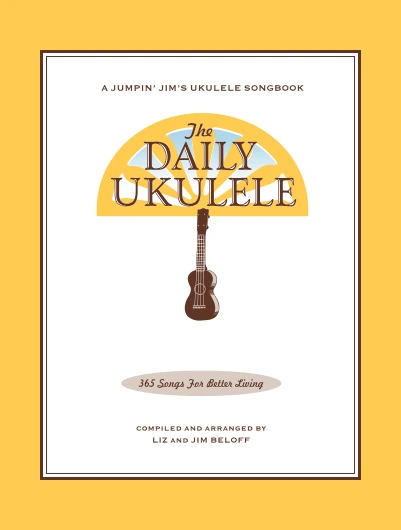
Good Day Sunshine is in the The Daily Ukulele — 365 Songs for Better Living book.
Strum a different song every day with easy arrangements of 365 of your favorite songs in one big songbook! The Daily Ukulele features ukulele arrangements with melody, lyrics and uke chord grids and are in ukulele-friendly keys that are particularly suited for groups of one to one hundred to play and sing.
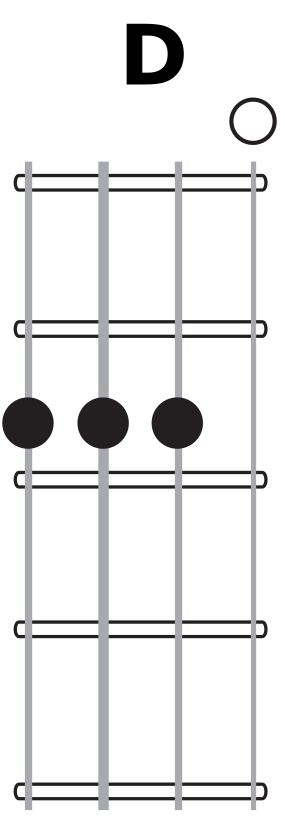
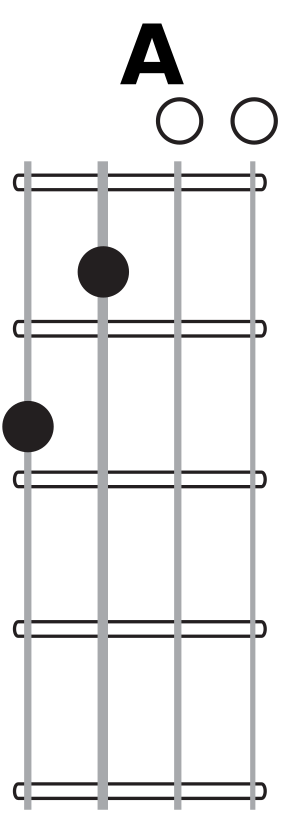
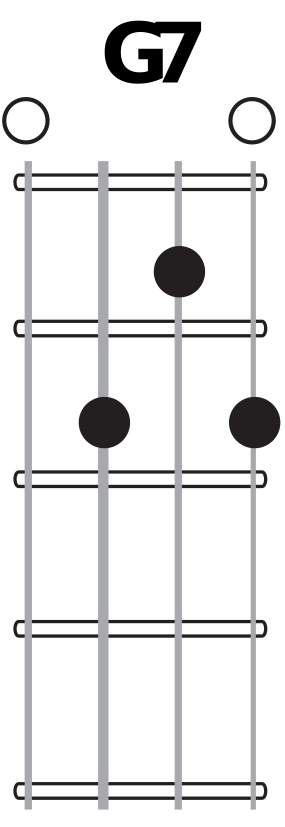
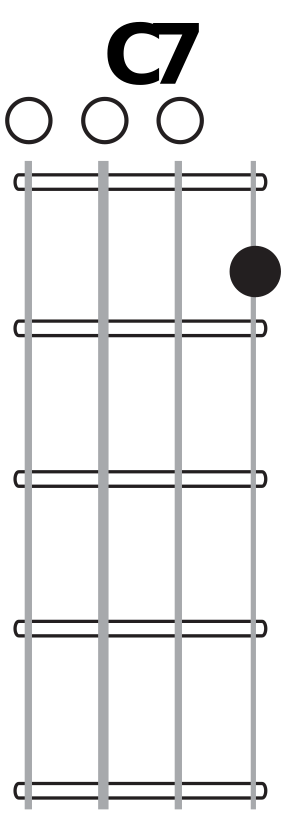
Ukulele Chords
These and many other chords are covered in the Learn A Chord A Day series of lessons.
C Tuning Chords
In the Daily Ukulele series of book the chords are actually listing in their order of appearance. And, are always the basic open position chords when possible.
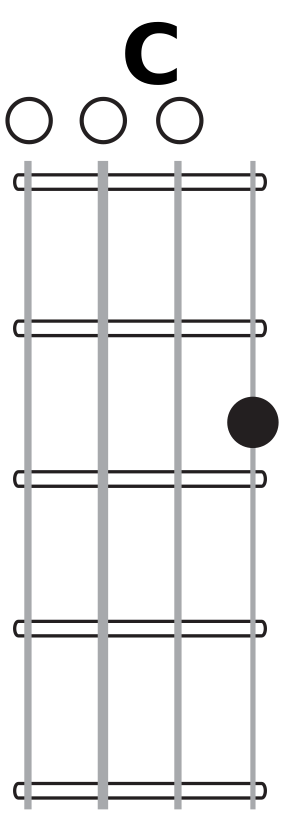
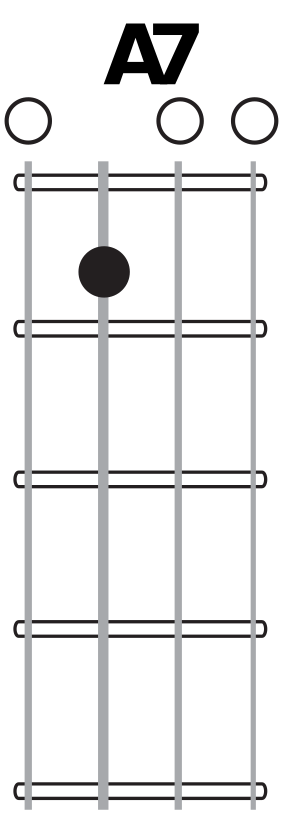
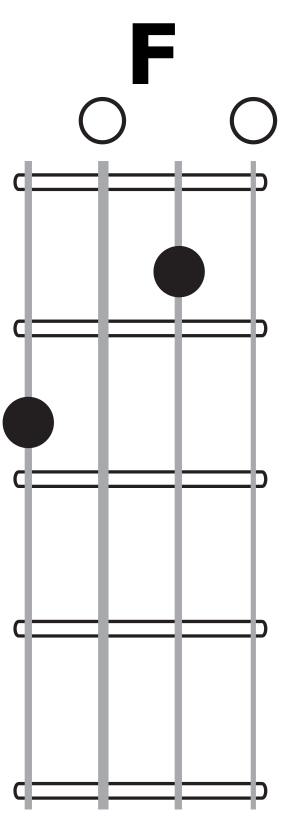
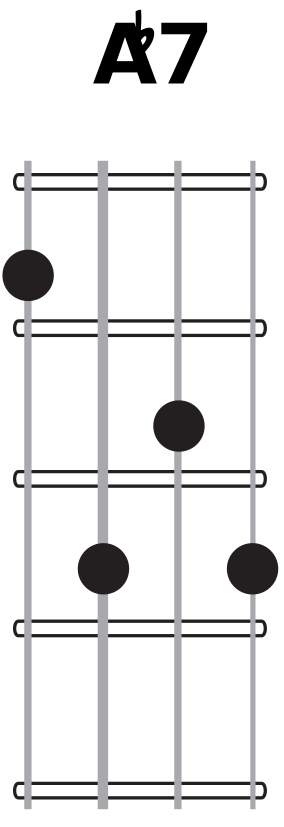
Starting Melody Note and 1st Interval
Intervals Legend: Root=note that begins a scale of the starting key; C is C, D is D, Am is A, Em is E, etc… m=minor; M=Major; P=Perfect; D=Diminished; A=Augmented. • ↑ is up/ascending; ↓ is down/descending;
Harmonic Analysis (HA) Worksheet
Visit the Harmonic Analysis for Scale and Chord Selection series of lessons for information on creating your own Harmonic Analysis Worksheet
D: D Ionian
Intro in the Key of D and then song modulations to the Key of C for the duration of the song until to Coda.
VI7
(V of II)
II7
(V of V)
C: C Ionian
A mix+4
D mix+4
Start of a Perfect Fourth Chained Secondary Dominant Cycle: A7, D7, G7 leading to the Tonic I chord.
Start of a Perfect Fourth Chained Secondary Dominant Cycle: A7, D7, G7 leading to the Tonic I chord.
To Coda
D: D Ionian
Intro in the Key of D and then song modulations to the Key of C for the duration of the song until to Coda.
VI7
(V of II)
II7
(V of V)
C: C Ionian
A mix+4
D mix+4
Start of a Perfect Fourth Chained Secondary Dominant Cycle: A7, D7, G7
The Worksheet for Good Day Sunshine RMA/HA is formatted to show that in most cases songs are not as harmonically complex as one might think.
D.C. al Coda
II7
(V of V)
I7
(V of IV)
D Mix
C Mix
Start of a Perfect Fourth Chained Secondary Dominant Cycle: D7, G7, C7 leading to the Sub-Dominant, II chord.
Coda
C: C: Ionian
D: C: Ionian
The Harmonic Analysis (HA)
A Harmonic Analysis (RMA/HA) and its worksheet are intended to show the function of the chords, the harmonic principles used, the keys and tonalities the song explores. And, can be used for scale selections and chord and scale substitutions.
NOTE: A Harmonic Analysis Worksheet is NOT intended to be a lead leadsheet.
Minimal roadmap information such as repeats, fine, D.S., D.C., and codas has been used in preparing the worksheets to somewhat mirror the leadsheet in the Daily Ukulele book.
Sections, Verse, Chorus, 1st, 2nd Ending, turnbacks …
The worksheets will show 1st, 2nd Ending, turnbacks, etc. as indicated in the Yellow Book
. You should start to recognize that 1st endings typically always return to a previous verse or an  section. With a 2nd ending, a transition to a different part of the song, a
  or chorus. Harmonic Principles are used for these repeats and transitions.
If turnback chords are not indicated for these 1st and 2nd endings in the original Yellow Book leadsheet, recommended chord(s) will be indicated in parentheses or as an alternate harmony in Red . Typically the last measures or turnbacks will be a chord that resolves to and harmonically leads you to the next section or turning you back to the same section. Typically a V or direct substitution of that next chord.
Nashville Number System (NNS)
Nashville Numbering System always uses four bars/measures per line, no bar lines, and default is each number of the number of beats per bar/measure based on the time signature. If multiple chords in same bar then they are underlined. It can be as simple as converting the Roman Numerals above to Arabic numbers.
At its simplest you simply replace the roman numbers with Arabic numbers. e.g., I becomes 1 , II becomes 2 , etc. The only exception is the bVII7 chord becomes 7 as this borrowed chord from the Mixolydian tonality is so common and the VII (half-diminished seventh) in a major chord is so rare (actually never). And, you could go as far as saying all the modes are numbered: I II III IV V VI VII — just as in the major scale. So calling it a 7 is not that far out.
Check the definitive book Nashville Number System
Scale Selection
Once a Harmonic Analysis has been completed, scale selections can be made. These scale selections can be either vertical or horizontal choices. And, really, only needed if you are going to take a solo or embellish the melody with added notes.
Scale Abbreviation Legend
Traditional Scales: Maj: Major (Ionian), Nat Min: Natural Minor, Dim: Diminished, WT: Whole Tone, Har Min: Harmonic Minor
Contemporary Scales: Minor Pent: Minor Pentatonic, Pent: Major Pentatonic, Blues
Scale/Mode Names: Ion: Ionian (Major), Dor: Dorian (Minor), Phrygian: Phrygian, Lyd: Lydian, Mix: Mixolydian (Dominant), Aeol: Aeolian (Natural Minor), Loc: Locrian
Altered Scales: Mix+4: Mixolydian Plus 4 / Lydian Dominant, Mix-2-6: Mixolydian flat 2, flat 6
Checkout the Lesson Series: Harmonic Analysis for Scale and Chord Selection or download the Harmonic Analysis for Scale and Chord Selection book. And the QuickStart Series of Scale and Arpeggio books.
Links & Resources
- wikiwand Good Day Sunshine
- The Beatles Bible: Good Day Sunshine
- Good Day Sunshine •


End of Lesson - Thanks, Hope You Enjoyed It!
Related Lessons, Videos, Lesson Series, Songs, Books & Reference Charts, Resources & Assets, Workshops are below.

A Guide to Ukulele Strums
Learn a variety of strums and rhythmic patterns in wide range of musical styles. One of the first skills a ukulele player learns is the art and craft of strumming, playing rhythm. This refers to an accompaniment technique suitable for the singer, singer - songwriter or someone who plays a support role for another instrument.
Harmonic Analysis for Scale Selection and Chord Substitution
Harmonic Analysis is the understanding of the functional sequence of chords. It is the process used to analyze the harmonic structure of a progression, song or composition. This analysis is then used to make scale selections for improvisation and chord substitution.
The Daily Ukulele
Strum a different song every day with easy arrangements of 365 of your favorite songs in one big songbook! The Daily Ukulele features ukulele arrangements with melody, lyrics and uke chord grids and are in ukulele-friendly keys that are particularly suited for groups of one to one hundred to play and sing.

Harmonic Analysis for Scale and Chord Selection
Harmonic Analysis (HA), also known as the study of chord relationships, is the method used to identify the harmonic role of chords within a chord progression or song. A chord progression refers to a sequence of chords, with each chord having a root note and belonging to a specific chord type. The function of a chord within a particular scale's tonality is determined by its relationship to that scale.